 English
 Deutsch
 Français
 Nederlands
 Español


Reset. Heal. Grow.
Santa, Shamans, and Fly Agaric: The Psychedelic Roots of Christmas
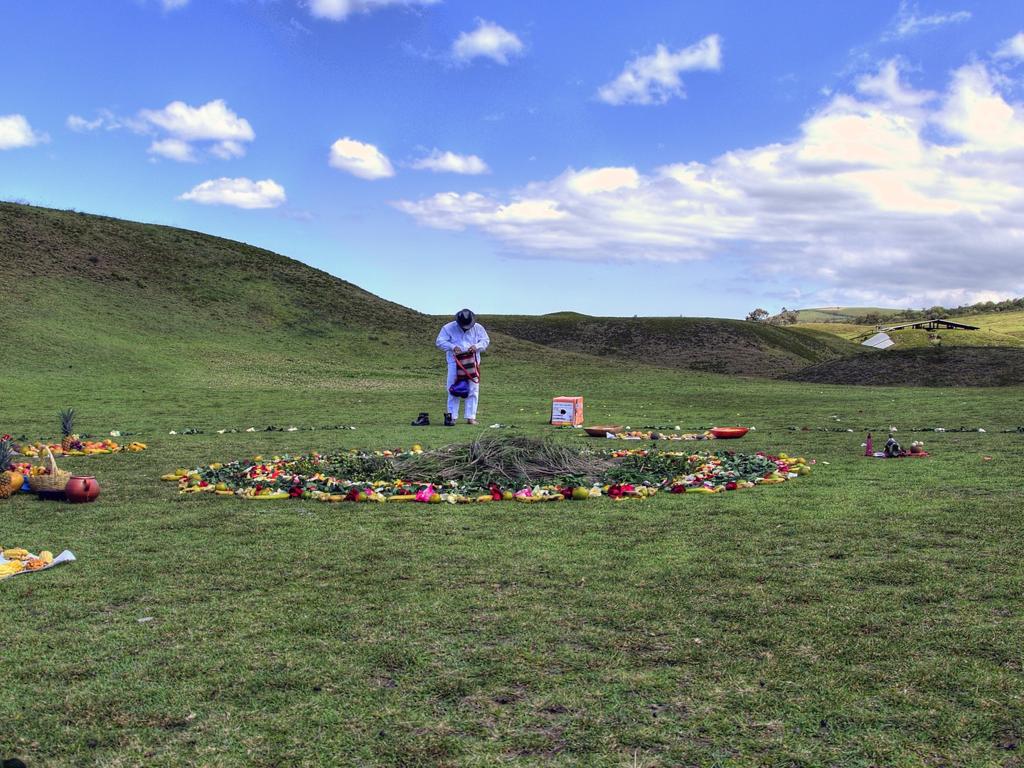
Picture a man in red and white robes, sliding down through a hole in the roof in the dead of winter, leaving gifts beneath an evergreen tree. Sounds like Santa. It also sounds suspiciously like a Siberian shaman on a heavy dose of Amanita muscaria — the fly agaric mushroom that grows at the base of pines and birches across the northern hemisphere. The overlap between this peculiar fungus and our modern Christmas iconography is one of the stranger threads in the broader story of psychedelics and human culture, and once you start pulling on it, the whole sweater of holiday tradition begins to unravel in interesting ways. This isn't fringe internet conspiracy — at least not entirely. Ethnobotanists have been writing about the connection for decades, and while no one can prove a direct line from a Koryak shaman in the 1600s to the Coca-Cola Santa of the 1930s, the parallels are hard to wave away as coincidence. So pour yourself something warm and let's wander through the evidence. The short version: among the Koryak, Kamchadal, Evenki, and other Indigenous peoples of the Russian Far East and Siberia, the fly agaric was — and in some communities still is — a sacred psychoactive. Shamans used it as a tool for divination, especially around the winter solstice, when daylight bottoms out and the new solar year begins to claw its way back. They reportedly dressed in red and white to mirror the mushroom's distinctive cap. They entered yurts (round felt tents) through the smoke hole at the top, because the snow blocked the regular door. They distributed mushrooms as gifts. They spoke of flying through the night sky toward the North Star to gather wisdom for the coming year. Read that paragraph again and tell me you don't see Santa squinting back at you. The red suit. The chimney entry. The sleigh ride. The annual visit on the longest night. None of this is a smoking gun on its own, but the cumulative weight starts to feel like more than a stretch — especially once you bring the reindeer in. Before going further, it's worth being clear-eyed about what Amanita muscaria actually is. It's a mycorrhizal fungus that grows in symbiosis with the roots of certain trees — birch, pine, spruce — which is why it can't be cultivated commercially and has to be foraged. It contains two main active compounds: ibotenic acid and muscimol. Ibotenic acid is essentially the prodrug; the body slowly converts it into muscimol, which is the compound responsible for the bulk of the experience. Importantly, fly agaric is not a classic psychedelic in the way psilocybin mushrooms or ayahuasca are. It doesn't act on serotonin 5-HT2A receptors. Instead, muscimol is a GABA-A agonist — it works on the same receptor system as alcohol and benzodiazepines, just from a very different angle. The result is something more dreamlike, dissociative, and unpredictable than a typical psilocybin journey. Reported effects include: Effects typically peak around three hours in and can last anywhere from ten to twenty-four hours. The raw mushroom is genuinely toxic and people do get seriously sick from eating it improperly. Traditional preparation — drying, repeated boiling, or the rather notorious reindeer-urine method — converts most of the ibotenic acid to muscimol and reduces the worst side effects. This is not a casual snack. The reindeer connection is where the story gets gleefully strange. Reindeer in Siberia love fly agaric. They seek it out, dig it from beneath the snow, and eat it apparently for its psychoactive effect. They tolerate the toxins in ways humans don't. The herders noticed this. They also noticed something else: the muscimol passes through the reindeer's body largely intact and ends up in the urine. So — and there's no polite way to say this — people drank the urine. Either straight from the snow or collected from the animal directly. It was a brilliant pharmacological hack: the reindeer's metabolism filtered out most of the nasty stuff, leaving a relatively cleaner psychoactive product. Some accounts even describe the urine being passed from person to person, with muscimol staying potent through several recyclings. Once you know this, the image of reindeer prancing through the sky with a slightly delirious-looking man in red takes on a whole new dimension. And Rudolph's glowing red nose? Probably a stretch — but the most famous red thing in the snowy north, the thing that made reindeer matter to these cultures in the first place, was a mushroom with a bright red cap. Make of that what you will. The Christmas tree is one of the most curious customs in the Western calendar. Why drag an evergreen indoors in December? Pre-Christian solstice traditions across northern Europe revered evergreens as symbols of life persisting through winter death, and that's the standard explanation. But there's a more specific reading too. Fly agaric only grows beneath certain trees — pines, birches, spruces — because it needs their roots to survive. In Siberian cosmology, these trees were sometimes seen as cosmic axes connecting earth to sky, and the mushrooms that appeared beneath them were considered gifts from the tree itself. Foragers would gather them from under the branches, much the way children today gather presents from under a decorated fir. The drying process adds another layer. To reduce toxicity, the mushrooms were often hung from tree branches to dry in the cold winter air. Bright red caps dangling from evergreen boughs. Sound like ornaments yet? Other accounts mention drying them in stockings hung above the fireplace, the heat slowly removing moisture without cooking off the active compounds. Stockings by the fire. On the longest night of the year. Waiting for something. As these traditions drifted west and tangled with Norse and Sami practice, new versions emerged. There's a thread in Nordic folklore involving Odin riding the night sky on his eight-legged horse Sleipnir during the midwinter Wild Hunt. In some tellings, blood or saliva dripped from the horse's mouth as it galloped, and where those droplets fell, fly agaric mushrooms grew the following season. Eight reindeer. Eight-legged horse. Probably not unrelated. The Sami of northern Scandinavia, who herd reindeer to this day, had their own shamanic traditions involving fly agaric. Their drums were sometimes painted with the mushroom's image. Their noaidi (shamans) wore red and white. Their cosmology mapped neatly onto solstice timing. As Christianity spread north and absorbed local custom — as it almost always did — these elements didn't disappear; they simply got reassigned. Here's where I have to be honest with you. The fly-agaric-equals-Santa theory is popular, it's fun, and parts of it are well-documented. But it's also been disputed by serious scholars. The historian Ronald Hutton, who knows more about British and northern European folk tradition than almost anyone alive, has pushed back on the strongest versions of the claim. He argues that fly agaric use was less widespread than the popular story suggests, that Siberian shamans didn't dress in red and white as a uniform, and that the modern Santa is mostly a product of nineteenth-century American writers and illustrators — Clement Clarke Moore, Thomas Nast — drawing on Dutch Sinterklaas traditions. That's a fair correction. The Coca-Cola red-suit Santa really did come from a 1930s advertising campaign, even if the colour scheme already existed in earlier illustrations. Saint Nicholas of Myra was a real fourth-century bishop with no obvious mushroom connections. And a lot of the more specific claims — about chimneys, about reindeer urine, about gifts under trees — get sharper and more dramatic each time they're retold online. The reasonable middle ground goes like this: Siberian and northern European peoples did use fly agaric ceremonially. Their solstice practices did involve reindeer, evergreens, red-and-white symbolism, and ecstatic flight. These traditions did drift south and west over centuries, mingling with Christian and folk customs. Whether they directly shaped Santa Claus is unprovable — but to say they had zero influence on the broader symbolic vocabulary of midwinter celebration feels equally unsupportable. Fly agaric is having a quiet moment. As psilocybin and ayahuasca have moved into mainstream conversation, Amanita muscaria has crept along behind them, partly because it occupies a strange legal grey zone in many countries — unlike classic psychedelics, it isn't scheduled in most of the US, the UK, or the EU. You can find it sold openly, sometimes in gummies or tinctures, which is not the same as saying it's a good idea to use it casually. It's a different animal from the serotonergic psychedelics most retreat-seekers are researching. The experience is harder to predict, the dose-response curve is steeper, and the risk of an unpleasant or genuinely toxic episode is real. People who work with it traditionally do so with deep knowledge of preparation methods passed down through generations. Most of us don't have that. If you're curious about plant medicine for healing addiction, depression, or trauma, fly agaric is probably not the first door to open — ayahuasca, psilocybin, and ibogaine all have substantially more clinical research and a much longer track record of facilitated, ceremonial use in modern retreat settings. Still, the mushroom matters culturally. It's a reminder that the human relationship with master plants and psychoactive fungi is ancient, that it's woven into rituals we still perform without realising what we're doing, and that the line between religion, medicine, and altered states has always been blurrier than tidy modern categories suggest. If your interest in psychedelics is partly a search for older, deeper ways of marking time and meaning, a range of ayahuasca, psilocybin, and other plant-medicine retreats can be browsed on our marketplace here. Whether or not Santa is a Siberian shaman in disguise, there's something worth holding onto in the story. Midwinter is when human beings have always reached for the strange — for ritual, for light in the dark, for some hint that the year is going to turn and the sun will come back. That instinct predates Christianity, predates Coca-Cola, predates the mushroom theory itself. It probably predates language. So this December, when you string up red and white ornaments and hang stockings by a fire and put presents under an evergreen tree, you might be participating in a tradition far older and weirder than the carols suggest. Worth a quiet nod to the reindeer, at least.
MDMA-Assisted Therapy for Autism and Social Anxiety: What the Research Suggests
Social anxiety isn't shyness. Anyone who's lived inside it knows the difference — the racing pulse before a dinner party, the rehearsed sentences that never quite leave your mouth, the exhaustion of pretending you're fine. For many autistic adults, that experience runs deeper still. Reading a room, parsing tone, tracking the unspoken rules of small talk — these things cost energy most people never have to spend. And the standard treatments? They don't always help. Which is why a study published in the journal Psychopharmacology caught the attention of researchers, clinicians, and a lot of curious readers. The trial was small. The conditions were tightly controlled. But the results hinted at something the psychedelic-therapy field has been quietly building toward for years — that MDMA, used in a clinical setting with trained therapists, might offer real relief for autistic adults living with severe social anxiety. Researchers at the Biomedical Research Institute at Harbor-UCLA Medical Center ran a trial with twelve autistic adults. Half received two MDMA-assisted therapy sessions; half received placebo paired with the same therapeutic structure. Everyone was assessed using the Liebowitz Social Anxiety Scale, a clinical tool that produces a numeric score — higher means more socially anxious. The MDMA group saw an average drop of 44.1 points on the scale. The placebo group dropped 19.3. That's a meaningful gap, especially in a population for whom conventional anti-anxiety medications and talk therapy often fall short. Participants didn't just score lower on a questionnaire — they described feeling, sometimes for the first time, that interacting with other people wasn't a battle to be survived. One participant said they felt as though they were experiencing their best self and seeing the world clearly for the first time. Another talked about realizing communication wasn't only about talking — that emotions, theirs and others', deserved attention before words did. These aren't the kinds of statements a placebo response usually produces. MDMA isn't a classical psychedelic in the way psilocybin or LSD are. It's an empathogen — a compound that increases feelings of trust, emotional openness, and connection. In a therapeutic context, that pharmacology is the point. The drug doesn't do the work; it lowers the walls so the work can happen. Therapists guide the session. The medicine softens the defenses that usually keep painful or confusing material out of reach. For autistic adults whose social anxiety is rooted in years of misread cues, social rejection, or trauma from being forced to mask, that softening can be the door. The therapy team in the Harbor-UCLA study reported no unexpected adverse reactions. Side effects matched what's been seen in other MDMA trials — fatigue, headaches, sensitivity to cold — and none were serious. Charles Grob, one of the study's authors, pointed to something the numbers don't quite capture: participants showed up to social situations afterward with more self-confidence. The settings that used to overwhelm them felt navigable. That's the kind of outcome that matters in a life, not just a paper. This work doesn't exist in a vacuum. Over the past decade, MDMA-assisted therapy has produced some of the strongest clinical results in any mental-health research program. The Multidisciplinary Association for Psychedelic Studies (MAPS) has shepherded MDMA through Phase 3 trials for PTSD, where the majority of participants in some studies no longer met diagnostic criteria after treatment. Psilocybin has shown promise for treatment-resistant depression. Ibogaine and ayahuasca are being studied for addiction and trauma. Ketamine clinics have proliferated across the U.S. Within that picture, the autism study is small but conceptually important. It expands the conversation beyond PTSD and depression. It suggests psychedelic-assisted therapy might be useful for populations that traditional psychiatry has often failed — not by curing autism (it's not a disease to cure) but by addressing the secondary anxiety that years of social difficulty can produce. It also raises uncomfortable questions for the field. Autistic adults are an underserved research population. Sample sizes are tiny. Funding is hard to find. The researchers behind the Harbor-UCLA work have been clear that they hope their paper sparks larger trials. A few things worth saying plainly, because the psychedelic conversation gets hyped fast. The honest framing: this is early evidence that points somewhere worth going. It's not a green light for self-treatment, and it's not a promise of healing. It's a reason to pay attention to where the science is heading. A lot of readers who follow MDMA research also find their way to ayahuasca, psilocybin, and other plant medicines used in retreat settings. The mechanisms differ. The traditions differ. But the underlying intuition is similar — that certain substances, in the right container, with the right preparation, can help people contact parts of themselves that ordinary life keeps locked away. Ayahuasca ceremonies, in particular, have drawn autistic adults and people with severe social anxiety to retreat centers in Peru, Costa Rica, and elsewhere. The reports are mixed and personal — some find profound shifts in how they relate to others; some find the intensity overwhelming. There's no clinical equivalent of the Harbor-UCLA study for ayahuasca and autism yet, and the small but vocal community of autistic ayahuasca participants tends to emphasize that preparation, facilitator skill, and aftercare matter enormously. If you're someone considering a retreat partly because social anxiety has shaped your life in painful ways, a few things are worth weighing carefully. Talk to your doctor, especially if you take SSRIs or other psychiatric medications — interactions with MDMA, ayahuasca, and similar substances can be serious. Ask retreat centers specifically about their experience with neurodivergent participants. Read the integration plan, not just the brochure. Alicia Danforth, one of the study's co-authors, has been working in this area for years and has spoken about wanting their paper to attract funding for larger trials. That's the bottleneck. Psychedelic research is expensive, slow, and politically fragile. Studies involving autistic adults face additional ethical scrutiny — appropriately so. But the pilot data is now on the record. Other research groups are paying attention. The broader MDMA-therapy program continues to move toward formal approval in the U.S., with regulatory decisions on PTSD treatment shaping what's possible for other indications. If MDMA-assisted therapy becomes a legal clinical option for PTSD, the path for studying it in other anxiety conditions — including social anxiety in autistic adults — gets a lot shorter. For now, the takeaway is modest but real. Twelve people sat through two carefully structured sessions with a compound that most of Western medicine spent forty years calling worthless, and they came out the other side describing social ease they hadn't felt before. That deserves more research, more funding, and more honest conversation about who psychedelic therapy could actually help. If something in this conversation speaks to you, the broader landscape of psychedelic and plant-medicine retreats can be browsed on our marketplace here — a useful place to start if you're researching options with an open mind and a careful one.
What DMT Actually Does: Inside the Science, the Trips, and the Healing Potential
Ask ten people who've smoked DMT to describe what happened and you'll get ten answers that all begin the same way: words don't really work for this. Then they'll try anyway. Spirals inside spirals. Beings that seemed to be waiting. A feeling of being yanked clean out of the body and dropped somewhere that felt — and this is the phrase that keeps coming up — more real than real. That phrase is doing a lot of heavy lifting, and it's worth taking seriously. DMT is the psychedelic compound at the heart of ayahuasca, the Amazonian brew that has pulled tens of thousands of seekers to jungle retreats over the past two decades. Understanding the molecule itself — what it does, where the research stands, and why people keep saying it changed their lives — is a useful piece of homework if you're weighing whether plant medicine is for you. N,N-Dimethyltryptamine is a short-acting psychedelic found across an absurd range of life. It's in hundreds of plants. It's in the venom of certain toads. It's been detected in every mammal researchers have bothered to test, including humans. We appear to make it ourselves, in small quantities, possibly in the lungs and the pineal gland. Nobody is entirely sure why. Smoked or vaporized, it produces a hallucinogenic experience that arrives within seconds and is largely over inside half an hour. Injected, similar story. Swallowed on its own, it does basically nothing — your gut breaks it down before it can reach the brain. That last fact is the whole reason ayahuasca exists. The traditional Amazonian brew combines a DMT-containing plant with a second plant that blocks the enzyme that would otherwise neutralize it, allowing the molecule to stay active for hours rather than minutes. So when people talk about ayahuasca, they're really talking about a way of taking DMT slowly, in a body that's been prepared by diet and ceremony, surrounded by people who know what to do when things get strange. DMT was first identified as psychoactive by Hungarian chemist Stephen Szára in the 1950s. A short, productive decade of research followed — including some investigations into whether endogenous DMT might explain schizophrenia (it doesn't). Then the 1970s arrived, drug laws tightened, and serious human research in the United States essentially stopped for twenty years. The thaw came in the early 1990s when psychiatrist Rick Strassman ran the first new DMT trials on humans in a generation at the University of New Mexico. His setup was deliberately bare: no incense, no statues, no guided meditation. He'd dose experienced volunteers in a hospital room and ask them to report back. The point was to see what the molecule did, stripped of expectation. What they reported was strange enough that Strassman went on to write a book about it. Volunteers described being pulled out of their bodies. Encountering entities that seemed intelligent and aware of being observed. Visiting places that didn't behave like physical space. One woman came back from her session convinced — calmly, matter-of-factly — that consciousness continues after death. If everyone knew what was waiting, everyone would commit suicide, she told him. He suggested she keep that to herself. Here's the thing that makes DMT genuinely different from other psychedelics. Mushrooms and LSD tend to modify your relationship with the world you're already in — colors smear, walls breathe, your sense of self softens. A DMT experience, by contrast, tends to feel like leaving entirely. Users describe a sensation of being launched. The geometry of ordinary space falls away and is replaced by something that operates on different rules — recursive fractals, impossible architectures, what one person I spoke with called "the back end of the simulation." Time becomes meaningless. Language follows. People often report telepathic exchanges with whatever they encounter in there, and a peculiar sense that the encounter is the point. A few recurring figures appear often enough across reports that there are entire online forums devoted to them — the jester, the mantis, the machine elves popularized by Terence McKenna. Whether these are projections of the human mind under extreme neurochemical pressure or something stranger is a question the science cannot currently answer. Probably won't anytime soon. The connection between DMT and death — or near-death — has been around long before the chemistry was understood. In Quechua, ayahuasca roughly translates to vine of the dead or vine of the souls. The traditional belief is that drinking the brew opens a doorway to the realm of disembodied spirits. The Shipibo, Shuar, and other Amazonian peoples have organized substantial portions of their cosmology and medicine around this idea for centuries. Modern interest in this overlap took off when researchers noticed that the standard near-death experience — the tunnel of light, the loving presence, the life review, the reluctance to come back — sounds an awful lot like a strong DMT trip. There's a hypothesis, still unproven, that the dying brain releases a flood of endogenous DMT as a kind of farewell. Some unpublished animal data suggests DMT levels do rise in the brain at death. It's not nothing, but it's not yet a settled case either. What we can say honestly: Whether any of that means DMT is a cosmic doorway or just an unusually interesting neurochemical, I'll let you decide. This is where things get practical for anyone reading because they're thinking about a retreat. The therapeutic conversation around DMT — and, by extension, around ayahuasca — has shifted dramatically in the last decade. Researchers have looked at ayahuasca for treatment-resistant depression, PTSD, grief, and addiction recovery. The early results are genuinely promising, particularly for people who've tried conventional treatments and come up empty. One reason DMT is hard to study clinically is that the experience is so short. Strassman and his colleague Andrew Gallimore published a paper proposing a way to deliver DMT via continuous infusion — essentially a steady IV drip that could hold someone in the state for hours rather than minutes. The reasoning is medical, not recreational: a sustained experience allows for actual therapeutic work, which is impossible to do during a fifteen-minute blast. This is also, in a sense, what ayahuasca already does. The brew stretches a DMT experience across four to six hours, long enough for emotional material to surface, be witnessed, and begin to integrate. Talk to people who've done plant medicine for trauma or addiction and you'll hear versions of the same arc: the substance shows them something they'd been avoiding, and the actual healing happens in the weeks and months afterward, in therapy, in journaling, in the slow business of changing how they live. One of Strassman's volunteers described looking back on her childhood with a clarity she'd never had sober. Another came back with strong feelings about needing to spend more time with family. A man I corresponded with — call him Sam — told me he'd been planning suicide before he tried DMT. He described the experience as the universe holding him in something that felt like oceanic love. Afterward, the cynicism that had been suffocating him simply lifted. He started living again. I include that not as a sales pitch. Plenty of people have difficult, frightening, or genuinely traumatic experiences with DMT and ayahuasca, especially when set and setting are wrong. But the testimony of people who feel they were pulled back from something terminal is consistent enough across decades and continents that it deserves to be taken seriously. Something is happening in there. A few practical points for the reader who's been Googling at midnight, weighing whether to actually do this: DMT — and ayahuasca specifically — is not for everyone, and the people running ethical retreats will tell you so. It's a powerful tool that happens to suit certain people at certain points in their lives, and it sits alongside therapy, breathwork, meditation, and a hundred other options that may serve you better depending on where you are. If after reading this you find yourself genuinely curious rather than just intellectually interested, that's worth listening to. For readers who want to take this further, a range of ayahuasca and plant medicine retreats can be browsed on our marketplace here. Take your time with the decision — the medicine, whatever you believe about it, has been around for centuries and isn't going anywhere.
Ibogaine Retreats Explained: What a Psychospiritual Journey Actually Involves
The first time someone tells you about ibogaine, they usually say something like, “It showed me my entire life in one night.” That's the line. It gets repeated in recovery rooms, on forums, in late-night phone calls between people who've been chewing on the idea of a retreat for months. And it's not exactly wrong — but it's also not the whole story. Ibogaine is one of the heaviest plant medicines on the planet. Heavier than ayahuasca in some ways. Longer than psilocybin. More physically demanding than almost anything else in the psychedelic landscape. It's also the substance with the most credible track record for interrupting opioid addiction, which is why people in genuine crisis end up googling it at three in the morning. If that's where you are, or if you're somewhere further back in the research process, here's an honest look at what ibogaine retreats actually involve. Ibogaine is an alkaloid extracted from the root bark of the iboga shrub, which grows in the rainforests of central west Africa — Gabon, Cameroon, parts of Congo. In its traditional context, iboga is used by the Bwiti, an initiatory spiritual tradition where the plant is taken in large quantities during multi-day rites of passage. It's a master plant in the truest sense: revered, feared, treated with enormous care. In the modern psychedelic and addiction-recovery world, ibogaine usually shows up in one of two forms. There's purified ibogaine HCl, which is what most medical-model clinics use because the dose is precise. And there's total alkaloid extract or whole root bark, which keeps the full spectrum of compounds intact and is more common in psychospiritual or Bwiti-influenced retreats. Different teachers prefer different forms for different reasons, and neither is automatically better. The experience itself lasts a long time. Plan on twelve to twenty-four hours of active effects, followed by another day or two of what people call the “gray day” — exhausted, raw, processing. Most retreats keep you on-site for at least a week. The biggest single reason is addiction. Specifically opioids — heroin, fentanyl, oxycodone, methadone — because ibogaine has a documented ability to dramatically reduce or eliminate physical withdrawal in a single session. That's not marketing. It's been observed clinically since the 1960s, and there's enough peer-reviewed research now that several countries treat ibogaine as a legitimate (if still experimental) addiction intervention. People walk into a clinic strung out and walk out, days later, without the gnawing physical craving. That alone is reason enough that ibogaine retreats exist. But opioid recovery isn't the only doorway. Plenty of people arrive looking for something else entirely: Ibogaine has a reputation, deserved, for being unusually direct about showing you your own life. Where ayahuasca tends to move in waves of imagery and emotion, ibogaine often feels more like watching a documentary about yourself. The memories that surface are specific. The lessons feel almost lectured. People describe meeting parts of themselves they'd written off, or seeing a relationship in completely new terms, or understanding — finally — why they keep doing the thing they keep doing. You'll usually start in the evening, after a medical screening earlier in the day. The room is dark or low-lit. You're lying down — and you'll stay lying down, because ibogaine produces ataxia, which means your coordination is gone. Standing up is a bad idea for many hours. The first phase, often called the visionary phase, comes on within an hour or two. Eyes closed, you start seeing — and the word “seeing” is doing a lot of work here. Some people describe it as a flood of autobiographical memory played at high speed. Others get more symbolic, archetypal material. Many hear a buzzing or whirring sound, almost mechanical. There's frequently a sense of being shown something by an intelligence that isn't you. Whether you call that the plant, the unconscious, or something else is up to you. The second phase is more reflective. The flood slows. You're still inside the experience but able to think about it, examine specific scenes, ask questions and get answers. This can go on for hours. Time becomes essentially meaningless. The third phase is the long tail. Physical exhaustion, sensitivity to light and sound, sometimes nausea, and a strange kind of mental clarity that sits underneath the tiredness. Sleep often doesn't come for another day. When it finally does, it's usually deep. Ibogaine is the psychedelic with the most serious safety profile concerns, and any retreat worth its fee will tell you this upfront. The risk isn't really psychological — it's cardiac. Ibogaine prolongs the QT interval, which in plain language means it can disrupt the electrical rhythm of the heart. In a healthy screened person, in a properly run setting, this risk is manageable. In an unscreened person with an undiagnosed condition, it can be fatal. Non-negotiables when evaluating a retreat: If a retreat is cagey about any of these, walk away. There's no version of ibogaine where the spiritual depth justifies skipping the medical infrastructure. The retreats with the best long-term outcomes are also, without exception, the ones with the strictest screening. The ibogaine world is smaller than the ayahuasca world, but it's grown fast in the last few years, and not every operation is equal. A handful of things to look at: Lineage and training. Is the lead facilitator trained in a recognized tradition or by a recognized medical body? Bwiti-trained practitioners, ibogaine providers who came up through GITA-aligned programs, clinicians with addiction-medicine backgrounds — these are signals. Vague spiritual credentials are not. Integration support. The ceremony is maybe a third of the work. What happens in the weeks and months afterward decides whether the insight lands or evaporates. Reputable retreats offer post-retreat integration calls, group sessions, or referrals to integration coaches. If the relationship ends when you leave the property, that's a red flag. Honesty about what ibogaine can't do. If a retreat promises a cure, run. Ibogaine interrupts patterns. It opens a window. What you do with that window is on you — and on whatever support structure you build around it. A facilitator who says this plainly is more trustworthy than one who promises transformation. Reasonable group size. Ibogaine isn't a group ceremony in the ayahuasca sense. Each person needs close attention. Be skeptical of large cohorts. The preparation window matters more than people realize. A few practical things: Get your medications sorted with your prescribing doctor well in advance. SSRIs and SNRIs typically need to be tapered weeks before, not days. Methadone has its own long timeline. Buprenorphine has its own. Stimulants, including ADHD medications, need to be cleared. Do not improvise this part. Eat clean for at least a couple of weeks before — less sugar, less alcohol, more whole foods. Your body is about to do something difficult; show up rested. Sleep matters more than any superfood. Spend some honest time with the question of what you actually want from the experience. Not the spiritual version of the answer — the real version. “I want to stop using” is real. “I want to know why I've sabotaged every relationship I've had” is real. “I want to feel something other than numb” is real. Write it down. Bring it with you. And tell someone you trust what you're doing. Not for permission — you're an adult — but because integration is easier when you have at least one person who knows where you went and is curious to hear what came back with you. The week after is strange. You'll feel physically tender for a few days. Emotionally, many people report a kind of quiet — the constant background noise of craving or self-criticism turned way down. This is sometimes called the “afterglow,” and it can last weeks. It's a window. Use it. Build something during this period. Therapy appointments scheduled. New routines actually started. Honest conversations actually had. The ibogaine showed you the map; the walking is yours to do. People who treat the retreat as the end of the work tend to drift back toward where they started within months. People who treat it as the beginning tend to be having different conversations a year later. For readers who want to take this further, a range of vetted ibogaine and plant-medicine retreats can be browsed on our marketplace here. Take your time with the decision — the right retreat is worth waiting a few months for, and the wrong one isn't worth any price.
Bufo Alvarius: What a 5-MeO-DMT Ceremony Actually Feels Like
Someone asked me once, very casually, over tea: “You've sat with ayahuasca, you've done kambo — but have you ever smoked the toad?” The way they said it made the question land differently. Like they were quietly checking whether I knew what I was getting into. Bufo, they kept telling me, is something else entirely. Why, I wondered, would anyone willingly sign up to feel like they're dying? And yet here I am, writing about the night I did exactly that. This is a long piece about Bufo alvarius — what the medicine is, where it comes from, what the ceremony looked like from the inside, and what stuck around afterward. If you're researching whether to sit with 5-MeO-DMT yourself, I'd rather you read an honest account than a glossy one. Bufo refers to the dried venom of the Sonoran Desert toad — Bufo alvarius, also called Incilius alvarius by the people who care about taxonomy. The toad lives in a narrow band of desert across northern Mexico and the American Southwest. Its parotid glands secrete a milky substance loaded with tryptamines, the most notable being 5-MeO-DMT, which is widely considered the most potent naturally occurring psychedelic on the planet. The secretions are harvested without killing the animal, then dried into small crystalline flakes. Those flakes get loaded into a glass pipe, gently heated, and inhaled in a single slow breath. The effects arrive almost immediately. Total duration is usually fifteen to twenty minutes by the clock. Inside the experience, time is meaningless. People come back saying it felt like forever, or like no time at all, or both. This is worth pausing on: 5-MeO-DMT is not the same as the N,N-DMT found in ayahuasca. The visual character is different. The emotional terrain is different. Ayahuasca tends to give you a narrative — scenes, memories, conversations with something that feels like an intelligence. Bufo tends to dissolve the narrator entirely. There's no story. There's just whatever is left when the story-maker stops. For a long time my answer was a polite no. The reports I heard sounded too intense, too close to actual ego death, too much like the dying I wasn't ready for. I had two kids at home. I had work I cared about. I wasn't running away from anything obvious, and I couldn't find a clean reason to invite something that felt this big. Then a stranger messaged me about a ceremony happening the following week, on the one open evening between Christmas and New Year — the only unscheduled day in a packed month. I'm not a sucker for coincidence, but my body said yes before my mind could argue. So I went. If you're considering Bufo, I'd offer this: pay attention to how the invitation arrives. Are you chasing it because you've seen testimonials on Instagram and you want what those people seemed to get? Or has it shown up in your life with a strange quiet insistence that you can't quite explain away? Those are different motivations, and they tend to produce different ceremonies. The ceremony was on the top floor of an old building near a canal in Amsterdam. Steep stairs, creaking floors, about ten of us sitting on cushions in a circle. Sage smoke. A small altar with feathers and a few stones. None of it was theatrical. It looked, honestly, like somebody's living room arranged with care. The facilitator — I'll call him Raul — opened by saying he wasn't a shaman. “We're each our own shaman,” he said. “I'm just here to sit with you while it happens.” Every actual shaman I've met says some version of this. The ones claiming the title outright are almost always the ones to avoid. His partner translated from Spanish into English. They explained what the medicine does and doesn't do, what to expect physically, what might come up emotionally, and what they would do if someone struggled. They told us bluntly: the body can feel heavy. The body can feel orgasmic. The ego dissolves. You may not remember who you are. They asked each of us to set an intention. People went one at a time. Raul would load the pipe, heat it, and guide the person to breathe out, then inhale slowly and hold. Within seconds, most of them either lay back voluntarily or were gently lowered to the floor. Then came the next fifteen or twenty minutes — completely different for everyone. Some people went silent and motionless. One person sobbed. One laughed for nearly the entire time. One thrashed for two minutes and then went still and beatific. Raul's response shifted with each — sometimes singing, sometimes waving a feather, sometimes just sitting nearby looking unbothered. There was no formula. He read each person and responded. What surprised me, watching, was how unlike kambo this looked. Kambo is loud — the racing heart, the purging, the heat. Bufo was quieter on the outside. The whole drama was happening internally. That calmed me down a little before my turn. When they called me up, my main fear wasn't death itself. It was leaving my kids without a mother. But everyone in the circle had returned from their own dying, so I figured I could too. I'd later come to think of that moment — the willingness to let go even briefly — as the actual work. The smoke is just the vehicle. The pipe touched my lips. It tasted like singed hair and something organic I'd rather not name. I relaxed my throat and kept drawing it in until Raul said stop. Hold. The drop was immediate. I felt myself fall backward into the floor — into the earth beneath the floor — while a warm, overwhelming light filled my visual field. Behind my eyelids, fractals rushed toward my forehead at speeds I had no reference for. Most were drenched in color. Some were stark black and white. Waves of sensation moved through me that I genuinely have no language for. So this, I thought from somewhere, is what dying feels like. What I learned in those minutes — and this is the only practical thing I can really offer you — is that resistance and surrender produce wildly different experiences inside the same medicine. When my thinking mind tried to assert itself (should I make sounds? should I move?) the colors dimmed and a harsher, more judgmental texture crept in. When I let go and dropped attention back into the fractals, the beauty returned. The choice point was right there, over and over. That's the practice. I sat up, eventually. Raul was in front of me. We held eye contact for what felt like a long, wordless conversation. My mind was already running its usual program — did I do that right? what now? — but underneath it was a quieter knowing that didn't need anything from me. We bowed. He leaned in and said one word in my ear that happened to be the exact word I'd been working with all year. I won't share it. It would mean nothing to you and everything to me. For about a week, I felt soft and porous in the best way. More love in my chest. Easier tears at small things — strangers laughing on a tram, my kid drawing something terrible and showing me proudly. Also, oddly, the world felt slightly flat. The colors of ordinary life were duller, as if I now knew about a dimension that wasn't currently accessible. This is normal. Integration after 5-MeO-DMT can include a kind of homesickness for the state the medicine showed you. Some people report a low or grey period in the second or third week. Some get the opposite — sustained joy, clarity, a quieter inner critic. Most get some of both. If you're thinking about sitting with Bufo, plan your calendar accordingly. Don't book a ceremony the night before a job interview or a wedding you have to host. I can't answer that for anyone else. What I can say is that Bufo is not a beginner medicine, and it's not a substitute for therapy, recovery work, or the long slow building of a life you actually want to be in. It's a brief, extraordinary look at something — call it consciousness, call it presence, call it whatever you want — and what you do with that look is the rest of the work. If you're drawn to it because ayahuasca felt too long, kambo too physical, or psilocybin too narrative — fair enough. If you're drawn because you want a shortcut past your trauma, please reconsider. There are no shortcuts. The medicine can crack open a door; walking through it is still on you. For readers who feel quietly called to take this further, a curated selection of 5-MeO-DMT and broader plant-medicine retreats can be browsed on our marketplace here. Take your time choosing. The right ceremony will still be there when you're ready.
Craving More Stories?
Join our ShopAyahuascaRetreats newsletter for the latest updates on thrilling
destinations and inspirational tales, delivered straight to your inbox!
We value your privacy. Your email address will never be shared or published.
Why Silicon Valley Money Is Pouring Into Psychedelics Startups
Something strange is happening at the intersection of psychedelics and Silicon Valley. The same investors who funded scooter apps and food-delivery platforms are now writing checks to companies developing the next generation of psychedelic-assisted therapies. If you'd told me a decade ago that the world's most famous startup accelerator would be backing magic-mushroom research, I'd have laughed into my mug of mapacho tea. And yet here we are. Analysts have floated numbers north of $100 billion for the future psychedelics market, and the money is moving accordingly. For anyone researching ayahuasca, ibogaine, psilocybin, or other master plants — whether for addiction recovery, depression, or just the kind of stuck life pattern you can't seem to shake — this matters. The infrastructure behind plant medicine is changing fast, and what gets built (or doesn't) over the next five years will shape the retreats, clinics, and protocols you'll eventually choose between. The short answer: clinical results, decriminalization momentum, and an addiction-and-depression crisis that mainstream pharma hasn't dented. SSRIs have plateaued. Opioid overdoses keep climbing. Veterans are dying by suicide at rates that should embarrass everyone. Into that vacuum walks a body of research — much of it from Johns Hopkins, NYU, Imperial College London, and MAPS — suggesting that compounds like psilocybin, MDMA, and ibogaine produce meaningful, sometimes durable improvement after just one or two sessions. Investors smell a fundamental shift. Not incremental. Generational. When something works better than the current standard of care and the regulatory door is creaking open, capital floods in. That's the boring, predictable part. The interesting part is what those investors choose to fund. The famed Y Combinator accelerator — the one that backed Airbnb, DoorDash, and Dropbox before anyone knew their names — has quietly admitted several psychedelics companies to its program. A spokesperson was careful to say YC doesn't pick industries, it picks teams. Fair enough. But the fact that four psychedelics startups cleared a roughly 1.5% acceptance bar tells you something about where smart money thinks the puck is heading. A handful of YC-backed companies give a useful snapshot of the space. None of them run retreats. All of them are building the scaffolding around the medicines themselves. What's striking is the range. One company is building clinical software. Another is doing computational drug design. A third is running traditional pharma R&D with a psychedelic twist. None of them are running ceremonies in the jungle. That distinction matters more than it might seem. Here's where things get philosophically interesting, and where I'll be honest about my own bias. I've sat in ayahuasca ceremonies. I've watched people work through grief, trauma, and addictions that years of talk therapy hadn't budged. The thing that made those experiences powerful wasn't the molecule alone — it was the container. The shaman who knew when to sing and when to be silent. The dieta beforehand. The integration circle the next morning. The jungle itself. Venture-backed psychedelics is a different beast. It's optimized for FDA approval, insurance reimbursement, and scalable clinical delivery. That has real upside: standardized dosing, medical oversight, fewer cowboys offering "ceremonies" in suburban living rooms. It also has real costs. The ceremonial context — the lineage, the songs, the relationship with the plant as a being and not a compound — doesn't fit neatly on a Series A pitch deck. For readers weighing whether to fly to Peru, Costa Rica, or Mexico for a traditional retreat versus waiting a few years for a clinical option closer to home, the trade-offs are worth thinking about honestly: None of these paths is automatically right. What matters is matching the path to what you're actually working with. Someone with treatment-resistant depression and no trauma history might do beautifully in a clinical setting. Someone unwinding decades of complex PTSD or wrestling with addiction often needs the longer arc and ceremonial holding that retreats provide. A hundred billion dollars sounds like it could solve a lot of problems. It won't solve the ones that matter most. It won't teach a facilitator how to sit with someone in their darkest hour without flinching. It won't replicate the apprenticeship of a curandero who learned from their grandmother who learned from hers. It won't undo the extractive history of foreign companies patenting compounds that indigenous people have used for generations. And — this is the quiet part nobody at a pitch meeting wants to say — it won't change the fact that psychedelic healing is hard, often uncomfortable, and absolutely not a shortcut. I've seen people come back from a retreat changed in ways that lasted years. I've also seen people come back convinced they were healed, then quietly relapse six months later because they skipped the integration work. The medicine is not the cure. The medicine cracks something open, and then the actual work begins. No amount of venture funding changes that math. Both. Probably more good than bad, if I'm being fair. Legalization and clinical access mean people who would never travel to the Amazon — veterans, people with chronic illness, people without passports or PTO — will eventually get access to compounds that could genuinely help them. That's worth a lot. The risk is monoculture. If clinical models dominate the conversation, the ceremonial traditions get framed as quaint, unscientific, or unsafe — even when they've been refined over centuries and produce outcomes the studies are only beginning to measure. The best future is one where both exist, where someone can choose a six-day ayahuasca retreat with a vetted lineage or a structured psilocybin protocol at a clinic forty minutes from home, depending on what they need. For readers who want to take this further, a range of curated plant-medicine and psychedelic retreats can be browsed on our marketplace here — useful if you're weighing the traditional side of the equation against the clinical wave that's still a few years out. Whichever path you find yourself drawn to, do the homework. Talk to people who've sat with the specific medicine you're considering. Ask facilitators uncomfortable questions about training, safety protocols, and what happens if something goes wrong. The money rushing in will eventually make this whole landscape safer and more accessible. Until it does, your discernment is the most valuable thing in the room.
The Psychedelic Renaissance: Why Science Is Revisiting Plant Medicines for Addiction and Depression
Something strange has happened over the past decade. Substances that were treated as cultural radioactive waste for half a century — LSD, psilocybin, mescaline, MDMA, ayahuasca — are now being studied at Johns Hopkins, Imperial College London, NYU, and a growing list of universities that wouldn't have touched this work in 1995. Psychedelics and the broader family of master plants are no longer fringe. They're showing up in peer-reviewed journals, in regulatory filings, and in conversations between therapists and clients who have run out of other options. If you're researching a retreat — quietly, maybe a little nervously — you've probably noticed the shift too. The tone has changed. The people writing about plant medicine for addiction recovery aren't all wearing tie-dye. Some of them are clinicians. Some are veterans. Some are recovering executives who tried everything else first. So what actually happened? Why did the science come back, and what does the current evidence really say? Most people forget — or were never taught — that there was a first wave. Between roughly 1950 and the late 1960s, more than a thousand scientific papers were published on psychedelics. Humphry Osmond, the British-Canadian psychiatrist who actually coined the word psychedelic in 1957, was treating alcoholics with LSD and getting results that would make a modern addiction researcher sit up straight. Mescaline, freshly synthesized from the peyote cactus, was being studied alongside Albert Hofmann's LSD, which Sandoz had been distributing to researchers since 1938. Then the door slammed shut. A combination of factors — the CIA's grotesque MK-Ultra mind-control program, Timothy Leary turning Harvard into a self-promotion machine, alarmist government films, and a recreational scene that genuinely did produce casualties — collapsed the entire research field. By 1970, the Controlled Substances Act in the U.S. had placed these molecules in Schedule I, the most restrictive category. Studying them legally became almost impossible. Careers built on that work evaporated. Here's the part that gets glossed over: the science didn't die because the science was bad. It died because the political climate made the science unfundable and the researchers unemployable. Promising data on alcoholism, end-of-life anxiety, and depression simply sat on shelves for decades, waiting. The thaw started slowly. In 2009, Britain's chief drug adviser David Nutt publicly argued that alcohol and tobacco were measurably more harmful than LSD, MDMA, and psilocybin. He was fired. But his data — and the controversy — cracked something open. Other established researchers began publishing again. MAPS (the Multidisciplinary Association for Psychedelic Studies) and the Beckley Foundation kept funding work that universities were too nervous to underwrite directly. The findings that emerged over the next decade and a half are the reason you're reading this article today: None of this means psychedelics are a miracle. It means the evidence base has grown thick enough that ignoring it is no longer intellectually defensible. If there's one thread that keeps surfacing in this work, it's addiction. The early Saskatchewan LSD trials in the 1950s were aimed at alcoholism. Modern psilocybin work has revisited that exact question and found echoes of the same results. Ayahuasca retreats in Peru and Costa Rica are quietly full of people working on alcohol, cocaine, and opioid dependence. Ibogaine, derived from the iboga root in West Africa, has built its underground reputation almost entirely on opioid interruption. Why? The honest answer is that nobody fully knows. The leading theories involve a combination of neuroplasticity — these substances appear to make the brain temporarily more flexible — and the psychological experience itself, which often delivers something that feels like a confrontation with whatever the person has been avoiding. Patients describe seeing the shape of their own behavior from outside it, sometimes for the first time. That's not a mechanism a pharmaceutical company can patent, which may be part of why the research took so long to come back. The takeaway for someone considering plant medicine for addiction: this is a serious avenue worth taking seriously, but it isn't a one-shot cure. The people who get lasting benefit tend to do real preparation, real integration, and real life-restructuring afterward. The ceremony is the doorway, not the destination. Here's where the current renaissance differs from the 1960s in a way that actually matters. The first generation of researchers tried hard to isolate the molecule from its context. That was the dominant scientific instinct of the era — strip away the ritual, the music, the setting, the shaman, and measure the chemical. The randomized controlled trial, which became the gold standard of pharmacology, is built on exactly that logic. It turns out that with psychedelics, you can't really do that. Set and setting — the mindset you bring and the environment you're in — shape the experience more than the dose does, past a certain point. The Indigenous traditions that had been working with ayahuasca, peyote, and psilocybin mushrooms for centuries already knew this. They built elaborate frameworks around the medicine: dietary preparation, songs, intentions, community, aftercare. Modern researchers are, somewhat sheepishly, beginning to admit that those frameworks aren't decoration. They're part of what makes the medicine work. This is why the better retreats today combine clinical seriousness with traditional practice. The facilitators have read the papers and spent years apprenticing with elders. Neither half alone is enough. If you're sitting at your laptop wondering whether to actually do this — book a flight, take time off work, drink something that will reorganize your inner life for a few hours — the science gives you reasons to take the option seriously. It doesn't give you reasons to be reckless. A few things worth thinking through honestly: The psychedelic renaissance is real, the evidence is meaningful, and the door that closed in 1970 is genuinely open again — but as a participant, not just an observer, you're walking into something that asks for respect. For readers who want to explore this further, a thoughtfully curated range of ayahuasca and plant-medicine retreats can be browsed on our marketplace here. Take your time. The medicine isn't going anywhere, and neither is the question you're trying to answer.
Inside the Rise of Luxury Psilocybin Retreats: What You Actually Get for $7,000
Somewhere between the wellness spa weekend and the underground ceremony in a friend-of-a-friend's basement, a new category has quietly taken shape: the luxury psilocybin retreat. Five-figure flights aside, you're now looking at programs in Jamaica, Costa Rica, and the Netherlands that charge anywhere from $3,900 to nearly $7,000 for a week, mushrooms included. The clientele isn't who you'd expect either. It's lawyers, founders, surgeons, mid-career people who've quietly read every Michael Pollan paragraph twice and want to know what the fuss is about — in a setting where nobody is going to call the cops. I've spent enough time around plant medicine and psychedelic spaces to feel both excited and twitchy about this trend. On one hand: more people getting access to real psychedelic healing, in safer settings, with proper integration. That's progress. On the other hand: a lot of money is flooding in, and not all of it is arriving with clean intentions. So let's actually look at what these retreats offer, what they cost, and whether you — sitting there reading this, weighing whether to spend the equivalent of a used car on a week with mushrooms — should consider one. The shorthand is easy: a multi-day program at a private property, usually in a jurisdiction where psilocybin sits in a legal grey or green zone, with screened participants, trained facilitators, and a ratio of staff to guest that would make most yoga retreats jealous. The longer answer is more interesting. These programs are designed less like a vacation and more like a structured therapeutic arc — preparation, ceremony, integration — wrapped inside the trappings of a five-star stay. What you're really paying for is the container. A villa with thirteen rooms tucked away on a river, two pools, organic meals, a maloca or ceremony space that doesn't smell like the last guy's cologne. One facilitator for every three or four guests. Pre-retreat coaching calls. Six weeks of group integration after you've gone home and your boss is wondering why you keep crying during meetings. That's the product. The mushrooms, ironically, are maybe a third of it. Here's where I have to be honest with you, because the entire psychedelic retreat space is starting to develop the same uncomfortable rhetoric the wellness industry mastered years ago — the implication that if you really want to heal, you'll find the money. I don't buy it. Plenty of people have had transformative psychedelic experiences for the cost of a tank of gas. The mushroom doesn't know what you paid for it. What the money actually buys you is risk reduction and follow-through. Specifically: If you have $7,000 and you'd otherwise be eating mushrooms alone in your apartment on a Tuesday, the retreat is probably the better bet. If $7,000 means second-mortgaging something or canceling a year of therapy to afford it, that math gets ugly fast. There are quieter, smaller, more affordable options out there — including community-based circles in legal jurisdictions and lower-cost retreats in Mexico and Jamaica. The luxury version is one tier of a wider menu, not the only entry point. Most reputable luxury retreats are explicit that they're not designed for people in acute mental health crisis. The phrase used inside the industry is "healthy normals" — people whose lives function, who aren't actively suicidal or in psychotic territory, but who feel stuck. Numb. Career on autopilot, marriage on autopilot, evenings disappearing into a glass of wine and a screen. That kind of stuck. These programs also screen for harder stuff: family history of schizophrenia, current medication conflicts, recent major loss. If you're carrying severe trauma or you're in recovery from substance dependence, a generic luxury retreat may not be the right room for you. Ibogaine programs, dedicated trauma-informed psilocybin therapy, or ayahuasca centers with strong medical staff are different animals built for different work. Don't let glossy marketing convince you a five-star villa is equivalent to a clinical setting — it isn't. The honest reader profile, in my experience, looks like this: late thirties to mid-fifties, professionally accomplished, has read at least one psychedelic book, hasn't tripped since college (if ever), wants the experience inside a setting that feels grown-up and safe. If that's you, the luxury retreat category is genuinely built around your nervous system. The structure across reputable programs is remarkably similar, which is reassuring — it suggests the practitioners are talking to each other and converging on what works. A typical arc: Notice how little of that is the trip itself. Maybe twelve hours out of a hundred-and-twenty-hour program. The rest is scaffolding — the thing that determines whether your six hours of altered consciousness becomes a permanent shift or a fading memory you'll bring up at dinner parties for the next year. Not every retreat charging luxury prices is delivering luxury care. As money has poured into the psychedelic space, I've watched programs spring up that are essentially weekend parties dressed in shamanic costume. A few things to look for, and look out for: The good operators welcome scrutiny. They'll send you their facilitator bios, walk you through the medical screening, and tell you who they've turned away and why. If a program won't engage with those questions, your wallet has its answer. The psychedelic retreat industry is growing fast — projections for the broader psychedelic medicine market run into the tens of billions over the next decade. Regulation is shifting too, with Oregon and Colorado already operating legal psilocybin therapy frameworks and several other states inching that direction. The FDA hasn't approved psilocybin for general therapeutic use yet, but clinical trials for depression and end-of-life anxiety have produced results compelling enough that approval feels like a question of when, not if. What this means practically: in five years, the $7,000 luxury retreat in Jamaica may have local equivalents at a fraction of the price. Community-based psilocybin centers, insurance-covered clinical sessions, lower-cost retreats with the same quality of care. The current premium reflects scarcity and legal complexity more than the underlying value of the mushroom or the work. If cost is the only thing keeping you from exploring this, the menu is widening every year. That said, the work itself isn't going to get any easier just because the price drops. Psychedelics aren't a shortcut — they're an accelerant. They show you what's there. The discipline of integrating what they show you, of actually changing the patterns they illuminate, is still on you, retreat or no retreat. The honest answer depends on what you're after. If you're a curious, reasonably healthy person who wants to explore psilocybin in a setting designed not to traumatize you, and you can afford it without financial strain, a well-run luxury retreat is one of the safest, most supported ways to do that work right now. If you're carrying heavier stuff — addiction, severe trauma, treatment-resistant depression — you want a program built specifically for that, not a wellness retreat dressed up as therapy. And if you've read this far and something in you is leaning toward yes, take that seriously. Curiosity that persists past the second article is usually pointing somewhere. For readers ready to look at specific options, a range of vetted psilocybin retreats can be browsed on our marketplace here. Take your time with the choice. The right container matters more than the right price tag.
Psychedelic Research: Landmark Studies on Plant Medicine and the Brain
If you're reading this, you've probably already gone past the point of casual curiosity. Maybe a friend came back from Peru looking lighter than you'd seen them in years. Maybe you've read about ibogaine clinics in Mexico treating opioid dependence when nothing else worked. Maybe you're tired — quietly, persistently tired — and you want to know whether the buzz around psychedelics is real science or wishful thinking. Good news: there's actual research. A lot of it. Psychedelic research has been quietly accumulating since the early 2000s, and the findings around ayahuasca, psilocybin, MDMA, and the broader family of master plants are genuinely interesting. Not miracle-cure interesting. Not influencer-promising-enlightenment interesting. But solid, peer-reviewed, this-deserves-attention interesting — especially for people thinking about addiction recovery, trauma, or the kind of depression that hasn't budged for years. Here's a tour through the studies that matter, what they actually found, and what it means for someone weighing a retreat. Psychedelic science had a strange century. In the 1950s and 60s, researchers ran thousands of studies on LSD — looking at it as a tool for psychotherapy and, notably, as a treatment for alcoholism. Some of the results were striking. Then 1970 happened. The Controlled Substances Act made the compounds illegal in the United States, funding dried up, and for roughly three decades the field went dark. What we now call the psychedelic renaissance kicked off in the 1990s, when a US-approved study by Rick Strassman cracked the door back open. Everything that follows happened in the last 30 years, much of it in the last ten. That's worth remembering when someone tells you psychedelic healing is "ancient wisdom now proven by science." The wisdom is ancient. The science is young, and still finding its footing. Strassman administered roughly 400 doses of DMT to about 60 participants between 1990 and 1995 at the University of New Mexico. What people reported was strange enough that he ended up calling DMT "the spirit molecule" in his 2001 book of the same name. Participants described visions, intense emotion, out-of-body states, and — this is the part that still raises eyebrows — apparent contact with entities that felt independent of their own minds. Fast forward to 2019. Researchers at Imperial College London ran the first proper brain imaging study on DMT, measuring electrical activity with EEG. They found that DMT suppresses the brain waves associated with normal waking consciousness while ramping up the waves typically seen during dreaming. The participants weren't asleep. They were in what the researchers described as a waking dream — eyes closed, fully conscious, brain doing something it doesn't usually do. This matters for anyone considering an ayahuasca ceremony, because DMT is the visionary component of the brew. Whatever you've heard about journeys, the underlying neurology is real and increasingly mappable. Two studies stand out here. The first, from Dennis McKenna and Charles Grob in 1996, looked at long-term members of the União do Vegetal — a Brazilian religious group that drinks ayahuasca ceremonially. Compared to a control group with no plant-medicine history, the UDV members showed lasting shifts in personality: more emotional steadiness, more optimism, fewer inhibitions, more outgoingness. Several members had struggled with alcohol or depression before joining. After regular ceremonial use, those issues had largely resolved. The second is a 2018 Brazilian study on treatment-resistant depression. Participants who hadn't responded to conventional antidepressants experienced rapid improvement after a single ayahuasca session — and the researchers found that the brew reduces activity in the default mode network, a brain region known to be hyperactive in depressed people. That's a real mechanistic clue, not just a vibe. None of this means you should book a flight to Iquitos tomorrow. But if you've been wondering whether the addiction-recovery and depression stories around ayahuasca have any scientific weight, the honest answer is: yes, some, and it's growing. Roland Griffiths at Johns Hopkins ran a 2006 study that's now considered foundational. Participants who took psilocybin under controlled conditions frequently rated the session as one of the five most meaningful experiences of their lives — comparable, many said, to the birth of a child or the death of a parent. Years later, the meaning was still there. A 2011 study by Grob then showed psilocybin could meaningfully reduce anxiety in patients with advanced-stage cancer. End-of-life dread is one of the cruelest things a person can face, and standard medications often do little. A guided psilocybin session, repeatedly, seems to help people make peace with their mortality — months after the substance is long out of their system. Then in 2017, Robin Carhart-Harris and colleagues at Imperial College published work showing that two doses of psilocybin could rapidly lift treatment-resistant depression. They described it as something like a reset. Improvements held for up to six months. The researchers were also careful to note something that anyone considering a retreat should hear clearly: the quality of the experience predicted the antidepressant effect. Set, setting, and integration aren't decorative add-ons. They're part of the medicine. This is where it gets technical, but stick with me — it's worth knowing. In 1998, Franz Vollenweider's lab in Zurich showed that LSD and psilocybin produce their effects by binding to a specific serotonin receptor called 5-HT2A. When researchers blocked that receptor with another drug, the psychedelic effects didn't happen. That single finding established the neurochemical anchor for most of the classic psychedelics. Carhart-Harris's group then built on this in two ways. First, in 2014, they showed that psilocybin dramatically increases communication between brain regions that don't usually talk to each other — possibly explaining experiences like synesthesia (tasting color, hearing shapes, that sort of thing). Second, in 2016, they captured the first images of a brain on LSD and found that the drug quiets the default mode network, the system associated with our sense of self. When the DMN goes quiet, the ego loosens. That's the neural correlate of what people in ceremony describe as oneness, dissolution, or the experience of being something larger than themselves. If you've ever wondered why people come back from a psychedelic retreat saying things like "I'm not who I thought I was," this is part of the answer. For a few hours, the brain network most responsible for maintaining "who you are" goes offline. MDMA isn't a classic psychedelic — it works on different receptors and produces a different kind of experience. But Michael Mithoefer's 2011 study showed that MDMA-assisted therapy was both safe and effective for people with treatment-resistant PTSD. Combat veterans, survivors of abuse, people who'd tried every other approach — many of them experienced significant, lasting reductions in symptoms after just a few therapy sessions paired with MDMA. The mechanism seems to involve a temporary reduction in fear response, which allows participants to revisit traumatic memories without being overwhelmed by them. The therapy does the work. The medicine creates the conditions. A few honest takeaways from sitting with this body of research: None of this is meant to push you toward a booking. The decision to drink ayahuasca, sit with psilocybin, or work with any master plant is a serious one — and the research, encouraging as it is, doesn't override the need for careful self-assessment. Talk to your doctor about medication interactions (SSRIs and ayahuasca are a known concern). Be honest about your mental health history. Pick a place that screens you back. For readers who want to take this further, a curated selection of ayahuasca and psychedelic retreats can be browsed on our marketplace here — useful if you want to see what reputable facilitators actually offer rather than guess from a Google search. The research is encouraging. The medicine is powerful. The decision is yours to make slowly, with as much information as you can gather.
Microdosing Iboga for Dopamine Issues: What You Should Actually Know
Microdosing iboga is one of those topics that lives in the gap between forum gossip and actual clinical research. People whisper about it. A few swear by it. Most have no idea what they're talking about. And yet, if you spend any time in the corners of the internet where folks discuss addiction recovery, ADHD, depression, or the strange flatness that follows years of stimulant use, you'll hear iboga root bark mentioned — usually in tones that mix awe with a healthy dose of caution. Let's talk about what microdosing iboga actually involves, why dopamine sits at the center of the conversation, and what someone considering this path should think hard about before they start. This is plant medicine territory, and iboga is not a substance to treat casually — even at small doses. Iboga (Tabernanthe iboga) is a shrub native to West Central Africa, mostly Gabon and Cameroon, where the Bwiti tradition has used it ceremonially for generations. The root bark contains a family of alkaloids, the most famous being ibogaine — the compound that's made headlines for its ability to interrupt opioid and stimulant addictions, sometimes in a single high-dose session. A full ibogaine flood dose is intense. We're talking 12 to 36 hours of waking dream-state, deep autobiographical review, and significant cardiovascular load. That's the version you see at clinics in Mexico, Costa Rica, and increasingly other jurisdictions. Microdosing is something different: people take small amounts of root bark — often 100 to 300 milligrams — with the goal of subtle, sub-perceptual effects over weeks or months. The motivations vary. Some are stacking it onto recovery from opioid or stimulant addiction, hoping to keep cravings quiet between flood sessions. Others are dealing with post-acute withdrawal, where dopamine receptors are sluggish and motivation has gone missing. A smaller group is experimenting with iboga the way people experiment with psilocybin microdosing — for mood, focus, or what they vaguely call “stuckness.” If you've burned through your dopamine system — years of cocaine, methamphetamine, heavy stimulant prescriptions, or even just compulsive screen and porn use — you might find yourself in a strange flat zone. Nothing feels rewarding. You can't get yourself to start anything. Pleasure feels theoretical. This is the territory where people start researching iboga. Here's what's interesting: ibogaine and its primary metabolite noribogaine appear to act on the dopamine system in unusual ways. Rather than flooding receptors like an amphetamine, they seem to modulate — interacting with sigma-2 receptors, NMDA receptors, and various dopamine and serotonin pathways simultaneously. Animal studies have shown that ibogaine can help normalize dopamine signaling after chronic stimulant exposure. That's not a guarantee for humans, but it's why the substance keeps showing up in conversations about addiction recovery and post-stimulant burnout. The honest answer to “does microdosing iboga restore dopamine function?” is: we don't really know. There's anecdote, there's mechanistic plausibility, and there's almost no rigorous clinical data on the microdose protocol specifically. Most of the published research is on flood doses for addiction interruption. Anyone who tells you the science is settled here is either selling you something or hasn't read enough of it. Iboga is not psilocybin. It is not LSD. The safety profile is genuinely different, and this is where a lot of well-meaning people get themselves into trouble. The main issue is cardiac. Ibogaine prolongs the QT interval, which in plain terms means it can disrupt the heart's electrical rhythm in ways that have, in rare cases, been fatal. The risk goes up dramatically if you have: At microdose levels the risk is lower than at flood-dose levels — but it's not zero, especially with repeated daily dosing that allows ibogaine and noribogaine to accumulate. Noribogaine has a long half-life. The drug stays in your system. This is why anyone serious about exploring iboga, even at low doses, gets bloodwork and an EKG first. Not optional. Not paranoid. Standard practice. From what people who've done it describe, a true microdose of iboga root bark is subtle. Some report a slight warming sensation, mild stimulation, easier focus, and a kind of quiet emotional steadiness. Others get nothing. A handful overshoot the dose and end up with nausea, ataxia (that wobbly, drunk-feeling coordination loss iboga is known for), and a tracer-laden visual field that's well past sub-perceptual. The bark itself is unforgivably bitter. People who've worked with it say the taste is genuinely difficult — like chewing aspirin mixed with damp earth. Capsules help. Most experienced practitioners suggest starting much lower than you think you need to, waiting a full day to see how your body responds, and never dosing daily without breaks. A common protocol you'll see discussed: small dose two or three times per week, with rest days in between, for a defined period — maybe four to eight weeks — followed by a longer break to assess what's actually changed. Daily dosing is where accumulation risks rise and where people start running into trouble. If you're reading this because you're stuck — addicted, depressed, exhausted by your own patterns — please hear this clearly: microdosing iboga off the back of a Reddit thread, alone, with no medical screening and no integration support, is not a recovery plan. It's a gamble with a substance that deserves more respect than that. What does a reasonable approach look like? Usually some version of: Iboga sits in an interesting place in the master plants family — alongside ayahuasca, San Pedro, and peyote — as a teacher plant with a long traditional lineage. Treating it like a nootropic supplement misses the point and creates real risk. For readers who want to explore this more seriously, a range of ibogaine and iboga retreat programs with medical screening and trained facilitators can be browsed on our marketplace here. The dopamine question, the addiction question, the “am I broken?” question — these are real, and plant medicine can sometimes be part of an answer. Just not a shortcut, and not without the work that surrounds it.
Dreaming of a Psychedelic Retreat?
We have the best deals and offers from thousands of organizers all over the world! Get them into your mailbox every week!
We value your privacy. Your email address will never be shared or published.
