 English
 Deutsch
 Français
 Nederlands
 Español
SHOP AYAHUASCA RETREATS BLOG
Microdosing Mushrooms: What the Research Actually Shows About Psilocybin
Axel Hartley
June 4, 2026
Your ultimate guide to discover transforming ayahuasca and psychedelic experiences. Dive into serene destinations and elevate your consciousness to unparalled heights.
Discover Ayahuasca & Psychedelic Retreats NowSearch for ayahuasca & psychedelic retreats
Discover retreats, trainings, and holidays from all over the world
Somewhere between the full-blown psychedelic trip and a regular Tuesday morning sits a quieter practice: microdosing. A crumb of dried mushroom — maybe a tenth of a gram — taken every few days, with no expectation of seeing the wallpaper breathe. People do it for focus. For mood. For creative work that won't unstick. For depression that hasn't budged in years.
The question is whether any of it actually works, or whether we're all just very enthusiastic about placebo. The honest answer, as of 2026, is: somewhere in between, and the science is still catching up. If you're considering microdosing psilocybin — or any psychedelic — as part of your own recovery from addiction, depression, or just feeling stuck, here's what's actually known and what's still guesswork.
What Microdosing Actually Means
A microdose is roughly one-tenth of a recreational dose. If a noticeable psychedelic experience kicks in around one gram of dried mushrooms, a microdose lands near 0.1 grams. Some people go even smaller. The point is that you shouldn't feel intoxicated. No visuals, no time dilation, no laughing at the ceiling. If you're tripping, you've overshot — that's a low dose, not a microdose.
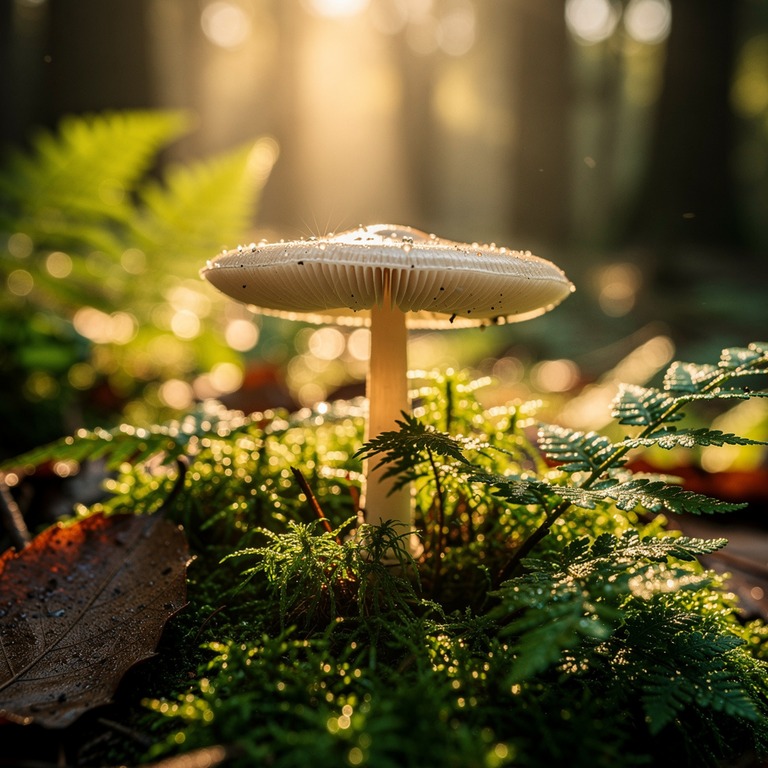
Psilocybin, the active compound in these mushrooms, gets converted in the body to psilocin, which binds to serotonin 2A receptors in the brain. At full doses, this rewiring produces the classic psychedelic experience — altered perception, dissolved ego, hallucinations, the works. At a microdose, the theory goes, you get subtle neurochemical effects without the cinematic ones: a small lift in mood, sharper attention, a looser kind of thinking.
That's the theory. The evidence is messier.
Does Microdosing Mushrooms Actually Work?
Here's where things get awkward. Several solid studies from the early 2020s — including placebo-controlled work that finally went beyond self-reported surveys — found that much of what people attribute to microdosing tracks closely with the placebo effect. In one widely cited trial, participants who thought they had taken a microdose reported nearly the same benefits as those who actually had. Expectation, it turns out, is a powerful drug all by itself.
That doesn't mean microdosing is fake. It means we can't yet cleanly separate the chemistry from the belief. Both might be doing work. And given how much modern medicine accepts that mindset shapes outcome — see also: nearly every antidepressant trial ever — that's not nothing. It's just not the slam-dunk evidence that microdosing advocates sometimes claim.
What the better studies do suggest is modest and worth taking seriously:
- Mood lift. Surveys of microdosers consistently report feeling lighter, less reactive, more emotionally available. Whether that's pharmacology or self-fulfilling prophecy, the lift is real to the person experiencing it.
- Creative flexibility. Some research points to looser associative thinking and increased openness — useful if your work depends on connecting unrelated ideas.
- Reduced symptoms of depression and anxiety over multi-week protocols, though most of this data is self-reported and uncontrolled.
- Possible benefits for PTSD and trauma when microdosing is paired with proper therapeutic support — emphasis on the support.
Notice that last point. The studies showing the strongest mental-health outcomes almost all involve psychological support alongside the substance. Microdosing alone, with no therapy, no integration, no structure, gets you considerably less than microdosing inside a thoughtful framework. The mushroom isn't the treatment. The mushroom is one ingredient in the treatment.
The Risks Nobody Likes to List
Microdosing has a reputation for being basically harmless — a sort of mushroom-flavored multivitamin. That's marketing, not science. Psilocybin remains a Schedule I substance in the U.S. and most other countries, which means unregulated supply, unknown potency, and zero quality control unless you're growing your own or sourcing from a meticulous friend.
The actual reported side effects of microdosing include:
- Headaches and migraines, especially with frequent dosing
- Disrupted sleep, particularly if you dose later in the day
- Increased anxiety, paradoxically — for some people, the same compound that calms others ramps them up
- Heart-rate changes (psilocybin acts on receptors found in cardiac tissue, which matters if you have any cardiovascular condition)
- Emotional volatility you didn't see coming
And there's a bigger caution: people with a personal or family history of psychotic disorders — schizophrenia, bipolar I, schizoaffective disorder — should not microdose. Psychedelics can trigger or accelerate episodes in vulnerable people. This isn't theoretical. It's the single most important screening question a responsible facilitator will ask, and if nobody's asking you, that tells you something about who you're working with.
Is Microdosing the Same as a Plant-Medicine Retreat?
No, and the difference matters. A retreat — whether it's psilocybin in Jamaica or the Netherlands, ayahuasca in Peru, or one of the legally sanctioned psilocybin programs now operating in Oregon and Colorado — uses a full dose in a held container with trained support. The intent is a single, intense experience that opens something up, followed by integration work to make sense of what surfaced.
Microdosing is the opposite shape: subtle, repeated, woven into ordinary life. You go to work. You take a hike. You attend your kid's recital. The substance is supposed to fade into the background while quietly nudging your baseline. Some people use microdosing as preparation before a retreat or as part of integration afterward — both can make sense, though you should always check with the facilitators running your ceremony, because many traditions ask you to be substance-free for a meaningful window beforehand.
If you're drawn to psilocybin because you're working through deep trauma, addiction, or treatment-resistant depression, the honest read is that a structured experience with proper support tends to do more than microdosing alone. Microdosing might help maintain gains or smooth out daily life. The heavy lifting often happens at higher doses with skilled people around you.
How to Think About It If You're Considering Microdosing
A few practical things worth holding in mind before you decide anything:
- Get your medical situation straight. If you take SSRIs, MAOIs, lithium, or any medication that affects serotonin, talk to a knowledgeable clinician before combining anything. Psilocybin plus the wrong medication can range from blunting the effect entirely to genuinely dangerous.
- Decide what you're actually trying to fix. "I want to feel better" is a starting point, not a plan. Are you trying to address depression? Drink less? Get unstuck creatively? Different goals point to different approaches — and sometimes therapy or a retreat will serve you better than self-administered microdoses.
- Pick a protocol and stick to it. The Fadiman protocol (one day on, two days off) and the Stamets stack are the two most common. Whatever you pick, journal honestly. Without notes, you'll project your hopes onto neutral days.
- Set a stopping date. Six weeks, eight weeks, whatever. Then take a real break. Continuous dosing for months on end has not been well-studied, and there are theoretical concerns about heart valve tissue with chronic serotonin 2B receptor stimulation.
- Don't drive on dosing days until you know how you respond. Most microdosers are fine. Some aren't. Find out at home.
The Bigger Picture
Microdosing is one small piece of a much larger conversation about psychedelics, master plants, and what we now call psychedelic-assisted recovery. The renaissance is real — clinical trials for psilocybin, MDMA, and ibogaine have produced some of the most striking results in psychiatry in decades. But the most dramatic outcomes come from full-dose, supported experiences, not from sprinkling tiny amounts into your morning coffee.
If you're considering plant medicine because something in your life isn't working — addiction that won't lift, depression that grinds on, trauma that keeps replaying — it's worth thinking bigger than a microdose. A well-run psilocybin retreat, ayahuasca ceremony, or ibogaine program can do in a week what microdosing might do in a year, assuming microdosing is doing anything at all beyond placebo. For readers who want to explore the structured, supported route, a curated selection of psilocybin and plant-medicine retreats can be browsed on our marketplace here.
Microdosing has its place. It's just probably not the whole answer — and anyone selling it as one is selling something other than the truth.
Craving More Stories?
Join our ShopAyahuascaRetreats newsletter for the latest updates on thrilling
destinations and inspirational tales, delivered straight to your inbox!
We value your privacy. Your email address will never be shared or published.