 English
 Deutsch
 Français
 Nederlands
 Español
SHOP AYAHUASCA RETREATS BLOG
What DMT Actually Does: Inside the Science, the Trips, and the Healing Potential

Ezra Caldwell
June 4, 2026
Your ultimate guide to discover transforming ayahuasca and psychedelic experiences. Dive into serene destinations and elevate your consciousness to unparalled heights.
Discover Ayahuasca & Psychedelic Retreats NowSearch for ayahuasca & psychedelic retreats
Discover retreats, trainings, and holidays from all over the world
Ask ten people who've smoked DMT to describe what happened and you'll get ten answers that all begin the same way: words don't really work for this. Then they'll try anyway. Spirals inside spirals. Beings that seemed to be waiting. A feeling of being yanked clean out of the body and dropped somewhere that felt — and this is the phrase that keeps coming up — more real than real.
That phrase is doing a lot of heavy lifting, and it's worth taking seriously. DMT is the psychedelic compound at the heart of ayahuasca, the Amazonian brew that has pulled tens of thousands of seekers to jungle retreats over the past two decades. Understanding the molecule itself — what it does, where the research stands, and why people keep saying it changed their lives — is a useful piece of homework if you're weighing whether plant medicine is for you.
So What Is DMT, Exactly?
N,N-Dimethyltryptamine is a short-acting psychedelic found across an absurd range of life. It's in hundreds of plants. It's in the venom of certain toads. It's been detected in every mammal researchers have bothered to test, including humans. We appear to make it ourselves, in small quantities, possibly in the lungs and the pineal gland. Nobody is entirely sure why.
Smoked or vaporized, it produces a hallucinogenic experience that arrives within seconds and is largely over inside half an hour. Injected, similar story. Swallowed on its own, it does basically nothing — your gut breaks it down before it can reach the brain. That last fact is the whole reason ayahuasca exists. The traditional Amazonian brew combines a DMT-containing plant with a second plant that blocks the enzyme that would otherwise neutralize it, allowing the molecule to stay active for hours rather than minutes.
So when people talk about ayahuasca, they're really talking about a way of taking DMT slowly, in a body that's been prepared by diet and ceremony, surrounded by people who know what to do when things get strange.
The Research Nobody Was Allowed to Do
DMT was first identified as psychoactive by Hungarian chemist Stephen Szára in the 1950s. A short, productive decade of research followed — including some investigations into whether endogenous DMT might explain schizophrenia (it doesn't). Then the 1970s arrived, drug laws tightened, and serious human research in the United States essentially stopped for twenty years.
The thaw came in the early 1990s when psychiatrist Rick Strassman ran the first new DMT trials on humans in a generation at the University of New Mexico. His setup was deliberately bare: no incense, no statues, no guided meditation. He'd dose experienced volunteers in a hospital room and ask them to report back. The point was to see what the molecule did, stripped of expectation.
What they reported was strange enough that Strassman went on to write a book about it. Volunteers described being pulled out of their bodies. Encountering entities that seemed intelligent and aware of being observed. Visiting places that didn't behave like physical space. One woman came back from her session convinced — calmly, matter-of-factly — that consciousness continues after death. If everyone knew what was waiting, everyone would commit suicide, she told him. He suggested she keep that to herself.
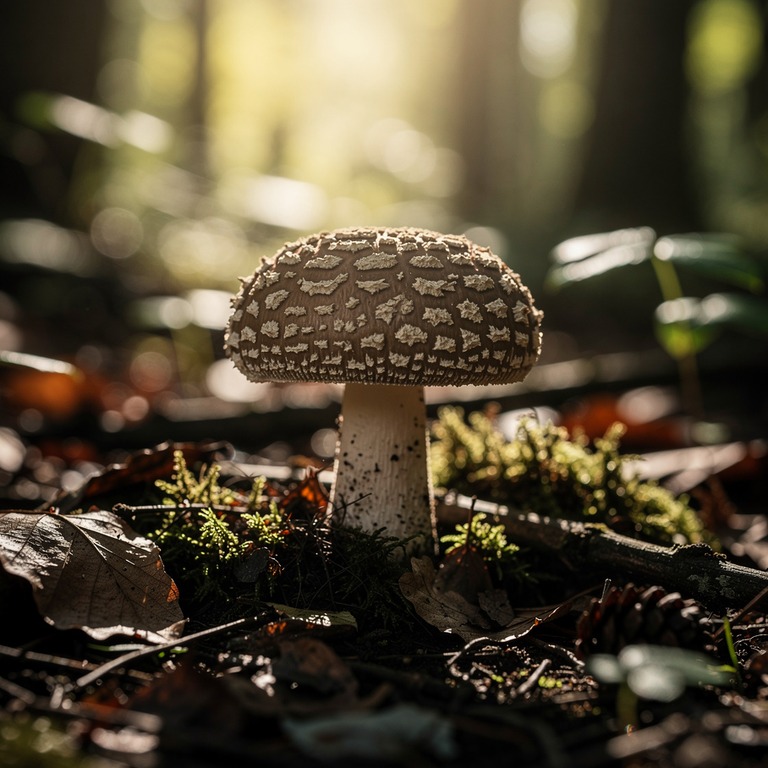
Why People Say It Feels More Real Than Real
Here's the thing that makes DMT genuinely different from other psychedelics. Mushrooms and LSD tend to modify your relationship with the world you're already in — colors smear, walls breathe, your sense of self softens. A DMT experience, by contrast, tends to feel like leaving entirely.
Users describe a sensation of being launched. The geometry of ordinary space falls away and is replaced by something that operates on different rules — recursive fractals, impossible architectures, what one person I spoke with called "the back end of the simulation." Time becomes meaningless. Language follows. People often report telepathic exchanges with whatever they encounter in there, and a peculiar sense that the encounter is the point.
A few recurring figures appear often enough across reports that there are entire online forums devoted to them — the jester, the mantis, the machine elves popularized by Terence McKenna. Whether these are projections of the human mind under extreme neurochemical pressure or something stranger is a question the science cannot currently answer. Probably won't anytime soon.
The Spiritual Throughline
The connection between DMT and death — or near-death — has been around long before the chemistry was understood. In Quechua, ayahuasca roughly translates to vine of the dead or vine of the souls. The traditional belief is that drinking the brew opens a doorway to the realm of disembodied spirits. The Shipibo, Shuar, and other Amazonian peoples have organized substantial portions of their cosmology and medicine around this idea for centuries.
Modern interest in this overlap took off when researchers noticed that the standard near-death experience — the tunnel of light, the loving presence, the life review, the reluctance to come back — sounds an awful lot like a strong DMT trip. There's a hypothesis, still unproven, that the dying brain releases a flood of endogenous DMT as a kind of farewell. Some unpublished animal data suggests DMT levels do rise in the brain at death. It's not nothing, but it's not yet a settled case either.
What we can say honestly:
- Many people who've had near-death experiences and later tried DMT report striking similarities.
- The body actively transports DMT into the brain using energy, the way it transports glucose and essential amino acids. The brain doesn't do that for compounds it considers unimportant.
- The enzymes responsible for synthesizing DMT are active in the retina, which is curious enough that some researchers think it may be involved in ordinary perception, not just exotic states.
Whether any of that means DMT is a cosmic doorway or just an unusually interesting neurochemical, I'll let you decide.
The Therapeutic Question
This is where things get practical for anyone reading because they're thinking about a retreat. The therapeutic conversation around DMT — and, by extension, around ayahuasca — has shifted dramatically in the last decade. Researchers have looked at ayahuasca for treatment-resistant depression, PTSD, grief, and addiction recovery. The early results are genuinely promising, particularly for people who've tried conventional treatments and come up empty.
One reason DMT is hard to study clinically is that the experience is so short. Strassman and his colleague Andrew Gallimore published a paper proposing a way to deliver DMT via continuous infusion — essentially a steady IV drip that could hold someone in the state for hours rather than minutes. The reasoning is medical, not recreational: a sustained experience allows for actual therapeutic work, which is impossible to do during a fifteen-minute blast.
This is also, in a sense, what ayahuasca already does. The brew stretches a DMT experience across four to six hours, long enough for emotional material to surface, be witnessed, and begin to integrate. Talk to people who've done plant medicine for trauma or addiction and you'll hear versions of the same arc: the substance shows them something they'd been avoiding, and the actual healing happens in the weeks and months afterward, in therapy, in journaling, in the slow business of changing how they live.
What Real Users Actually Take Away
One of Strassman's volunteers described looking back on her childhood with a clarity she'd never had sober. Another came back with strong feelings about needing to spend more time with family. A man I corresponded with — call him Sam — told me he'd been planning suicide before he tried DMT. He described the experience as the universe holding him in something that felt like oceanic love. Afterward, the cynicism that had been suffocating him simply lifted. He started living again.
I include that not as a sales pitch. Plenty of people have difficult, frightening, or genuinely traumatic experiences with DMT and ayahuasca, especially when set and setting are wrong. But the testimony of people who feel they were pulled back from something terminal is consistent enough across decades and continents that it deserves to be taken seriously. Something is happening in there.

If You're Thinking About a Plant Medicine Retreat
A few practical points for the reader who's been Googling at midnight, weighing whether to actually do this:
- The molecule itself is short-acting and physically safe for most healthy adults — but the context matters enormously. Smoked DMT alone in a bedroom is a very different proposition from ayahuasca with experienced facilitators after a week of preparation.
- Screen yourself honestly. Personal or family history of psychosis, bipolar I, certain heart conditions, and SSRIs all complicate the picture. A reputable retreat will ask about these things at length. If they don't, that's a flag.
- Preparation matters as much as the ceremony. The dieta — usually a couple of weeks of no alcohol, no recreational drugs, restricted foods, less screen time — isn't superstition. It's how you arrive at the experience open and ready.
- Integration matters even more. What happens during the ceremony is roughly twenty percent of the work. The other eighty percent is what you do with it in the six months afterward. Plan for therapy, integration circles, or at minimum a serious journaling practice before you book.
- Choose facilitators carefully. Lineage, training, medical screening protocols, ratio of staff to participants, what happens if someone has a hard night. Ask all of it. The good places want you to ask.
DMT — and ayahuasca specifically — is not for everyone, and the people running ethical retreats will tell you so. It's a powerful tool that happens to suit certain people at certain points in their lives, and it sits alongside therapy, breathwork, meditation, and a hundred other options that may serve you better depending on where you are.
If after reading this you find yourself genuinely curious rather than just intellectually interested, that's worth listening to. For readers who want to take this further, a range of ayahuasca and plant medicine retreats can be browsed on our marketplace here. Take your time with the decision — the medicine, whatever you believe about it, has been around for centuries and isn't going anywhere.
Craving More Stories?
Join our ShopAyahuascaRetreats newsletter for the latest updates on thrilling
destinations and inspirational tales, delivered straight to your inbox!
We value your privacy. Your email address will never be shared or published.