 English
 Deutsch
 Français
 Nederlands
 Español
Reset. Heal. Grow.
How to Be a Good Trip Sitter: A Practical Guide to Holding Space During Psychedelics
The first time a friend asked me to sit for them while they took mushrooms, I said yes before I really understood what I was agreeing to. I figured I'd hang out, keep an eye on things, maybe pour some water. What I didn't realise — and what most people don't, until they're four hours in watching someone weep at the ceiling — is that trip sitting is a real role with real responsibilities. It's not babysitting. It's not therapy. And it's definitely not a chance to micro-dose alongside your friend for moral support. If you're considering sitting for someone on a psychedelic — mushrooms, LSD, MDMA, ketamine, or anything in between — this is the honest version of what the job actually looks like. I'll also touch on where home trip sitting ends and where a proper plant-medicine retreat begins, because the two are very different animals. A trip sitter is a sober, trusted person who stays present while someone else journeys on a psychedelic substance. Their job is not to guide the experience, interpret visions, or play shaman. Their job is to make sure the person tripping stays physically safe, emotionally supported when needed, and otherwise left alone to have their own experience. Think of a sitter as a quiet lifeguard. Most of the shift, nothing dramatic happens. You sit nearby, read a book, refill a glass of water, occasionally check that your friend hasn't decided to redecorate the kitchen at 3am. The value isn't in constant intervention — it's in the simple fact of being there. Many people describe feeling enormous relief just knowing someone calm is in the next room. One thing worth saying upfront: a trip sitter isn't mandatory. Plenty of experienced psychonauts journey alone and do fine. But for first-timers, for higher doses, or for anyone with a complicated relationship to anxiety, having a sitter can be the difference between a difficult patch and a genuinely scary one. This part trips people up. A sitter is not: If your friend needs the kind of structured, ceremonial holding that plant medicine traditions provide, a retreat is the right environment — not your living room. Knowing the difference is part of being a responsible sitter. Preparation is where most sitters underinvest. The actual sitting is mostly waiting; the prep is where the real work lives. Start with the substance. A mushroom journey runs roughly four to six hours. LSD can stretch past twelve. MDMA peaks fast and tapers. Ketamine is much shorter but more dissociative. If you don't know what's normal for the molecule in question, read up — Wikipedia is a reasonable starting point for pharmacology basics, but go deeper from there. You should know roughly when the come-up starts, when the peak hits, and when things should be tapering off. Then get to know the person, if you don't already. What are they hoping to explore? Are they working through something heavy — grief, a breakup, addiction recovery, an old trauma? Have they done psychedelics before, and if so, how did it go? Are they on any medications, especially SSRIs or anything that interacts dangerously with what they're about to take? This last point isn't optional. Combining MDMA with certain antidepressants can cause serotonin syndrome, which is a medical emergency. Finally, prepare the setting. Set and setting aren't just buzzwords — they shape the whole experience. The room should be comfortable, dim-ish, free of obvious hazards (no open flames, no easy access to balconies or stairs, no sharp clutter), and stocked with water, soft blankets, a sick bowl if the substance tends to bring nausea, and a phone in case you need help. Music is often welcome but should be discussed in advance; what sounds like a gentle piano track sober can sound like a horror soundtrack at hour three. Here's the truth most guides bury: a good trip sitter is mostly bored. That's the sign you're doing it right. Stay close but not in their face. Read. Knit. Stare at a wall. Do not scroll loud videos on your phone. Do not invite other people over. Do not start a deep conversation about politics. Your job is to be a calm, low-stimulus presence — not entertainment. Check in occasionally, but lightly. A soft “how are you doing?” every so often is plenty. If they want to talk, listen without steering. If they want silence, give them silence. If they get up to move around, follow at a distance — falls and stubbed toes are a real risk when depth perception is scrambled. When things get hard — and on a meaningful dose, they often will at some point — your tools are simpler than you'd think: And the hardest skill: knowing when to back off. Some people in difficult passages don't want to be touched or talked to. Paranoia can latch onto the sitter. If your presence is making things worse, give them space — stay in earshot, but stop trying to fix it. The discomfort often needs to move through them, not be argued away. If you ever see signs of a true emergency — chest pain, seizure, sustained violent behaviour, genuine suicidal intent, signs of serotonin syndrome — call emergency services without hesitation. Tell them exactly what was taken. Honesty saves lives in those moments, and medics are not there to get anyone arrested. The trip doesn't end when the visuals fade. The hours and days afterward are when the real work of integration begins, and a good sitter understands this. Once your friend is back in their body, feed them. Something simple — fruit, toast, soup. Hydrate them. Let them sleep if they need to. The next morning, when they're rested, sit with them and let them talk about what came up. Don't interpret. Don't analyse. Just listen and reflect back what they say. Sometimes the most important moment of the whole experience happens at breakfast the next day, over a slow cup of coffee, when something they saw finally clicks into a sentence. If the experience was hard, don't paper over it. Difficult trips often carry the most useful material if they're processed honestly. Encourage journaling, gentle walks, time in nature. If real distress lingers more than a few days, point them toward a therapist who's familiar with psychedelic integration — they exist, and there are more of them every year. Trip sitting at home works well for recreational doses with experienced friends, or for someone doing careful personal exploration. It does not work well for everyone, and it's worth being honest about the limits. If someone is using psychedelics to work on serious trauma, deep depression, or addiction, a living-room setup is usually the wrong container. The traditional plant medicines — ayahuasca, ibogaine, peyote, San Pedro, psilocybin in ceremonial contexts — have been used for centuries inside structures specifically designed to hold the weight of that kind of work. Trained facilitators, dietary preparation, ritual framing, medical screening, and proper integration support all do real things that a friend with a thermos of tea cannot replicate. For readers weighing that bigger step, a curated range of ayahuasca and plant-medicine retreats can be browsed on our marketplace here. Trip sitting is a small act of love. You're trading a night of your own life so someone else can do something that might genuinely change theirs. Take the role seriously, but don't let it intimidate you — most trips are gentle, most challenges are workable, and most people come out the other side grateful, articulate, and a little bit changed. And when it's your turn to lie on the couch and stare at the ceiling, you'll know exactly what kind of person you want sitting in the next room. Pay it forward when the time comes.
Why Big Healthcare Money Is Quietly Backing Psychedelic Medicine
Something interesting has been happening in the back rooms of biotech finance, and most people booking a retreat in Peru next month have no idea. The same venture capital firms that bankrolled Moderna and Novavax are now writing checks to companies developing psychedelics into prescription medicines. That shift matters — not because Wall Street's blessing makes plant medicine more legitimate (it doesn't), but because it changes what's coming next. If you're researching ayahuasca, psilocybin, or any other psychedelic path for depression, addiction, or trauma, the story of who's funding what gives you a useful map. It tells you which compounds will reach clinics first, which retreats will face new competition from medical models, and which therapies remain — for now — only available outside the regulated system. Let's walk through what's actually happening. A few years ago, investing in psychedelic research looked like a hobby for eccentric philanthropists and crypto guys with a microdosing habit. That's no longer the case. A wave of specialist funds emerged first — small firms built specifically around psychedelic startups — and they did the unglamorous work of pushing early compounds through preclinical hurdles. They proved the science wasn't a joke. Now the bigger fish have arrived. Established healthcare venture capital firms with billion-dollar funds have started putting real money behind psychedelic biotech. These are the firms that fund late-stage clinical trials, the kind of trials that cost tens of millions and involve hundreds of patients across multiple sites. Without that capital, no psychedelic drug ever reaches an FDA approval. With it, the timeline shortens dramatically. The shift signals something subtle but important: psychedelics are no longer being treated as a curiosity. They're being treated as a drug development pipeline, with all the rigor and skepticism that implies. For the retreat-seeker, that's a double-edged thing. More research means better safety data and clearer answers about who benefits. It also means a medicalized future where some of these compounds become tightly regulated prescriptions rather than ceremonial sacraments. A handful of mainstream healthcare investors have made multiple bets in the space. Boston-based RA Capital — better known for funding vaccine makers — has backed at least three psychedelic-focused companies, including GH Research, Cybin, and Delix Therapeutics. All three are chasing mood disorders: depression, anxiety, and the stuck states that talk therapy and SSRIs can't always touch. Catalio Capital, a younger biotech-focused firm, has held positions in Atai Life Sciences and Compass Pathways through both their private and public stages. OrbiMed, a New York firm with stakes in more than eighty life-sciences startups, has put money behind Awakn — which is studying ketamine and MDMA for alcohol-use disorder — and Cybin, which is working on psilocybin and DMT-based compounds. Soleus Capital has stakes in Compass Pathways and Field Trip. If you've been following addiction recovery research, the Awakn investment is the one to circle. MDMA and ketamine for alcohol-use disorder is the kind of clinical work that could legitimately reshape how we treat addiction in the next decade. And it's being funded not by ideologues but by people who measure outcomes in spreadsheets. One company has attracted more healthcare-VC attention than the rest: GH Research, a Dublin-based outfit developing a treatment for treatment-resistant depression based on 5-MeO-DMT. That's the psychoactive compound traditionally extracted from the secretions of the Sonoran Desert toad — though clinical versions are synthesized, not harvested from amphibians. Why the unusual amount of investor enthusiasm? Two reasons, according to analysts who cover the company. First, the experience itself is short — typically under thirty minutes rather than the six-to-eight-hour marathon of a psilocybin session or the all-night ayahuasca journey. From a clinic-operations standpoint, that's enormous. Fewer staff hours per patient, faster turnaround, easier to scale. Second, the founders came in with substantial biotech credibility, which matters more than people in the plant-medicine world tend to admit. For readers who've sat with 5-MeO-DMT in ceremony, this medicalization can feel strange. The traditional context — drums, prayers, a guide who's worked with the medicine for years — gets stripped away in favor of a clinical room and a structured protocol. Whether that's a loss or simply a different valid container is one of the genuine debates in this field right now. Here's the practical takeaway. The medical pipeline and the retreat world are running on parallel tracks, and they will eventually intersect. Some predictions worth holding loosely: If your interest is in classic ayahuasca ceremony with experienced curanderos, the venture capital story barely touches your decision. Those traditions exist in a different ecosystem and will continue to. If your interest is psilocybin or MDMA for a specific clinical issue like depression or PTSD, you may want to weigh whether to seek a retreat now or wait for regulated options that could appear in the next handful of years. Retreats and clinics offer genuinely different things, and neither is universally better. A reputable plant-medicine retreat gives you traditional context, longer integration time, group ceremony, dietary preparation, and access to compounds and combinations that no clinic will ever offer. The costs are typically lower than medicalized therapy will be, though they're not cheap. A future FDA-approved psilocybin treatment will offer insurance coverage potentially, standardized dosing, screened therapists with malpractice insurance, and a legal framework that removes the risk of arrest or job consequences. What it likely won't offer is the cultural depth, the community, or the multi-day arc that lets the medicine work at the pace it wants to work. Both models have their failures too. Retreats vary wildly in quality, and there are operations out there with weak screening, undertrained facilitators, and no real integration support. Clinical models will have their own problems — the same brittleness that makes psychiatry frustrating for many people who go looking for help isn't going to vanish just because the molecule changes. Tracking who funds what is one of the more boring ways to predict where psychedelic medicine is heading, and one of the most reliable. When mainstream healthcare capital starts moving, regulatory approval tends to follow within a few years. The compounds with the most investor interest right now — psilocybin, MDMA, 5-MeO-DMT, ketamine — are the ones most likely to reach clinics first. For someone weighing a retreat decision today, the practical question isn't whether psychedelics work. The research increasingly suggests they do, for specific conditions, for specific people, under the right conditions. The question is whether the ceremonial route or the eventual clinical route fits your situation better — and that's a personal calculation involving your condition, your resources, your tolerance for uncertainty, and your relationship to ritual and tradition. If you want to explore what's currently available in the ceremonial and retreat world while the clinical options continue to develop, a curated selection of plant-medicine and psychedelic retreats can be browsed on our marketplace here. Whatever path you take, take it slowly, ask hard questions of any facilitator or clinician, and remember that the medicine is only part of the work.
How to Take Magic Mushrooms: 5 Methods Compared for First-Time Trippers
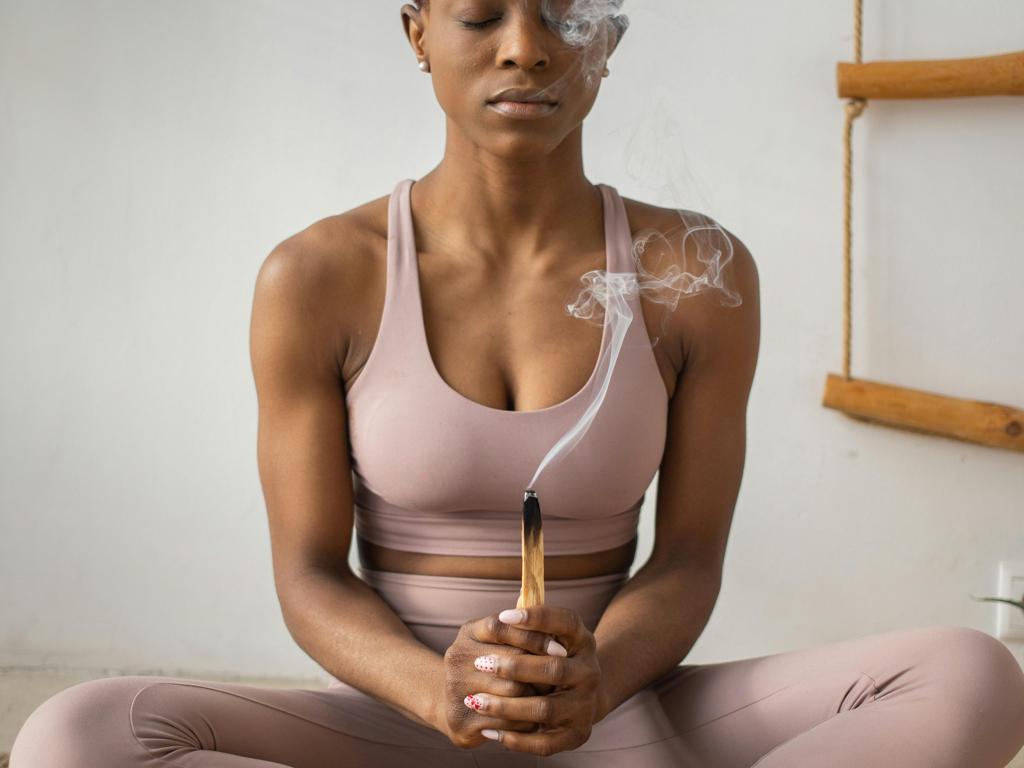
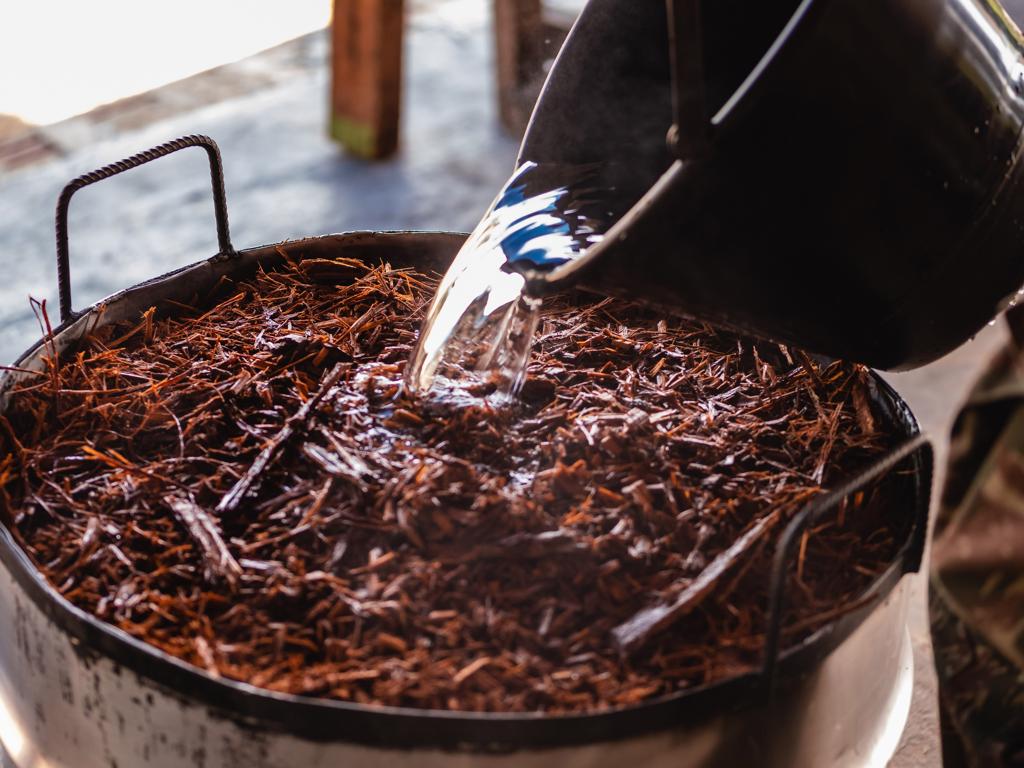
Here's something most first-timers don't realise until they're already an hour deep: how you take psilocybin mushrooms changes the trip almost as much as the dose. Same gram of cubensis, two different methods, two completely different afternoons. One person is quietly weeping at a houseplant. The other is throwing up behind a tree, wondering what went wrong. The difference usually comes down to preparation. Magic mushrooms — and the broader family of plant medicines and psychedelics that people turn to for healing, addiction recovery, or deep soul exploration — are not one-size-fits-all. The method of consumption shapes how fast the come-up hits, how intense the peak gets, how long you're out there, and (crucially) whether your stomach behaves itself. So before you crunch down on a dried cap, it's worth knowing your options. Short answer: yes. Longer answer: the chemistry is genuinely different depending on how the psilocybin gets into your bloodstream. Psilocybin itself isn't psychoactive — your body has to convert it into psilocin first, usually through stomach acid and a stop at the liver. Anything that speeds up, slows down, or sidesteps that process changes the character of the trip. Eat on an empty stomach and the come-up is fast, sometimes uncomfortably so. Eat after a big meal and the whole thing arrives gently, peaks lower, and fades sooner. Add lemon juice and you've effectively done the conversion outside your body, which means the trip hits like a freight train. None of these are right or wrong — they're tools. The question is what kind of experience you actually want. A quick word on dosing before we get into methods. Mushrooms are not something you can redose halfway through. Your serotonin receptors downregulate fast once psilocin shows up, so a second helping forty minutes in mostly just gives you a stomach ache. You get one shot to land the dose right. As a rough guide for dried cubensis: These numbers shift wildly depending on the strain, how fresh they are, your body weight, and what you ate for breakfast. When in doubt, go lower. You can always do it again next month. The most basic method and, for a lot of people, still the best. You take the mushrooms, you chew them slowly and thoroughly, you swallow. That's the whole technique. The taste is — let's be honest — not great. Earthy, slightly metallic, with a texture somewhere between cardboard and old sponge. But chewing matters. The more you break the cell walls down before swallowing, the faster your gut can extract the goods. People who bolt them down whole often wonder why the come-up took two hours. People who actually chew can feel something within twenty to thirty minutes on an empty stomach. The trip from this method tends to be the most balanced — slower to build, longer to taper, slightly more body-load than the cleaner approaches. If you're going to a forest, a beach, or anywhere you'd rather not be carrying drug paraphernalia, this is your friend. Tea is what a lot of experienced trippers default to, and it's the method most ceremonial settings prefer too. There are two big advantages. First, the taste is far more manageable — throw in some ginger, lemon, honey, whatever — and you can actually finish your dose without gagging. Second, you're not eating the chitin. Chitin is the fibrous stuff that gives mushroom cell walls their structure. It's also a major cause of the famous shroom nausea. By steeping rather than eating, you extract the psilocybin into the water and leave most of the chitin behind in the grounds. People with sensitive stomachs swear by this method. The basic process: heat water to around 70°C — no hotter, because high heat degrades psilocybin — grind your mushrooms fine, steep for about twenty minutes, strain, drink. A squeeze of lemon juice into the tea kicks off some of the psilocybin-to-psilocin conversion before you drink it, giving you a slightly faster and sharper come-up without the full intensity of a lemon tek. Onset is usually faster than chewing, peak comes on cleaner, and the overall arc tends to feel less heavy on the body. Capsules are the method of choice for two very different groups: people who genuinely cannot stand the taste, and people who microdose seriously and need to know exactly what they're taking every time. To make them, you need a coffee grinder, milligram-accurate scales (not the kitchen scale you weigh flour on — get a proper jeweller's scale), and empty gelatin or veggie capsules. Grind your dried mushrooms to a fine powder, weigh out each dose, fill the capsules. Most size 0 capsules hold roughly half a gram of mushroom powder, so a full ceremonial dose means swallowing several at once. The trade-off is onset speed. Capsules have to dissolve before anything happens, which adds maybe twenty extra minutes to the come-up. For a microdosing regimen — where you're taking 0.1 to 0.3 grams a couple of times a week and trying to function normally — that's a feature, not a bug. The trip is gentle, the body load is light, and you can carry a dose discreetly in a vitamin bottle. Mushroom chocolate is the most popular edible by a wide margin, and the pairing isn't new — the Aztecs were combining psilocybe with cacao long before anyone wrote about psychedelics. There's a folk belief that the MAO-inhibiting compounds in raw cacao potentiate the trip, though the evidence for this in normal doses is thin. What chocolate definitely does is mask the taste and make dosing more pleasant. Other edibles are possible — honey, energy balls, smoothies — but two warnings. First, heat above roughly 70°C will degrade the psilocybin. So baking your mushrooms into a brownie is mostly just wasting them. Second, any meaningful amount of food in your stomach during the trip will mute the experience. Mushroom pizza is mostly a joke; if you want a real psychedelic journey, don't eat a meal alongside it. The right way to make chocolate is to melt good-quality dark chocolate low and slow (a double boiler, off the heat once it's liquid), stir in your ground mushroom powder once the chocolate has cooled to lukewarm, then pour into moulds. Dose each piece deliberately so you know what you're eating. If you want the most intense version of the trip in the shortest amount of time, lemon tek is the way. You grind the mushrooms fine, cover them in fresh lemon juice (the citric acid does the work that your stomach would normally do), let it sit for fifteen to twenty minutes, and then take the whole shot — pulp, juice, and all. What you're doing is converting the psilocybin to psilocin before it enters your body. That means when you swallow it, the active compound is already there, ready to cross into your bloodstream. Onset is fast — sometimes fifteen minutes — and the peak hits hard and clean. Many people describe lemon-tek trips as more visual, less nauseating, and shorter overall, with the whole thing wrapped up in three to four hours instead of six. The catch: it is intense. People who handle two grams chewed will often find one and a half grams lemon-tekked is more than enough. If you're new to this method, drop your usual dose by a third and see how it goes. You can't pull back once you've drunk it. Method doesn't matter if the timing is wrong. There are situations where the kindest thing you can do for yourself is put the bag back in the drawer. Whatever method you choose, the same basics apply. Eat lightly four to six hours beforehand. Have water, fruit, and a blanket within reach. Pick music you trust — a curated playlist beats whatever shuffle throws at you. Have a sober sitter if it's your first time, or at least someone who knows what you've taken and can be reached. And give yourself the whole next day to come down properly; this isn't something to do on a Sunday evening before a Monday meeting. For people exploring psilocybin as part of something bigger — addiction recovery, depression that hasn't responded to other approaches, the kind of stuck patterns that come up when you read about master plants and wonder if they might help — a structured retreat is worth considering. The difference between tripping alone in your bedroom and sitting with experienced facilitators in a prepared container is enormous, and not just in terms of safety. Integration support afterwards is where most of the real change happens. If any of this has caught your attention and you'd like to take the exploration further, a curated selection of psilocybin and plant-medicine retreats can be browsed on our marketplace here. Whatever route you take — solo and slow, or in ceremony with others — go gently, dose conservatively, and respect what these mushrooms are actually capable of doing.
Kambo Therapy: What to Really Expect From the Frog Medicine Ceremony
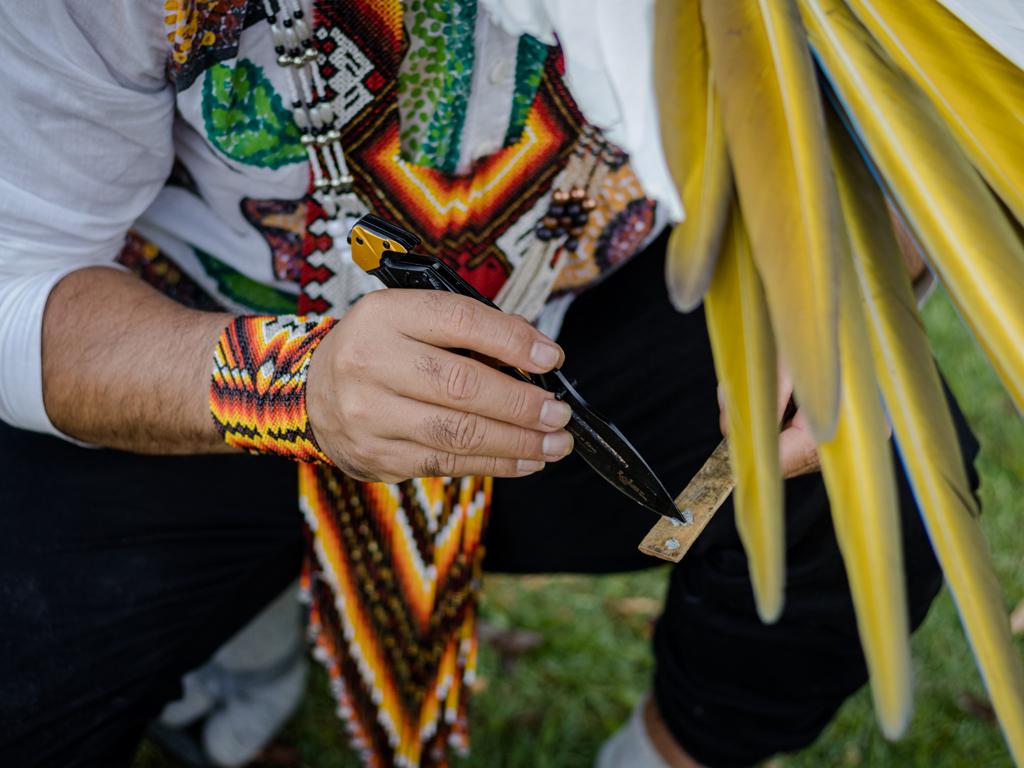
The first thing people tell you about kambo is the purge. The second thing they tell you, usually about ten minutes later, is that it was somehow worth it. Sit with anyone who's done a serious round of plant medicine work and kambo comes up — sometimes whispered, sometimes laughed about, almost always with a strange affection for an experience that, on paper, sounds horrible. So what is it actually? Kambo is the secretion of the giant monkey frog, Phyllomedusa bicolor, native to the Amazon basin. For centuries the Matsés, Katukina, Yawanawá and other indigenous peoples have used it as a hunting medicine and a cleanse — a way to clear what they call panema, a kind of heavy energetic fog that settles on a person and dulls their luck, focus, and vitality. In the last decade or so it's leaked out of the rainforest and into wellness centers, ayahuasca retreats, and urban living rooms from Berlin to Bali. Whether that's a good thing depends a lot on who's holding the stick. The mechanics are simple and a little startling. A practitioner uses a smoldering vine to burn small superficial dots — usually three to seven of them — into the top layer of skin, most often on the shoulder for men or the lower leg for women. These are called gates. The dried frog secretion is mixed with water into little dots of paste, and those dots are pressed onto the open points. The medicine enters directly through the lymphatic system rather than the stomach. Within thirty seconds, things start. A flush of heat moves up the chest and face. The heart rate climbs. Some people describe a tight band around the head, others a swelling sensation in the throat or tongue. Then comes the part everyone warns you about: the purge. You drink a couple of liters of water beforehand, and your body finds a fairly emphatic way to get rid of it. Most of the intense phase is over in fifteen to thirty minutes. The medicine is then wiped off the gates, and you rest. It's short. That's the thing nobody quite prepares you for. Compared to an ayahuasca ceremony — six, seven, sometimes nine hours of inner weather — kambo is a sprint. You're back on your feet and quietly eating soup within an hour or two. The science here is more interesting than the marketing usually lets on. Kambo secretion contains a cocktail of bioactive peptides — dermorphins, deltorphins, phyllomedusin, phyllocaerulein, sauvagine, and others. Some of these are powerful opioid agonists (dermorphin is roughly forty times stronger than morphine in lab assays). Others act on smooth muscle, blood pressure, and the gut. A few have shown interesting activity in early-stage research on infections and inflammation. What does that mean for you, on the mat? A few things seem reasonably well-established from observation: Beyond that, claims get fuzzier. You'll hear that kambo resets the immune system, kills cancer cells, treats Lyme disease, and rewrites your karma. Some of these are plausible avenues for future research. None of them are proven. A serious practitioner will tell you that honestly. A salesperson won't. This is where I want to slow down, because the casual framing kambo sometimes gets in wellness spaces underplays the real stuff. Kambo is not a gentle herbal infusion. It's a potent peptide cocktail that puts measurable strain on the cardiovascular system. There have been deaths. Not many, but enough. The biggest danger is hyponatremia — water intoxication. Because the ritual involves drinking a large volume of water and then purging, the sodium balance in the blood can crash, particularly if a participant keeps drinking more water than the practitioner advises. This can trigger seizures and, in rare cases, be fatal. A good facilitator measures water carefully and stops you from over-drinking. A careless one hands you a bucket and walks away. People who should not do kambo at all (or should only do so under medical supervision): If your practitioner doesn't take a thorough health intake before agreeing to work with you — blood pressure, medications, mental health history, the lot — walk away. That alone is the single biggest filter between a safe session and a dangerous one. Now, the part that's harder to put on a lab report. People come out of kambo describing things that sound a lot like what you hear after a psychedelic session, even though kambo isn't classically psychedelic. There's clarity. A sense of weight lifting. Sometimes a quiet emotional release — tears that arrive without a clear story attached, or a sudden recognition of something you've been carrying. Why? Honest answer: nobody fully knows. Part of it is probably the intensity of the experience itself — pushing your body through something that hard tends to shake loose whatever's sitting on the surface. Part of it may be the opioid peptides briefly flooding the system. Part of it is almost certainly the ceremonial frame — the intention, the silence, the witnessing of your own purge as something more than just being sick. People who use kambo regularly often pair it with other plant medicine work. It's common to see it offered at the start of an ayahuasca retreat as a kind of clearing, or in between ceremonies to break a stuck pattern. Some folks use it on its own as a once-or-twice-a-year reset. I've talked with a handful of people in addiction recovery who swear by it — not as a cure, but as something that gives them a clearer line of sight on the cravings and stories underneath. The evidence there is anecdotal but consistent enough to be worth noticing. This is where most of the difference between a transformative session and a regrettable one lives. The kambo space is largely unregulated, which means the floor is very low. A weekend course exists. Anyone can call themselves a practitioner. So you have to do the filtering yourself. Questions worth asking before you book: A practitioner who answers these clearly and unhurriedly is probably someone you can trust. One who deflects, gets defensive, or leans on mystical language to dodge the practical questions is not. Kambo is having a moment, and the reasons are worth naming honestly. There's a real hunger right now for embodied, non-pharmaceutical approaches to mental and physical health — partly because conventional options have failed a lot of people, partly because the broader psychedelic renaissance has made plant medicine feel legitimate again. Kambo slots into that opening. It's short, it's intense, it produces visible effects, and it has the kind of indigenous lineage that lends it weight. It also fits the rhythm of modern life in a way ayahuasca doesn't quite. You can do kambo on a Saturday morning and be functional by evening. You can fold it into a longer retreat without it eating the whole week. For people curious about plant medicine but not ready for a multi-day journey, it can feel like a manageable doorway. None of that makes it a casual thing. The ceremonies that work best are the ones held with care — small groups, an experienced practitioner, a clear container, and time afterward to rest and integrate. The ones that go badly tend to be rushed, oversold, or run by someone who learned the ritual from a YouTube video. Read more than one source. Talk to people who've done it. Get honest with yourself about your health history and whether this is the right tool for what you're actually looking for. Kambo isn't a magic bullet for depression, addiction, or trauma — and any practitioner who tells you it is should make you nervous. What it can be, in the right hands, is one useful instrument in a longer process of paying attention to your body and your patterns. If something here resonates and you'd like to explore it further, a selection of vetted kambo and plant-medicine retreats can be browsed on our marketplace here. Take your time choosing. The right ceremony, with the right people, is worth waiting for.
Peyote Demystified: Effects, History, and What a Ceremony Actually Looks Like
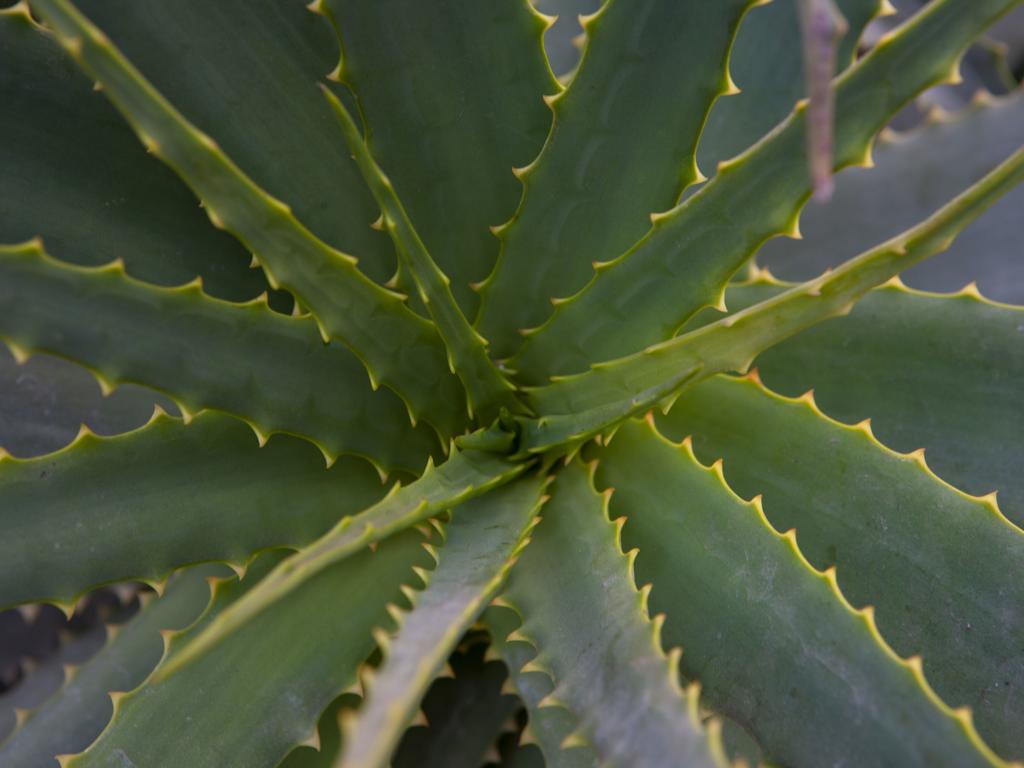
Peyote is one of those plant medicines people whisper about but rarely understand. It’s older than most religions, smaller than your palm, and contains a compound — mescaline — that has shaped indigenous spiritual life across the deserts of North America for thousands of years. If you’ve been circling the broader world of psychedelics and master plants, peyote keeps surfacing as a name that carries weight. Let’s actually unpack what it is, where it comes from, and what you should know before considering a ceremony. This isn’t a sales pitch and it isn’t a romantic travelogue. It’s the kind of overview I wish someone had handed me years ago, when I first started asking real questions about plant medicine for addiction, depression, and the stuck patterns that bring most people to these traditions in the first place. Peyote (Lophophora williamsii) is a small, spineless, button-shaped cactus that grows in the limestone soils of northern Mexico and a thin slice of southwestern Texas. It looks unremarkable — squat, blue-green, sometimes crowned with a pale pink flower. You could walk past one in the Chihuahuan Desert and not notice it. That modesty is part of why traditional cultures regard it as something hidden, something you have to be ready to see. Its active compound is mescaline, a phenethylamine psychedelic that also occurs in the San Pedro and Peruvian Torch cacti. Fresh peyote contains roughly 0.4% mescaline; dried buttons concentrate that figure to between 3 and 6 percent. The cactus also contains a soup of other alkaloids, which is why people who’ve taken both peyote and pure mescaline often report the two experiences feel meaningfully different — peyote tends to be earthier, heavier, more body-based. One thing worth sitting with: peyote grows astonishingly slowly. A wild plant can take over a decade to reach maturity. This single fact reshapes everything else about how it should be approached — ethically, ecologically, and ceremonially. Archaeological finds along the Rio Grande place peyote use as far back as 3,700 BC. That is not a typo. Humans have been in relationship with this cactus for nearly six thousand years. The Aztecs called it peyōtl — roughly, “the thing that glimmers” — and treated it as a divine messenger, a way to speak with the gods. Spanish missionaries arriving in the 1500s documented its use with a mixture of fascination and alarm, and predictably tried to suppress it. Western science came to peyote late and clumsily. A Dallas physician published an account of his own self-experimentation in 1887. A few years later, the Comanche chief Quanah Parker sent a large supply of dried buttons to an ethnologist at the Smithsonian, who passed samples to William James and other early American psychologists. The cactus was formally classified in 1894, and its first scientific trial appeared in a medical journal the following year. None of that, of course, is where the real story lives. The real story lives with the Huichol (Wixáritari) of the Sierra Madre Occidental, who still make an annual pilgrimage of roughly 300 miles to Wirikuta, the sacred desert where the peyote grows. And with the members of the Native American Church, who carry an unbroken ceremonial relationship with this plant into the present day. The crown of the cactus — the “button” — is sliced off and dried. From there it’s either chewed (intensely bitter, often followed by nausea) or simmered into a tea. The nausea is not a bug; in many traditions it’s considered part of the purification. The plant is asking something of you before it shows you anything. Among the Huichol, peyote ceremonies involve singing, weeping, prayer, and communication with ancestors and deities. The plant isn’t recreational and isn’t framed as therapy in the clinical sense — it’s a sacrament, woven into a worldview where the visible and invisible worlds are constantly in conversation. The Native American Church (NAC), which formed in the late 19th century, blends indigenous spirituality with Christian elements in varying proportions depending on the branch. Their all-night ceremonies take place in a tipi, led by a peyote “chief,” and include prayer, song, contemplation, and the sacramental eating of the buttons. For many members, peyote is the medium through which the Creator becomes audible. Peyote is a long one. Effects typically last between 8 and 16 hours, putting it in the same endurance category as LSD or ibogaine. That length is part of why ceremonies run all night — the medicine sets its own clock. Onset is gradual: an hour or so of building physical heaviness, often with that famous wave of nausea, then the perceptual shifts begin. Common physical effects include: Cognitive and emotional effects can be substantial: enhanced creativity, deep introspection, an altered sense of self, vivid memory work, music that suddenly feels structural rather than decorative, and — for some — moments described as self-realization. The perceptual layer brings visual patterning, depth and color shifts, and at higher doses, full visionary content. As with every psychedelic, dose, set, and setting shape almost everything. A button taken in someone’s apartment is not the same medicine as a button taken in a tipi with a fire and a song carrier and people who’ve been holding ceremony for thirty years. Legal status is layered. In the United States, peyote is a Schedule I substance — except for documented members of the Native American Church, who are protected under the American Indian Religious Freedom Act amendments. In Mexico, peyote is protected as part of indigenous cultural heritage, and harvesting outside traditional contexts is restricted. In Canada, peyote occupies a strange middle ground: mescaline is controlled, but the cactus itself is exempt. The ethical question is louder than the legal one. Wild peyote populations are in trouble. Overharvesting, illegal poaching, and habitat loss in the Texas-Mexico borderlands have pushed the plant into ecological stress. Many indigenous leaders have publicly asked non-Native seekers to choose other mescaline-containing cacti — San Pedro and Peruvian Torch, both of which grow much faster and are cultivated sustainably in South America — rather than putting more pressure on a sacred plant that takes ten years to grow back. That’s a request worth honoring. If your curiosity is about mescaline as a master plant, San Pedro ceremonies in the Andes offer that doorway without participating in the decline of a sacred ecosystem. Here’s the honest version. People come to plant medicine for real reasons — addiction, depression, grief, trauma, a feeling of being unmoored from their own life. Mescaline-containing cacti have a long track record of helping with exactly those struggles, but they aren’t a vending machine. The experience is long, physically demanding, and emotionally unpredictable. Preparation matters. Integration matters more. A few things to weigh if you’re seriously considering it: Peyote isn’t a shortcut, and it isn’t a souvenir. It’s a plant a lot of people have given their lives to protect. Approached with that kind of seriousness, mescaline medicines can be genuinely transformative for the patterns that brought you to this article in the first place. If you want to explore this path further, a range of San Pedro and mescaline-tradition retreats — most of them sustainable, ethically run, and welcoming to non-Native seekers — can be browsed on our marketplace here. Take your time choosing. The plant has been waiting six thousand years; another week of careful research won’t hurt.
Craving More Stories?
Join our ShopAyahuascaRetreats newsletter for the latest updates on thrilling
destinations and inspirational tales, delivered straight to your inbox!
We value your privacy. Your email address will never be shared or published.
Lemon Tek Explained: Faster, Sharper Magic Mushroom Trips
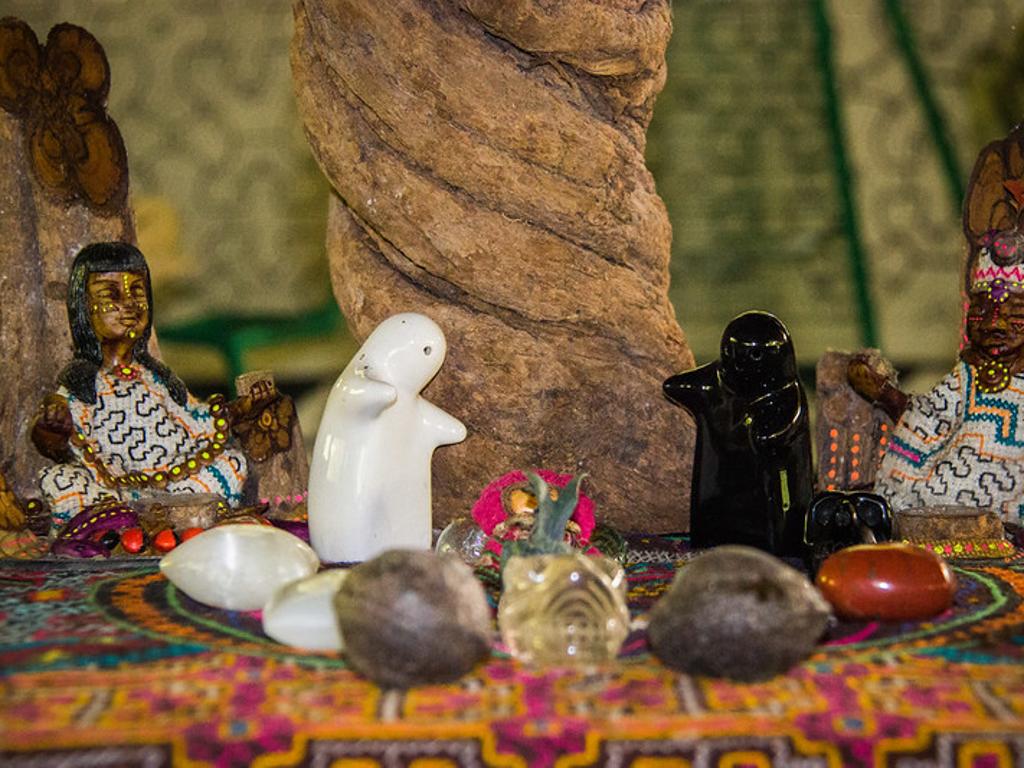
Ask anyone who’s spent time around psilocybin and they’ll eventually mention the lemon. It’s one of those folk techniques that sounds suspiciously like kitchen magic — a citrus fruit, some dried mushrooms, a small glass — and yet people swear by it. The lemon tek isn’t a substance. It’s a preparation method. And depending on who you ask, it’s either a clever hack for a smoother psychedelic experience or a way to get yourself flung into the deep end before you’ve finished tasting the tea. Either way, if you’re researching psilocybin — for curiosity, for healing work, for a retreat you’re considering — you should understand what lemon tekking actually does. Because the method changes how the trip arrives, how long it lasts, and how it lands in your body. That matters. Lemon tek is the practice of soaking ground magic mushrooms or magic truffles in fresh lemon (or lime) juice for ten to twenty minutes before drinking the whole mixture down. That’s the entire technique. No special tools, no exotic ingredients, no shamanic incantation required — though some people do mutter at the cup, which is fair. The point is to start converting psilocybin into psilocin before the mixture enters your stomach. Psilocybin is the compound your body normally has to break down first; psilocin is the active form your brain actually responds to. Citrus juice is acidic enough to begin that conversion outside the body, essentially doing a little of the digestive work in advance. The result, for most people, is a faster, sharper onset and a slightly shorter overall trip. Some practitioners have used lemon or lime with mushrooms for decades — it’s common in parts of Mexico where psilocybin mushrooms grow wild. The internet gave it a name and a method, but the underlying intuition isn’t new. Here’s the chemistry without the chemistry lecture. Inside fresh mushrooms or truffles, psilocybin sits there as a relatively inert molecule. Once you eat them whole, your stomach acid and enzymes slowly convert that psilocybin into psilocin over the course of thirty to sixty minutes. That gradual conversion is why a normal mushroom trip ramps up slowly — sometimes painfully slowly, if you’re anxious and watching the clock. Lemon juice has a pH of around 2 to 3, which is actually similar to stomach acid. When you grind your mushrooms finely and submerge them in citrus, the acid starts that conversion process right there in the glass. By the time you drink it, a meaningful chunk of the psilocybin is already psilocin, which absorbs faster across your stomach lining and gut. The practical effects most people report: That last one is worth a footnote. Mushroom nausea usually comes from chitin, the tough fibre in fungal cell walls. Lemon tekking breaks the mushrooms down enough that some of that fibre is left behind in the strainer (if you choose to strain), which can be gentler on the stomach. Or it can be worse — sour acidic citrus on an empty stomach isn’t universally pleasant. Your mileage will vary. If you’re going to do this, do it properly. The method is forgiving but a few details matter. Then sit down somewhere comfortable, because the onset is quick. Have water nearby. Don’t plan to be anywhere in the next hour. Neither method is objectively better. They’re different tools for different situations. Eat them raw or in tea if: you’re new to psilocybin, you want a gentler ramp-up, you’re working with a sitter who needs time to gauge how you’re doing, or you have a long evening with nothing to do. The slow onset gives you time to settle into your set and setting. Lemon tek if: you’re experienced enough to handle a fast-arriving peak, you’ve had bad nausea before, you want a more compressed window, or you’re working with truffles that have lost some potency in storage (the acid extraction recovers more of the available compound). One honest caveat — lemon tek doesn’t conjure new psilocybin out of nothing. If your mushrooms are weak, the tek won’t fix that. It just makes the available compound hit faster and harder. Some people interpret “hits harder” as “stronger” when really the same total content is just delivered in a shorter window. A 2-gram lemon tek and a 2-gram raw dose contain the same psilocybin. The curve is different. The total area under the curve is similar. Faster onset is not a feature for everyone. A psilocybin trip that arrives in fifteen minutes leaves less time to back out, breathe through doubt, or move to a different room if you decide you’d rather be on the couch than in the kitchen. For first-timers, that compressed window can feel ambushing. The peak comes before you’ve mentally arrived. If you’re considering psilocybin for genuine therapeutic work — addiction, depression, trauma, the kind of stuck patterns that brought you to plant medicine in the first place — the preparation method matters less than the context. A retreat with experienced facilitators, proper screening, and integration support will use whatever delivery method suits the protocol. Many psilocybin retreats in the Netherlands serve fresh truffles ground into a smoothie or honey, which is closer to a mild lemon tek than to raw eating. Others use traditional dried mushroom preparations. Both work. What you cannot lemon-tek your way around: medication interactions (SSRIs, MAOIs, lithium especially), pre-existing psychotic conditions in yourself or close family, cardiovascular issues, or the fact that an unprepared mind in a chaotic setting will have a hard time no matter how the medicine is prepared. If you’re reading about lemon tek because you’re curious about psilocybin generally, that curiosity is worth honouring — but the method is the last 5% of the equation. Intention, setting, and aftercare are the first 95%. People sometimes ask whether a lemon-tek trip “feels different” — not just faster, but qualitatively different. The honest answer is yes and no. The compounds are the same. Your brain is the same. But the speed of onset changes the emotional shape of the experience. A slow climb gives your psyche time to negotiate. A fast climb skips the negotiation entirely. Whether that’s a gift or a problem depends on what you’re bringing in with you. If you’ve only ever eaten dried caps and you try a properly prepared lemon tek at the same dose, expect something that feels more like a small leap than a long walk. Not necessarily harder. Just more sudden. For readers who want to explore this work in a supported, ceremonial setting rather than on a kitchen floor, a range of psilocybin and plant-medicine retreats can be browsed on our marketplace here. Whatever path you take, take it with people who know what they’re doing and give yourself time on the other side to make sense of what came up.
How Psychedelics Change the Brain: What Psilocybin, LSD, and Ketamine Actually Do to Consciousness
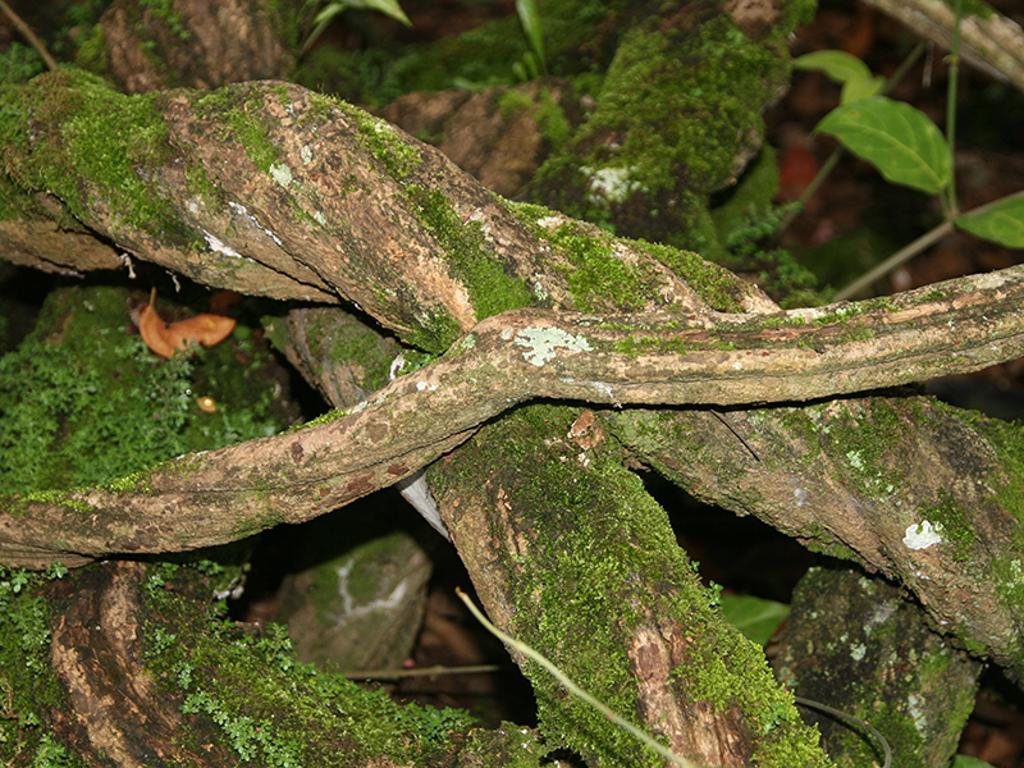
Something strange happens when researchers watch a brain on psychedelics. The patterns of activity get noisier, less predictable, harder to pin down — and yet the person inside that brain often reports an experience that feels more vivid, more meaningful, and more real than anything they encounter in ordinary waking life. That paradox sits at the centre of one of the more interesting findings in recent psychedelic neuroscience, and it has real implications for anyone considering ayahuasca, psilocybin, or another plant medicine retreat to work through addiction, depression, or trauma. The short version: when scientists at the University of Sussex re-analysed brain scans of healthy volunteers who had taken psilocybin, LSD, or ketamine, they found something they hadn't quite seen before. Brain activity during the psychedelic state was measurably more diverse, more chaotic, less integrated than during regular wakefulness. By a specific mathematical measure called global signal diversity, the dosed brains were operating at a level above normal conscious awareness — not below it. That finding lands differently depending on where you're standing. For neuroscientists, it's a clue about what consciousness actually is. For someone weighing a plant medicine retreat for the first time, it's something else — a small piece of evidence that the experience people describe isn't just imagination running loose. The brain really is doing something different. The work was led by Anil Seth at the Sackler Centre for Consciousness Science, with Robin Carhart-Harris from Imperial College London — one of the more recognisable names in modern psychedelic research — listed as a co-author. The team used magneto-encephalography, or MEG, which reads the faint magnetic fields produced by electrical activity at the brain's surface. It's a tool built for catching how brain activity shifts from one moment to the next, even if it's less precise about exactly where in the brain things are happening. What they were looking for was a specific signature: how varied, how unpredictable, how rich the moment-to-moment electrical signals were. In a sleeping brain, that signal is relatively orderly and easy to predict. In a normally awake brain, it's more diverse. In a brain on psychedelics, it was more diverse still — by a clear margin, across all three substances tested. The researchers also noticed something worth pausing on. The intensity of the unusual experiences volunteers reported — feelings of floating, time bending, the self loosening at the edges, sounds bleeding into colours — tracked with the degree of neural diversity. The stranger the brain signal looked, the stranger the experience felt. That correlation matters, because it suggests these subjective reports aren't disconnected from anything physical. They map onto measurable changes. Here's where things get philosophically interesting. The logic the Sussex team used goes like this: if neural diversity is higher in waking people than in sleeping people, and if we accept that waking people are more conscious than sleeping ones, then a brain showing even greater diversity might reasonably be described as occupying an even higher level of consciousness. Hence the language of "heightened" awareness. It's a tidy argument, but worth holding with a light grip. Diversity of brain signal is one measure of conscious activity, not a complete definition of it. Carhart-Harris's earlier work framed the same kind of data in slightly different language — as evidence of greater entropy, or disorder, in brain patterns. Whether you call it heightened, expanded, or simply altered, what the science is converging on is the idea that psychedelics push the brain into a state it doesn't normally occupy. That state has features ordinary waking consciousness lacks. For anyone who has sat in ceremony, none of this will feel surprising. The experience of an ayahuasca night, a strong psilocybin journey, or a serious ibogaine session is precisely the experience of the mind moving through territory it doesn't usually visit. The neuroscience is, in a sense, late to the party. But it matters, because it gives clinicians and researchers a vocabulary to describe what's happening — and that vocabulary is what's slowly opening doors to legal therapeutic use. Plant medicine and psychedelics are increasingly being studied for depression, PTSD, end-of-life anxiety, and various forms of addiction. The mechanism by which they help — when they help — is still being argued over. One leading theory holds that the increased neural diversity during a session lets the brain temporarily escape rigid, well-worn patterns. Depression, addiction, and trauma all involve a brain stuck in a groove. A session loosens that groove. Integration afterwards is what determines whether the groove re-forms or whether something genuinely shifts. This is roughly what experienced facilitators have been describing for years in non-scientific language. The medicine cracks the shell. The work afterwards is what decides whether anything actually changes. If you're considering a retreat for addiction recovery or a stuck depression, this framing is worth carrying with you: It's tempting to take a finding like this and run with it. Brain scans look authoritative. Words like "heightened consciousness" feel like vindication. But the honest position is more cautious. The study involved healthy volunteers in a lab setting, not people working through trauma or addiction in ceremony. The MEG data shows that something measurable is happening; it doesn't yet tell us which specific brain changes produce which specific therapeutic effects. The researchers themselves flagged that as the next question to investigate. So if you're reading this while weighing whether to book a retreat, here's what the science currently supports and what it doesn't. It supports the claim that psychedelics put the brain into a genuinely different state, not just an exaggerated version of normal. It supports the idea that this state correlates with the unusual experiences people report. It does not yet support specific promises about healing outcomes for specific conditions, though the broader clinical research on psilocybin for depression and ibogaine for opioid dependence is more developed and worth reading on its own terms. Knowing that a session involves real, measurable changes in brain activity is useful when you're evaluating where to go. It raises the stakes on a few things: None of this is meant to either sell you on a retreat or talk you out of one. It's just the honest version of what the research and the lived experience are pointing toward. What's happening in psychedelic science right now is a slow, careful re-evaluation of substances that were dismissed for decades. The findings on neural diversity are one small piece of a much larger conversation that includes clinical trials, indigenous traditions that have known these plants for centuries, and the personal accounts of thousands of people who have used them to address something painful in their lives. The picture is getting clearer, but it's still being painted. If you're at the early-research stage of considering plant medicine, give yourself time. Read widely. Talk to people who have actually sat with the medicine, not just those who write about it. Pay attention to the cautious voices as much as the enthusiastic ones — both have something useful to say. For readers who want to take this further, a range of vetted ayahuasca and psychedelic retreats can be browsed on our marketplace here. Whatever you decide, the most important thing is that the decision is yours, made with clear eyes and a real sense of what you're walking into. The brain on psychedelics may be doing something extraordinary. The person inside that brain still has to do the work.
Psilocybin Therapy: How Magic Mushrooms Are Reshaping Mental Health Treatment
Something strange is happening in psychiatry. After half a century of drug-war silence, a compound from a humble brown mushroom is being studied at Johns Hopkins, NYU, Imperial College London, and a growing list of medical schools — and the results keep landing harder than anyone expected. Psilocybin therapy is no longer fringe. It is, increasingly, the most talked-about development in mental health treatment in a generation. If you are reading this because depression, addiction, or a long shadow of trauma has worn you down, you probably want straight answers. Not lifestyle copy. Not promises. Just: what is this, does it work, how is it actually done, and how do you decide if it's worth pursuing? Let's go through it honestly. Psilocybin is the main psychoactive compound in what most people call magic mushrooms — over 200 species in the Psilocybe family contain it. The compound itself isn't what gets you high. Your body converts psilocybin into psilocin, which then latches onto serotonin receptors in the brain and produces the experience people describe as a trip. Here's where things get interesting, though. In a clinical setting, you don't eat a handful of dried mushrooms. Researchers use synthetic, pharmaceutical-grade psilocybin — precisely dosed, lab-produced, free of the other minor alkaloids found in the whole mushroom. The reason is simple: reproducibility. If a 25mg dose worked for one participant, the next participant needs to get exactly the same thing. The therapy part matters as much as the molecule. Psilocybin therapy isn't a pill you swallow and walk out the door with. It's a structured arc — usually preparation, the dosing session itself, and integration afterward. Skip any of those three and you're not really doing psilocybin therapy. You're just taking mushrooms. Most clinical trials use either one or two dosing sessions, with a low dose (around 10mg) and a higher dose (around 25mg) that's strong enough to occasion a full mystical experience. That higher dose is where most of the therapeutic action lives. The evidence base is no longer a couple of promising case studies. There are now multiple Phase 2 trials, growing Phase 3 data, and a handful of FDA breakthrough therapy designations to back this up. Here's what the research is showing. This is the biggest one. Roughly a third of people with major depression don't respond meaningfully to SSRIs or talk therapy. For that group, psilocybin has produced response rates that frankly surprised the researchers running the studies. The FDA granted psilocybin therapy Breakthrough Therapy status for treatment-resistant depression, which is regulatory shorthand for: this looks substantially better than what's currently available, fast-track it. Imperial College London's psilocybin-for-depression trials have shown sustained reductions in depressive symptoms weeks and even months after just two dosing sessions. That's a wildly different pharmacological profile from antidepressants, which you have to take daily and which often stop working over time. A 2016 study at NYU and Johns Hopkins gave a single high-dose psilocybin session to patients with life-threatening cancer who were dealing with what's clinically called existential distress. The results held up at six-month follow-ups. Roughly 80% of participants showed clinically significant reductions in depression and death anxiety. Many described the experience as among the most meaningful of their lives — ranked alongside the birth of a child or the death of a parent. Smoking, alcohol use disorder, and to a lesser extent stimulant addiction are all being studied. A small Johns Hopkins pilot found that 80% of long-term smokers were tobacco-free six months after psilocybin-assisted therapy — a number that dwarfs the success rates of patches, gum, or varenicline. Alcohol dependence trials have shown similar promise. The mechanism seems less about the drug itself and more about people's relationship to their compulsions shifting after a single profound experience. Early data, smaller samples, but the trend lines look consistent. Researchers are mapping psilocybin's effects across a range of conditions where rigid mental patterns are the problem — and rigid patterns are exactly what psilocybin appears to loosen. Honest answer: nobody knows for certain. But there are four mechanisms that show up again and again in the literature, and they probably work together. In depressed brains, the tiny branches of neurons called dendrites tend to shrivel in regions like the hippocampus and prefrontal cortex — areas that govern memory, mood, and emotional regulation. Animal studies suggest psilocybin promotes the regrowth of these connections. Some researchers describe psychedelics as fertilizer for the brain. The window of heightened plasticity may last weeks after a single dose, which is one reason integration matters so much. You're rewiring during that window whether you mean to or not. The researcher Robin Carhart-Harris proposed that depression is, in part, a state of low brain entropy — meaning brain activity gets stuck in predictable, narrow grooves. Rumination. Self-criticism. The same loop, over and over. Psilocybin appears to dramatically increase entropy, causing regions that don't normally communicate to start talking to each other. The brain becomes briefly, gloriously chaotic. When it settles, it often settles into a less rigid configuration. Here's the part that makes some psychiatrists uncomfortable. Across study after study, the depth of the mystical experience — feelings of unity, ego dissolution, profound meaning, encounter with something larger — predicts the therapeutic outcome better than the dose itself. People who have a full-blown mystical experience get better. People who take the same dose and don't, often don't. That's a strange thing for medicine to grapple with, but the data keeps saying it. Antidepressants often blunt emotion — patients describe feeling flat, neither sad nor happy. Psilocybin appears to do the opposite. Participants report being able to feel grief, joy, love, and fear again with full intensity. For people who've spent years emotionally numb, that aliveness itself is part of the healing. It's worth saying clearly: SSRIs help a lot of people, and they should not be dismissed. But the differences are real. It depends entirely on where you are. In the United States, psilocybin remains federally Schedule I, but Oregon and Colorado have legalized supervised adult use through state programs, and several cities have decriminalized possession. Canada permits access through its Special Access Program for certain patients. The Netherlands has a workaround through psilocybin truffles, which weren't included in their mushroom ban. Jamaica never criminalized psilocybin in the first place. Australia approved authorized psychiatrist-led treatment in 2023. For people who can't wait for their home country's regulatory wheels to turn, legal psilocybin retreats in the Netherlands, Jamaica, Mexico, and a few other jurisdictions have become the practical path. The quality varies enormously, which brings us to the harder question. This is where the romance has to meet reality. A good retreat is run by people who treat psilocybin with the seriousness clinical researchers do. A bad one treats it like a weekend amenity. The difference matters more than the price tag suggests. Things worth asking before you book: Cost ranges wildly. Expect anywhere from $1,500 for a basic three-day retreat to $6,000+ for week-long programs with extensive integration. Cheaper isn't always worse and expensive isn't always better, but rock-bottom prices usually mean corners are being cut where it matters most. It won't fix your life in a weekend. It won't replace the slow work of changing habits, leaving the wrong relationship, or building a healthier daily structure. Plenty of people have profound experiences and then drift back into the same patterns within months because they skipped the integration work. The medicine cracks the door open. Walking through it is still your job. And it isn't right for everyone. If you have a personal or family history of schizophrenia or bipolar disorder, most clinicians will tell you to avoid it. If you're on certain medications — particularly lithium or some antidepressants — the combination can be dangerous or simply blunt the experience entirely. A good facilitator will turn you away when appropriate. That's a feature, not a bug. For readers ready to explore this further, a range of vetted psilocybin retreats can be browsed on our marketplace here. Take your time with the decision — the right setting matters more than getting there fast.
Microdosing Psilocybin and Self-Discovery: A Personal Look at Plant Medicine and Identity
There's a particular kind of stuck that doesn't announce itself. You wake up, do the work, answer the emails, fall asleep — and somewhere along the way you stop singing in the kitchen. You stop dressing up on a Saturday. You stop noticing the light. That's the kind of stuck a lot of people describe before they start looking into psychedelics, and it's the kind of stuck that microdosing psilocybin is increasingly being explored to address. I want to walk through what microdosing actually looks like in real life, what it tends to shift, and what it doesn't. Plant medicine isn't a magic switch. But for the right person, in the right context, microdosing can quietly crack open parts of the self that had been boarded up — creativity, intimacy, gender expression, the willingness to be playful. This is a piece for the curious, the skeptical, and the people who suspect there might be more to themselves than the version currently going through the motions. A microdose is roughly a tenth to a third of a gram of dried psilocybin mushrooms — sub-perceptual, meaning you're not supposed to feel high. No fractals on the ceiling. No melting walls. The whole point is that you can get on with your Tuesday. Most protocols suggest dosing every third day, or following one of the schedules popularized by researchers like James Fadiman, to avoid building tolerance. Here's the thing nobody tells you in the breathless online articles: even at sub-perceptual doses, something is happening. Subtle, but real. Colors look a half-shade more vivid. Music sits differently. Conversations have more elasticity. You notice your own patterns — the catastrophizing, the looping anxiety, the way you flinch from your own creative work — and the noticing itself starts to loosen them. This is why microdosing has slipped into the broader conversation about plant medicine for addiction, depression, and what some people call soul exploration. It's the gentlest end of the psychedelic spectrum, and for many people it's the doorway. Nobody starts microdosing because everything's great. People come to psychedelics because the regular toolkit stopped working. Therapy helped to a point. Meditation helped to a point. SSRIs helped, or didn't, or helped in a way that flattened everything including the good. And underneath it all there's a sense of being disconnected — from the work, from the partner, from the version of yourself who used to be more curious and less guarded. That's the doorway most people walk through. Not the desire to get high. The desire to feel something again. It's worth being honest about the fears too. The first time you seriously consider psilocybin, your brain throws up the cartoon images: you'll cook your synapses, you'll become unrecognizable, you'll quit your job and move into a yurt. None of that is what microdosing looks like. But the fears are normal, and they're worth sitting with rather than dismissing. Most people who microdose responsibly report a similar arc. The first dose? Often almost nothing. A faint warmth, maybe a slightly better mood. You wonder if you got ripped off. Then around the end of week one, something quiet happens. You catch yourself noticing the rain on the window. You write a sentence that surprises you. You laugh at something your partner said that, last month, you'd have grunted at. By week two, the journal is filling up. Ideas you'd shelved come back. Conversations have more space in them. The shifts people most commonly describe with consistent, careful microdosing include: That last one is where the story tends to get interesting. Long-term relationships develop choreography. You know how the other person kisses, what they like, where the evening is headed. That's lovely until it isn't — until the choreography starts to feel like a routine and the routine starts to feel like distance. People who microdose with their partner often describe a recalibration here. Not a fireworks-and-strangers experience, but a kind of fresh attention. You slow down. You actually look at each other. You kiss for an hour because there's nowhere else you'd rather be. Sex becomes less goal-oriented and more like a conversation that happens to involve bodies. There's nothing magical about the chemistry — psilocybin isn't an aphrodisiac in any clinical sense. What seems to happen is that the usual mental clutter (work emails, the running to-do list, the quiet self-judgment) gets turned down enough that presence has room to show up. And presence, it turns out, is the actual ingredient most couples are missing. Here's where microdosing gets philosophically interesting, and where the personal essays on this topic almost all land in similar territory: a softening of identity. Psychedelics, even at small doses, tend to make rigid categories feel less rigid. The way you've always dressed. The way you've always carried yourself. The script you inherited about who you are and what version of you is allowed in public. None of it disappears, but it stops feeling load-bearing. You realize you've been performing some of it without ever having chosen it. For some people this shows up as creative reinvention — a new project, a new aesthetic, a willingness to make work that's weirder than they used to allow. For others it surfaces in gender expression: trying on clothes, makeup, ways of moving that the old self-concept would have ruled out. For others still it's about reconnecting with playfulness — the part of you that used to dress up for no reason, dance in the kitchen, send absurd voice notes. None of this requires changing pronouns or coming out or making any pronouncement. It's quieter than that. It's the discovery that the self you've been defending is more porous than you thought, and that letting it be porous is a relief. I'd be doing you a disservice to write all this without the caveats. Microdosing isn't safe for everyone. Specifically: And one more honest note: the research on microdosing is still young. Some studies suggest the effects are largely placebo. Others find genuine, measurable shifts in mood and cognition. The truth is probably that it works better for some people than others, and that set, setting, and intention matter enormously — even at sub-perceptual doses. Microdosing tends to be a beginning, not an ending. People who find it useful often go on to explore other parts of the psychedelic landscape — full psilocybin ceremonies, ayahuasca retreats in the Amazon, San Pedro in the Andes, ibogaine for those wrestling with addiction. The master plants, as traditional practitioners call them, work on a different scale than a third of a gram at breakfast. But the openness microdosing cultivates is often what makes the bigger work accessible. If you're already thinking about a retreat — a real one, with facilitators and ceremony and integration support — microdosing can be a way to gently test your own relationship with these substances first. To see how your mind responds. To notice what comes up when the usual armor thins out. It's a low-stakes way to ask yourself whether deeper plant medicine work might be worth investigating. For readers who'd like to look further, a curated range of psilocybin and plant-medicine retreats can be browsed on our marketplace here. Whatever you decide, take the decision seriously, go slowly, and trust the parts of yourself that are quietly asking to be heard.
Set and Setting: Why They Matter More Than the Substance Itself
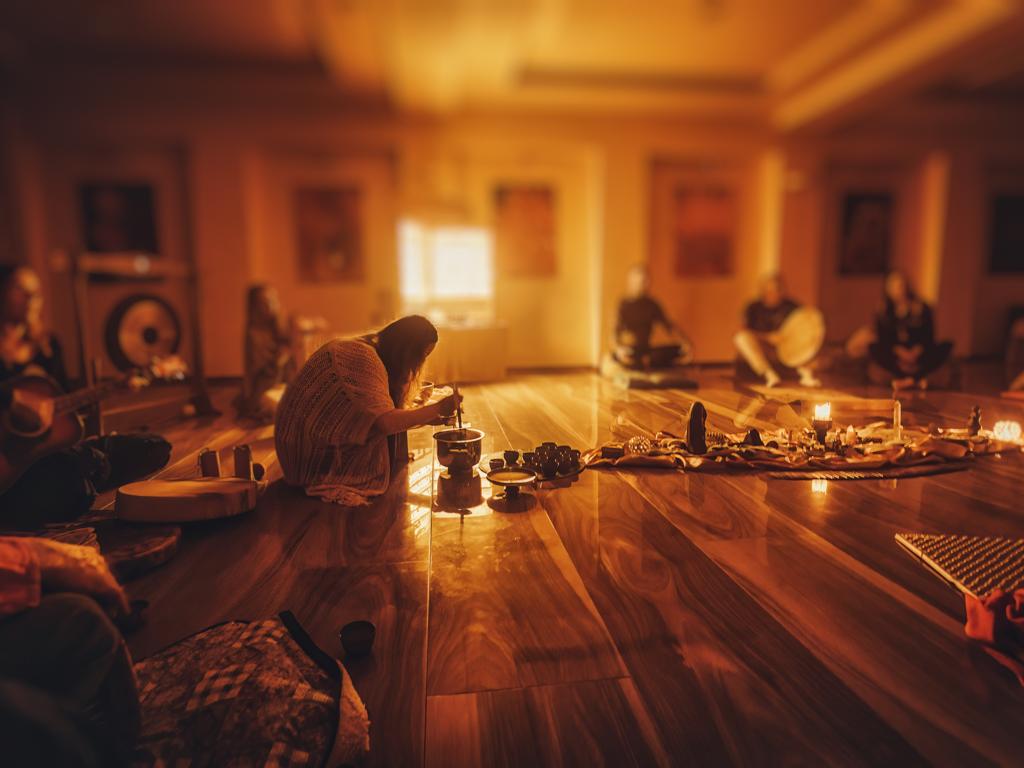
Here's something almost every seasoned facilitator will tell you, usually with a slightly weary look: the molecule is the smallest part of the equation. Whether you're considering ayahuasca, psilocybin, San Pedro, or any other psychedelic, the substance is essentially a key — what door it opens, and what's waiting in the room, depends on two unglamorous variables that get talked about constantly and understood rarely. Set and setting. If you're researching a retreat right now, weighing the cost and the risk and whether this is the year you finally do it, this is the concept to internalize before you book anything. Get set and setting right and the experience tends to land somewhere between profound and bearable. Get them wrong and you can turn a sacrament into a small disaster. The phrase was coined in the 1960s by researchers trying to explain why the same dose of the same compound could send one person into something like a mystical encounter and the next person into hours of paranoid hell. The substance wasn't the variable. The person was. The room was. Set is short for mindset — everything you bring with you into the experience. Your mood that morning. Your unresolved grief. Your expectations, your fears, the argument with your partner you haven't quite finished. Your beliefs about what plant medicine is and what it's supposed to do. The story you've been telling yourself about why you're here. Setting is everything outside your skull. The physical space — a jungle maloca, a candlelit room, a clinical trial unit. The people present. The sounds. The smells. Whether you feel safe. Whether the facilitator knows what they're doing. Whether the person sitting next to you is sobbing, snoring, or radiating quiet calm. Most drugs do roughly the same thing to most people. A glass of wine relaxes you whether you drink it at a wedding or in a parking lot. Psychedelics don't work that way. They amplify. They take whatever is already present in your mind and the room and turn the volume up — sometimes way up. This is why ayahuasca can feel like meeting your grandmother in one ceremony and like being run over by a freight train in the next, with no change in dose. The brew didn't change. You did. The room did. The night did. For people considering plant medicine for addiction, depression, or trauma — which, statistically, is most of you reading this — set and setting are the difference between a session that helps you metabolize something painful and one that re-traumatizes you. That is not an exaggeration. Bad set and setting can leave people worse off than they started, and the wellness industry doesn't love talking about that. Preparation isn't a vibe. It's a list of unglamorous, concrete things you do in the weeks before ceremony. Skip them and you're rolling dice. One more thing. If you're in active crisis — suicidal, psychotic, in the middle of a divorce that has not yet been processed — a psychedelic retreat is probably not the right week. The work that plant medicine does best is on material you've already started looking at, not material you're actively running from. You can usually tell within fifteen minutes of arriving whether a retreat takes setting seriously. Some signs the place knows what it's doing: Red flags, on the other hand, are loud once you know to look. A facilitator who claims they can cure anything. Pricing that's either suspiciously cheap or absurdly expensive without explanation. No medical screening. Mixing multiple substances on the same night without clear reason. Sexual weirdness, ever, in any form. Pressure to drink more than you want to. A facilitator with no apparent lineage or training — and no, "I've done ayahuasca a hundred times" is not training. Set and setting don't end when the ceremony does. The week and the month after matter as much as the night itself. This is where people who paid five thousand dollars for a retreat and then went straight back to their old life often feel like the whole thing was a beautiful dream that evaporated. Integration is the practice of taking what surfaced and slowly weaving it into how you actually live. It usually involves talking to someone — an integration coach, a therapist familiar with psychedelic work, a peer group. It involves journaling, walks, fewer demands on your nervous system for a while. It sometimes involves making changes you don't want to make: a relationship that needs ending, a job that needs leaving, a habit that needs facing. The plant doesn't do the work for you. It shows you the room. You still have to walk through it. If you've read this far, you're probably more serious than the average curious browser, which means you should treat the choice of where to drink — or to eat mushrooms, or to fast on iboga — as the most important decision in the whole process. The substance matters. The facilitators matter more. The container matters most. Ask questions before you pay. Ask about lineage, screening, ratios, emergency protocols, integration support. Ask what happens if someone has a hard night. Ask what happens to your deposit if you don't feel ready. A retreat that welcomes these questions is one you can probably trust. A retreat that bristles is telling you what you need to know. If you'd like to compare what's actually out there, a curated selection of psychedelic and plant-medicine retreats with their protocols, settings, and traditions can be browsed on our marketplace here. Take your time. The right container is worth waiting for.
Dreaming of a Psychedelic Retreat?
We have the best deals and offers from thousands of organizers all over the world! Get them into your mailbox every week!
We value your privacy. Your email address will never be shared or published.
