 English
 Deutsch
 Français
 Nederlands
 Español




Reset. Heal. Grow.
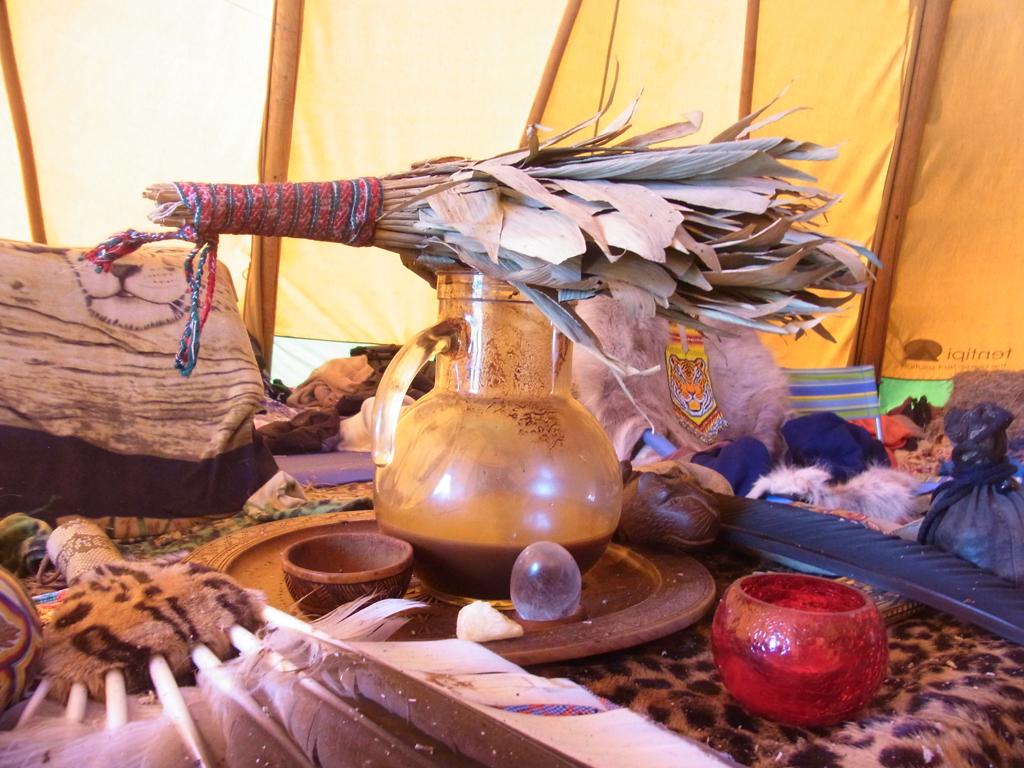

What an Ayahuasca Ceremony Actually Feels Like: One Honest Account
The first time someone told me about ayahuasca, I thought they were describing a particularly intense stomach flu with a soundtrack. You drink something disgusting, you throw up for hours, and then you understand your childhood? Sure. Sign me up. Except — and this is the thing nobody quite prepares you for — that's almost exactly what happens. And almost nothing like what happens. Both at once. If you're researching whether to sit in your first ayahuasca ceremony, you've probably read a dozen sanitized retreat descriptions full of words like transformation and sacred. What follows is the version your friend would tell you over the second beer, after the polite version wore off. Most first-timers don't arrive at an ayahuasca retreat because they're curious about Amazonian botany. They arrive because something in their life has gotten loud enough that they're willing to fly to a jungle and drink a bitter tea that makes them vomit. Depression that won't lift. A grief that keeps circling back. A pattern in relationships they can see clearly and still can't stop repeating. Sometimes addiction. Sometimes a low, persistent sense that the life they're living isn't the one they meant to be living. For me, it was the quieter version of all that — a stuck feeling of being alone in a way that long predated being physically alone. The kind of thing that talk therapy could circle for years without quite landing on. When the word ayahuasca started appearing in three separate conversations in the same week, including one with someone who'd assisted at ceremonies, I took the hint. Call it synchronicity, call it the algorithm of paying attention. Either way, I booked a weekend. Different facilitators recommend different things, and the range is wide. Some ask only that you skip alcohol for a day or two. Others want a strict dieta for a full week: no sugar, no dairy, no wheat, no caffeine, no pork, no fermented foods, no sex, no recreational drugs. The pharmacological reason matters — ayahuasca contains MAO inhibitors, and certain foods and medications can interact dangerously with them. Specifically, anything containing tyramine (aged cheeses, cured meats, fermented soy) and most antidepressants, especially SSRIs and SNRIs, can become genuinely risky. This is the part where I'll say something nobody loves hearing: if you're on antidepressants, you must talk to a doctor and the retreat facilitators before you go. Don't quit your meds on a whim and don't show up without disclosing them. Reputable retreats screen for this. The ones that don't are the ones to walk away from. Beyond the physical preparation, I quit social media for the week, ate plainly, and spent the long drive to the retreat in silence. No podcast, no playlist. I set an intention — something about wanting to meet the part of myself I'd been avoiding — and then, on the advice of someone who'd done this before, I deliberately tried to let the intention go. The brew doesn't tend to deliver what you order. It delivers what's underneath the order. Thirteen of us, mostly women, on mattresses arranged in a circle around an altar of flowers and candles. White clothing. A pair of facilitators with guitars. A bucket beside each mattress — yours, personally, for the inevitable. The atmosphere was less Burning Man and more church potluck where everyone happens to know they're about to be turned inside out. The first cup is offered with a small bow. The liquid is the color of strong tea steeped in coffee grounds, and it tastes like both, if both had spoiled. People who say it's not that bad are lying or have damaged taste buds. A slice of citrus afterward helps for maybe four seconds. Then you walk back to your mattress and you wait. For roughly fifteen minutes, nothing happens except a slow rearrangement of your stomach's opinion about being a stomach. Then the facilitators start singing — icaros, the traditional songs that guide a ceremony — and somewhere around the second or third song, the room begins to tilt in a way that isn't really tilting. The visuals come first for some people. For me it was sound: a kind of busy static in my head, like every unfinished thought I'd had for a year showed up to a meeting at the same time. Ayahuasca is sometimes called la purga, and the name is accurate but incomplete. Yes, most people throw up. Some cry hard for hours. Some shake. Some have to run to the bathroom in the other direction. The purge isn't a side effect — facilitators and traditional drinkers consider it part of the medicine, the body's way of releasing something that's been stored where talking can't reach. What surprised me is how un-horrible it was in the moment. The energy that builds before a purge feels less like nausea and more like a wave with somewhere it needs to go. I didn't end up vomiting that first night — a small voice somewhere in the noise told me there was nothing for me to release that way, which I couldn't have argued with even if I'd wanted to. Other people in the circle purged for what felt like hours. By morning, several of them looked lighter in a way I can only describe as physical. A short, honest list of things that may happen during a ceremony: Two hours in, when the first wave is fading, the facilitators offered a second cup. This is standard at most ceremonies and the dose is usually smaller. The second drink tends to deepen what's already happening rather than start something new. For me, the second cup was where the noise quieted and something else moved in. I lay on my back and watched the room from upside down. I sat up and watched it right-side up. I noticed I'd been crying for what must have been a long time without registering it, and even that — even the wet cheeks — felt like something I was witnessing rather than doing. The phrase that kept arriving was simple and almost embarrassing in its plainness: without the stories you attach to things, things are just things. Not a revelation that would survive being printed on a coffee mug. But in the moment, it landed in my body in a way that no amount of reading had ever managed. I'll be honest about the part the brochures skip. Ayahuasca is not a one-night cure. People who go in expecting their depression, addiction, or trauma to be lifted out of them by morning often leave disappointed, or worse, convinced they did something wrong. The actual work is integration — the weeks and months after, when you have to take whatever you saw and translate it into how you live. Some of what shifted for me stuck. Some of it faded back into the noise of regular life within a month. The shifts that lasted were the ones I made decisions around: changing what I ate, who I spent time with, how I responded when the old stuck feelings came back. The shifts that faded were the ones I expected to maintain themselves. If you're considering a retreat, a few honest things to weigh: I can't answer that for you and I'd be suspicious of anyone who claimed to. What I can say is that the people I've watched genuinely benefit from ayahuasca tended to share a few things in common: they came to it after exhausting more conventional avenues, not before; they chose their retreat carefully and unhurriedly; they took integration as seriously as the ceremony itself; and they arrived with humility rather than a shopping list of outcomes. Ayahuasca is one of several master plants people are turning to as part of a broader rethink of how we heal — alongside psilocybin, ibogaine for addiction recovery, San Pedro, and others. It isn't a shortcut, and it isn't for everyone. But for some people, in the right setting, with the right preparation, it does something that nothing else has managed to do. If that possibility is what brought you here, and you'd like to take a closer look at what's actually available, a curated range of ayahuasca retreats and ceremonies can be browsed on our marketplace here. Whatever you decide, decide it slowly. The vine has been around for thousands of years. It will still be there next month.
Can Ibogaine Break Opioid Dependence? An Honest Look at Recovery
Somewhere around the second or third week of trying to taper off opioids on your own, a particular kind of desperation sets in. You start typing things into search bars at 2 a.m. that you'd be embarrassed to say out loud. Things like: can ibogaine actually kick this? If that's how you found your way here, welcome. You're not alone, and the question is a fair one. Ibogaine sits in a strange corner of the psychedelic and plant-medicine world. It's the one substance that addiction researchers keep circling back to, the one ex-users keep writing about years later, and the one almost no doctor in the United States can legally prescribe. So let's talk plainly about what it does, what it doesn't, what the risks actually are, and how someone weighing a retreat should think about the decision. Ibogaine is an alkaloid extracted from the root bark of the iboga shrub, which grows in West and Central Africa. The Bwiti tradition in Gabon has used it ceremonially for generations, in initiation rites that look nothing like the clinical detox protocols you'll find at modern retreats. Worth keeping that distinction in mind — Western ibogaine clinics borrowed the molecule, not the cosmology. Pharmacologically it's a beast. Ibogaine and its metabolite noribogaine hit a wide spread of receptors — opioid, serotonin, NMDA, sigma, nicotinic — and seem to do something genuinely unusual to the brain's reward circuitry. The short version, drawn from both clinical research and decades of underground reports: a single high dose appears to reset opioid tolerance and dramatically blunt acute withdrawal. People who walk into a clinic dope-sick often walk out, somewhere between 24 and 48 hours later, with the worst of the physical withdrawal already behind them. That's the part that makes it sound like a miracle. The fuller picture is messier. This is the question I see most often from people in the early research stage, so let's give it a real answer. For short-acting opioids — oxycodone, heroin, fentanyl — ibogaine has a relatively well-documented track record of interrupting acute withdrawal. The mechanism isn't perfectly understood, but the experience reported by participants is remarkably consistent: the bone-deep ache, the restless legs, the nausea, the crawling skin — much of it lifts during or shortly after the experience. Several open-label studies and observational reviews back this up, though we're still waiting on the large randomized trials that would settle the question for regulators. Suboxone (buprenorphine) is a different story, and anyone considering a retreat needs to hear this clearly. Buprenorphine has a long half-life and binds tightly to opioid receptors. Most reputable ibogaine providers will not accept a client who's still on suboxone — they require a switch to a short-acting opioid for several weeks beforehand, then a brief abstinence window before dosing. Trying to skip that switch tends to produce a much rougher experience, a less complete withdrawal interruption, and sometimes cardiac complications. If a clinic is willing to dose you straight off suboxone with no preparation protocol, that's a serious red flag. Methadone is even harder. Some providers won't take methadone clients at all. Others require months of careful tapering and substitution first. Ibogaine can stop your heart. That's not hyperbole — it's the central reason this is a clinical-grade intervention, not a weekend ceremony. Ibogaine prolongs the QT interval on an EKG, which in vulnerable people can trigger fatal arrhythmias. Documented deaths from ibogaine sessions almost always involve one or more of the following: A serious ibogaine retreat will require, at minimum: a recent EKG, comprehensive bloodwork, liver function tests, a full medication and substance history, and continuous cardiac monitoring during the experience itself. There should be a medical doctor on site — not on call, on site — with the equipment to manage an arrhythmia if one develops. If any of that is missing, walk away. The price difference between a properly medicalized program and a cheap one is the price of your life, and that math is not abstract. Forget anything you've heard about psychedelics being euphoric or blissful. Ibogaine isn't that. People who've been through it describe it as long, demanding, and frequently uncomfortable — closer to neurological surgery than a mystical journey, at least in the early hours. The first phase, the so-called visionary state, typically begins within an hour or two of dosing. Eyes-closed visuals come on, often described as watching a film of your own life — childhood scenes, faces of people you've hurt, the moment your using began, the people you've lost. It's autobiographical and often confrontational. People cry. People get quiet. Some report meeting something that feels like a presence, though the framing depends entirely on the person's background and beliefs. The second phase is introspective and analytical — more like lying in the dark thinking very clearly about your life for many hours, with the body heavy and motion uncomfortable. The third phase is exhaustion. Sleep often won't come for 24 to 36 hours after dosing, even though the body badly wants it. The whole arc, from dose to feeling somewhat normal again, runs three to five days. And then comes the part the brochures really don't emphasize: the afterglow window. Many people describe a stretch of weeks — sometimes months — where cravings are dramatically reduced and the old mental loops feel quieter. This is the window where the actual recovery work has to happen. Ibogaine doesn't build a new life for you. It opens a door. What you do in the months after determines whether you walk through it. If you're seriously considering this, a few practical filters that have served readers well: Readers often ask how ibogaine stacks up against ayahuasca or psilocybin for addiction recovery. Honest answer: they do different jobs. Ayahuasca tends to work over multiple ceremonies, addressing the emotional and trauma roots that drive substance use. It doesn't directly interrupt physical withdrawal the way ibogaine does. People with active opioid dependence usually need to stabilize before an ayahuasca retreat will be useful — many traditional centers won't accept active opioid users at all. Psilocybin shows promising results in early trials for alcohol use disorder and tobacco cessation, but it's not a withdrawal-interruption tool either. Its strength is in shifting the underlying patterns of thought and self-concept. Ibogaine is the one that addresses the physical hardware directly. For someone deep in opioid dependence, it's often the most realistic doorway — followed, ideally, by other modalities once the body is no longer the emergency. If you've read this far, you're doing the right thing. Researching slowly, asking hard questions, and refusing to romanticize a powerful intervention is exactly the posture that gets people through this in one piece. Ibogaine is not magic, but for the right person, with the right medical container and a serious commitment to the work that follows, it can be the thing that finally interrupts a pattern that's resisted everything else. If something here lands with you, the medically-screened ibogaine and plant-medicine retreats discussed throughout this piece can be browsed on our marketplace here. Take the time you need, ask the uncomfortable questions, and trust the people who answer them straight.
Is Ibogaine a Mindfulness Pill? What the Iboga Experience Really Teaches
Someone asked me last year, half-joking, whether iboga was basically a mindfulness pill. The kind of thing you swallow when sitting on a cushion for ten years feels like too long a wait. I laughed. Then I thought about it for a week. Because the question, underneath the flippancy, points at something real. People who've sat with iboga — or its pharmaceutical cousin ibogaine — often describe an experience that sounds suspiciously close to what long-term meditators report: an unflinching look at their own conditioning, the loosening of compulsive patterns, a strange and uncomfortable clarity about who they've been. So is it a shortcut? Is it cheating? Is it even the same thing? I want to talk through this honestly, because I think the answer matters — especially if you're someone weighing whether to fly to Mexico or Costa Rica or Portugal and hand yourself over to a facilitator with a root bark and a stethoscope. Mindfulness, in the way it's taught now, usually means non-judgmental awareness of the present moment. You notice what's happening — thoughts, sensations, emotions — without grabbing at it or pushing it away. Done consistently over years, it tends to produce people who are less reactive, more present, better at noticing the gap between stimulus and response. That's the public-facing version. The deeper claim of contemplative traditions is bigger: that sustained practice reveals something about the nature of the self. That the “you” running the show is more constructed and more porous than it feels. Buddhist teachers have been pointing at this for two and a half millennia. It's not a productivity hack. It's a slow-motion ontological audit. Here's where iboga gets interesting. Because whatever else it does, it forces an audit. It just does it in fourteen hours instead of fourteen years. Iboga is the root bark of Tabernanthe iboga, a shrub native to Central Africa, used ceremonially for centuries by the Bwiti tradition in Gabon. Ibogaine is the principal alkaloid, extracted and used in clinical and retreat settings — most famously as a treatment for opioid and stimulant addiction. The two are related but not identical experiences. The whole-root ceremony tends to feel more textured and more guided by the plant's own logic; ibogaine in a clinic setting can feel more pharmacological, more medical. Either way, the experience is long. We're talking 12 to 36 hours of altered consciousness, with the most intense phase lasting maybe eight to twelve. People often describe two distinct stages. The first is sometimes called the “visionary” phase — a flood of memories, images, and what feels like a structured review of one's life. Not random imagery. Specific scenes, specific people, specific moments where you made a choice that set a pattern in motion. The second phase is quieter and stranger. The visions fade and you're left lying in the dark, mostly awake, watching your own mind work without the usual filters. This is the part that participants frequently describe as “meditation-like,” though it's a meditation you didn't sign up for and can't end early. Yes and no. Let me explain. The yes: iboga absolutely does produce states of detached, observational awareness. People come out of ceremonies describing days or weeks of unusual clarity — they can see their habitual reactions before they fire, they notice cravings without acting on them, they catch themselves in the middle of an old story and just… don't finish telling it. That's recognizably what mindfulness practice is supposed to deliver. There's emerging research suggesting ibogaine affects neuroplasticity in ways that may temporarily increase this kind of metacognitive capacity. The no: a pill that gives you the view for a month is not the same as a practice that gives you the legs to keep walking. Plenty of people have profound iboga experiences and slide right back into the patterns they thought they'd seen through. The experience hands you a map. It doesn't hand you the discipline to actually use it. This, by the way, is where iboga differs sharply from ayahuasca or psilocybin in the cultural conversation. Iboga isn't really sold as a journey. It's sold as a confrontation — particularly for people struggling with addiction. The marketing language around it is less “heart-opening” and more “interrupting a death spiral.” Which is closer to the truth. The reason ibogaine has built a reputation outside the broader psychedelic conversation is its effect on opioid dependence. People with heroin or fentanyl addictions report walking out of an ibogaine treatment with their withdrawal symptoms gone and their cravings dramatically reduced. This isn't a small thing. It's the closest thing the addiction field has to a chemical reset button — and that's why underground and offshore clinics have been running treatments for decades despite ibogaine being a Schedule I substance in the United States. But — and this is critical — ibogaine is not safe in the casual way some other plant medicines can be approached. It's cardiotoxic. It can cause fatal arrhythmias in people with undiagnosed heart conditions or certain medication interactions. Reputable clinics require EKGs, bloodwork, and medical supervision throughout. If you're researching ibogaine and a provider doesn't mention any of this, walk away. I mean it. A few things worth knowing if you're considering it: In the Amazonian traditions, ayahuasca isn't the only “master plant” — there's a whole pharmacopoeia of teachers, each said to offer a particular kind of instruction. Iboga sits in a parallel category from a different continent. The Bwiti tradition treats it not as a substance but as a teacher, an ancestor, something you enter into relationship with. That framing matters because it pushes back against the “mindfulness pill” idea. You don't take a master plant. You consult one. And the consultation, if you're paying attention, includes homework. The visions show you what's broken. The integration phase is when you decide whether to actually fix it. People who treat iboga as a one-shot fix tend to be disappointed. People who treat it as the beginning of a longer practice — therapy, meditation, lifestyle change, community — tend to be the ones whose lives actually shift. If you're researching iboga or ibogaine, start with brutal honesty about why. Are you looking for addiction recovery? A spiritual experience? Relief from depression that hasn't responded to anything else? Each of those points you toward different providers, different settings, different price points. A medical ibogaine clinic in Mexico is a very different proposition from a Bwiti-influenced ceremony in Costa Rica or Portugal. Both can be legitimate. Neither is interchangeable. Be skeptical of any provider promising transformation. Be more skeptical of one promising it without medical screening. And give yourself a serious think about what you'll do for the six months after — because that's the part that determines whether the experience becomes a turning point or a story you tell at parties. For readers wanting to take this further, a range of vetted ibogaine and plant-medicine retreats can be browsed on our marketplace here. Whether iboga is a mindfulness pill or not, it's a serious tool — and the people who get the most out of it tend to be the ones who treat it that way from the first phone call.

Psychedelic Water Review: Does Kava Really Replace Your Evening Drink?
A friend of mine cracked open one of these cans at a backyard dinner last summer and someone immediately asked if she was tripping. She wasn’t. She was drinking what looked like a hard seltzer, was called Psychedelic Water, and contained roughly zero psychedelics. The name does a lot of heavy lifting — some of it useful, some of it misleading. I spent about a month using it the way the marketing suggests: as the thing in my hand at gatherings where everyone else was reaching for a margarita. I’m not strictly sober, I just have terrible hangovers and a low tolerance for the slow social erosion that comes with regular drinking. So this counted as a real experiment, not a stunt. Here’s what I learned about the drink, the ingredients, and the broader trend it rides on — including how it overlaps (and doesn’t) with the actual world of psychedelics and plant medicine. The headline ingredient is kava — a root from the South Pacific that islanders have used in social and ceremonial settings for centuries. Traditional kava is prepared by pounding or grinding the root and mixing it with water until you have something resembling muddy dishwater that tastes, frankly, the way it looks. The canned version is a much gentler product: kava extract, damiana leaf (a mild relaxant with a long history in Central America), green-tea extract for a small caffeine lift, and flavoring. Four flavors are in rotation — hibiscus lime, blackberry yuzu, oolong orange blossom, and prickly pear. Prickly pear is the one to start with. What kava does in the body is sedative-adjacent. It binds to GABA receptors, which is the same general pathway alcohol and benzodiazepines use, although kava is far gentler. You feel a softening of the edges. A loosening in the shoulders. Conversation feels easier without the sloppy disinhibition booze gives you. The National Institutes of Health notes that kava supplements have shown a small effect on reducing anxiety in clinical studies — modest, but real. One thing worth flagging up front: kava has been linked in rare cases to liver injury, especially when used heavily or combined with alcohol or certain medications. If you’re on prescription meds, drink regularly, or have any liver concerns, talk to a doctor before making this a habit. The occasional can at a dinner party is a different beast than daily use. Let’s clear up the obvious confusion first. Psychedelic Water is not psychedelic. There is no LSD, no psilocybin, no DMT, no mescaline. You will not see geometric patterns. You will not have an ego-dissolution experience in your kitchen. The name is a marketing choice — provocative, memorable, and arguably useful in the way it nudges the word “psychedelic” into ordinary supermarket vocabulary, but the can itself is closer to a fancy herbal tea than to anything you’d find at an ayahuasca retreat. What it actually feels like, for me, was a soft 20-minute onset of mild calm. A faint tingle on the tongue (kava does that — it’s a quirk of the active compounds called kavalactones). A small lift in mood that didn’t spike or crash. After two cans across an evening I felt loose-jawed and content. After three I felt slightly queasy and had a dull stomach ache, so I’d say two is the practical ceiling. The most useful comparison I can give: it sits somewhere between chamomile tea and a single glass of wine on the relaxation spectrum, minus the next-day fog. I slept well. I woke up sharp. I did not text anyone something I regretted. By the modest standards of a Tuesday night, that’s a win. Nonalcoholic-beverage sales jumped roughly a third year-over-year a couple of years back, and the curve has kept climbing since. The category that used to mean O’Doul’s and grape juice now includes adaptogenic sodas, hemp-derived seltzers, functional mushroom blends, and a whole subgenre of kava drinks. Psychedelic Water is one of the louder voices in that crowd, partly because of TikTok and partly because of the name. The motivations behind sober-curious living are more varied than the wellness narrative suggests. Yes, some people are quitting for health. But just as many cite productivity, mental clarity, sleep quality, and the simple math of not wanting to feel rotten on Saturday morning. Younger drinkers are also doing it for cost — alcohol is expensive — and for the fact that they’ve grown up watching the long-term damage it does to the people around them. That last one matters more than people admit. Alcohol is a pretty effective short-term anesthetic. Take it away and a lot of stuff surfaces — restlessness, sadness, the patterns you’ve been numbing for years. Some people find that uncomfortable and circle back. Others find it’s the doorway they didn’t know they were looking for. Here’s where it gets interesting for anyone who lands on a drink like this and starts wondering what else is out there. Kava is, in the broadest sense, a plant medicine. It’s a botanical with psychoactive properties used ceremonially by an indigenous culture for generations. That puts it in the same loose family as ayahuasca, San Pedro, peyote, and the other master plants — but the family is very, very loose. Kava sedates. Ayahuasca rearranges your sense of reality for six hours and shows you the contents of your own mind. They are not the same tool. I’ve sat in a number of ayahuasca ceremonies and interviewed facilitators across Peru, Costa Rica, and the Netherlands. The thing readers most often miss is that the “psychedelic” part of psychedelics isn’t about visuals or recreation — it’s about a temporary suspension of the usual mental machinery that lets you see your patterns, your trauma, your addiction, your grief, with unusual clarity. That’s why these medicines have become a serious conversation in addiction recovery, depression treatment, and PTSD therapy. Compounds like psilocybin and ibogaine are now in late-stage clinical trials for exactly those uses. A canned kava drink will not do any of that. What it might do, honestly and usefully, is start a conversation. If you’re someone who picks up a can called Psychedelic Water at a dinner party and finds yourself curious — really curious — about what the word actually means, that curiosity is worth following. Read about the Indigenous traditions. Read the Johns Hopkins research. Talk to people who’ve done the work. Don’t confuse a beverage with a ceremony. If you’re looking for a smarter thing to hold at a party, or a wind-down drink that won’t cost you Sunday morning, this category is worth exploring and Psychedelic Water is a reasonable entry point. Go in with realistic expectations. You’re buying a mild herbal relaxant in a stylish can, not a portal to anywhere. Pay attention to how your body responds, don’t mix it with alcohol or sedatives, and skip it entirely if you’re pregnant, on liver-sensitive meds, or drinking heavily already. And if the experiment leaves you genuinely interested in what plant medicines can do at the deeper end — addiction work, trauma work, the kind of inner inventory that actually changes a life — there’s a much larger world waiting. A growing range of ayahuasca, psilocybin, and other plant-medicine retreats can be browsed on our marketplace here, with facilitators and traditions worth taking seriously. Start with the can if you want. Just know that the can is the beginning of the question, not the answer.
Ibogaine for Addiction Recovery: What a Real Reset Actually Looks Like
Every so often I get a message from a reader that goes something like this: I've tried everything. Twelve-step, rehab, suboxone, therapy. Nothing sticks. Is ibogaine actually different? It's a fair question, and one I'm careful with. Ibogaine isn't a wellness trend. It's a serious psychoactive alkaloid from the iboga shrub in West Africa, and people who take it for addiction recovery aren't doing it because it sounds fun. They're doing it because the alternative — another decade of using, another overdose, another stretch of being a ghost in their own life — feels worse than the risk. So let's talk honestly about what ibogaine does, why it keeps coming up in conversations about psychedelics and addiction, and what a session at a reputable retreat actually involves. No hype. No promises. Just the kind of information I wish more people had before they booked. Ibogaine is the principal psychoactive compound in the root bark of Tabernanthe iboga, a shrub native to Gabon and Cameroon. The Bwiti people have used it ceremonially for centuries — for rites of passage, ancestral communion, and as what they call a master plant. In the West, it's been studied since the 1960s for one specific reason: people kept reporting that it interrupted their opioid dependence almost overnight. That's the part that catches people's attention. Unlike ayahuasca or psilocybin, where the healing tends to unfold through emotional and psychological insight, ibogaine appears to do something pharmacologically distinct. It seems to reset opioid receptors, sharply reducing the physical withdrawal that traps so many people in the cycle of heroin, fentanyl, methadone, and prescription painkillers. Animal studies and a handful of human trials back this up. Anecdotally, the reports are sometimes startling — people describing a single experience that ended a fifteen-year heroin habit. Is that everyone's outcome? No. But it happens often enough that ibogaine has become one of the most-discussed psychedelics in addiction recovery circles, sitting alongside ayahuasca, psilocybin, and 5-MeO-DMT in the broader plant medicine conversation. I'll be direct: ibogaine is not pleasant in the way some people imagine psychedelics to be. There's no giggly come-up, no warm dissolving into the cosmos. Most participants describe the experience in three rough phases. The first phase — what people sometimes call the visionary or oneirogenic stage — typically begins an hour or so after dosing. It often feels like a waking dream. Memories surface in vivid sequence. People report watching their own life replay in fragments, often with surprising clarity around moments they'd buried. It's intense, sometimes overwhelming, and the body feels heavy enough that movement is difficult. This is by design — you're meant to lie still, eyes closed, and let it work. The second phase is more introspective. The visions soften and what remains is a kind of long, slow review. Why you started using. What you were running from. The choices that compounded. People describe it as confronting but not punishing — more like sitting with an honest version of yourself for the first time in years. The third phase is the residual period, which can last 24 to 72 hours. You're depleted. Sleep is hard to come by. But the cravings — and this is the part people fixate on — are often dramatically reduced or absent entirely. That window is what makes ibogaine remarkable, and also what makes the integration period that follows so important. I get asked this a lot, and the honest answer is: they do different things. Some people do one. Some people do both, sequentially, with months of integration between. There's no universal protocol, which is part of why choosing a reputable facilitator matters so much. Here's where I have to be the unfun one. Ibogaine carries real cardiac risk. It can prolong the QT interval in the heart, and there have been deaths — most of them linked to underlying heart conditions, drug interactions, or unscreened participants taking ibogaine in unsupervised settings. A responsible ibogaine retreat will require, at minimum: If a retreat brushes past any of this, walk away. I mean that. The places doing this work well are unhurried about screening because they've seen what happens when corners get cut. The ones cutting corners are the ones you read about in the cautionary articles. Ibogaine is legal in some countries (Mexico, Costa Rica, Portugal, Gabon, New Zealand) and not in others (it's Schedule I in the United States). Most Western retreat-seekers end up traveling, and the quality varies enormously. A few things I look for, and would suggest you look for too: Medical infrastructure. Ask specifically: who is on staff, what are their credentials, what equipment is on site, and what's the nearest hospital? A serious operation answers without hesitation. Pre-screening rigor. If they'll take your booking without seeing an ECG, that's a red flag. The good ones sometimes turn people away — which sounds frustrating until you realise it means they're not just chasing payments. Integration support. The session is maybe 30% of the work. What happens in the weeks and months after — therapy, peer groups, lifestyle support — is where the real change either takes root or doesn't. Ask what they offer post-retreat and whether it's included. Lineage and approach. Some retreats blend the medical model with traditional Bwiti ceremony. Others are clinical and stripped-down. Neither is inherently better — what matters is that the approach matches what you're looking for. If you want ritual and meaning, find a place that holds that. If you want a medical reset, find a place built around that. Honest pricing. Expect somewhere between $5,000 and $10,000 USD for a reputable week-long program. Wildly cheaper than that usually means corners are being cut on medical safety. Wildly more expensive doesn't necessarily mean better — it sometimes just means a nicer pool. The window ibogaine opens is real, but it's a window, not a door that stays open forever. Most people I've spoken to who've sustained long-term recovery describe the post-retreat months as the make-or-break period. The cravings are quiet. Old triggers feel distant. But life — the actual job, relationships, boredom, grief — is still there, waiting. What works, more often than not: a structured integration plan. Therapy with someone who understands psychedelic experiences. Movement, sleep, sunlight. Community with other people who've done this work. Avoiding the environments and people tied to using, at least for the first six months. Boring, unglamorous stuff. The medicine does something extraordinary; the daily decisions afterward are what compound it into a different life. And I'll say this gently: ibogaine isn't a cure. It's an opening. The people who treat it as a magic bullet tend to relapse. The people who treat it as the start of a long, real piece of work tend to stay free. If you're researching this for yourself or someone you love, take your time. Read the harm-reduction literature. Talk to people who've actually done it, ideally more than one. For readers who want to take this further, a range of vetted ibogaine and plant-medicine retreats can be browsed on our marketplace here — alongside other options worth considering if your situation doesn't quite fit the ibogaine profile. The decision is yours, and it should be. Just make it with eyes open.
Craving More Stories?
Join our ShopAyahuascaRetreats newsletter for the latest updates on thrilling
destinations and inspirational tales, delivered straight to your inbox!
We value your privacy. Your email address will never be shared or published.

Ibogaine Aftermath: Double Vision, Insomnia, and Body Temperature Swings Explained
Three days after a flood dose, you finally try to read something on your phone and the letters won't sit still. Sleep comes in 40-minute scraps. Your hands feel hot, your feet feel like ice, and your heart seems to be reporting from another time zone. Sound familiar? If you've recently sat with ibogaine — or you're researching what the recovery actually looks like before booking a retreat — this is the conversation nobody puts on the glossy brochure. Ibogaine is one of the most powerful tools in the plant medicine and psychedelic world for breaking addiction, particularly opioid dependence. It's also one of the most physiologically demanding. The aftermath can stretch out for weeks. Knowing what's normal, what's annoying, and what's a red flag matters. Most psychedelics clear your system in hours. Ibogaine doesn't play by those rules. The active alkaloid metabolizes into noribogaine, which binds to fat tissue and slowly releases back into circulation for days — sometimes weeks. That's part of what makes ibogaine so unusual for addiction work: the afterglow has a pharmacological tail. It's also why people report odd, lingering effects long after they assumed they'd be back to baseline. Noribogaine continues to nudge serotonin, dopamine, and opioid receptors. Your nervous system, meanwhile, has just been through something closer to a controlled crisis than a typical ceremony. The autonomic system — the one that runs your heartbeat, body temperature, digestion, and sleep — takes time to recalibrate. So when people show up in forums asking about double vision, insomnia, and thermoregulation chaos, they're not imagining things. These are documented post-ibogaine experiences. Across facilitator notes, harm-reduction guides, and the people I've talked with after their retreats, three after-effects come up over and over in the first one-to-four weeks: None of these are particularly fun. Most of them resolve on their own. But they're worth understanding so you can tell ordinary recovery from something that needs attention. During the ibogaine experience itself, eyes-closed visuals are part of the territory — the rapid film-reel of memories that the medicine is famous for. Afterwards, some people notice their eyes feel uncoordinated for days. Reading is hard. Phone screens blur. Driving feels unsafe. The mechanism is ataxia — a temporary disruption in the cerebellum's coordination of fine motor movement, including the muscles that aim your eyeballs. Ibogaine is famously ataxic during the acute phase (you'll have been walked to the bathroom by a facilitator for a reason), and residual cerebellar effects can hang around. Most people see this clear up within a week or two. If it's still happening at the four-to-six-week mark, that's the point to see a neurologist rather than another forum. This one surprises people. You'd think a medicine that knocks you flat for 24 hours would leave you ready to sleep for a month. Instead, the opposite often happens. Many people report two, three, even five days of almost no sleep after a flood dose, followed by weeks of choppy, fragmented rest. Part of this is noribogaine's stimulant-like profile slowly tapering off. Part of it is that opioid withdrawal — if that's why you came to ibogaine in the first place — has its own insomnia signature that doesn't fully resolve when the acute withdrawal does. And part of it is simply that your nervous system has been turned inside out and is still finding its footing. Practical things that help: keep caffeine to a minimum, get morning sunlight on your eyes, eat real meals at regular times, avoid heavy screens before bed, and accept that sleep will be weird for a while. Magnesium glycinate at night helps some people. Melatonin is hit-or-miss after ibogaine — some find it useful, others say it makes the dreams more intense than they want. Thermoregulation is run by your hypothalamus, which sits at the intersection of the endocrine and autonomic nervous systems. Both of those systems got rattled. So it's not strange that for a few weeks, your internal thermostat seems broken. People describe sweating through sheets, then shivering in a warm room twenty minutes later. Hands and feet that won't warm up. A face that flushes for no reason. Layered clothing is your friend. So is staying well hydrated with electrolytes — sodium, potassium, magnesium — because ibogaine is hard on minerals and the residual effects can show up as temperature swings. Most after-effects fade. Some don't, and a few are genuinely dangerous. The two that demand immediate medical attention are anything cardiac and anything that looks like a prolonged QT-interval issue. Ibogaine prolongs the QT interval, which means it can predispose the heart to a specific kind of arrhythmia called torsades de pointes. This is why reputable retreats screen for cardiac risk with an EKG, magnesium and potassium bloodwork, and a careful medication review before they'll give you a dose. The risk window for QT prolongation extends well past the ceremony itself — some studies suggest two weeks or more. Get medical care immediately if, in the weeks after ibogaine, you experience: The vast majority of people who do ibogaine in a properly screened, properly supervised setting come through without any of these. The minority who run into trouble usually skipped the screening — either because they treated at home with no medical backup, or because the operation they went to wasn't actually running the tests they claimed to. This is where the booking decision really lives, in my view. Anyone can hand you a capsule. What separates a credible ibogaine provider from a sketchy one is what happens before and what happens after. Things to ask before you put a deposit down: A serious operation will have answers ready. A sketchy one will get vague, defensive, or pivot to talking about how powerful the medicine is. The medicine is powerful. That's the point. It's also why the wrapper around the medicine — the screening, the supervision, the integration — matters more than the medicine itself. Here's the thing about ibogaine specifically, as compared with ayahuasca or psilocybin: the post-acute window stretches longer because of that fat-stored noribogaine slowly trickling back into your bloodstream. Many people describe two to six weeks of feeling unusually open, emotionally permeable, sometimes raw. The cravings for the substance you came to address may be remarkably quiet. Old emotional material may keep surfacing. This is the integration window. It's a gift if you use it. Therapy appointments scheduled in advance, a support group, a sober community, daily walks, journaling — the unglamorous infrastructure of recovery — work better in this window than at any other time. People who waste it tend to find the cravings creeping back. People who use it tend to describe ibogaine as the most useful single event in their recovery, even years later. If you're still researching whether this path is right for you, take your time. Read survivor accounts, read the harm-reduction literature, talk to people who've done it. For readers who want to take this further, a range of vetted ibogaine and plant-medicine retreats can be browsed on our marketplace here. The strange weeks after a flood dose aren't a sign that something went wrong. Usually they're a sign that something significant happened, and your body is still catching up. Treat that body kindly. Sleep when you can. Eat real food. Keep someone you trust in the loop. And if anything feels truly off — especially anything cardiac — don't tough it out. Get checked.
Psychedelics and Depression: What the Research Actually Shows About Plant Medicine for Healing
Depression is the most common reason people quietly start Googling ayahuasca at 2 a.m. I've sat across from dozens of them in pre-retreat interviews — engineers, mothers, recovering addicts, retired teachers — and the story is almost always the same. They've tried the medications. They've tried therapy. Something still isn't moving. So they start reading about psychedelics, and the research they find is genuinely encouraging. Here's what's actually known about psychedelics and depression in 2026, what's still uncertain, and what to think about if you're weighing a retreat as part of your own path forward. The World Health Organization estimates more than 280 million people live with depression worldwide. It's the leading cause of disability on the planet. And despite five decades of SSRIs, talk therapy, and an ever-expanding menu of treatments, the global numbers keep climbing — not falling. For roughly a third of people diagnosed with major depression, the standard tools don't work well enough. That's treatment-resistant depression: you've tried two or more medications at adequate doses, and you're still struggling. It's a brutal place to be, and it's the population most psychedelic studies have focused on. Major depression — the form most relevant to plant-medicine work — usually shows up as some combination of persistent low mood, exhaustion, anhedonia (the loss of pleasure in things that used to matter), isolation, and intrusive thoughts that don't quit. If any of that sounds familiar, you're not alone in turning over every stone. The first wave of psychedelic research began in the 1950s, mostly around LSD. It produced promising results, then was cut short by the political crackdown of the late 1960s. The work picked back up in the 1990s, and the past decade in particular has produced a body of evidence serious enough that institutions like Johns Hopkins, NYU, and Imperial College London have built dedicated psychedelic research centers. Across that work, a consistent pattern has emerged. When given in a supportive setting — careful screening, trained facilitators, integration support afterward — psychedelics appear to produce rapid and often long-lasting reductions in depressive symptoms. Not in everyone. Not as a magic bullet. But in proportions that traditional psychiatry hasn't seen in decades. A few of the substances that keep coming up: Each works differently. Each carries different risks. None should be approached casually. If you've read a news article about psychedelics in the last few years, it was probably about psilocybin. That's because it has the cleanest research record so far. A landmark 2016 trial at Johns Hopkins found that a single high-dose psilocybin session, paired with therapy, produced substantial and sustained drops in depression and anxiety among patients with life-threatening cancer. Follow-ups years later showed many of those benefits had stuck. Then came the Imperial College work led by Robin Carhart-Harris. Two doses of psilocybin, in patients whose depression hadn't responded to anything else, brought relief that lasted up to six months. His team's brain-imaging research suggested psilocybin temporarily quiets the default mode network — the part of the brain that runs the same loops of self-referential, often self-critical thought that characterize depression. When that network goes quiet, parts of the brain that normally don't talk to each other start communicating. People describe it as something loosening. One detail worth knowing: the patients who reported what researchers call a “mystical experience” during their session — a sense of unity, awe, or contact with something larger than themselves — were the ones most likely to see depression lift. The chemistry alone doesn't seem to be enough. The experience matters. Ayahuasca has been used ceremonially by Indigenous Amazonian communities for centuries. Western science showed up late to the conversation — most rigorous studies are from the 1990s onward — but the findings have been striking. A 2018 Brazilian randomized placebo-controlled trial gave ayahuasca to people with treatment-resistant depression. A single session produced rapid antidepressant effects that were still measurable a week later. As with psilocybin, brain imaging pointed to changes in the default mode network. Participants weren't just feeling better; the actual wiring of their rumination loops seemed to soften. What I've watched in person at retreats matches the data, with caveats. People who come in carrying years of depression often describe the ceremony as the first time in a long while they've felt something other than the weight. Not euphoria — more like a deep recalibration. Some cry for hours. Some sit in silence and watch their whole life play back. Some throw up a lot (the purge is a real and unglamorous part of the experience). Most report, in the weeks after, that the constant background noise of depression has gotten quieter. But ayahuasca is not gentle. It's a full-body, multi-hour journey. People with certain conditions — bipolar disorder, schizophrenia, a family history of psychosis, certain heart conditions, and anyone on SSRIs or MAOIs without proper medical tapering — should not drink it. A reputable retreat will screen carefully and turn people away. A bad one won't. Microdosing — taking sub-perceptual doses of LSD or psilocybin every few days — has become its own cottage industry. The anecdotal reports are everywhere: better mood, more focus, lifted depression, more emotional availability. The peer-reviewed research is more mixed. Several recent studies have suggested microdosing may produce real benefits, while others have found the effects are largely placebo. My honest read: microdosing might help some people some of the time, but it's not the same intervention as a full psychedelic-assisted session. The breakthroughs people describe from a single guided ayahuasca or psilocybin experience aren't typically what microdosers report. If your depression is severe, microdosing is unlikely to be the answer. If you're managing a mild rut and want to experiment carefully and legally, that's a different conversation. If you're considering plant medicine specifically because depression is grinding you down, here are the things I'd want you to know before booking anything. Psychedelics are not for everyone. People with bipolar disorder or a personal or family history of psychotic illness are excluded from research trials for good reason — the medicine can destabilize those conditions, sometimes severely. Pregnant women, people with significant cardiovascular disease, and anyone in acute crisis should not be drinking ayahuasca at a retreat in the jungle. Legality also matters. Ayahuasca exists in a gray zone in most countries; psilocybin therapy is becoming legal in specific jurisdictions (Oregon and Colorado in the U.S., for example), but recreational possession remains illegal almost everywhere. Many of the most-respected retreats operate in countries where the medicine is legal or culturally protected — Peru, Costa Rica, Brazil, the Netherlands, Mexico, Jamaica. And the research itself, while genuinely promising, is still young. We have strong signals, not final answers. A serious facilitator will tell you that. A salesperson won't. If you're depressed and reading this, the fact that the science is finally catching up to what Indigenous communities have known for centuries is, on balance, good news. Psychedelics aren't a shortcut around the hard work of recovery — they're a tool that, used with care, can crack open doors that have been welded shut for years. The decision to attend a retreat is personal, medical, and worth making slowly. Talk to your doctor. Talk to people who've done it. Read the trial results yourself. Trust your own pace. If something here speaks to you, the available psychedelic and plant-medicine retreats discussed throughout this piece can be browsed on our marketplace here — quietly, on your own time, with no pressure to do anything except keep learning.
Psilocybin for Depression: What a Year-Long Johns Hopkins Study Actually Found
Picture this: two psilocybin sessions, spaced a couple of weeks apart, and a year later your depression scores are still down. That's the finding making the rounds out of Johns Hopkins, and if you're someone quietly considering a psychedelic retreat for a low mood that won't lift, it's worth understanding what the research actually says — and what it carefully avoids saying. The short version is genuinely promising. The longer version, which is the one you need if you're weighing a real decision, comes with caveats that the cleaner headlines tend to skip. Let's go through both. Researchers at the Johns Hopkins Center for Psychedelic and Consciousness Research followed 24 adults with major depressive disorder after giving them two doses of psilocybin alongside supportive psychotherapy. They'd already published earlier results showing the antidepressant effect held for two months. The new paper, in the Journal of Psychopharmacology, extends that follow-up to a full twelve. The numbers are striking. Average depression scores dropped from 22.8 — squarely in the severe range — to 7.7, which sits right at the threshold of no depression at all. That's not a marginal nudge. That's the kind of shift people normally chase across years of medication trials, talk therapy, and dose adjustments. And the participants got there with two guided sessions. No serious adverse events were reported as related to the psilocybin itself. Roland Griffiths, who led the work, framed it bluntly: where standard antidepressants need to be taken every day, often indefinitely, psilocybin may be able to do the job with one or two carefully held sessions. That's a different model of treatment entirely. Depression rarely travels alone. People who land on the idea of psychedelics — ayahuasca, psilocybin, ibogaine, San Pedro, the broader family of master plants — are often dealing with some braided combination of low mood, anxiety, trauma, and addiction. The same neural ruts that keep someone reaching for a drink at 9pm keep them reaching for the same dark thought at 3am. They're not separate problems wearing different costumes. That's part of why psychedelic-assisted recovery has caught so much attention. The effect isn't symptom suppression; it's something closer to a temporary loosening of the patterns themselves. Psilocybin appears to act on serotonin pathways in a way that interrupts the looping, self-referential negativity that defines a depressive episode. For some people, that interruption is enough to climb out. For others, it opens a window — and what they do with that window matters more than the medicine. This is the part the research gestures at but doesn't shout. About a third of the study's participants started an antidepressant during the follow-up year, and roughly 40% got some form of psychotherapy. The headline isn't psilocybin alone fixes depression for a year. The honest version is psilocybin, plus integration, plus often some combination of ongoing support, produced lasting change for most of the people in this small study. Not as snappy. More accurate. Standard SSRIs work for many people, partially work for many more, and don't work at all for a stubborn minority. Even when they help, they ask for daily commitment, side effects ranging from sexual dysfunction to emotional flattening, and a wind-down period that can be genuinely miserable. Psilocybin, in this trial, looks more like a procedure than a prescription — closer in shape to a surgical intervention than to a pill bottle. Two sessions. Substantial upfront cost in time, money, and emotional bandwidth. And then, in theory, you go on with your life. David Nutt of Imperial College London, who wasn't part of the Hopkins team, made the cost-efficacy point: the upfront expense of psychedelic therapy is high, but if the effects hold, it could compete with — or beat — the lifetime cost of conventional antidepressants. That math only works if the durability holds across larger and more diverse populations than 24 carefully screened volunteers, which is exactly what late-stage trials are now investigating. Here's where I want to slow you down, because this is where the gap between a research study and a real-world retreat opens widest. The Hopkins participants didn't take psilocybin on a beach in Jamaica or a jungle lodge in Peru. They took it in a controlled clinical room, with trained therapists, after multiple preparation sessions, with structured integration afterward. The medicine was one component of a careful protocol. Strip away the protocol and you're not running the same experiment anymore — you're running a different one, with different odds. A few things worth holding in mind if you're considering a psychedelic retreat for depression or addiction: None of this is meant to dampen the genuine promise here. It's meant to put the promise in scale. Psilocybin and the broader family of plant medicines look more and more like serious tools for serious problems. Tools, though. Not magic. The person holding the tool — meaning you, the support team, the facilitator, the therapist you see afterward — still does most of the work. The Hopkins paper sits inside a much larger wave. Compass Pathways is running late-stage psilocybin trials. MDMA for PTSD has been through multi-site Phase 3 work. Ibogaine continues to draw attention for opioid dependence. Ayahuasca research, slower and messier because of the ritual context, keeps producing intriguing signals around depression, addiction, and trauma. The picture forming across all of it is consistent: when paired with thoughtful psychological support, psychedelics can produce changes that standard pharmacology has struggled to match. The catch — and there's always a catch — is that the research settings bear little resemblance to most real-world settings. Underground use, casual recreational use, and even some retreat experiences strip away the elements that the trials suggest matter most. The medicine alone is not the whole story. It might not even be the most important part of the story. If you're someone reading this with a specific decision in mind — should I book a retreat, should I try psilocybin, should I look into ayahuasca for the thing I haven't been able to shake — let the research inform you without letting the headlines stampede you. The data is encouraging. The framework around the data is what makes it work. For readers who want to take this further, a range of carefully vetted psilocybin and plant-medicine retreats can be browsed on our marketplace here. Depression is patient. It waits. The good news is that the tools available for working with it are finally getting more interesting than they've been in decades. The better news is that you get to be deliberate about how you use them.

The DEA's Ayahuasca Risk Report: What It Says and Why It Matters
For years, anyone trying to understand how the U.S. government actually thinks about ayahuasca ran into the same wall. Lots of seizures at the border. Lots of denied religious exemptions. Very little paperwork explaining the reasoning. Then, in early 2023, a single document slipped out — a Drug Enforcement Administration report titled Ayahuasca: Risks to Public Health and Safety, dated July 2020. It surfaced only because a small church and a research nonprofit filed Freedom of Information Act requests and waited two years for a response that, by law, should have arrived in weeks. If you're researching an ayahuasca retreat — or wondering whether the brew might one day be regulated more like cannabis than like heroin — this document matters. It's the closest thing we have to an official federal position. And honestly? It's not great. The reasoning is thin in places, conflates a few different things, and reads like it was written to justify a conclusion rather than reach one. Let's unpack what's actually in it, what it gets wrong, and why it still shapes the legal landscape for plant medicine in the United States. The backstory is brief but telling. The Church of the Eagle and the Condor, working alongside the Chacruna Institute, submitted FOIA requests to the DEA and the Department of Justice asking for every record the government holds on ayahuasca. The requests went unanswered for years — a quiet violation of federal transparency law that, in fairness, is depressingly common when psychedelics are involved. When the DEA finally responded, it released exactly one document. That document had already been quietly cited in a 2021 denial letter rejecting another church's bid for a religious-use exemption. So the same report that no member of the public had read was being used to deny religious freedom claims. That's a striking detail. The government's entire articulated position on ayahuasca risk fits in a handful of pages, and until recently nobody outside the agency had seen the reasoning. This matters because ayahuasca occupies a strange legal corner. The brew itself isn't scheduled — DMT, one of its components, is. Two religious groups (the União do Vegetal and Santo Daime) have won Supreme Court and federal court protection to use it as a sacrament. Every other group seeking that same protection has to argue from scratch, and the DEA's risk assessment is now part of what they're arguing against. The report's headline conclusion is that ayahuasca poses a risk to public health and safety. To reach that, it leans on a few main arguments — and this is where the reasoning gets wobbly. First, the document repeatedly treats ayahuasca and pure synthetic DMT as if they were interchangeable. They aren't. Ayahuasca is a brewed decoction of two plants — usually Banisteriopsis caapi and Psychotria viridis — that produces a long, oral experience moderated by MAO inhibitors in the vine. Smoked or injected DMT is a brief, intense flash with a completely different pharmacological profile. Conflating them is roughly like writing a risk assessment of beer by citing data on grain alcohol. The substances overlap, but they don't behave the same way in the body, in ceremony, or in the data. Second, the assessment catalogs adverse events without much context. Vomiting and diarrhea are listed as concerns. Anyone who has sat in a ceremony will tell you these are not side effects in the conventional sense — they're part of how the medicine is traditionally understood to work. The term la purga exists for a reason. That doesn't mean the discomfort is trivial, but framing it as evidence of public-health danger is a bit like calling a sauna unsafe because people sweat. Third, the report leans on case reports of psychiatric crises and a handful of deaths. These do happen and shouldn't be brushed aside. But the document doesn't weigh them against base rates, doesn't account for whether the participants had medical or psychiatric contraindications that responsible screening would catch, and doesn't compare the risk profile to substances the same agency considers acceptable. Here's what the report doesn't do, and the gaps are arguably more important than what it does include. None of this means the DEA was obligated to declare ayahuasca safe. It does mean the document reads less like a balanced scientific review and more like a brief written for one side of an argument. You might reasonably ask: how does a federal report I'll never read affect my decision about whether to fly to Peru or Costa Rica and sit in ceremony? More than you'd think. The U.S. government's position drives a lot of downstream consequences. Customs and Border Protection seizures of ayahuasca have increased noticeably in the last few years. Practitioners have been arrested. New religious groups seeking the same legal protection as the UDV and Santo Daime are being denied based on reasoning that traces back, in part, to this very document. If you've ever wondered why your friend's facilitator suddenly stopped doing ceremonies in the U.S. and now runs them in Mexico, this is part of the answer. For the practical retreat-goer, a few takeaways. Drinking ayahuasca in countries where it's legal — Peru, Brazil, Costa Rica, the Netherlands, and others — sidesteps the U.S. legal question entirely while you're abroad. Bringing brew back into the States is a different matter, and not one I'd recommend testing. And if you're attending a U.S.-based ceremony, it's worth knowing the legal posture of the group hosting it. Some operate under recognized religious exemptions. Many don't, and the risk profile is real, both for facilitators and, occasionally, participants. The most damning thing about the FOIA episode isn't the report itself. It's that the government sat on these records for two years, in violation of its own transparency obligations, while citing the unreleased document to deny religious freedom claims. That's not how administrative law is supposed to work. Decisions affecting fundamental rights are supposed to be made on a record the affected parties can see and contest. The good news is that the document is now public, which means it can be critiqued, rebutted, and — eventually — replaced by something better. Advocacy groups are actively pushing for a more honest federal conversation about ayahuasca, one that distinguishes plant medicine from isolated compounds, weighs benefits alongside risks, and respects the diversity of traditions that have safely used the brew for generations. For now, if you're weighing whether plant medicine has a place in your own life, the most useful thing you can do is get specific. Read the actual research, not the headlines. Talk to people who have done the work — both the ceremony and the integration afterward. Ask hard questions of any retreat you're considering: who screens for contraindications, what medications conflict with the brew, what their aftercare actually involves. The federal posture is what it is, but your decision is yours. If something in this piece resonated and you want to look at what's actually out there, a curated selection of ayahuasca retreats can be browsed on our marketplace here. Pick the place carefully, prepare seriously, and treat the experience with the respect it asks for.
Mixing Weed and Magic Mushrooms: What Actually Happens
Ask any group of psychonauts whether they've ever lit a joint mid-mushroom trip, and most will smirk before answering. The combination is common — almost a rite of passage in some circles — but that doesn't make it predictable, pleasant, or wise. Cannabis and psilocybin are two of the most-used psychedelics on the planet, and pairing them sits in a strange grey zone between folk wisdom and genuine risk. So let's actually talk about it. This isn't a recipe. It's a closer look at what each substance does, how they interact, and what's worth knowing before you decide whether they belong in the same evening. If you're researching this because you're curious about the broader world of psychedelics and master plants — maybe even considering a structured retreat down the line — the same principle applies: information first, decisions second. The short answer? Cannabis amplifies whatever's already happening. For some people, that means deeper visuals, looser thoughts, and a softer landing on the comedown. For others, it means a perfectly fine mushroom trip suddenly tips into a heart-pounding spiral that lasts an hour and feels like a lifetime. Same drugs, very different experiences — and that variability is exactly the problem. Psilocybin and THC also occupy different categories. Mushrooms are unambiguously psychedelic. Cannabis is harder to pin down — sometimes it acts like a mild hallucinogen, sometimes a depressant, sometimes a stimulant, depending on the strain, the dose, and the person. Stacking an unpredictable drug on top of an already unpredictable one is a recipe for surprises. Some are wonderful. Some are not. Psilocybin converts to psilocin in the body and binds to serotonin 5-HT2A receptors. The net effect is a flood of altered signalling and — this is the part researchers find most interesting — a quieting of the default mode network, the brain circuitry tied to your sense of a continuous, narrating self. When the DMN goes quiet, ego boundaries soften and sensory input gets louder. That's the classic psychedelic state. Cannabis works through a completely different system. THC mimics anandamide, an endogenous cannabinoid, and binds to CB1 receptors throughout the brain and body. CBD takes a subtler path — it slows the breakdown of anandamide and partially blocks CB1 receptors, which is why it can actually take the edge off THC's more anxious moments. Two different mechanisms, two different timelines, one shared bloodstream. Let's get the reassuring part out of the way first: neither psilocybin nor cannabis is physically toxic at recreational doses, and there is no known fatal interaction between the two. You're not going to die. That's not the risk anyone honest is worried about. The actual risk is psychological. Cannabis — especially high-THC, low-CBD cannabis — is surprisingly good at producing anxiety and paranoia in sober people. Now add a psilocybin trip, where your defences against anxious thinking are already lowered, and you have a setup where a small spike of weed-induced unease can balloon into a full panic loop. Racing heart, shortness of breath, that grim certainty that something is deeply wrong. None of it is dangerous in a medical sense. All of it feels awful in the moment. A few specific things worth flagging: If you've decided you want to try it anyway — and plenty of people do, with no drama — the consensus among more experienced users is consistent. Treat the night as a mushroom trip first. The shrooms are the main event. The cannabis is a small, optional accent, not a co-headliner. A reasonable approach looks something like this: Strain choice matters more than people give it credit for. High-CBD strains, or strains with a more balanced THC:CBD ratio, are far less likely to drop you into paranoia. The current trend toward 25%+ THC flower is the exact opposite of what you want on a trip. If you only have access to heavy indica or potent sativa, smaller doses or skipping the weed entirely is the smarter call. This question gets debated endlessly. There's no objectively correct answer, but here's the honest breakdown. Before. Some people smoke a little to ease pre-trip jitters. The risk is that cannabis anxiety becomes the seed of the entire experience, and you spend the next four hours trying to outrun a mood you set yourself. During the peak. Generally the worst option. The peak is already the most overwhelming part. Adding THC at peak is the most reliable way to push a manageable experience into a chaotic one. During the comedown. This is what most experienced users recommend. Two to three hours in, when visuals are softening and you're returning to baseline, a small amount of cannabis can extend the reflective, integrative quality of the experience without overloading your nervous system. This is also when sleep starts to matter, and indica strains can help close out the night. The next day. Maybe the most underrated option. The afterglow from psilocybin can last 24–48 hours, and a low-dose smoke the following evening sometimes brings back gentle echoes of the trip's clarity. No risk of a bad mix, all of the integration benefits. Mixing substances recreationally is a different universe from doing serious psychedelic work — and it's worth being honest about that distinction. People who combine weed and mushrooms at a music festival aren't pursuing the same thing as someone sitting in an ayahuasca ceremony or doing structured psilocybin sessions for depression. Both are valid. They're just different projects with different rules. If your interest in psilocybin is partly therapeutic — addressing depression, addiction, trauma, or just the sense that something in your life is stuck — the recreational mixing question becomes less interesting than the question of set, setting, and support. Most serious facilitators will tell you to leave cannabis out of the picture entirely during intentional work. It muddies the signal. It introduces a variable that has nothing to do with what you're trying to heal. And for people working through addiction specifically, the habit of layering one substance on another is often part of what they're trying to step away from. That doesn't make cannabis bad. It just means context matters. The joint with friends on a Saturday night and the cup of brewed mushroom tea with a trained guide are two different conversations, and treating them as interchangeable is how people end up disappointed in both. Can you mix weed and magic mushrooms? Yes. Should you? It depends entirely on who you are, what you're after, and how well you read your own warning signs. For some people, it's a pleasant amplification — funnier, deeper, more visual. For others, it's the thing that turns a beautiful afternoon into a few hours they'd rather forget. There's no way to know in advance which camp you're in until you try, and the prudent move is to err small: less weed, later in the trip, in a setting you trust. And if reading this has nudged you toward thinking about psilocybin more seriously — as a tool for healing rather than a Saturday-night curiosity — a range of curated psilocybin and plant-medicine retreats can be browsed on our marketplace here. The structured path is a very different animal from the recreational one, and for some people it ends up being the more useful door to walk through.
Dreaming of a Psychedelic Retreat?
We have the best deals and offers from thousands of organizers all over the world! Get them into your mailbox every week!
We value your privacy. Your email address will never be shared or published.
