 English
 Deutsch
 Français
 Nederlands
 Español
SHOP AYAHUASCA RETREATS BLOG
Is Cannabis a Psychedelic? What Psychiatrists Are Quietly Rethinking
Luca Reeves
May 29, 2026
Your ultimate guide to discover transforming ayahuasca and psychedelic experiences. Dive into serene destinations and elevate your consciousness to unparalled heights.
Discover Ayahuasca & Psychedelic Retreats NowSearch for ayahuasca & psychedelic retreats
Discover retreats, trainings, and holidays from all over the world
Cannabis doesn’t usually get invited to the psychedelic dinner party. Mushrooms show up. Ayahuasca shows up. LSD wanders in late, talking about set and setting. Weed gets left on the porch with a bag of chips. But a small, persistent group of psychiatrists keep arguing it deserves a seat at the table — and the reasoning is more interesting than the stoner-meets-shaman cliché suggests.
The premise is simple. Real psychedelics shift how you perceive the familiar. They strip the varnish off habit. Some researchers think cannabis — at certain doses, in certain people, in certain contexts — does a softer version of the same trick. Not the fireworks of a high-dose mushroom journey. More like a side door into the same room.
This matters because the conversation around plant medicine, addiction, and master plants is widening fast. If cannabis genuinely belongs in that conversation, it changes how clinicians, retreat-goers, and policymakers think about an enormous, already-legal substance. If it doesn’t, the framing risks muddying the waters of real psychedelic-assisted therapy. Worth taking seriously either way.
What psychiatrists mean when they call cannabis “psychedelic”
The case usually hinges on a clinical concept called dehabituation — the moment your brain stops auto-completing reality and actually looks at it again. You’ve felt this without any drug at all. The first morning of a vacation, when the light in a strange room hits you differently. The week after a breakup, when your own apartment looks like someone else’s. That fresh-eyes effect is what some psychiatrists believe cannabis can produce on demand, in lower-stakes form.
Julie Holland, a New York psychiatrist who’s written extensively about psychoactive substances, has argued exactly this at psychedelic science conferences. Her phrasing — that cannabis can make everything old feel new again — is a tidy way of describing what therapists already chase in the consulting room. A lot of talk therapy is, at root, a perspective problem. You’re stuck in a loop. Something jolts the loop. The loop loosens. Insight follows.
That’s also why psychiatry and psychedelics share a Latin root — psyche, the mind. Both act on it. They just work at different intensities, with different risks, and on different timelines. Calling cannabis psychedelic isn’t saying it’s the same as ayahuasca. It’s saying the mechanism — interruption of automatic perception — sits on a shared spectrum.
How this fits into the broader psychedelics-and-addiction conversation
The reason any of this is being discussed seriously now is the larger resurgence in psychedelic research. After decades of regulatory deep-freeze, psilocybin, MDMA, LSD, ayahuasca, and ibogaine are all back in clinical trials for depression, end-of-life anxiety, treatment-resistant PTSD, and addiction. Some of the results have been striking — striking enough that the FDA designated psilocybin a breakthrough therapy and MDMA-assisted therapy has moved through late-stage trials.
Inside that wave, cannabis is the weird cousin. It’s been studied for chronic pain, nausea, sleep, and PTSD symptom management — Holland herself has worked as a medical monitor on a MAPS-led study examining marijuana for PTSD in veterans. But it sits in a category of its own at the DEA, which has historically made serious research painfully slow. So we’re left with a lot of anecdote, a growing pile of preliminary data, and very few clean answers.
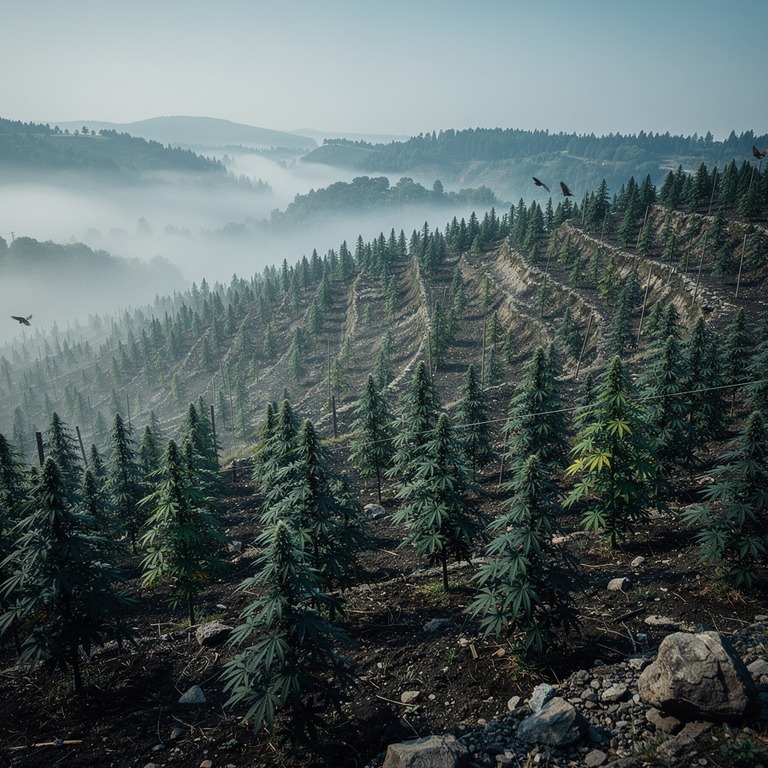
For anyone weighing a plant-medicine retreat, this matters in a specific way. Cannabis is sometimes folded into ceremonial work — in some traditions it’s used as a master plant in its own right, with dieta-like preparation, intention setting, and integration. In other traditions it’s seen as a distraction from deeper work. Both views have weight. Knowing which framing your facilitators hold is part of doing your due diligence.
The honest case for cannabis as a therapeutic tool
Here’s what the more measured proponents actually claim:
- At modest doses, cannabis can soften rigid thought patterns enough for therapeutic conversation to land differently.
- It may help some people access emotional material they’ve been avoiding — grief, anger, fear — without the full intensity of a classical psychedelic experience.
- It can shift sensory and bodily awareness in ways that, paired with intention, mimic some of the somatic openings people describe from ceremony work.
- For people with PTSD, certain cannabinoids appear to dampen the over-reactive fear response that drives nightmares and hypervigilance.
None of that is the same as saying weed cures depression or replaces ayahuasca. It’s saying the plant has psychoactive properties that, used carefully, might be useful in a clinical or contemplative context. That’s a smaller, more defensible claim — and it’s the one worth taking forward.
And the honest case against
Cannabis also has a complicated relationship with mental health, and pretending otherwise serves nobody. The most comprehensive review of marijuana research to date — a sprawling National Academies report — found that heavier, more frequent use is associated with elevated risk of psychosis, social anxiety, and to a lesser degree, depression. The report couldn’t cleanly say whether cannabis causes those outcomes or whether people predisposed to them simply self-medicate more often. Probably some of both. The question is far from settled.
What this means practically: cannabis is not a neutral tool. For some people it’s a quiet ally. For others, especially those with a family history of psychosis, heavy use can be genuinely destabilizing. The difference between the two camps isn’t always obvious until something cracks. And unlike a ceremonial psychedelic, cannabis is easy to use every day — which is where the dehabituation effect tends to invert. The thing that once made everything feel new becomes the thing you reach for to feel normal. That’s not insight. That’s dependence with extra steps.
This is also the part of the conversation that gets skipped at parties. People love to hear that their daily habit might be secretly therapeutic. Fewer people love hearing that daily use probably blunts the very effect that made it interesting in the first place.
If you’re considering a retreat, how should this change anything?
If you’re researching ayahuasca, psilocybin, ibogaine, or another plant-medicine retreat, cannabis-as-psychedelic is mostly a tangent — but a useful one to think through before you go. Three practical points:
- Check the dieta. Most reputable ayahuasca retreats ask you to stop cannabis use for a window before ceremony — anywhere from two weeks to a couple of months. This isn’t arbitrary. Daily cannabis use can blunt the dissociative and emotional openings ayahuasca aims to produce, and facilitators have seen the pattern enough times to make it a rule.
- Be honest about your relationship to it. If cannabis has been a daily coping mechanism for years, that’s worth naming to your facilitators during intake. Not as confession — as data. It tells them something about your nervous system and what your integration period might need.
- Don’t expect ceremony to reset your habit alone. People sometimes book a retreat hoping a single ayahuasca experience will dissolve a long-standing cannabis pattern. It can plant the seed. The actual work of changing a daily habit happens at home, in the months after, often with a therapist who understands plant medicine.
The deeper point is that addiction and habituation exist on a continuum, and so do the tools we use to address them. Master plants like ayahuasca, iboga, and huachuma sit at the heavier end of that toolkit. Cannabis, used intentionally, may sit somewhere closer to the middle. Daily habit-use sits at the other end entirely — closer to the problem than to the solution.
Where the research goes from here
The honest answer is: slowly. Cannabis remains federally restricted in ways that make rigorous psychiatric study harder than it should be, even as more than half of U.S. states have legalized some form of access. The mismatch is producing a lot of street-level experimentation and not nearly enough clinical data. Meanwhile, classical psychedelics — psilocybin in particular — are racing ahead in the trial pipeline, and the regulatory frameworks built for them may eventually drag cannabis research forward in their wake.
For now, the most useful posture is curious skepticism. Take seriously that thoughtful psychiatrists see something worth studying. Take equally seriously that the same plant, used differently, contributes to real mental-health harm. Both can be true. Most plants worth knowing are complicated.
If exploring this terrain through a structured container appeals to you, a range of ayahuasca, psilocybin, and other plant-medicine retreats can be browsed on our marketplace here. Whatever you decide, decide it slowly — the plants will still be there next month, and the right retreat is almost never the one you booked in a hurry.
Craving More Stories?
Join our ShopAyahuascaRetreats newsletter for the latest updates on thrilling
destinations and inspirational tales, delivered straight to your inbox!
We value your privacy. Your email address will never be shared or published.