 English
 Deutsch
 Français
 Nederlands
 Español
SHOP AYAHUASCA RETREATS BLOG
What Ayahuasca Actually Does to Your Brain and Body: An Honest Look
Luca Reeves
May 29, 2026
Your ultimate guide to discover transforming ayahuasca and psychedelic experiences. Dive into serene destinations and elevate your consciousness to unparalled heights.
Discover Ayahuasca & Psychedelic Retreats NowSearch for ayahuasca & psychedelic retreats
Discover retreats, trainings, and holidays from all over the world
If you've spent any time researching ayahuasca retreats, you've already met the two extremes. On one side: glowing testimonials about decades of trauma dissolving in a single night. On the other: warnings about violent purges, panic spirals, and people coming home stranger than they left. Both are true. Neither is the whole story.
What's missing from most write-ups is the middle layer — what ayahuasca actually does inside the human body, what the research has found so far, and what an honest practitioner will tell you when the marketing copy ends. That's what this piece is about. If you're weighing a retreat, you deserve more than vibes.
So what is ayahuasca, really?
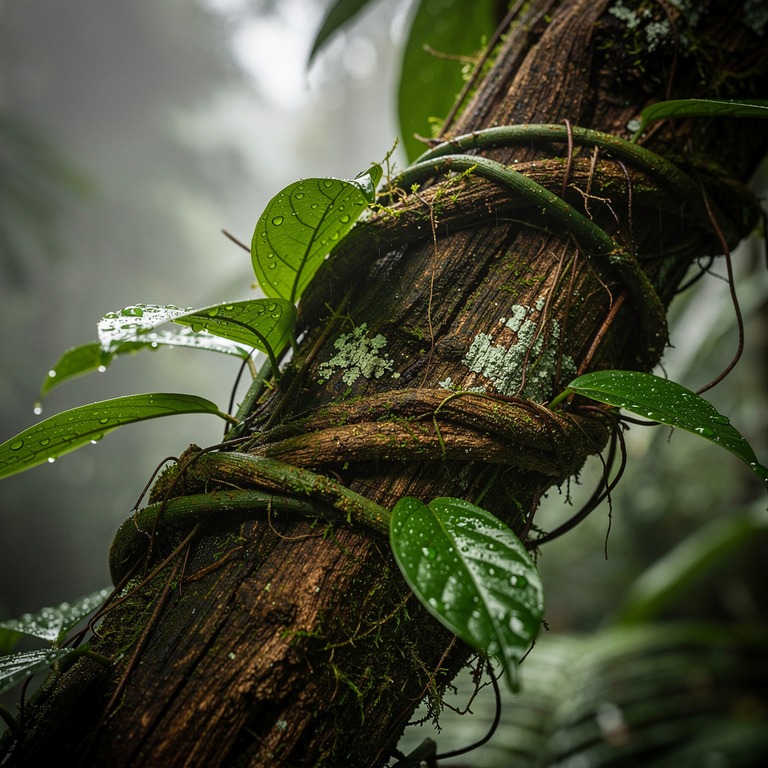
Ayahuasca is a brew. Two plants, simmered together for hours, sometimes a full day, in a pot over a fire somewhere in the Amazon basin. The Banisteriopsis caapi vine — the so-called vine of the soul — supplies one half. Leaves from Psychotria viridis (or a regional cousin) supply the other. On their own, neither does much of anything dramatic if you drink them. Together, they make one of the most potent psychedelics on earth.
The chemistry is elegant, if a bit brutal. The leaves contain DMT, a short-acting psychedelic that your gut would normally destroy in minutes. The vine contains MAO inhibitors that switch off the enzyme responsible for that destruction. Result: the DMT survives digestion, crosses into your bloodstream, and reaches the brain. A trip that would last twenty minutes if you smoked the molecule stretches out into four, sometimes six hours of sustained altered consciousness.
Indigenous communities in Peru, Brazil, Colombia, and Ecuador have used this brew for an unknown but very long time — hundreds of years at minimum, probably much longer. The Quechua name translates roughly as vine of the dead. That's not marketing. People who drink it often describe a kind of ego death, a loosening of the self that can feel, in the moment, indistinguishable from actual dying.
The body trip nobody talks about in the testimonials
Here's the part the Instagram captions usually skip: ayahuasca is physically miserable for most people, at least for a while.
The purge is real. You'll likely vomit. You may have diarrhea. Your heart rate will probably climb. Your blood pressure may spike. The brew tastes — and there's no polite way to say this — like fermented mud that's been left in a shoe. Veteran ceremony-goers don't get used to the taste; they just stop fighting it. Some traditions consider the purge itself the medicine, a literal expelling of stuck energy or grief. Whether you buy the metaphysics or not, the physical part is unavoidable for most participants and shouldn't surprise you.
None of this is permanent. The cardiovascular spike fades. The nausea passes. But if you have an underlying heart condition, uncontrolled blood pressure, a history of seizures, or you're on certain medications — particularly SSRIs and other antidepressants that interact with the MAOI component — the risk profile changes sharply. People have died from drug interactions at retreats. Not many, but enough that any responsible facilitator screens you carefully before you ever sit down with a cup.
What's actually happening in the brain
The scientific revival around psychedelics over the last decade has produced some interesting clues about why ayahuasca seems to do what it does. Brain imaging studies show that during the experience, activity drops in something called the default mode network — the cluster of regions associated with self-referential thinking, rumination, and the ongoing narrative of being you. That same network tends to be overactive in people struggling with depression and anxiety.
When it quiets down, something interesting happens. Connections between brain regions that don't usually talk much suddenly open up. Old patterns loosen. Researchers comparing brain scans of long-term meditators with brain scans of people on ayahuasca have noticed structural similarities — a kind of stepping outside the usual self that contemplatives spend decades training for and that the brew seems to trigger in a few hours.
This is part of why people describe ayahuasca experiences as feeling more real than ordinary reality. The brain is doing something it doesn't normally do. Whether you call that mystical or neurochemical is somewhat a matter of taste.
Can ayahuasca help with addiction, depression, or trauma?
This is the question driving most of the current retreat boom, and it deserves a careful answer.
The evidence so far is genuinely promising but still thin. Several small clinical studies have shown rapid and sometimes durable reductions in depression scores after a single ayahuasca session, including in people who hadn't responded to conventional antidepressants. Observational research on long-term members of ayahuasca-using churches in Brazil has shown lower rates of substance abuse compared to matched controls. Anecdotally, the stories of people walking away from years of alcohol dependence, opioid addiction, or treatment-resistant PTSD are everywhere.
But — and this is important — most of those studies are small. The control conditions are tricky to design (it's hard to blind anyone to whether they just drank ayahuasca). And the retreat industry is largely unregulated. A ceremony that produces a profound healing experience for one person can leave the next destabilized and worse off, especially without proper integration support afterward.
If you're considering plant medicine specifically because you're trying to address addiction, depression, or trauma, a few honest points:
- Ayahuasca is not a one-shot cure. The people who report lasting changes almost always describe ongoing work — therapy, community, lifestyle shifts — that began with the ceremony but didn't end there.
- The integration period matters as much as the night itself. Reputable retreats build in real integration support, not just a goodbye breakfast.
- If you're currently on psychiatric medication, you cannot simply skip a dose and drink. Tapering off SSRIs takes weeks under medical supervision, and trying to shortcut this is one of the more dangerous things people do.
- Some conditions — active psychosis, bipolar disorder with mania, certain heart conditions — are widely considered contraindications. A good retreat will tell you no. A bad one will take your deposit.
How to read a retreat before you book it
The market has exploded, which means quality varies enormously. A few things to look for:
- Real medical screening. If the intake form is a single page and nobody asks about your medications, walk away.
- Lineage and training. Who is the lead facilitator? How long have they been working with the medicine? Did they train within a recognized tradition or self-appoint after a few good trips?
- Group size and ratios. A maloca with forty strangers and two facilitators is a different animal than eight participants with three experienced helpers.
- Integration support. What happens in the weeks after you fly home? A retreat that hands you a profound experience and then ghosts you is doing half the job.
- How they handle the no. A center that turns down unsuitable applicants is one that takes the work seriously. One that books anyone with a credit card is selling tourism.
Cost varies wildly. A week-long retreat in Peru can run anywhere from around $1,500 at smaller community-rooted centers to well over $5,000 at high-amenity options. Price doesn't always correlate with quality — sometimes the most expensive places are the most polished and the least traditional. Ask what you're actually paying for.
The honest bottom line
Ayahuasca is neither the miracle some boosters claim nor the reckless party drug others fear. It's a powerful psychoactive substance with a long indigenous lineage, real therapeutic potential, real physiological risks, and a growing — if still preliminary — body of scientific research behind it. People do have life-changing experiences. People also have terrifying ones. Sometimes the same person, in the same ceremony.
If you're drawn to the work, the worst thing you can do is rush. The best thing you can do is research carefully, screen yourself honestly, and choose a setting that takes the medicine — and you — seriously. For readers who want to explore this further, a range of vetted ayahuasca retreats can be browsed on our marketplace here. Take your time with the decision. The medicine, if it's right for you, will still be there when you're ready.
Craving More Stories?
Join our ShopAyahuascaRetreats newsletter for the latest updates on thrilling
destinations and inspirational tales, delivered straight to your inbox!
We value your privacy. Your email address will never be shared or published.