 English
 Deutsch
 Français
 Nederlands
 Español



Reset. Heal. Grow.
Sobriety and Plant Medicine: Rebuilding After Quitting Alcohol
The first ninety days without alcohol are strange. Not bad, exactly. Just strange. You sleep harder than you have in years, wake up early with a clarity that borders on uncomfortable, and start noticing things — the low hum of anxiety you'd been drowning, the resentment you'd been softening, the grief you'd been diluting one glass at a time. People talk about sobriety like it's the finish line. It isn't. It's the moment the actual work becomes visible. Which is why more and more people who've quit drinking end up quietly Googling something like ayahuasca for addiction or psilocybin retreats for sobriety. Not because they want to swap one substance for another — most are terrified of that — but because they suspect there's something underneath the drinking that never got addressed. And they're usually right. Alcohol is a coping mechanism dressed up as a social lubricant. Take it away and the coping doesn't vanish — it just loses its favourite tool. This is why so many people white-knuckle their way to six months sober and then find themselves depressed, restless, or drawn to some new fixation. Work. Food. Scrolling. A new relationship that feels suspiciously urgent. The nervous system that reached for a drink at 6pm every day was reaching for a reason. Sometimes the reason is trauma. Sometimes it's chronic low-grade depression. Sometimes it's a life that quietly stopped fitting years ago and you never wanted to face it sober. Traditional recovery programs are wonderful at community and structure, but they don't always get near the root. That's where a lot of people start looking sideways at plant medicine. The short answer is: the evidence is stronger than most people realise, and more limited than the enthusiasts claim. Somewhere in the middle is the honest picture. Johns Hopkins ran a psilocybin trial for alcohol use disorder that produced results serious enough to make even conservative addiction researchers pay attention — roughly a doubling of the reduction in heavy drinking days compared to placebo. Ibogaine, a West African root, has been used for decades in Mexico and other jurisdictions to interrupt opioid dependence, with unusual efficacy at breaking physical withdrawal. Ayahuasca, though harder to study because ceremonies vary so widely, keeps producing the same anecdotal pattern: people arrive with a decades-long drinking or drug habit and leave with the compulsion noticeably quieter, sometimes gone. None of this is a magic wand. Anyone who tells you otherwise is either selling something or hasn't seen enough people go through it. What plant medicine seems to do, when it works, is loosen the grip of the story that keeps the addiction alive. You suddenly see, very clearly, what you've been running from. Whether the change lasts depends almost entirely on what you do in the months afterwards. Ayahuasca gets most of the headlines, but in the Amazonian tradition it's part of a larger family of what curanderos call master plants — plant teachers with distinct personalities that work on different aspects of a person. Chacruna, chiric sanango, ajo sacha, bobinsana, tobacco (yes, real tobacco, used in radically different ways than we use it in the West). A serious dieta with any of these is nothing like a weekend retreat. It's weeks of isolation, restricted food, no salt, no sugar, no sex, no reading — just you and the plant. Most Westerners never do a full dieta. They come for a five or seven night ayahuasca retreat, drink the brew three or four times, and go home. That's a legitimate entry point, but it's worth understanding you're getting a taste of a much deeper tradition. The ceremony itself — the mareacion, the icaros the shaman sings, the purging, the visions — is the part that gets described in memoirs. The quieter, longer work of integrating what you saw is the part that actually matters for someone in recovery. Here's where I'll be blunt, because this decision deserves it. If you've been sober less than six months, most reputable facilitators will ask you to wait. Not because ayahuasca or psilocybin will make you relapse — usually the opposite — but because early sobriety is fragile in ways you may not fully appreciate yet. A powerful psychedelic experience while your nervous system is still recalibrating can be destabilising. Give yourself a foundation first. When you are ready, here's what actually matters when choosing a retreat: Cost varies wildly. A week-long ayahuasca retreat in Peru typically runs anywhere from around $1,200 at a rustic centre to $4,000+ at a well-staffed facility with medical support. Ibogaine treatment, because of the medical monitoring required, runs higher — often $6,000 to $10,000 for a week. Psilocybin retreats in legal jurisdictions like the Netherlands or Jamaica sit somewhere in between. The retreat is not the healing. This is the sentence I wish someone had tattooed onto my forearm before my first ceremony. The retreat is a doorway. What you do in the weeks and months after — how you sleep, who you talk to, what you stop doing, what you start doing — is the actual medicine. People who do well after plant medicine tend to build a boring, unglamorous scaffolding around the experience. They keep therapy going. They journal, even badly. They stay off alcohol for at least a good stretch afterwards (many find they don't want it anyway). They find one other person who's been through something similar and can talk to them honestly. They resist the urge to immediately book the next retreat, because chasing the peak experience is its own kind of drinking. People who don't do well tend to treat the ceremony as the answer and then wonder why, six months later, the old patterns are creeping back. The plants show you things. They don't do the work of changing you. You do that, slowly, in the ordinary Tuesday afternoons that follow. If you've stopped drinking recently and you're reading this, take the win first. That's not a small thing. Whatever pulled you into that habit had its reasons, and whatever pulled you out of it took real courage. Plant medicine may or may not be part of your next chapter. It's one path, not the path. Some people rebuild through therapy, community, running, prayer, a dog, a garden, a change of city. All valid. But if the pull toward exploring ayahuasca, psilocybin, or another plant medicine keeps returning — quietly, persistently, over months — it's worth listening to. Do the research. Talk to people who've actually been. Find a facilitator whose approach makes you feel safer, not more excited. For readers who want to take that next step, a range of vetted ayahuasca and psychedelic retreats can be browsed on our marketplace here, with details on facilitators, medical protocols, and integration support so you can compare properly before committing. Sobriety cracks something open. Whether you fill that space with medicine, meditation, or plain old time — fill it deliberately.

Can't Stop Ruminating? Why Plant Medicine Keeps Coming Up in the Conversation
Three in the morning. Same argument playing in your head from six years ago. You know it doesn't matter. You know the person barely remembers it. And still, your brain runs the tape, frame by frame, like it's looking for a different ending. If that sounds familiar, welcome to rumination — the mental loop that turns bedtime into a courtroom and quiet moments into interrogations. It's one of the most common complaints I hear from people considering an ayahuasca retreat or a psilocybin sit. Not depression exactly. Not trauma with a capital T. Just a mind that won't shut up. Standard advice says meditate, journal, exercise, talk to someone. All of it helps. But there's a subset of people for whom the usual toolkit only takes the edge off, and they start asking harder questions. Can psychedelics help with this? Are master plants actually good for stuck thinking? What does an ayahuasca ceremony do to a ruminating brain? Let's get into it honestly. Rumination isn't a character flaw. Neuroscientists tend to blame the default mode network — the constellation of brain regions that fires up when you're not focused on a task. It's the seat of self-referential thinking, autobiographical memory, and, unfortunately, worry. In depressed and anxious brains, this network gets stuck in overdrive. The volume knob is broken. Traditional mindfulness works by giving that network something else to do. You focus on the breath, the body, a candle, a mantra — and slowly the loops loosen their grip. It's genuinely effective. Long-term meditators show measurable changes in exactly the brain regions that go haywire in chronic rumination. The catch: it takes time. Months, often years. And if the underlying loop is fed by unprocessed grief, addiction, or trauma, meditation alone can feel like bailing out a boat with a teacup. This is where a lot of people start looking at plant medicine. Here's the interesting bit. Brain-imaging studies — the ones out of Imperial College London have been the most cited — show that psilocybin and ayahuasca temporarily quiet the default mode network. That same network that keeps replaying your worst moments? It goes offline. Briefly. And in that pause, something shifts. People come out of a psilocybin session or an ayahuasca ceremony describing the same thing over and over: the loop stopped. Not forever. But long enough for them to see it from the outside, notice it wasn't them, and get some leverage on it. Researchers call this ego dissolution or psychological flexibility. Participants usually just say something like, “I finally got some space from my own head.” This isn't hype. Clinical trials for psilocybin-assisted therapy in treatment-resistant depression have shown response rates that would embarrass most conventional medications. Ayahuasca studies from Brazil and Spain point in the same direction for people who've been stuck for years. The plant medicines don't erase the pain — they seem to make it workable again. Amazonian tradition frames ayahuasca, tobacco, San Pedro, and a handful of others as master plants — plantas maestras. The idea is that each plant has something to teach, and the ceremony is less like taking a drug and more like sitting with a difficult mentor for eight hours. Take that framing however you want. What matters practically is that people leave these ceremonies with insights, not just experiences. Someone who ruminates about a failed relationship might spend the night not reliving it, but seeing it from angles they never allowed themselves. A person locked in shame about an addiction might feel, for the first time in a decade, that they're worth forgiving. Whether you call that neurochemistry, spirit, or subconscious housekeeping, the outcome is the same — the loop weakens. A few master plants that come up most in this context: Different plants, different textures. None of them are magic. All of them ask something of you. Honest answer: sometimes yes, sometimes no. Here's how I'd think about it if I were the one making the decision. A retreat probably makes sense if you've tried the standard approaches — therapy, meditation, medication, lifestyle changes — with real effort over real time, and you're still stuck. If your rumination is tied to something specific (a loss, an addiction, an event) and you sense there's material underneath that you haven't been able to touch, plant medicine can be a genuine catalyst. And if you're the kind of person who can sit with intensity, follow instructions, and take integration seriously, you're a reasonable candidate. A retreat probably isn't the right move if you're in acute crisis, on SSRIs or MAOIs (a real medical concern with ayahuasca), have a family history of psychosis or bipolar disorder, or if you're hoping the ceremony will do the work so you don't have to. It won't. The plants show you the room. You still have to clean it. Cost is a real factor too. A legitimate ayahuasca retreat in Peru runs anywhere from around $1,200 for a shorter stay to $3,500+ for a well-run ten-day program. Ibogaine treatment in Mexico, because of the medical supervision required, tends to sit between $6,000 and $10,000. Add flights, time off work, and preparation. It's not a casual purchase. The space has grown fast, and not everyone hanging a shingle knows what they're doing. Some practical filters I'd apply before sending a deposit: Here's the part that rarely makes it into the brochure. The ceremony is maybe 20% of the work. The other 80% is what you do in the weeks and months afterward — the therapy, the journaling, the slow behavior changes, the conversations you finally have. People who treat a retreat as a one-and-done fix usually find their rumination back in the door within a season. People who treat it as a starting point often report that the loops genuinely quiet down for good. Practical integration looks unglamorous. Talking to a therapist who understands psychedelic experiences. Building a sitting practice you can actually sustain (ten minutes a day beats forty minutes twice a week). Sleep. Sunlight. Real food. Fewer screens. Difficult conversations you've been avoiding. Boring, obvious, effective. If you've read this far, some part of you is already leaning in. That's worth honoring, and also worth slowing down. Talk to a doctor if you're on any medication. Talk to a therapist if you can. Read first-hand accounts, especially the difficult ones. Give yourself a few months to decide rather than a few days. Rumination is a signal, not a defect. Your mind is telling you something needs attention. Sometimes that attention comes through meditation, sometimes through therapy, sometimes through a night in a candlelit maloca with a plant that tastes like tar and a shaman singing icaros until sunrise. Different roads, same direction — a mind with a little more room in it. If something in this piece has been sitting with you, a range of curated ayahuasca and plant-medicine retreats can be browsed on our marketplace here. Take your time, ask good questions, and choose deliberately. The loop in your head has been waiting years — a few more weeks of research won't hurt it.
Hormones and Breakfast: What to Eat to Steady Cortisol and Blood Sugar
Here's something worth thinking about before you pour that second cup of coffee on an empty stomach: what you eat in the first hour of your day quietly shapes your hormones for the next twelve. Not in a mystical way. In a very measurable, blood-sugar-and-cortisol kind of way. And if you've ever felt wired-but-tired by 10am, or ravenous by noon, or emotionally reactive over nothing in particular, breakfast is one of the first places to look. I've spent enough time around clinicians, retreat kitchens, and people rebuilding their nervous systems after burnout to notice a pattern. The ones who feel steady tend to eat a real breakfast. The ones who feel like a frayed wire tend to skip it, or grab something sweet on the way out the door. This isn't about moralizing food. It's about giving your endocrine system a fighting chance. Your body spends the night in a fasted state, running on stored glucose and dipping into repair mode. When you wake up, cortisol — the alertness-and-stress hormone — is already at its daily peak. That's normal. It's what gets you out of bed. The problem is when cortisol has nothing to land on. No food, no fuel, just caffeine on top of an already-elevated stress signal. Over time, that pattern trains your body to run on adrenaline instead of nutrients. A balanced morning meal does a few things at once. It gives your brain glucose in a slow-release form so you're not spiking and crashing. It nudges cortisol back into its natural downward curve. It sends a signal to your circadian clock that the day has begun, which in turn helps regulate melatonin, appetite hormones like leptin and ghrelin, and even reproductive hormones over the longer arc. Skipping breakfast isn't automatically harmful — plenty of people intermittent-fast without issue — but if your hormones are already dysregulated, the morning is not the place to be austere. The nutrients you take in also become the raw materials your endocrine glands use to build hormones throughout the day. Cholesterol from healthy fats. Amino acids from protein. B vitamins, magnesium, zinc — all of it comes from food. You can't manufacture what you don't consume. Forget the packaged "hormone smoothie" trend for a moment. The formula is simpler than the wellness industry wants you to believe. You need protein, complex carbohydrates, some fat, and ideally a bit of color from produce. That's it. The proportions shift based on your body, your activity, and what you're working on — but the four pillars stay the same. Here's how I'd think about building it: If you get those four elements on the plate, you've done more for your hormones than any specialty supplement will do in isolation. Consistency beats optimization every time. Let's talk about the espresso-before-food habit, because it's everywhere and it deserves a closer look. Caffeine on an empty stomach compounds the morning cortisol spike. For someone with a robust nervous system, this might feel like a productive edge. For someone recovering from burnout, chronic stress, trauma, or anxiety — which is a lot of people quietly walking around — it can feel like being hit by a truck without knowing why. The fix isn't necessarily quitting coffee. It's eating something first. Even ten minutes of yogurt with seeds and berries before the coffee changes the biochemistry noticeably. You give cortisol somewhere to go besides your central nervous system. Try it for a week and see if the afternoon crash softens. This matters especially for anyone doing deeper inner work — therapy, integration after a plant-medicine ceremony, recovery from addiction, or just untangling old stress patterns. When your baseline nervous system is calmer, everything else you're working on lands better. Food isn't the whole picture, but it's one of the least glamorous and most reliable levers. Theory is nice. Here's what this looks like when you're standing in the kitchen at 7am with limited patience. Notice what's missing: cereal, fruit-only smoothies, pastries, protein bars with sugar alcohols that taste like regret. None of those are inherently evil, but they don't do the hormonal work you're trying to get done in the morning. A few finishing touches worth mentioning. Cinnamon has genuine evidence behind it for gentle blood-sugar support — a teaspoon on your oats or yogurt is a low-effort win. Turmeric with black pepper offers anti-inflammatory benefits that stack over time. Ginger tea before or with breakfast can help digestion, especially if mornings feel sluggish. Hydration matters more than people think. You wake up mildly dehydrated after seven or eight hours of sleep. A tall glass of water — ideally before the coffee — resets that. Some folks add a pinch of sea salt and a squeeze of lemon; whether that does much beyond taste is debatable, but it's harmless and pleasant. And one last honest note: none of this needs to be perfect. If you eat a solid breakfast four days out of seven, you'll be miles ahead of where most people are. Hormones respond to trends, not to isolated meals. The goal is a body that trusts food will show up, in the right form, at roughly the right time. That trust — biochemical, not emotional — is what steadiness feels like. The people I know who've done meaningful work on themselves — whether through therapy, meditation, plant medicine, or long slow recovery from something hard — almost always end up paying more attention to what they eat. Not obsessively. Just with more respect. The body you're asking to process trauma, integrate a difficult ceremony, or hold you through withdrawal deserves fuel that supports it. Breakfast is the smallest, most repeatable expression of that respect. If you're in a season of deeper inner work and thinking about a retreat as part of that path, most reputable healing programs place real emphasis on nutrition alongside the ceremonial or contemplative work — the two feed each other, literally. A range of plant-medicine and healing retreats that take this integrated approach seriously can be browsed on our marketplace here. Start with the plate in front of you tomorrow morning, and let the rest of the work build from there.
Mindfulness and ADHD: Why Sitting Still Feels Impossible (And What Actually Helps)
Ask anyone with ADHD to close their eyes and follow their breath for ten minutes and watch what happens. The knee starts bouncing. The grocery list appears. Then an argument from 2014. Then the sudden, urgent need to reorganise the sock drawer. By minute four, they're convinced mindfulness is a scam invented by people whose brains don't work like theirs. I've heard some version of this from dozens of people at retreats — folks who came to ayahuasca or psilocybin ceremonies specifically because they'd bounced off meditation apps, silent retreats, and every well-meaning therapist who told them to just breathe. They're not lazy. They're not undisciplined. Their nervous systems are wired differently, and the standard mindfulness playbook was written for a different kind of brain. So let's talk honestly about what works, what doesn't, and where psychedelics and plant medicine fit into the picture for people whose minds refuse to sit down and be quiet. The classic instruction — sit, watch your breath, return when the mind wanders — assumes a baseline of neurological quiet that ADHD brains simply don't have. For someone with unmedicated attention issues, the mind isn't wandering. It's sprinting through a Costco parking lot on fire. Telling that brain to gently return to the breath is like telling a toddler on espresso to enjoy a nap. Anxiety adds another layer. When an anxious person closes their eyes and turns attention inward, they often find… more anxiety. The body scan reveals a tight chest, shallow breath, and a heart doing jazz drumming. Rather than dissolving, the sensations amplify. This is called meditation-induced anxiety, and it's more common than the wellness industry likes to admit. Some studies suggest a meaningful minority of new meditators experience worse symptoms before they experience any relief — if they experience relief at all. Here's the part no one really talks about: sitting practice was developed by monastics who spent hours a day walking, chanting, doing physical labour, and living in structured community. Modern people are trying to bolt twenty minutes of silence onto a life of open-plan offices, phone notifications, and chronic low-grade dread. It's not a fair fight. The good news is that mindfulness isn't just seated meditation. It's a family of practices, and some members of that family are much friendlier to ADHD and anxious nervous systems. If the cushion isn't working, try one of these instead: Notice that most of these involve doing something. That's not a coincidence. For a lot of ADHD and anxious people, the doorway into presence runs through the body first, and the still mind comes later — if it comes at all. Here's where it gets interesting. A lot of people who couldn't meditate for the life of them describe their first ayahuasca ceremony, psilocybin journey, or San Pedro sit as the first time they ever actually experienced what mindfulness teachers were pointing at. The mental chatter didn't just quiet — it dissolved. They saw their thoughts as thoughts rather than being run by them. The default mode network, which neuroscientists associate with self-referential rumination, went quiet. And for once, the anxious brain got to see what it looked like from the outside. This isn't a magic fix. But there's a growing body of clinical research suggesting that psilocybin and ayahuasca can produce lasting reductions in anxiety, depression, and rumination, particularly when the experience is integrated properly afterward. The plant medicine gives you a taste of a different way of being. The integration work is what turns that taste into a habit. For ADHD specifically, the evidence is thinner but interesting. Microdosing psilocybin has become popular in ADHD circles — plenty of anecdotal reports, some early studies, and a lot of people who swear it helps them focus better than stimulants without the crash. The research is genuinely too young to say anything definitive. But if you're in that world and considering it, know that you're not alone. The reason retreats keep drawing people who've failed at meditation elsewhere isn't mystical. It's structural. A well-run plant medicine retreat provides: None of this is a shortcut. Anyone who tells you ayahuasca or psilocybin will fix your ADHD in a weekend is selling something. But for people whose minds have never really slowed down, a well-held ceremony can be the first crack in the wall — the moment they realise that a quieter, less anxious way of being is actually possible for them, not just for the serene monk on the meditation app's homepage. If mindfulness has been a wall for you, don't force it. Try the movement-based practices first. Get a therapist who understands neurodivergence. Consider medication if that's on the table for you. Build the foundation. If you're drawn to plant medicine, do the homework. Reputable retreat centres screen carefully for medications (SSRIs and ayahuasca can be a dangerous combination), check for cardiovascular conditions, and require honest disclosure of mental health history. Anyone who doesn't ask these questions is a red flag. And be honest with yourself about why you want to go — running toward healing is different from running away from your life. Anxiety and ADHD often respond well to plant medicine, but not always, and not for everyone. Some people have difficult experiences that require serious integration work. Some come out with more questions than answers. That's part of the deal. The people who benefit most tend to be the ones who go in with realistic expectations and stay committed to the slow work of integration afterward. For readers who feel ready to explore this route more seriously, a curated selection of ayahuasca, psilocybin, and other plant medicine retreats can be browsed on our marketplace here. Take your time with the decision — the right retreat, at the right moment, tends to make itself apparent.
Sleep Support Supplements: What Actually Helps You Fall Asleep
Here's the strange thing about sleep: the harder you chase it, the further it runs. Anyone who's spent 2 a.m. staring at the ceiling knows the feeling — body tired, mind loud, and that quiet panic building because tomorrow starts in five hours whether you sleep or not. Most people, when they finally decide to do something about it, reach for melatonin. It's cheap, it's everywhere, and it kind of works. But melatonin isn't right for everyone. Some folks wake up feeling like they've been sedated by a small horse. Others find it stops working after a few weeks. And a growing number of people are turning to non-hormonal options — magnesium blends, glycine, L-theanine, and other calming compounds — that support the body's own wind-down process instead of hitting it with a hormone signal from outside. This piece is for the person who's tried a few things, hasn't found the fit, and is genuinely curious about what a well-formulated sleep supplement can and can't do. I'll also touch on something that comes up more than you'd think in retreat and integration circles — how people recovering from psychedelic ceremonies or working through anxiety and trauma often need to rebuild their sleep from the ground up. Melatonin is a hormone. Your pineal gland makes it in response to darkness, and it tells your body that night has arrived. Taking it as a supplement can be genuinely useful for jet lag or shift work — situations where your internal clock is out of sync with the actual clock on the wall. But for run-of-the-mill trouble falling asleep? The picture is messier. Doses in over-the-counter products are often wildly higher than what your body naturally produces. Many people report morning grogginess, vivid or unsettling dreams, and a kind of chemical hangover that lingers past breakfast. There's also the concern — still debated, but worth noting — that supplementing with a hormone long-term may nudge your body to produce less of it on its own. None of this means melatonin is bad. It means it's a specific tool for specific problems, and "I can't fall asleep because my brain won't shut up" isn't necessarily one of them. The alternative approach doesn't try to hijack your circadian rhythm. Instead, it supports the physiological conditions that make sleep possible — a calm nervous system, relaxed muscles, and a settled stress response. A few of the ingredients that show up again and again in well-designed formulas: None of these knock you out. That's the point. They ease the friction between wakefulness and sleep so your body can do what it already knows how to do. Yes and no. Here's the truth most product pages won't tell you: a supplement is not going to fix sleep that's broken by poor habits. If you're scrolling until midnight under blue light, drinking coffee at 4 p.m., eating a heavy dinner at 9, and sleeping in an overheated room, no capsule on earth will save you. What a good supplement can do is help when the foundations are mostly in place but something still isn't clicking. Maybe your stress is chronically high. Maybe you're perimenopausal and your nervous system is running hot. Maybe you're an anxious sleeper who lies down and immediately starts inventorying every conversation from the past decade. In those cases, the right formula can be the last small nudge that lets your body finally let go. Expect subtle. If someone tells you their sleep supplement hit them like a tranquilizer, that's either the placebo effect or something considerably stronger than magnesium. Real support feels like: you get into bed, you're a bit less wound up than usual, you don't remember lying there for an hour, and you wake up feeling like you actually slept. Not miraculous. Just... normal. Which, for a lot of people, is miraculous enough. Here's a wrinkle that doesn't get talked about enough. People coming out of intense inner work — an ayahuasca retreat, a psilocybin ceremony, a therapy intensive, or even a hard stretch of trauma processing — often find their sleep changes for weeks or months afterward. Sometimes it gets deeper and more restorative. Sometimes it gets fragmented and strange. This isn't a defect. The nervous system is recalibrating. Old holding patterns loosen; buried material surfaces at night; dreams get louder. In these integration windows, hitting your system with a heavy hormonal sleep aid can feel jarring — like slamming a door on a room that's still trying to air out. Gentler nervous-system support tends to sit better. Magnesium at night, a warm epsom bath, breathwork before bed, cutting caffeine earlier than you think you need to. Facilitators I've talked to often recommend guests avoid new supplements for the first week or two after ceremony while the body settles. After that, folks reintroducing a mineral like magnesium usually describe it as supportive rather than intrusive — which is the whole point. The sleep supplement aisle is a mess. Every bottle promises the deepest sleep of your life. Here's a shorter, less exciting list of what actually matters: And a general rule: if the sales page reads like it was written by someone in a state of extreme excitement, be suspicious. Sleep is a quiet subject. The good products tend to talk quietly too. I'd be doing you a disservice not to say this plainly. The single most powerful sleep intervention is boring: consistent wake time, screens off an hour before bed, cool room, dark room, no alcohol close to bedtime, morning sunlight on your face within thirty minutes of getting up. Boring, unglamorous, free, and more effective than any supplement stack you can build. Layer a good supplement on top of solid habits and you've got something. Take a supplement instead of fixing your habits and you're just decorating the problem. If sleep is tangled up with deeper stuff — trauma, unresolved grief, chronic anxiety, addiction, patterns you can't seem to break — that's worth naming honestly. Sometimes the sleep problem is the surface expression of something that needs a different kind of attention. Talk therapy, somatic work, and for some people, plant-medicine ceremonies held in a safe container, can address the roots in a way no capsule ever will. For readers curious about that path, a curated range of plant-medicine and integration-focused retreats can be browsed on our marketplace here. Sleep well. Or at least — better than last week. That's usually how this goes.
Craving More Stories?
Join our ShopAyahuascaRetreats newsletter for the latest updates on thrilling
destinations and inspirational tales, delivered straight to your inbox!
We value your privacy. Your email address will never be shared or published.
Big Pharma Bets on Psychedelics: What the Lilly-AtaiBeckley Deal Means for Retreat-Goers
Something shifted in the psychedelic world this month, and if you've been following plant medicine even loosely, you probably felt the tremor. Eli Lilly — yes, that Lilly, the insulin-and-Ozempic-and-Alzheimer's-drug pharma giant — agreed to acquire AtaiBeckley, a company developing 5-MeO-DMT (sometimes called the God molecule, sometimes bufo, depending on who you're talking to) for up to $3.8 billion. It's the biggest psychedelic acquisition to date. And it comes with a patent standoff, a fresh round of FDA guidance, and a whole lot of quiet nervousness among people who actually sit in ceremony. If you're someone weighing whether to attend an ayahuasca retreat, a psilocybin container, or a traditional bufo ceremony — the kind of person this site is really written for — you might be wondering what any of this corporate maneuvering has to do with you. Fair question. The short answer: quite a lot, actually, and not always in comforting ways. Let's walk through what's happening and why the retreat world is watching so closely. AtaiBeckley is one of the more prominent developers of pharmaceutical-grade 5-MeO-DMT, a short-acting psychedelic traditionally sourced from the secretions of the Sonoran Desert toad and used in intense, brief ceremonies that often last fifteen to thirty minutes. Lilly reportedly did a full sweep of the psychedelic drug development field before pulling the trigger — kicking the tires on private and public players, including candidates like Compass Pathways' COMP360 psilocybin program. Word from people close to the negotiations is that Lilly liked the short duration of 5-MeO-DMT. From a business standpoint, that matters. A treatment that wraps up in half an hour could plug neatly into the same clinic infrastructure that already delivers Spravato (Johnson & Johnson's ketamine-derived depression drug). Longer-acting molecules like psilocybin — which can keep a patient inside a therapeutic session for six or seven hours — apparently gave Lilly's team pause. Whether that was truly a dealbreaker or just a negotiating angle, sources disagree. Other pharma heavyweights, including AbbVie and Johnson & Johnson, reportedly took a look at AtaiBeckley too. The bidding was competitive. That in itself tells you something: the largest pharmaceutical companies on earth are now openly hunting for psychedelic assets. This is no longer a fringe interest. Here's where it gets thorny. GH Research, another company developing a 5-MeO-DMT product, is in an ongoing patent standoff with AtaiBeckley — now, by extension, with Lilly. The core question is who owns the intellectual property around specific formulations of a molecule that Indigenous communities and underground practitioners have used for generations. Patents on psychedelic compounds are one of the more uncomfortable conversations in this space. You can't patent the toad. You can't patent the vine. But you can, apparently, patent a particular synthesis method, a specific delivery mechanism, a crystalline form, or a dosing protocol. Companies have been racing to stake claims for years. Now that pharma money is flowing in seriously, those claims matter more. For anyone thinking about attending a retreat where 5-MeO-DMT, ayahuasca, or synthetic analogs are offered, this legal wrangling is worth understanding. It shapes what medicines will remain broadly accessible, what gets locked behind clinical settings, and how much cultural friction is coming down the line between traditional practice and pharmaceutical distribution. Around the same time as the Lilly deal, the FDA released its finalized guidance for psychedelic drug development. The field's response has been mixed — some welcoming the regulatory clarity, others frustrated that the document treats psychedelic-assisted therapy through the same lens as any other pharmaceutical trial. The tension is real. Psychedelic experiences don't behave like statins. Set, setting, integration, therapist presence, and the participant's own psyche all shape outcomes in ways the standard clinical trial model was not designed to measure. When you compress that complexity into a placebo-controlled framework, something important gets lost. Practitioners and facilitators in the retreat world have been saying this for years. Now that the regulators are formally weighing in, expect the conversation to intensify. Meanwhile, Resilient Pharma is preparing to resubmit its application for MDMA-assisted therapy after last year's setback. If it clears this time, MDMA becomes the first true psychedelic-assisted therapy legally available through prescribed channels in the U.S. That's a big deal — and it's the exact kind of development that could reshape what people expect from psychedelic healing. Here's the honest part. The pharmaceutical model and the retreat model are not the same thing, and they're not going to become the same thing. A Lilly-branded 5-MeO-DMT product delivered in a clinical setting in Indianapolis is a fundamentally different experience from a ceremony with a Shipibo maestro in Peru or a traditional bufo container with a trained facilitator in Mexico. Both may involve the same molecule. Neither is a substitute for the other. What each offers — and what each demands from you — is distinct. The retreat world tends to emphasize: The clinical model, by contrast, offers standardization, regulatory oversight, insurance coverage (eventually), and access for people who would never fly to the Amazon. Both have real value. Both have real limitations. The mistake is thinking one obsoletes the other. If you're in the middle of researching an ayahuasca retreat or a psilocybin container right now, the corporate news probably feels distant. Should it change your decision? Mostly, no. The reasons to attend a plant medicine retreat — genuine curiosity, stuck patterns, unresolved trauma, spiritual searching, addiction recovery — are the same reasons they've always been. A pharmaceutical company writing a check does not change what happens when you drink the brew. What might change, over the next few years, is the broader landscape. Expect to see: If you're serious about doing this work — and I mean actually serious, not just curious — the practical advice hasn't changed. Choose facilitators with real training and real lineage. Prepare properly. Understand your medical and psychiatric history and be honest about it with the retreat team. Plan for integration before you even leave home. Don't treat ceremony as a vacation with a psychoactive centerpiece. Because the Lilly deal is specifically about 5-MeO-DMT, a note on that particular medicine feels warranted. It's often called the most intense psychedelic experience available to humans. That's not marketing copy — participants routinely describe complete ego dissolution within seconds of inhaling. The experience is brief, but the aftershocks can last months. It is not a starter medicine. Anyone who tells you 5-MeO-DMT is a good first psychedelic is either uninformed or selling something. Most reputable facilitators want participants to have prior experience with ayahuasca, psilocybin, or extended meditation practice before entering a bufo ceremony. That's not gatekeeping — it's harm reduction. The reason pharma finds this molecule attractive (short duration, dramatic effect) is exactly what makes it risky when handled casually. Whether the future belongs to Lilly's clinical version, to traditional Sonoran ceremonies, to synthetic analogs, or to some combination remains to be seen. What I'd caution against, either way, is treating any of these as a shortcut. The pharmaceutical industry's growing interest in psychedelics is not a betrayal of the medicine, and it's not a rescue either. It's simply what happens when a formerly underground field enters the mainstream. Some of it will help people who would never otherwise access these tools. Some of it will flatten the deeper dimensions of the experience into a billable procedure. Both things will be true at once. The retreat world, for all its imperfections, still holds space for the parts of this that don't fit inside a clinical trial — the community, the ritual, the encounter with something that feels older than any of us. That's not going away because Eli Lilly signed a term sheet. If anything, the traditional container becomes more distinct, more valuable, as the pharmaceutical version takes shape alongside it. For readers who want to explore the ceremonies and plant-medicine retreats being discussed across this wider shift in the field, a curated selection can be browsed on our marketplace here. Whichever path you end up walking, walk it with your eyes open.
What a 4-Gram Psilocybin Journey Actually Feels Like
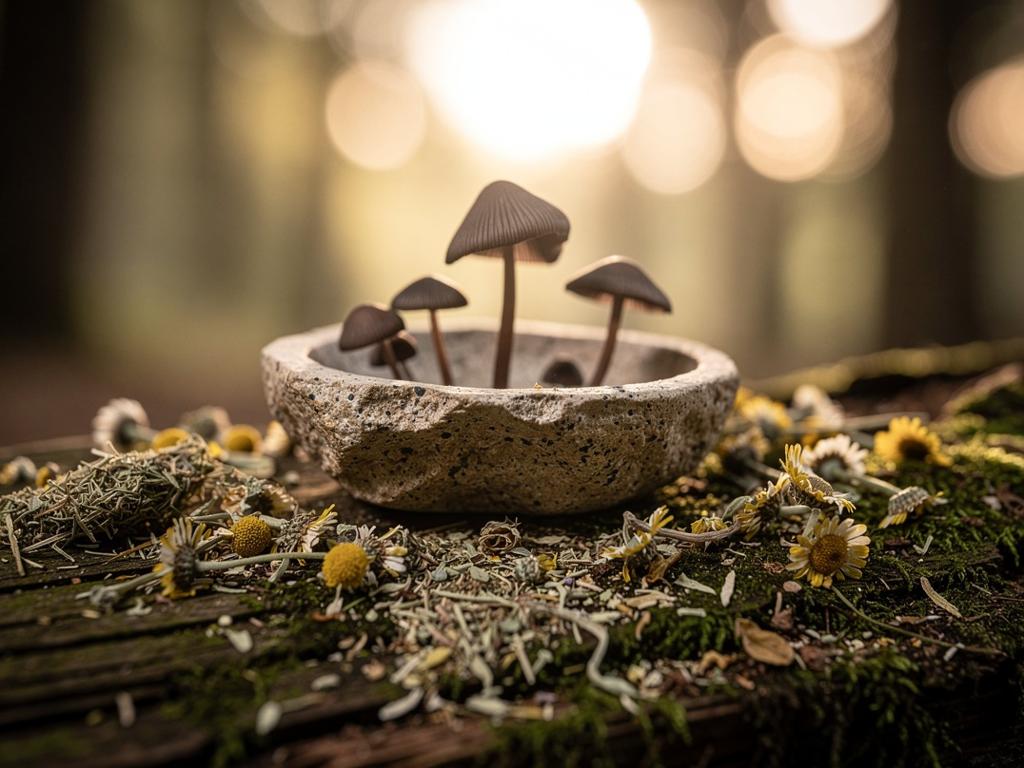
Four grams of dried psilocybin mushrooms sits right at the edge of what most people call a heroic dose. It's not quite the ego-dissolving five-gram territory Terence McKenna made famous, but it's well past the point where you can pretend you're still in control of the ride. If you're researching what a serious psilocybin experience actually feels like — maybe because you're considering a retreat, maybe because you're just curious — this is the terrain worth understanding before you commit. I've spent years around plant medicine ceremonies and psychedelic retreats, and I've watched a lot of people walk into their first high-dose mushroom experience thinking they knew what to expect. Most of them didn't. The dose changes everything. What works as a gentle afternoon at two grams becomes something else entirely once you double it. The come-up on four grams doesn't sneak up on you the way a smaller dose might. Somewhere around the 30-minute mark, the room starts breathing. Colors get a little too interested in themselves. That familiar body buzz shows up, but it's louder — a kind of electric hum that makes you want to sit down, then lie down, then close your eyes. Nausea is common at this dose. Some people throw up. In traditional contexts, purging is treated as part of the medicine — the body letting go of what it's been holding. If you're prepared for it, it's manageable. If you're not, it can feel like the trip is going wrong before it's really started. It isn't. It's just starting honestly. By the 60-minute mark, most people at this dose have stopped trying to describe what's happening. There's a moment — every experienced tripper knows it — where you realize the thing you swallowed an hour ago has fully taken the wheel. That surrender is either the hardest part or the whole point, depending on how you meet it. The peak of a four-gram psilocybin trip lasts roughly two hours, though your subjective sense of time will have very little to do with the clock. People commonly report: The confrontational part deserves its own paragraph. At recreational doses, mushrooms are mostly playful. At four grams, they're not really playful anymore. Whatever you've been avoiding tends to show up. That's why people who use psychedelics for healing — for depression, for addiction, for trauma — often gravitate toward these bigger doses. The medicine gets serious when you get serious with it. This is also why setting matters so much more at this level. A four-gram trip in the wrong environment — noisy, unsafe, with people you don't trust — can become genuinely difficult to navigate. In the right environment, with a sitter or facilitator you trust, the same dose can feel like the most important afternoon of your life. Readers researching psychedelic retreats often ask how high-dose psilocybin stacks up against ayahuasca, San Pedro, or ibogaine. They're not the same experience, though they overlap in useful ways. Ayahuasca tends to feel more directed — like there's an intelligence guiding the session, showing you what needs seeing. The visionary content is often more narrative, more imagistic. Mushrooms feel more elemental, more like being dissolved into something rather than shown something. Neither is better. They're different medicines with different personalities. San Pedro (huachuma) is gentler and longer — a day-long walk through your own psyche rather than a plunge. Ibogaine is in another category entirely: much longer, physically demanding, and used almost exclusively in therapeutic contexts for addiction recovery. If you're weighing options for a retreat, the choice usually comes down to what you're bringing to the work and how much intensity you can hold. The research emerging over the past few years has been remarkably consistent: substantial mystical-type experiences correlate with better therapeutic outcomes for depression, addiction, and end-of-life anxiety. Johns Hopkins, NYU, and Imperial College London have all published work pointing in the same direction. And here's the honest part — you don't reliably get those experiences at low doses. You get them at doses like this. That's the reason retreats offering psilocybin work almost always land in the three-to-five-gram range for a primary ceremony. Below that, the medicine tends to stay decorative. Above it, most people don't remember much and integration becomes harder. Four grams is a working dose for actual psychological movement. None of which means you should book something tomorrow. High-dose psilocybin has real contraindications — a personal or family history of psychotic disorders is a serious flag, and interactions with SSRIs, lithium, and certain other medications matter. A reputable retreat will screen for these things. If they don't, that's your first red flag. The tail end of a four-gram trip is often the most quietly beautiful part. Somewhere around hour four, the intensity releases and you're left in what people call the afterglow — a soft, warm, unusually clear state that can last well into the following day. Emotions run close to the surface. Music sounds better than it has in years. You may cry for no obvious reason and it will feel like relief. The real work, though, starts a few days later. This is what facilitators mean when they talk about integration — the slow process of translating what happened during the trip into changes in how you actually live. Without integration, a big psychedelic experience tends to fade into a story you tell at parties. With it, the experience becomes something that reshapes your life in the months and years afterward. Practical integration looks less mystical than people expect. It's journaling. It's talking to a therapist who understands psychedelics. It's noticing where your old patterns start creeping back and choosing differently. It's boring, in the best possible way. Only you can answer that. But here are the questions worth sitting with before you decide: The people I've watched benefit most from experiences like this are the ones who arrive with humility rather than expectations. They're not looking for enlightenment. They're looking to be honest with themselves. Mushrooms tend to reward that posture. If you've read this far and something about it feels like a call rather than a curiosity, that's worth paying attention to. For readers who want to explore this further in a supported setting, a range of vetted psilocybin retreats can be browsed on our marketplace here. Take your time with the decision. The medicine will still be there when you're ready.
Creatine Supplements for Women Over 40: What Actually Works
Creatine used to have a bit of a locker-room reputation — the domain of teenage boys chasing bicep gains and older lifters trying to hold onto them. That framing is outdated, and it was probably wrong to begin with. The people who arguably benefit most from creatine aren't 19-year-old bodybuilders. They're women over 40 trying to hold onto strength, bone density, and mental sharpness through a decade of hormonal shift. This is not a supplement I would have written about ten years ago. The research has caught up, though, and the case for women in midlife is genuinely compelling. So let's talk about what creatine actually does, why the female body responds to it a little differently, and how to pick a version worth your money. Creatine is a compound your body already makes. It's built from three amino acids — methionine, glycine, and arginine — and the vast majority of it, roughly 95%, lives in your muscle tissue. A smaller amount sits in the brain. Its job is to help cells generate energy quickly when things get demanding: a heavy lift, a sprint up the stairs, a mentally taxing afternoon. Inside your cells, creatine converts into phosphocreatine, which then helps regenerate ATP — the molecule your body burns as immediate fuel. More available phosphocreatine means more ready ATP, which translates to more strength during a set, more endurance in short bursts, and arguably a bit more cognitive stamina when you're pushing through a long day. Here's the catch. You only get the real benefits when your creatine stores are essentially full. Diet alone — meat and fish, mostly — tops most people up to around 60–80% saturation. To get the rest of the way, you need to supplement. And for women, the math is even more lopsided: baseline creatine stores in the female body tend to run 70–80% lower than in male bodies. Combine that with the fact that women lose up to 8% of their muscle mass per decade after 30, and the supplement starts looking less like a nice-to-have and more like a reasonable line of defense. The forties are when a few biological trendlines start bending in ways that get your attention. Estrogen begins its long slow decline. Muscle mass drops faster than it did in your thirties. Bone density starts to matter in a way it never did before. Sleep gets weirder. Recovery from a hard workout takes longer than it used to — sometimes annoyingly so. Creatine won't fix any of that on its own, but it does address a few of the underlying mechanisms directly. A 2021 comprehensive review looking at creatine and women's health across life stages concluded that supplementation appears beneficial through nearly every phase — with minimal risk. The specific areas where evidence is strongest: None of this is magic. You still have to lift the weights, eat the protein, sleep the hours. But creatine appears to make the effort you're already putting in count for slightly more, which is a decent trade for something you stir into your morning coffee. The supplement aisle is a swamp. Half the products are fine, a quarter are overpriced, and the rest are creatively marketed sugar. Here's what actually matters when you're picking one. Insist on creatine monohydrate. You'll see other forms — hydrochloride, nitrate, malate, ethyl ester, buffered — and they'll all promise better absorption or fewer side effects. The truth is that monohydrate is the form that's been studied for decades. It has close to 100% bioavailability in powder form. The alternatives are usually more expensive and less proven. Stick with monohydrate. Check the dose. For most people, 3 to 5 grams daily is the sweet spot for muscle and performance benefits. Some research suggests that going up to around 10 grams may offer additional support for brain and bone health, though the ceiling of benefit isn't fully mapped. What you want to avoid is a product that lists creatine on the front and delivers half a gram per serving. That happens more often than you'd think. Powder over gummies. I know the gummies look appealing. They're portable, they taste like candy, they feel like less of a commitment. But independent testing has repeatedly shown that many creatine gummies contain far less creatine than the label claims — sometimes a fraction. Powder is boring, but it's honest. Mixed into water, coffee, a smoothie, oatmeal, or yogurt, it disappears into your routine without much fuss. Look for third-party testing. This is the single easiest way to filter out sketchy brands. A supplement that's been tested by an independent lab has at least been checked to verify it contains what the label says and isn't contaminated with anything you didn't sign up for. Bonus ingredients are optional. Some formulas pair creatine with taurine, electrolytes, or magnesium. These aren't necessary — plain monohydrate does the job — but they can be useful if you're stacking goals. Taurine for cellular hydration, electrolytes if you sweat heavily, magnesium if you're prone to muscle tightness. Just don't pay a premium for a proprietary blend that hides the actual doses. The timing question comes up constantly. Should you take creatine before your workout? After? On rest days? The honest answer is that consistency matters far more than timing. Creatine works by keeping your muscles saturated over time, not by giving you a pre-workout jolt. Take it whenever you'll actually remember to take it. That said, a few practical tips. Take it every day, not just on training days — saturation is the whole game. Mix it into something you already drink or eat, so it becomes automatic rather than a decision. And give it a few weeks before you judge whether it's working. The first two or three weeks are your muscles filling up. The effects on strength, recovery, and body composition tend to show up gradually after that. Common questions worth answering directly: This is the question I get most from women in their forties and fifties who are curious but hesitant. They're not training for anything. They walk, maybe do some yoga, maybe lift occasionally. Is creatine still worth it? Probably, yes — though the returns compound when you pair it with some form of resistance training. Creatine's benefits extend beyond athletic performance because energy production isn't only about workouts. Your brain uses ATP. Your organs use ATP. Everyday activities like carrying groceries, climbing stairs, and getting up off the floor draw on the same energy systems that a set of squats does. Supporting those systems as you age is not a luxury. That said, if you want the muscle and bone benefits specifically, you have to give your body a reason to build and preserve tissue. That means picking up something heavier than your handbag a few times a week. Creatine amplifies the signal — it doesn't create one from nothing. Supplements are tools, not solutions. The women I know who've moved through their forties and fifties with the most vitality did not do it through a single powder. They lift things. They sleep. They protect their nervous systems from the constant low-grade grind of modern life. Creatine fits into that picture as a small, evidence-backed edge — not a headline. What strikes me, writing about this, is how much of midlife wellness comes down to unglamorous consistency. Same walk, same protein target, same five grams of white powder in your morning water. It's not exciting. But five years of it looks very different from five years without it. And for readers whose interest in longevity and body-mind health extends into the deeper work — the kind that happens on a cushion, or in ceremony, or on a quiet retreat — a curated selection of wellness and plant-medicine retreats can be explored on our marketplace here.
Stress and Heart Health: Simple Habits That Protect Both
When was the last time you actually paused mid-day and asked yourself what stress feels like in your body? Not in the abstract — literally, right now, in your chest, your jaw, your shoulders. Most of us don’t. We push through, refill the coffee, answer the next email, and wonder later why sleep won’t come. Here’s the thing your heart already knows: it isn’t just a pump. It responds to what’s happening in your head, often before your conscious mind catches on. A tense budget meeting, a rough conversation with your teenager, three nights of thin sleep — your cardiovascular system is tracking all of it in real time. Learning to listen to that feedback loop between mind and heart is one of the quieter skills in wellness. It doesn’t make a good Instagram post. But it does change outcomes. Acute stress is a feature, not a bug. Cortisol rises, norepinephrine spikes, your heart rate lifts, your attention narrows. That cascade is exactly what you want when a car swerves into your lane or you need to say something hard to a colleague. Ramp up, act, come back down. Beautiful system. The problem is that most modern stress doesn’t hand you the “come back down” part. The American Heart Association published a scientific statement a few years ago mapping how sustained stress and anxiety chew away at cardiovascular health through two overlapping pathways. One is behavioral — when you’re fried, you move less, eat worse, drink more, skip medications, and stop sleeping properly. The other is silent and physiological. Stress hormones stay dialed up, the sympathetic nervous system doesn’t stand down, low-grade inflammation creeps in, and arterial walls stiffen over time. The reverse pattern also holds. People who report a sense of purpose, meaning, and cautious optimism tend to have healthier daily habits, lower inflammatory markers, and better long-term cardiovascular outcomes. It isn’t magic — it’s that mood shapes behavior, and behavior shapes biology. Here’s a finding that surprised me the first time I read it. Researchers looked at how accurately people could sense their own physiological arousal — whether what they said they felt matched what their heart rate was actually doing. The people whose inner reports lined up with their bodies had better psychological well-being, fewer depressive symptoms, less anxiety, and lower inflammatory markers linked to heart disease. The people who tuned it out — the champion suppressors, the “I’m fine” crowd — didn’t get that protection. Ignoring the signal doesn’t turn off the biology. It just means you don’t adjust course. This is one of the reasons interoceptive practices — anything that trains you to feel what’s happening inside your body — keep showing up in the well-being literature. Breathwork, meditation, somatic movement, plant-medicine work done in a considered container. They all rebuild the wiring between what your body is doing and what your mind is willing to acknowledge. Stress doesn’t always show up wearing a name tag. Once a certain level of tension becomes familiar, it stops registering as tension. It just feels like Tuesday. Physically, watch for a resting heart rate that runs higher than your usual baseline, a heaviness or tightness in the chest, jaw clenching, tension headaches, and sleep that fractures around three in the morning. Digestive weirdness counts too — the gut is wired into all of this. Psychologically, look for the quieter states: chronic low-grade irritation, cynicism, a flat sense of dissatisfaction, a shortened fuse, a general loss of curiosity about things you used to care about. None of these need to be dramatic to matter. Mild and persistent is often the more damaging pattern. These aren’t two separate checklists, either. Physical symptoms and emotional states are two views of the same underlying process — a nervous system that hasn’t been given permission to downshift. You’re not going to eliminate stress. That framing sets you up to fail, then feel worse about failing. The realistic target is reducing the amount of time you spend in an elevated state and building better exit ramps. A few approaches have decent evidence behind them: The last one gets underweighted constantly. In a recent trial of a mindfulness program for adults living with congenital heart disease, the thing participants kept naming as most valuable wasn’t the breathwork or the meditation. It was feeling less alone. Community isn’t decoration on top of stress management — it’s a load-bearing wall. This is where the conversation gets interesting for anyone reading this while quietly wondering whether a retreat might help. A well-run ayahuasca, psilocybin, or contemplative retreat is essentially a concentrated dose of many of the ingredients above — breath, stillness, community, beauty, and a forced pause from the phone. The psychedelic piece adds something extra. Emerging research on psilocybin and ayahuasca suggests they can temporarily loosen the mental patterns — the rumination, the hypervigilance, the low-grade dread — that keep the sympathetic nervous system idling too high. Participants often report a lasting reduction in that background static months after the ceremony itself. Whether that translates to measurable cardiovascular benefit over years is still being studied, but the mechanism is plausible. A caveat worth stating plainly: ayahuasca in particular puts genuine cardiovascular load on the body during the ceremony — heart rate and blood pressure both climb. If you have existing heart conditions, uncontrolled hypertension, or take certain medications (especially SSRIs and anything with MAOI interactions), you need a proper medical screen before you go anywhere near a ceremony. A reputable retreat will require this and turn people away who shouldn’t drink. If a place doesn’t ask about your medications, that’s your answer about whether to book. Knowing a technique and reaching for it at 4:47pm on a bad Wednesday are two different skills. The follow-up data from that heart-disease mindfulness trial is encouraging on this front — three months later, two-thirds of participants still had lower anxiety, and more than three-quarters still had lower depression and better resilience. Small habits held. The trick is attaching new behavior to existing routine. Slow breathing while the coffee brews. Two minutes of silence before opening email. A short walk without the phone after lunch. Ten minutes of journaling before bed instead of the doom-scroll. Ambitious once-a-week attempts fail. Ordinary daily ones don’t. This is boring advice. It also happens to be true. Stress and heart health are one system, not two. The physical signs and the emotional ones are the same signal wearing different clothes. The single most protective move you can make isn’t adding another supplement to your morning stack — it’s learning to notice, honestly, what your body is telling you, and giving it permission to come back down. For readers exploring whether a longer, deeper reset might help — a plant-medicine ceremony, a silent retreat, or a structured integration program — a range of curated psychedelic and plant-medicine retreats can be browsed on our marketplace here. Choose carefully, screen honestly, and treat your heart like it’s listening. Because it is.
Why Rest Feels Impossible — and Why Your Nervous System Depends On It
Here's a strange thing about rest: most of us don't know how to do it. Not really. We say the word like we mean it, we book the weekend off, we sit down on the couch — and within four minutes we're checking email, folding laundry, or mentally rewriting tomorrow's to-do list. The body wants to stop. The mind won't let it. I've spent years around people preparing for and coming down from intense inner work — ayahuasca retreats, psilocybin ceremonies, ibogaine programs, silent sits — and one pattern shows up again and again. The people who struggle most in integration aren't the ones with the wildest visions. They're the ones who can't rest. They fly home, land in Monday morning, and try to metabolize a soul-level experience on four hours of sleep between meetings. Then they wonder why nothing sticks. If you grew up anywhere in the industrialized West — and especially in the United States — you were programmed from about age five to equate your worth with your output. Nobody sat you down and taught this. You absorbed it. You watched the adults come home with grocery bags in both arms and immediately start dinner. You watched them clean up after dinner, then answer work emails, then fold something, then finally sit down at 9pm with a glass of wine and their phones in their hands. That was the model. Rest was what you did when the work was done, and the work was never done. The vocabulary is telling too. Pay your dues. Put in the work. No rest for the weary. I'll rest when I'm dead — a phrase that always struck me as darkly literal. We reward exhaustion the way other cultures reward hospitality or artistry. Say you spent Saturday reading in bed and people cock their heads sympathetically, wondering if you're okay. Say you spent Saturday running errands, working out, meal-prepping, and answering client emails, and people nod with approval. You get it. You're on top of things. This wiring doesn't just make us tired. It makes us disconnected — from our bodies, from our actual needs, from any signal quieter than a full-blown breakdown. And that disconnection is where a lot of the deeper problems live: the anxiety, the low-grade depression, the addictions we use to take the edge off, the sense that we're sprinting through our own lives without ever quite arriving. Rest is not the same as sleep, though sleep is a big part of it. Rest is anything that lets your nervous system downshift from “on” to “off.” That might look like: Notice what's not on that list: scrolling. Scrolling is not rest. Your brain treats it like foraging — constant micro-decisions, tiny hits of novelty, unresolved emotional threads. You get up from an hour of scrolling more depleted than when you sat down. If you've ever collapsed onto the couch, opened Instagram, looked up two hours later and thought “why do I feel worse,” that's why. Here's where this connects to the world I usually write about. Ayahuasca, psilocybin, ibogaine, San Pedro — the master plants and psychedelic compounds people travel across continents to sit with — do a lot of their real work in the days and weeks after the ceremony ends. That window is called integration, and integration requires a nervous system that can actually rest. If yours is stuck in constant sympathetic activation, you'll take the download and file it somewhere you can't access. The insight fades. The old patterns creep back within a month. Facilitators who've been doing this a long time will tell you the same thing in different words: the medicine shows you the door, but rest is what walks you through it. This is why the best retreat centers build in slow mornings, hammock time, silent stretches, unstructured hours. It looks like padding. It isn't. It's the actual medicine of the container — teaching your system, sometimes for the first time in decades, that it's allowed to stop. The same principle applies to recovery work. People using plant medicine for addiction — whether that's ibogaine for opioid dependence, ayahuasca for alcohol use disorder, or psilocybin protocols for compulsive patterns — often find that the substance interrupts the loop, but rest is what keeps it interrupted. A nervous system that never gets to downregulate is a nervous system that will keep reaching for whatever quiets it. Sometimes that's a drink. Sometimes it's a screen. Sometimes it's another twelve-hour workday. The mechanism is the same. When I first tried to build real rest into my week, I was terrible at it. I'd sit down to watch a movie and within ten minutes I'd be folding laundry with the movie on in the background. I'd take a “walk” that was really a phone call. I'd lie down for a nap and start mentally drafting emails until my heart rate was back up and the nap was cooked. What worked, eventually, was treating rest like a skill I was rebuilding from scratch. A few things that helped: The first few weeks feel weirdly frantic. You may feel bored, then anxious, then irritated, then a bit sad. That's not a sign the rest isn't working — that's the backlog surfacing. Underneath all the busyness, there are usually feelings we've been outrunning. When you stop running, they catch up. Let them. This is the same emotional weather that surfaces in ceremony, actually, just at a lower volume and without the visuals. The counterintuitive part — the part nobody who worships productivity wants to hear — is that resting more makes you get more done. Not in a hustle-bro “optimize your recovery to maximize your output” way. In a real way. You focus better. You make fewer stupid decisions. You stop snapping at people you love. You catch problems earlier because you're actually present enough to notice them. You also start to hear your body again. That vague ache in your shoulder turns out to be information. The 3pm energy crash turns out to have a pattern. The persistent low mood turns out to be connected to something specific. You can only hear those signals when the noise dies down, and the noise only dies down when you stop generating it. For anyone circling the idea of a retreat — plant medicine, silent, whatever the format — I'd offer this: start practicing rest now, before you go. Not because you need to be worthy of the experience, but because the more comfortable your system is with stillness, the more the experience can actually land. You don't want your first taste of real quiet to happen three days into a ceremony week. Give yourself a head start. If exploring this territory further feels right, a range of ayahuasca, psilocybin, and other plant-medicine retreats can be browsed on our marketplace here — including several that build genuine rest and integration time into the structure rather than treating it as afterthought. And in the meantime: put the phone in the other room. Sit down. Stay there. The world will still be there in an hour, and you'll be better equipped to meet it.
Dreaming of a Psychedelic Retreat?
We have the best deals and offers from thousands of organizers all over the world! Get them into your mailbox every week!
We value your privacy. Your email address will never be shared or published.
