 English
 Deutsch
 Français
 Nederlands
 Español
SHOP AYAHUASCA RETREATS BLOG
When Chronic Illness Breaks You: Finding Real Healing Beyond the Hyper-Vigilance

Ezra Caldwell
July 25, 2026
Your ultimate guide to discover transforming ayahuasca and psychedelic experiences. Dive into serene destinations and elevate your consciousness to unparalled heights.
Discover Ayahuasca & Psychedelic Retreats NowSearch for ayahuasca & psychedelic retreats
Discover retreats, trainings, and holidays from all over the world
There's a specific exhaustion that comes from living inside a body you can't fully trust. People who've spent decades managing a chronic condition know it well — the low hum of vigilance that never really switches off, the way your shoulders sit half an inch higher than everyone else's, the running mental checklist that keeps you tethered to the next possible threat. It looks a lot like anxiety from the outside. Underneath, it's something older and stranger. It's the nervous system deciding, quite reasonably, that the world is not safe.
I've spent a lot of time in retreat spaces sitting next to people who arrived carrying exactly this. Severe allergies. Autoimmune conditions. Long COVID. Chronic pain that no scan could explain. What they had in common wasn't the diagnosis — it was the pattern that grew up around the diagnosis. A pattern that, in many cases, was doing more damage than the original illness by the time they showed up looking for help.
This post is for people living inside that pattern, or loving someone who is. I want to talk honestly about how chronic illness rewires the nervous system, why traditional talk therapy sometimes stalls on it, and where practices like meditation, community, and — yes — plant medicine can actually move the needle. No promises. No hype. Just what I've seen and what the science increasingly supports.
The invisible weight of a chronic condition
Most people underestimate how much cognitive real estate a chronic condition eats up. If you've grown up scanning restaurants for allergens, reading every label twice, mentally locating exits in unfamiliar rooms — that scanning becomes the substrate of your daily consciousness. It's not something you do. It's who you are. And when the reactions are severe enough to be life-threatening, a whole other layer settles in: the awareness that any lapse could be your last.
Clinicians increasingly recognise this as a form of post-traumatic stress. It doesn't require a single defining event. It builds from the drip-feed of near-misses, ER trips, and the small daily humiliations of being the person who has to make everyone stop and read the menu again. One woman I met on a psilocybin retreat in the Netherlands described it perfectly: “I've been performing calm for so long, I forgot my body was allowed to relax.”
The knock-on effects are predictable and brutal. Sleep goes first. Then appetite, or the ability to trust food at all. Social life contracts. Some people develop full-blown agoraphobia; others just quietly stop saying yes to things. And because the underlying illness is real — the allergen really can kill you, the pain really is unpredictable — the vigilance never feels irrational. That's what makes it so hard to unwind.
Why standard treatment often isn't enough
Talk therapy helps. So do SSRIs, for some people. Cognitive behavioural approaches can chip away at the more obvious catastrophising loops. But for a lot of chronic-illness patients I've spoken with, these tools only get them so far. The problem isn't primarily cognitive. You can know, intellectually, that the restaurant is safe. Your body still won't let you eat.
This is where the newer wave of somatic and psychedelic-assisted approaches comes in. The nervous system that's been in threat mode for twenty years needs more than a reframe — it needs a felt experience of safety, sustained long enough that something below the neck starts to believe it. That's a very specific kind of work.
- Somatic therapies — like Somatic Experiencing or sensorimotor psychotherapy — work directly with the body's stored stress responses.
- Meditation and breathwork — particularly practices that emphasise interoception, or listening inward — help rebuild the trust between mind and body.
- Psychedelic-assisted work — under skilled facilitation — can temporarily loosen the vigilance patterns enough for something new to be experienced and, sometimes, integrated.
None of these are magic bullets. All of them require time, decent guidance, and a willingness to be uncomfortable. But when they work, they work at a depth that talk alone rarely reaches.
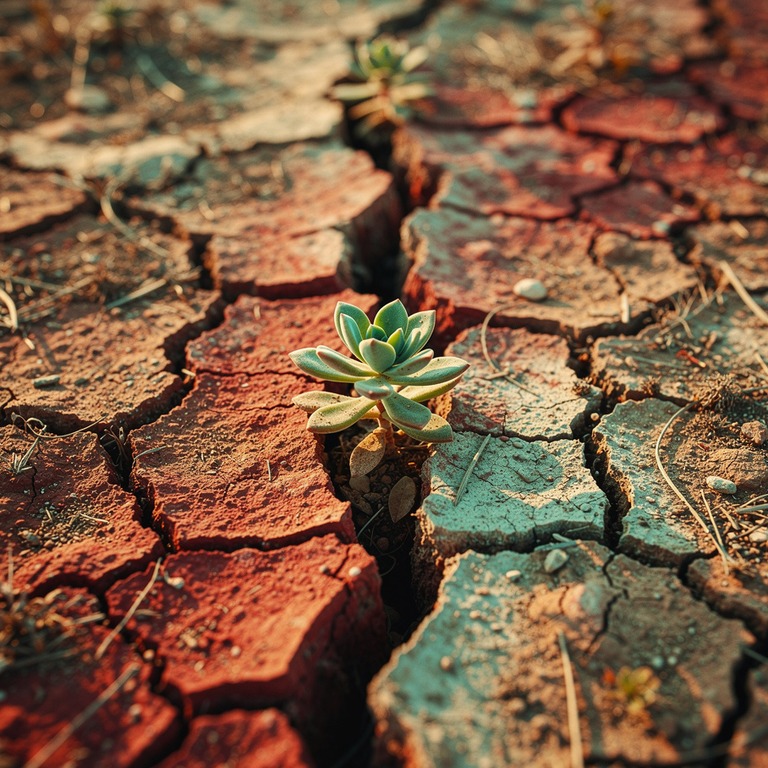
What plant medicine actually offers people with chronic illness
Let me be careful here, because this is where a lot of nonsense gets written. Plant medicines — ayahuasca, psilocybin, San Pedro, ibogaine — are not treatments for allergies, autoimmune conditions, or any physical illness. Anyone telling you otherwise is either uninformed or selling something. What plant medicine can sometimes address is the psychological and nervous-system fallout that grows around a chronic condition: the trauma, the hyper-vigilance, the disordered relationship with your own body.
The mechanism, as best current research understands it, involves a temporary increase in neuroplasticity — the brain's ability to form new connections and, crucially, to consider new interpretations of old experiences. During an ayahuasca ceremony, someone who's spent decades braced against their body might, for the first time in memory, feel their body as a home rather than a threat. Not because the illness has gone anywhere. Because the relationship to the illness has shifted.
I've watched this happen. A man in his fifties, career derailed by chronic pain, spending most of a psilocybin retreat weeping quietly and then telling the circle on the last morning that he'd forgotten his body could feel anything other than an enemy. Whether that shift holds depends almost entirely on what he does in the six months after — the integration work, the community, the daily practices. The ceremony cracks the door. Walking through it is a longer job.
Choosing a retreat when your body is already fragile
If you're living with a chronic condition and considering a plant-medicine retreat, the vetting process needs to be more rigorous than it would be for someone in robust health. This is not a place to cut corners. A few things to look for:
- Full medical intake. A serious facilitator will ask about your conditions, medications, and history in detail. If the intake form is casual or nonexistent, walk away.
- Medication interactions. Ayahuasca in particular interacts dangerously with SSRIs, SNRIs, and a long list of other drugs. The retreat must have a clear protocol for tapering, if tapering is even safe for you.
- Dietary accommodation. If you have allergies, ask specifically how meals are prepared, who's in the kitchen, and whether they've hosted people with your allergen profile before. A shrug is a no.
- On-site medical support. For severe conditions, know who's trained in what and how far the nearest hospital is. Genuinely.
- Integration support. What happens after you go home? A retreat that hands you a transcendent experience and no follow-up is doing half the job.
You'll notice these questions are basic. That's the point. If a retreat can't answer them clearly and without defensiveness, they're not the right fit — not because they're necessarily unsafe, but because you specifically need more than they're offering.
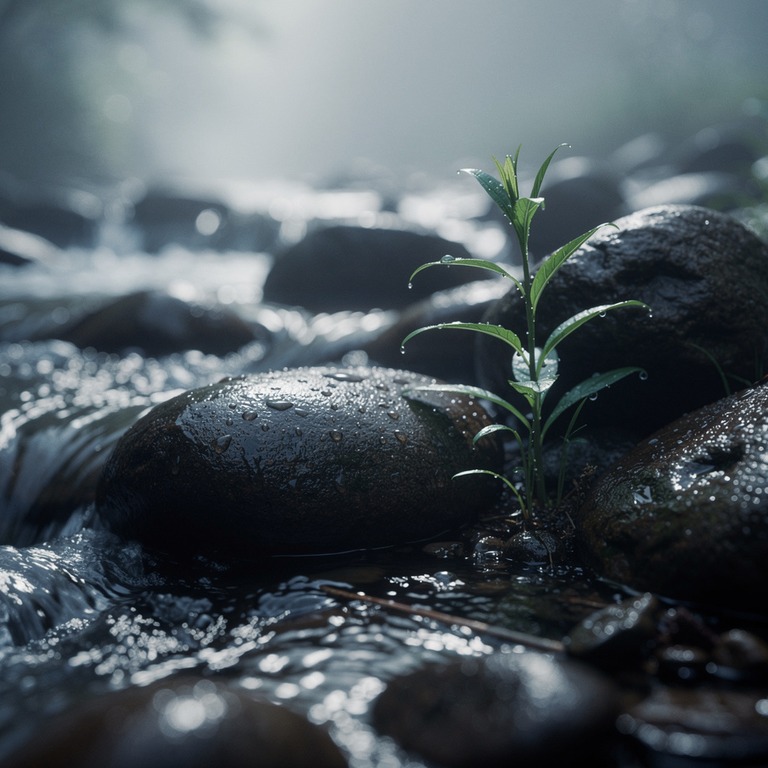
The quieter work: community, ritual, and time
Here's the thing nobody wants to hear: the retreat is the easy part. The hard part is the year afterwards, when the insights are supposed to translate into changed behaviour and mostly don't, unless you build the scaffolding for them to land on.
Community shows up again and again as the most consistent predictor of who actually rebuilds their life after a difficult experience — chronic illness, addiction, trauma, take your pick. Not community in the vague inspirational sense. Specific people who understand what you've been through and don't need you to explain the baseline. For someone with severe allergies, that might be one friend who has the same condition and gets it without translation. For someone recovering from addiction, it might be a sponsor and a room full of people in the same boat.
The people I've seen make the deepest changes tend to combine three things: a serious psychedelic or contemplative experience, ongoing daily practice (meditation, movement, breathwork — pick your medicine), and a small circle of people who can hold them accountable and witness the change. Take away any one leg and the stool tends to wobble.
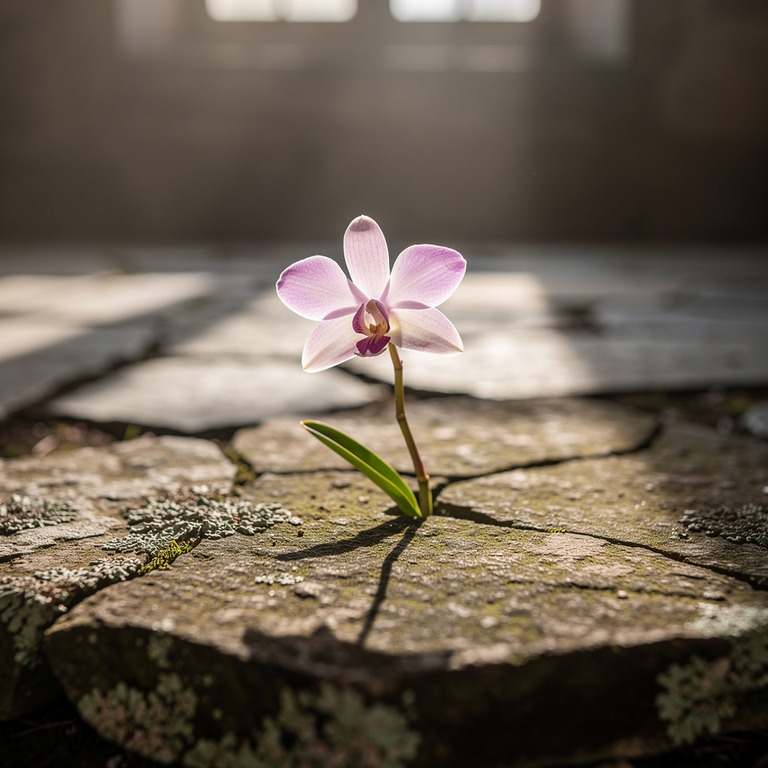
A note on self-acceptance, which sounds soft but isn't
Most of the people I've met who've genuinely healed from the psychological weight of a chronic condition arrived at the same unglamorous conclusion. They stopped fighting the fact of the illness. Not resignation — something more active. A decision to build a life around the reality of the body they have, rather than the body they wish they had.
Plant medicine can accelerate that recognition. So can years of therapy, or a good meditation practice, or a truly difficult conversation with someone who loves you. There's no single right doorway. There's just the doorway that opens for you, when it opens, and the work of walking through it.
If any of this resonates and you're weighing whether a plant-medicine retreat might be part of your own path, curated ayahuasca, psilocybin, and plant-medicine retreats can be browsed on our marketplace here. Take your time with the decision. The right retreat, at the right moment, with the right preparation, is worth waiting for.
Craving More Stories?
Join our ShopAyahuascaRetreats newsletter for the latest updates on thrilling
destinations and inspirational tales, delivered straight to your inbox!
We value your privacy. Your email address will never be shared or published.