 English
 Deutsch
 Français
 Nederlands
 Español


Reset. Heal. Grow.
When Mental Health Shifts Shape: Why Symptoms Return in New Forms
Here's something that catches a lot of people off guard: you do the work, you feel better, and then months down the line something creeps back in — only it doesn't quite match what you struggled with before. The anxiety you finally got a handle on has quieted, but now your mood feels flat. Or the depression lifted and now you're drinking more than you'd like. You're not imagining it, and you're not backsliding in the way you think you are. A large Dutch population study, published recently in Psychological Medicine, put some numbers behind this experience. Common mental health disorders appear to be sticking around longer than they did about a decade ago — and when they do persist, they often shift into a different diagnosis entirely. For anyone in recovery, integration, or just trying to make sense of their own patterns, that finding matters. The team analyzed data from the Netherlands Mental Health Survey and Incidence Study, an ongoing project tracking mental health across the Dutch adult population. They compared two cohorts assessed roughly twelve years apart. The earlier group included 6,646 adults. The more recent group — 6,194 adults between the ages of 18 and 75 — was interviewed between 2019 and 2022 and followed for about three years. Their focus was narrow but useful: anxiety disorders, mood disorders, and substance use disorders. For each participant who had one of these conditions at baseline, researchers checked whether the person still had a mental health disorder at follow-up — and whether it was the same one, or a different one. That second question turns out to be the interesting one. Most studies just ask whether the original diagnosis is still present. This one asked something closer to what people actually experience: are you still struggling, in some form? Among adults aged 18 to 64 who had a disorder at the start of the study, 42.7% of the earlier cohort still had a mental health condition at follow-up. In the more recent cohort, that number jumped to 57.9%. That's a meaningful shift over roughly a decade. The pattern held when researchers zoomed in on anxiety and mood disorders specifically. Substance use disorders also looked more persistent in the newer group, though that particular difference lost statistical significance once age and sex were accounted for. The study can't tell us why persistence has climbed. Broader awareness might mean more people are getting diagnosed who wouldn't have been before. Treatment access, cultural stressors, economic pressure, screen-mediated loneliness, the pandemic's long tail — any or all of these could be involved. What the data does tell us is that assuming a single episode and a clean recovery is probably too tidy a model for what a lot of people are actually living. Anxiety, depression, and substance use overlap in ways that clinicians have known about for a long time but don't always get communicated well to patients. They share biological substrates. They share cognitive patterns. And they share the underlying vulnerabilities — trauma histories, chronic stress, disrupted sleep, disrupted attachment — that keep the nervous system on high alert. So when someone with an anxiety disorder later meets criteria for a mood disorder, it's not necessarily a new problem parachuting in from nowhere. It's often the same underlying dysregulation expressing itself differently. The presentation changes; the root system doesn't. The Dutch team identified a few factors associated with more persistent symptoms: These are associations, not causes. But they line up with what most therapists and integration specialists will tell you privately — the people who struggle the longest tend to be the ones carrying unprocessed trauma, using substances to manage what won't stay managed, and operating in environments that don't give the nervous system much room to settle. This is worth naming carefully. The research above is about conventional epidemiology, not psychedelic medicine. But readers of this site are often people who've cycled through therapy, antidepressants, maybe a stint with a coach or a men's group, and are now wondering whether ayahuasca or psilocybin or ibogaine might reach something the other approaches didn't. The persistence and shape-shifting the study describes is exactly the terrain that draws people toward plant medicine in the first place. When your depression lifts on an SSRI but a low-grade anxiety takes its place, when your drinking stops but a new compulsion moves in, when the same feeling keeps showing up in different costumes — that's often when someone starts googling ayahuasca retreats at two in the morning. Plant medicine isn't a shortcut around the pattern. But experienced facilitators will often say that what ceremony does well is help people see the pattern itself. The ayahuasca or the psilocybin doesn't cure the anxiety; it can, in the right container, show you what the anxiety has been protecting you from. Integration — the weeks and months after — is where the actual shift happens, or doesn't. If you're considering a retreat, take the Dutch findings as a useful caution. A single ceremony is unlikely to be the finish line. Plan for aftercare. Plan for a therapist who won't spook at the word psychedelic. Plan for the possibility that whatever you brought into the maloca will show up again in some form, and that's not failure — that's how this kind of healing tends to move. Whether you're working with conventional care, plant medicine, or some combination, the same handful of moves tend to help when something starts to feel different: Mental health rarely follows a straight line, and the newer data suggests the lines are getting longer and more tangled, not shorter and neater. That's uncomfortable if you were hoping for a clean fix. It's also, in a strange way, freeing. If your symptoms have shifted shape, you're not doing recovery wrong. You're doing what recovery actually looks like for a lot of people. Staying curious about the changes — rather than treating every new symptom as a verdict on the last round of work — tends to be the more sustainable posture. For people whose search has led them toward psychedelic-assisted approaches, a range of ayahuasca and plant-medicine retreats with integration support can be browsed on our marketplace here. Whatever direction you go, the goal isn't to never struggle again. It's to get better at noticing what's happening and responding sooner.
The Sleep Sweet Spot for Healthy Aging: What New Research Reveals
Somewhere along the way, we all absorbed the same message about sleep: get more of it. Eight hours minimum. Nine if you can swing it. Ten on the weekends to catch up. It became one of those wellness truisms nobody questions — like drinking more water or taking more steps. Turns out, the picture is messier than that. A large new analysis published in Nature looked at how sleep duration maps onto the aging of specific organs and systems in the body, and the findings complicate the “more sleep equals better health” narrative in a useful way. If you've been dragging yourself through mornings on five hours, or logging ten hours and still feeling wrecked, this is worth understanding. Most of us think about sleep in terms of how we feel the next day. Alert or foggy. Patient or irritable. But researchers who study aging have spent the last decade building tools that measure how old your cells and organs actually are — biological age, as opposed to the number on your driver's license. These are called aging clocks, and they draw on brain imaging, blood proteins, metabolic markers, and other biomarkers to estimate the wear-and-tear age of specific tissues. The new study used data from the UK Biobank, one of the largest health databases in the world, and cross-referenced sleep duration against 23 different aging clocks. What the researchers were looking for wasn't a simple line — more sleep, younger cells — but a shape. And the shape they found was a U. Both ends of the sleep spectrum, it turns out, are associated with faster biological aging. People sleeping less than six hours a night showed accelerated aging across multiple organ systems. So did people sleeping more than eight. The middle range — somewhere between roughly 6.4 and 7.8 hours — was where the biological-age gap was smallest. A U-shaped curve means the trouble sits at the extremes. Too little sleep is bad. Too much sleep is also bad, though for different reasons. The sweet spot lives in the middle, and it's narrower than most people assume. What makes this study more interesting than the usual sleep headline is that it doesn't just point at the brain. Suboptimal sleep — on either end — was associated with accelerated aging in a startling list of systems: In other words, sleep isn't just something your brain needs. It's a systemic lever. When it's off, your liver notices. Your immune cells notice. Your skin notices. Nothing in the body is really operating in isolation, and sleep seems to be one of the master dials the whole system is tuned to. The researchers were able to get surprisingly specific. Across the nine aging clocks that showed the strongest U-shaped patterns, the optimal windows landed at: The gap between the sexes is small — we're talking minutes — but the fact that it exists at all is interesting. Sex hormones, immune-response patterns, and metabolic demands all differ between men and women, and different biomarkers tend to move in different ways. Women in the study showed higher brain-protein aging markers, while men showed higher brain-imaging aging markers. Same organ, different signals. Practically speaking, most adults probably do best somewhere between about six and a half and just under eight hours. Not the cultural target of “a solid eight or nine,” and definitely not the five or six that gets romanticized in hustle culture. Here's the counterintuitive part. Short sleep and long sleep don't seem to damage the body in the same way, or through the same mechanisms. Short sleep was linked to a broad spread of problems — cardiovascular disease, metabolic dysfunction, musculoskeletal issues, and psychiatric conditions. That fits with what most sleep researchers have been saying for years: chronically underslept people wear out faster in almost every domain. Long sleep, on the other hand, was much more narrowly linked to brain-related conditions like depression, schizophrenia, and bipolar disorder. And the researchers make a careful distinction here: they don't think oversleeping is causing those issues. They think it might be an early signal of them. The connection between long sleep and late-life depression, for example, appears to run largely through accelerated aging in the brain and in fat tissue — meaning the extra sleep is a symptom, not the underlying problem. So if you consistently need nine or ten hours to feel functional, that's worth paying attention to. Not with panic, but with curiosity. It could be a sign that something else — inflammation, mood, undiagnosed sleep apnea, an autoimmune process — is quietly asking for attention. The temptation with a study like this is to start micromanaging your sleep to the minute. Don't. Trying to hit exactly 7.2 hours is the kind of anxiety that makes sleep worse, not better. Here's a more useful way to translate the findings: For people exploring plant medicine or coming out of an ayahuasca or psilocybin retreat, sleep is one of the quiet variables that shapes how integration lands. The nervous system does a lot of its reorganizing at night. If you're preparing for a ceremony, the weeks beforehand are a genuinely good time to tighten up your sleep window — not because a facilitator told you to, but because your body will process the experience more cleanly when it's not running on fumes. The same holds for aftercare. Insights don't stick well in a sleep-deprived brain. What this research adds to the broader conversation is a useful correction: sleep is not a lever you can pull infinitely in one direction and expect better results. It's a range. Bodies are U-shaped about it. And the number of hours you spend in bed is one signal among many about how your whole system is doing. If any of this resonated — especially the part about how physical practices, integration, and rest weave together — a range of plant-medicine and ceremony experiences with strong aftercare support can be browsed on our marketplace here. Good sleep won't fix everything, but it's one of the least glamorous, most reliable things you can do for the body you're bringing to whatever comes next.
Walking Meditation and Beginner's Mind: A Simple Practice Anyone Can Do
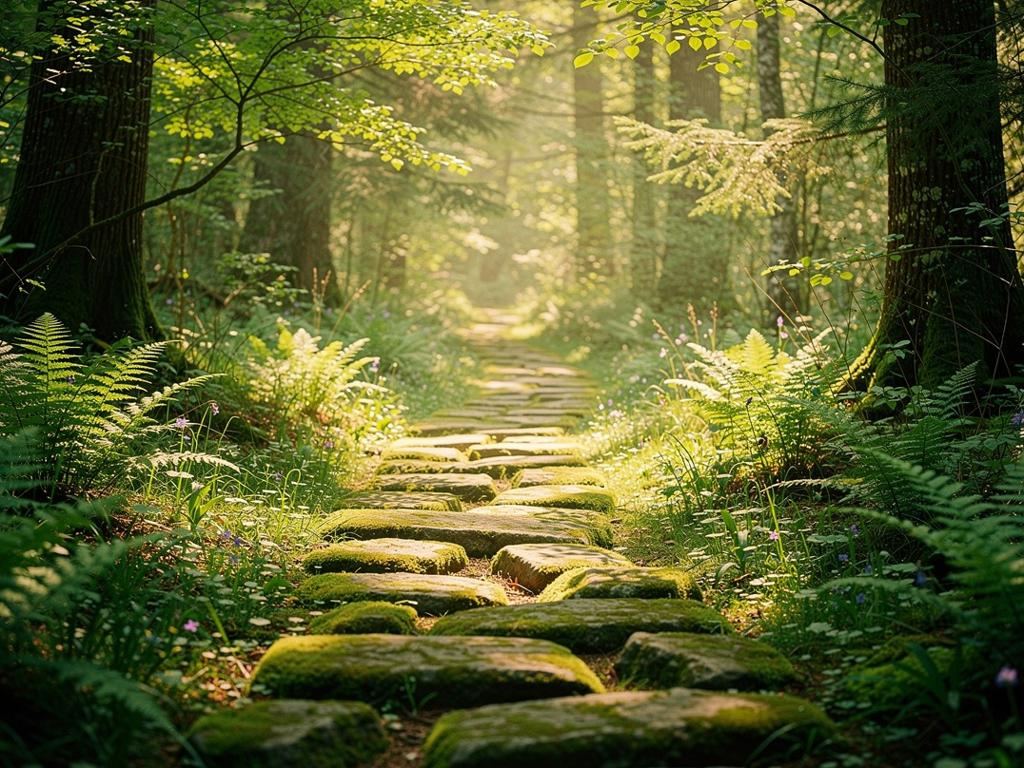
There's a strange thing that happens when you've walked the same street a thousand times. Your feet know the route. Your eyes stop looking. The whole trip collapses into a mental to-do list, and you arrive at your destination with almost no memory of getting there. Sound familiar? Walking meditation is the quiet antidote to that autopilot. It's one of the oldest contemplative practices going — you'll find versions of it in Zen monasteries, Theravada forest traditions, and modern secular mindfulness programs — and it works precisely because it hijacks something you're already doing. You don't need a cushion. You don't need silence. You just need a bit of pavement and a willingness to slow down maybe fifteen percent. What follows is a practice built around what teachers sometimes call beginner's mind — the deliberate stance of looking at something familiar as if you've never seen it before. It's simple. That's the whole point. And once you've tried it a few times, you may find it becomes one of those small practices that quietly changes how the rest of your day feels. The phrase comes from Zen, popularized in English by Shunryu Suzuki, who wrote that in the beginner's mind there are many possibilities, but in the expert's mind there are few. It sounds abstract until you try it. Beginner's mind isn't pretending to be ignorant. You still know what a tree is. You still remember your neighbor's name. What shifts is the layer of assumption sitting on top of every perception — the reflex that says I already know this, no need to look. That reflex is efficient. It's also the reason life can start feeling flat. When every object is pre-labeled and every route pre-walked, novelty disappears not because the world got boring but because you stopped meeting it directly. Beginner's mind is a gentle interruption of that habit. It matters for meditation, obviously. But it also matters for relationships, for creative work, and — worth naming here — for anyone approaching plant medicine or a psychedelic retreat. Those experiences ask you to encounter yourself and the world without your usual filters. Practicing that stance in a low-stakes context, like a walk around the block, is quietly useful preparation. Sitting meditation gets most of the attention, and for good reason. But for a lot of people — especially those with restless bodies, trauma histories, or brains that spiral hard the moment they close their eyes — sitting still can feel less like calm and more like being trapped in a small room with your worst thoughts. Walking gives the body something to do. The rhythm regulates. The forward motion pulls attention outward rather than letting it collapse inward. You're still practicing awareness, but you're doing it with a nervous system that has somewhere to put its energy. Many retreat centers, whether contemplative or psychedelic, build walking practice into the schedule for exactly this reason. It's a way to metabolize what's happening internally without forcing stillness on a body that isn't ready for it. A few practical reasons to try walking meditation instead of (or alongside) sitting: Read through this once first, then try it. You don't need to remember every step — the spirit matters more than the sequence. Give yourself somewhere between ten and thirty minutes. A quiet park path is ideal, but a residential sidewalk works. So does a hallway if the weather's terrible. What you want is somewhere you won't need to constantly dodge traffic or check maps. If you're wearing headphones for a guided version, keep the volume low enough that you can still hear the world around you. Before you take a step, just stand. Feel the weight of your body settling into your feet. Notice your posture without correcting it. Take one deliberate breath. This is the moment you're switching gears — from getting-somewhere mode into being-here mode. Look around as if you've been dropped into this location for the first time. From another country, another planet, whatever framing works for you. You don't know the names of things. You don't know what's ordinary or what's remarkable. You're just here, looking. Not comically slow. Just enough slower than your normal pace to notice the difference. Slow enough that you can feel your foot leave the ground, travel through the air, and land again. This isn't about performance — nobody watching should think you're doing anything unusual. Here's where beginner's mind gets specific. Challenge yourself to spot three things on this walk that you've never consciously registered before. A hairline crack in the pavement. The way one particular window is set slightly crooked. The shade of green on a leaf you've walked past hundreds of times. These don't have to be beautiful. They just have to be new to your attention. This one's harder than it sounds. Instead of thinking that's a tree, that's a car, that's a mailbox, try to just see the shapes, colors, and textures. Let the labels drop for a few seconds at a time. You'll fail constantly and that's fine. The attempt is the practice. Every few minutes, drop the visual focus and open your ears instead. What's the closest sound? The furthest? What's the quietest thing you can catch — your own footsteps, the wind through leaves, a distant hum you'd usually filter out? Cities and forests both reveal a lot when you actually listen. Your mind will absolutely produce some version of this is boring or I've seen this before or when does this end. That's not failure. That's the exact moment to gently ask yourself what else can I notice? and keep walking. If you've landed on this article because you're researching an ayahuasca retreat, an ibogaine program, or a psilocybin ceremony, this practice might seem like a detour. It isn't. The single most consistent piece of advice I hear from experienced facilitators is that the people who benefit most from psychedelic experiences are the ones who've already spent time cultivating attention. Not because you need to be a meditation master before you sit in ceremony. You don't. Many people arrive with no formal practice and still have profound experiences. But the skills you build in something as simple as a walking meditation — noticing without immediately judging, staying with what's present when the mind wants to flee, welcoming boredom or discomfort rather than fighting it — those are exactly the skills a long ceremony demands. And they're the skills that make integration in the weeks afterward less of a wild ride. Master plants, whether ayahuasca or peyote or huachuma, are often described in Amazonian and Andean traditions as teachers. What they teach depends heavily on your capacity to listen. Walking meditation is one of the smallest, most portable ways to strengthen that capacity, and it costs nothing. The trap with any mindfulness practice is treating it as an event rather than a stance. You do it for ten minutes on a Saturday and then return to autopilot for the rest of the week. That's not useless — even occasional practice beats none — but the real shift happens when beginner's mind starts leaking into ordinary moments. The walk from your car to the office. The two minutes you spend waiting for the kettle. The commute you'd normally spend scrolling. A few things that help: Beginner's mind is renewable. Every walk, every conversation, every meal is available to be met with fresh attention. Most of the time we won't manage it. Occasionally we will, and those are the moments that remind us we're actually alive and not just running errands through a life. If a practice like this resonates and you find yourself curious about deeper contemplative work — or about the psychedelic and plant-medicine retreats where this kind of attention becomes essential — a curated range of ceremonies and healing programs can be browsed on our marketplace here. Until then, go for a walk. Slowly. See what you notice.
The Hidden Magnesium Deficiency Affecting 70% of Americans (And Why Your Blood Test Missed It)
Ever had that nagging sense that something's off — you're tired in a way sleep doesn't fix, your nerves feel frayed, your muscles twitch at 2 a.m. — and then your doctor slides the lab printout across the desk and says everything looks fine? Turns out your gut might have been right. A wave of recent research points to a mineral deficiency that affects roughly two out of every three American adults, and the standard blood test most doctors order barely registers it. The mineral is magnesium. And while this isn't exactly breaking news to nutritionists, the scale of the problem — and the specific reason routine bloodwork keeps missing it — is worth understanding, especially if you're doing the kind of inner work that psychedelic and plant-medicine retreats invite. Preparation for ceremony asks a lot of the body. So does integration afterward. Running on depleted mineral stores makes both harder than they need to be. Researchers analyzed magnesium levels in more than 5,000 U.S. adults surveyed between 2021 and 2023 as part of the National Health and Nutrition Examination Survey. Using a serum magnesium threshold of 2.06 mg/dL, they concluded that around 67.8% of American adults are at risk of what's called chronic latent magnesium deficiency — a state where your blood levels look normal on paper, but the reserves stashed throughout your body are quietly draining. The numbers get worse when you zoom in on certain groups. Adults with type 2 diabetes came in at 78.3%. Those with hypertension hit 68.5%. People with chronic kidney disease landed at 71.1%. Magnesium is central to insulin signaling and glucose metabolism, so the overlap with metabolic disease is more than coincidence — it's mechanism. And several common medications quietly worsen the picture, including diuretics, proton pump inhibitors (the acid-reflux workhorses), and certain immunosuppressants. Here's the awkward truth about serum magnesium testing. Less than 1% of the magnesium in your body actually circulates in your blood. The rest lives in your bones, muscles, and soft tissues. A serum test is like judging a warehouse's inventory by peeking through a mail slot. It gets worse. Serum magnesium isn't even a standard inclusion in most routine blood panels — you have to ask for it. And when labs do run it, the reference ranges most hospitals rely on were derived from data collected more than half a century ago, back when soil quality, food processing, and diet looked very different. Researchers have flat-out described magnesium abnormalities as one of the most underdiagnosed deficiencies in clinical practice. That's not a fringe opinion. It's the mainstream cardiology and nephrology literature saying, essentially, we've been looking at this wrong for decades. Two forces are stacking against you. The first is the food supply itself. Over the past fifty years, the magnesium content of fruits and vegetables has dropped considerably, largely tracking the mineral depletion of the soils they're grown in. Industrial agriculture pulls more out of the ground than it puts back. Even an honest, veggie-heavy plate today delivers less magnesium than the same plate would have in 1975. The second force is processing. Roughly 80% of a food's magnesium is stripped away during milling, refining, and packaging. A slice of whole-grain sourdough and a slice of white sandwich bread are not remotely equivalent from a mineral standpoint. Add in the fact that about half of Americans don't even hit the recommended intake to begin with, and you have a slow-motion nutritional shortfall that most people don't notice — until something else in their health starts wobbling. Magnesium participates in more than 300 enzymatic reactions in the body, which is a fancy way of saying it touches nearly everything. That also means the deficiency symptoms are frustratingly nonspecific. They overlap with a dozen other things. Still, certain patterns show up over and over: None of these prove deficiency on their own. But if three or four of them apply to you and your last blood panel was unremarkable, you have reason to dig deeper. Plant medicines are physically demanding. Ayahuasca in particular puts the body through a workout — the purging, the sustained sympathetic arousal, the long nights, the emotional weight of what surfaces. Ibogaine has real cardiac considerations and takes electrolyte balance seriously. Even a psilocybin retreat, gentler on the body than the others, still asks your nervous system to do something unusual for hours at a stretch. Facilitators who take safety seriously will screen for medications, cardiovascular risk, and sometimes electrolyte issues. But magnesium status specifically? Rarely on the checklist. And that's a shame, because heading into ceremony already depleted — nervous system frayed, sleep already broken, muscles primed to cramp — makes the whole experience harder to move through and harder to integrate afterward. The days following a strong ceremony are when your body is doing enormous repair work. It needs raw material. This isn't about optimizing yourself into some idealized retreat-ready state. It's about not walking into an already-intense experience with your reserves running on fumes. The good news: this is one of the more fixable nutritional problems out there. A few practical steps: What this research really underlines is that a "normal" lab result is not the same as a healthy body. It means you fell within a range that was defined decades ago, using assumptions about diet and lifestyle that no longer match reality. If you've been feeling subtly off — the kind of off that doesn't have a clean diagnosis attached to it — mineral status is worth investigating before you chase more exotic explanations. And if you're preparing for a plant-medicine experience, treat the weeks beforehand as an opportunity to actually feed your body. Not a punishing dieta, not perfection — just consistent, unprocessed food and enough of the minerals your nervous system needs to do the work you're about to ask of it. For readers who are weighing that next step, a range of vetted ayahuasca, psilocybin, and other plant-medicine retreats can be explored on our marketplace here. Whatever you choose, walk in with your reserves topped up. Your body will thank you when the medicine starts to move.
Silent Hypertension: Why Half of Us Don't Know Our Blood Pressure Is High
Here's an uncomfortable question: when was the last time you actually knew your blood pressure numbers? Not guessed. Not assumed they were fine because you feel okay. Actually knew. If you can't remember, you're in very large company. A new analysis of 1.4 million adults in England — one of the biggest of its kind — found that more than one in three adults has hypertension, and nearly 60% of them have no clue. The condition is doing its quiet damage in the background while people go about their lives feeling perfectly normal. This matters far beyond cardiology waiting rooms. For anyone considering a plant-medicine retreat, an ibogaine program, or any intensive experience that puts real physiological demands on the heart, knowing your baseline blood pressure is not optional. It's the sort of thing responsible facilitators screen for before they'll let you sit in ceremony. And if you don't know your numbers, they can't help you. The Our Future Health study, published in a BMJ public health journal, looked at 1.4 million adults across England. Around 37% had high blood pressure. Of those, 58.8% were completely undiagnosed — they had elevated readings but no one had ever told them so. The finding that should stop you in your tracks is what happened among people who were being treated. Just over half of them still had uncontrolled numbers. So even a prescription and a doctor's involvement doesn't guarantee the problem is being managed. Researchers call this the “rule of halves” — roughly half of cases go undetected, and about half of those under treatment aren't actually under control. That's a lot of people walking around, some with pill bottles in their bathroom cabinets, assuming they've got this handled. Many of them don't. The reason so many cases slip past is depressingly simple: high blood pressure usually doesn't feel like anything. The World Health Organization is blunt about it — most people with hypertension have no symptoms at all. Meanwhile the pressure quietly wears down blood vessels, thickens the heart muscle, and raises the risk of stroke and kidney disease over years or decades. There's no headache that reliably signals it. No dizziness that shows up at the right moment. No fatigue that makes you think “ah yes, that must be my systolic reading creeping into the 140s.” The body doesn't send a warning. That's the whole problem. Which means the only way to catch it is to check. Not to feel for it — to check it, with an actual cuff, on an actual arm, at semi-regular intervals. There's no clever biohack that replaces this. Here's where the study gets interesting, and where a lot of retreat-going adults should pay attention. A related primary-care study found that adults aged 18 to 44 were more than twice as likely to have undiagnosed hypertension as older adults. Another piece of research showed that people at the lowest overall cardiovascular risk — often younger, leaner, more active people — were the most likely to have blood pressure that no one had caught. Why? Because they don't go to the doctor. They feel fine. They skip the annual physical. They assume the yoga, the clean eating, and the good genes are doing the work. And sometimes they are — but sometimes they aren't, and there's no way to tell without a reading. This is the population that ends up filling out retreat medical forms and writing “no known conditions” in the blank, entirely honestly, because they've never had reason to think otherwise. It's also the population most likely to be surprised when a facilitator asks for a recent reading and they realize the last one they can remember was during a college physical. The good news is that checking blood pressure has become almost embarrassingly easy. It's fast, painless, and accessible in ways it wasn't a decade ago. A short list of concrete moves: None of this is complicated. It's just easy to skip, because nothing hurts. Plant medicines and psychedelics have real cardiovascular effects. Ayahuasca can raise heart rate and blood pressure during the peak of a ceremony. Ibogaine is well-known for its effects on cardiac rhythm and requires medical screening — reputable ibogaine centers demand an EKG and full workup before they'll accept you. 5-MeO-DMT, San Pedro, and psilocybin all shift the cardiovascular system to some degree. This isn't a reason to be afraid; it's a reason to be informed. Any facilitator worth trusting will ask about your blood pressure history. If your answer is “I have no idea,” that's a signal — to them and to you — that a check-up is a sensible step before ceremony, not something to defer until after. Retreats that skip medical screening entirely, or that wave off your questions about risk, are telling you something about how they operate. Take the hint. Preparing for a psychedelic experience isn't just about intention-setting and dieta. It's also about knowing the machine you're bringing into the room. Blood pressure, resting heart rate, medications, and any cardiovascular history are all part of the picture. The more of that picture you can hand a facilitator, the safer and more useful your experience becomes. “Feeling fine” is not a diagnostic tool. That's really the whole lesson here. The people in this study who had no idea their blood pressure was elevated weren't ignoring symptoms — they didn't have symptoms. The condition doesn't play fair that way. Closing your own detection gap costs almost nothing. A monitor at home, a question at your next appointment, a pharmacy kiosk on the way to the grocery store. Any of these gives you information you can actually use — for your long-term health, and for making smarter decisions about intensive experiences like plant-medicine work. For readers thinking through a psychedelic or plant-medicine journey and wanting to arrive at ceremony well-prepared and honestly informed about their own body, a curated selection of retreats can be browsed on our marketplace here. Whatever path you take, get your numbers first. The rest of the work goes better when you know what you're working with.
Craving More Stories?
Join our ShopAyahuascaRetreats newsletter for the latest updates on thrilling
destinations and inspirational tales, delivered straight to your inbox!
We value your privacy. Your email address will never be shared or published.

Burnout, Broken Judgment, and Why Plant Medicine Might Be the Reset You Need
There's a particular kind of tired that doesn't announce itself. You keep working. You keep hitting deadlines. You keep making decisions that feel, in the moment, like reasonable ones. And then a year passes, or three, and you look back at choices you made and wonder who exactly was at the wheel. I've been writing about ayahuasca and psychedelic retreats for a while now, and one pattern keeps surfacing in the intake forms and post-ceremony conversations I overhear: people don't usually arrive at plant medicine because life is going great. They arrive because something has quietly broken. Often, that something is judgment itself — eroded by years of burnout they never quite named. This piece is for the reader who is exhausted, high-functioning, and beginning to wonder whether a retreat might help. It's also for anyone who has read about ayahuasca, psychedelics, or master plants as tools for addiction and depression, and is trying to figure out if the hype has any substance under it. Short answer: yes, but not the way most retreat marketing tells you. When people imagine burnout, they picture collapse. Someone who can't get out of bed. Someone who has clearly, obviously stopped. That version exists, but it's the minority. The more common version is the person who keeps showing up. They still ship the project. They still take the meeting. From the outside they look fine — maybe even impressive. Inside, something else is happening. Concentration takes more effort. Sleep is shallow. The things that used to feel meaningful feel like tasks. And because output continues, the person interprets that output as proof they're okay. They aren't. This is the trap. You are using the very organ that's been degraded — your own brain — as the instrument for evaluating whether that organ is degraded. It's a broken feedback loop, and it can run for years before anything visible cracks. Here's where plant medicine enters the picture. Ayahuasca, psilocybin, ibogaine, San Pedro — these are sometimes called master plants precisely because, in the right container, they seem to bypass the usual defenses. The exhausted, competent, deeply defended part of you doesn't get to run the show for a few hours. Something else gets a turn. People who have spent years pushing through often describe their first ayahuasca ceremony as the first time in a decade they felt what their body was actually saying. Not what their calendar said. Not what their KPIs said. What their nervous system had been trying to tell them since roughly 2019. That's the pull, and it's real. It's also why psychedelic healing has moved from fringe to something your dentist's cousin has now tried. But the pull is not, by itself, a booking decision. So let's talk about what to actually consider. There is a growing body of clinical research — not a mountain, but a real hill — showing that psychedelics can meaningfully help with treatment-resistant depression, alcohol and opioid addiction, PTSD, and the kind of stuck-life-pattern exhaustion we've been describing. Ibogaine has an unusual track record with opioid dependence. Psilocybin has produced striking results in end-of-life anxiety and major depression. Ayahuasca is being studied for depression and trauma, and has decades of traditional use for what Amazonian traditions would call soul-level fatigue. None of this makes plant medicine a cure. What it seems to do — when the ceremony is well-held and the integration afterward is taken seriously — is briefly loosen the grip of the patterns you've been living inside. You get a window. What you do with that window is the actual work. For a burned-out professional considering ayahuasca specifically, the honest framing is this: a good ceremony can show you, viscerally, that you've been operating on fumes. That's information you couldn't get from another vacation. But the retreat is not going to redesign your life for you. It's a diagnostic and an opening. Recovery is what happens in the eleven months after. Here is the part I want you to actually slow down for. If you are burned out and researching retreats, you are — by definition — making a significant decision while under-resourced. That doesn't mean don't go. It means apply some of the same rigor you'd apply to any high-stakes call. A few things worth checking before you send a deposit anywhere: And a piece of advice I wish more people took: run the decision past someone who isn't as tired as you are. Not because they know better. Because they aren't inside the same fog. This is the single cheapest safeguard available, and burned-out people almost never use it. People ask me constantly what an ayahuasca ceremony feels like, and I've stopped giving a clean answer because there isn't one. Some nights are terrifying. Some are boring. Some rearrange your understanding of your own life so thoroughly that you spend the next month trying to describe it and failing. What's consistent: you'll sit or lie in a ceremonial space, often called a maloca, usually after several days of a specific diet that excludes salt, sugar, pork, alcohol, and — importantly — most pharmaceuticals. A facilitator or curandero will serve the brew. Icaros, the traditional songs, will be sung. The experience typically lasts four to six hours. You'll probably purge at some point. Everyone purges. It's part of it, and no, it isn't the worst part. The worst part, usually, is the honesty. Plant medicine has a way of showing you the thing you've been avoiding — the job you should have left, the relationship you've been managing instead of being in, the way you've been drinking every night to take the edge off the exhaustion that's been telling you something for years. That's the medicine. It's also why people who show up hoping for a mystical vacation often leave rattled instead of blissed out. If I could give one piece of advice to someone booking their first ayahuasca or psilocybin retreat, it would be this: budget for integration as seriously as you budget for the retreat itself. That means a therapist familiar with psychedelics, an integration circle, or a coach who understands the terrain. It means blocking off unstructured time when you get home — not flying back into a Monday meeting. The insights that arrive during ceremony are like dreams. Vivid at the moment, half-gone by breakfast, entirely gone by the following week unless you do something with them. Journaling, somatic work, honest conversations, small behavior changes — that's where a retreat either becomes a turning point or becomes an expensive story you tell at dinner parties. Plant medicine isn't for everyone. If you have a personal or family history of schizophrenia or bipolar disorder, most reputable centers will and should decline you. If you're on SSRIs, MAOIs, lithium, or certain heart medications, the interactions can be serious — sometimes fatal. Ibogaine in particular requires cardiac screening. This is not the space for winging it. There is also the harder-to-name risk of a poorly held ceremony: a facilitator who crosses boundaries, a center that treats participants carelessly, a group dynamic that turns extractive. These situations happen more often than the glossy retreat websites suggest. Choose slowly. Read participant accounts that aren't on the center's own website. Trust the small, uneasy feelings. If you're reading this because you're exhausted and quietly wondering whether ayahuasca or another psychedelic retreat might be the reset your life needs — that instinct is worth taking seriously. It's also worth interrogating. Ask yourself what you actually want a retreat to do. Ask what you'd need to have in place, before and after, to give the experience a real chance. And then move slowly. Talk to someone rested. Do the reading. If something here speaks to you, the range of ayahuasca and plant-medicine retreats discussed throughout this space can be browsed on our marketplace here. Take your time with it. The whole point, after all, is to stop making depleted decisions.
Does Psychedelic Therapy Lead to a Spiritual Awakening? An Honest Look
Somewhere around the third night of a ceremony in the Sacred Valley, a woman I'd been sitting near — mid-forties, corporate lawyer, the kind of person who color-codes her grocery list — turned to me and said, very quietly, “I don't know who I am anymore.” She wasn't upset. She was almost laughing. That sentence, I've come to believe, is the honest beginning of what people mean when they say psychedelic therapy triggered a spiritual awakening. It's one of the most-asked questions in this whole space. Does ayahuasca — or psilocybin, or ibogaine, or any of the other master plants — actually push you into some kind of awakening? Or is that just retreat-brochure language dressed up for people who want their pain to mean something? The answer, from what I've seen across a decade of ceremonies and conversations with facilitators, is: yes, sometimes. And also: it's more complicated than the Instagram version. The word gets thrown around like confetti. For some people, awakening means a single, blinding moment during ceremony where the ego dissolves and they feel — really feel — that they are not separate from anything. For others, it's slower. A quiet unhooking from patterns that ran their life for thirty years. A sudden inability to keep lying to themselves about their marriage, their drinking, their job. In the psychedelic-therapy literature you'll see phrases like “mystical-type experience” or “ego dissolution.” In the Amazon, the curanderos I've worked with don't really use the word awakening at all. They talk about cleaning. Limpieza. As if you're not adding some new spiritual layer but scrubbing off the old crust so you can see what was already there. I've come to prefer their framing. It's less grandiose and, honestly, more accurate to what I've watched happen in people. Here's the thing though — the experience during ceremony is not the awakening. That's just the crack. What you do in the weeks and months afterward is what actually determines whether anything shifts. Studies out of Johns Hopkins, Imperial College London, and NYU have been reporting for years now that a single high-dose psilocybin session can produce lasting changes in personality, particularly in the trait called “openness.” That's unusual. Personality traits in adults are supposed to be stable. Ayahuasca research is smaller but pointing the same direction — reductions in depression, drops in problematic drinking, and self-reported increases in a sense of connectedness that hold up months out. What the research doesn't quite capture is the texture. In ceremony, people don't describe it as “a 42% reduction in depressive symptoms.” They describe it as their dead father sitting at the end of the mat and saying he's sorry. They describe watching every cruel thing they ever did to their body play back like a home movie. They describe — and this one comes up constantly — the sense that love is not a feeling but a substance, and it's everywhere, and they've been starving in the middle of a feast. Is that an awakening? Call it what you want. It changes people. Not all of them. Not permanently in every case. But often enough that the pattern is undeniable. A large slice of people researching plant medicine are quietly asking one question: can this help me stop drinking, or using, or scrolling my life away? The honest answer is that psychedelics and addiction have a real, documented relationship — and it's more nuanced than the headlines suggest. Ibogaine, in particular, has a reputation earned mostly in unregulated clinics in Mexico and Costa Rica for interrupting opioid dependency in a way nothing else quite does. Ayahuasca has been used in Brazilian recovery communities for decades. Psilocybin trials for alcohol use disorder have shown genuinely striking results. But — and this matters — none of these are magic bullets. The people who stay clean are almost always the ones who do the boring, unglamorous integration work afterward. Therapy. Community. New habits. New friends, sometimes. The medicine opens the door. It doesn't walk you through it. I've watched people leave a retreat convinced they'd never touch cocaine again, and then relapse within six weeks because they went back to the same apartment, the same job, the same friends who use. And I've watched people who had a comparatively “small” experience quietly rebuild their whole life over eighteen months. Guess which one looks like the real awakening. This is where I get a little cranky, because the retreat industry has a real problem with this. People come home from a week in Peru with a new vocabulary — vibrations, downloads, soul contracts, timelines — and they mistake the vocabulary for a transformation. Six months later they're the same person with a nicer Instagram grid. Some rough tests I've learned to apply, to myself and to friends: None of these are perfect. But they're better than asking yourself whether you feel spiritual. The romantic version is that you come home glowing and everything is different. The real version, for most people I've talked to, is a lot messier. There's usually a honeymoon window — maybe two weeks, maybe two months — where you feel open and grateful and can't stop crying at sunsets. Then life reasserts itself. Your boss is still awful. Your partner still leaves dishes in the sink. The insight you had about your mother is harder to hold onto when your mother is actually in the room. What tends to distinguish the people who genuinely integrate from the people who slide back is embarrassingly simple. They keep a practice. Some form of daily sitting — meditation, prayer, journaling, walking without a phone. They stay connected to at least one other person who was in ceremony with them, or to a facilitator, or to a therapist who understands this territory. They don't try to explain the experience to skeptics who didn't ask. And they treat the insight as a hypothesis to test in their life, not a truth to defend. The awakening, if that's what we're calling it, isn't in the ceremony. It's in the Tuesday morning after, when you choose to do the thing differently. I'll say this plainly, because the reader who's made it this far probably deserves it. Plant medicine can be genuinely transformative. It can also be destabilizing, expensive, and — at the wrong retreat, with the wrong facilitators — actively harmful. The question isn't really whether ayahuasca leads to awakening. The question is whether you're at a point in your life where cracking yourself open is what you actually need, and whether you have the support structure to put yourself back together afterward. Talk to people who've done it. Read the medical contraindications carefully, particularly if you're on SSRIs or have a family history of psychosis. Pick a retreat with real lineage, transparent facilitators, and integration support that lasts beyond the last ceremony. Ask what happens if you have a hard night. Ask who's in the room. If the answers are vague, keep looking. For readers who want to take this further, a range of vetted ayahuasca and psychedelic retreats can be browsed on our marketplace here. Whatever you decide, decide it slowly. The medicine will still be there in six months. Your discernment is worth more than your urgency.
Guided Meditations for Psychedelic Integration: What Actually Helps
The ceremony ends. You fly home. And then, roughly four days later, sitting in traffic on a Tuesday afternoon, something the medicine showed you comes crashing back with the force of a wave you didn't see coming. This is the part nobody puts in the retreat brochure — the long, unglamorous tail of integration, where the insights either take root or quietly evaporate. Guided meditation is one of the more useful tools for holding that tail steady. It's not a substitute for a good integration therapist, and it won't replace the community you built in the maloca. But when it's 6 a.m. and you're wide awake and the download from your last ayahuasca ceremony feels like it's slipping through your fingers, a well-chosen guided audio can be the difference between anchoring the experience and losing it. I've spent years asking retreat participants what they actually reach for in the weeks after plant medicine work. What follows is what I've learned — the styles that help, the ones to avoid, and how to build a simple daily practice that doesn't feel like homework. Psychedelics and master plants — ayahuasca, psilocybin, San Pedro, ibogaine — open a temporary window. The neuroscience people talk about increased neuroplasticity for weeks after a session, a period when new patterns can be laid down more easily than usual. That window is real, but it closes. What you do inside it matters enormously. Most people leave a retreat convinced they'll meditate every morning, journal every night, and finally quit the thing they came to quit. Two weeks in, life reasserts itself. The old grooves are deep. Willpower alone rarely wins that fight, and it's not supposed to. The point of integration practice is to give the nervous system a repeatable, low-effort way to return to the state the medicine showed you was possible. Guided meditation works here because it removes the biggest obstacle: deciding what to do. Press play. Follow a voice. That's it. On the days when you're too tired, too raw, or too scattered to sit in silence, a guided track will still carry you. Not all guided audio is created equal, and some of it is actively unhelpful for someone processing a psychedelic experience. A lot of mainstream mindfulness content is designed for stressed office workers who want to sleep better. That's a fine goal, but it's a different goal than metabolizing a ten-hour ayahuasca journey. Here's what tends to work for people coming out of ceremony: What to avoid: anything overly performative, tracks with heavy background music that jerks you around emotionally, and — this is personal — guides who whisper. If the ASMR trend has taught us anything, it's that a lot of people find whispering deeply relaxing. If you're one of them, ignore me. If you're not, your shoulders will climb toward your ears within thirty seconds. There's no single right approach, and different practices suit different phases of integration. In the first week after a retreat, most people are still raw and open, and gentler practices tend to land better. A month later, you might be ready for something more structured. Deceptively simple. You move attention slowly from feet to head, noticing sensation without trying to change it. For people processing trauma work done in ceremony, body scans are often the safest way back into embodied awareness. They're also useful for noticing when you're dissociating, which happens more than most retreat-goers admit in the weeks after intense sessions. The classical Buddhist practice of directing goodwill — first toward yourself, then outward — has a striking parallel with the emotional openness many people report during ayahuasca and psilocybin experiences. If your ceremony cracked open something around self-compassion, metta is one of the few practices that can keep that opening from closing. Straightforward attention to the breath. Nothing fancy. These are the workhorse of any long-term practice and useful when your mind is too busy for more subtle work. A ten-minute guided breath practice, done daily, will do more for integration than an hour-long session done sporadically. A lying-down practice sometimes called "yogic sleep." You're guided into a state between waking and sleeping, often with body rotation and visualization. Many people find yoga nidra especially useful in the first two weeks after a retreat, when sleep is often disturbed and the nervous system needs deep rest more than insight. The people who successfully integrate their psychedelic work tend to do less than they planned, more consistently than they expected. Here's the honest math: ten minutes a day, six days a week, will change more in your life than an hour a day for two weeks followed by nothing. One caveat worth naming: if your ceremony work stirred up trauma that feels unmanageable — intrusive imagery, panic, dissociation that won't settle — guided meditation is not the tool. Find an integration therapist who understands psychedelics. The field has grown considerably, and finding trained practitioners is easier than it was even a few years ago. You don't need a subscription to start. Insight Timer has one of the largest free libraries of guided meditations in the world, including plenty of teachers who work explicitly with psychedelic integration. Tara Brach's talks and meditations are freely available and lean heavily on trauma-informed, self-compassion-based practice — a good fit for post-ceremony work. Sam Harris and Ten Percent Happier both have paid apps with strong catalogs if you prefer a more curated experience. Some retreat centers now send participants home with their own integration audio, recorded by facilitators who were present in the ceremony. If yours offered this, use it — the voice you associate with the medicine space carries weight the algorithm can't replicate. Integration isn't a project you finish. The best retreat participants I've spoken with, some of them years out from the ceremony that changed their lives, still return to guided practice regularly. Not because they haven't "processed" the experience, but because the practice itself became the point. The medicine was the door. The daily sit is the room you actually live in. If you're still in the research phase — weighing whether to book a retreat at all — knowing that this kind of aftercare exists and is accessible should factor into your decision. A weekend of ceremony without integration is a firework. A weekend of ceremony followed by six months of steady practice is something else entirely. For anyone looking to take the next step, curated ayahuasca and plant-medicine retreats with strong integration support can be browsed on our marketplace here. Choose one that talks as seriously about the weeks after as it does about the ceremony itself — that's usually the tell that the people running it actually know what they're doing.
Anticipatory Grief and Plant Medicine: Healing Loss Before It Arrives
Grief doesn't wait politely for a funeral. Anyone who has watched a parent slowly disappear into dementia, or sat beside a partner through a terminal diagnosis, already knows this. The mourning starts early — sometimes years early — and it lives in a strange middle space where the person you love is still here and also, in ways that matter, already leaving. This is called anticipatory grief, and it's one of the least talked-about reasons people quietly consider a plant-medicine retreat. Not for a breakthrough. Not for enlightenment. Just for somewhere to put the weight of a loss that hasn't technically happened yet. In my work covering ayahuasca ceremonies, ibogaine centers, and psilocybin retreats, I keep meeting people carrying exactly this — and I want to talk honestly about what plant medicine can and can't do for it. The clinical definition is neat enough: the emotional, cognitive, and spiritual response to a loss that is expected but not yet complete. The lived experience is messier. It's guilt on a Wednesday afternoon because you laughed at something on the radio. It's the double-life of loving someone deeply while quietly rehearsing life without them. It's forgetting where you parked because your working memory is being eaten by what happens next. Psychiatrist Erich Lindemann first named this phenomenon back in the 1940s, and Therese Rando expanded on it decades later. Both noticed something ordinary people already knew — that grief is not a single event triggered by a death, but a long unspooling that often begins the moment a diagnosis is spoken aloud, or the first time a parent forgets your name. Anticipatory grief also isn't only about death. It shows up around progressive disability, infertility, divorce, the end of a career, the loss of a role. Anything where a piece of the future you were counting on quietly gets crossed off the list. Here's what I hear again and again from facilitators: a growing share of people arriving at ayahuasca retreats are carrying pre-loss grief. Adult children of parents with Alzheimer's. Spouses of people with ALS. Parents of medically fragile kids. They're not necessarily addicts, they're not necessarily in crisis in the ways we usually flag — they're just exhausted, foggy, and slowly being emptied out by a loss on slow burn. Plant medicine, in the right container, seems to offer something that ordinary therapy struggles to provide these clients: direct, non-verbal access to the emotion underneath the caretaking. Ayahuasca in particular has a reputation among facilitators for surfacing anticipatory grief that clients didn't even know they were suppressing. Master plants like the vine (Banisteriopsis caapi) and chacruna have been used in Amazonian traditions for generations to work with exactly this kind of tangled emotional material — grief, resentment, unspoken love, ancestral weight. Psilocybin sessions, whether in retreat settings in Jamaica or the Netherlands, have shown promise for what researchers cautiously call "existential distress" — the specific weight that lands on people confronting mortality, either their own or someone else's. A handful of trials at major research centers have used psilocybin with cancer patients and their caregivers, and the results have been striking enough that even skeptical clinicians started paying attention. Let's be careful here. There's a lot of hype, and grief is one of the areas where the sales-pitch version of psychedelics is particularly dangerous. So — a few honest things. First, psychedelics do not delete grief. Anyone selling that is either lying or hasn't sat with enough people in the days after ceremony. What good plant-medicine work can do is loosen the defenses around grief so it can actually move through the body instead of getting stuck. People often describe crying for the first time in months. Or being able to picture their dying parent without immediately dissociating. Or feeling, briefly, that love and loss are somehow the same substance. Second, the research base is real but early. Studies on psilocybin-assisted therapy for end-of-life distress — including some done at Johns Hopkins and NYU — show meaningful reductions in depression and anxiety among patients facing terminal illness. That's not the same as studying caregivers, but it's directionally hopeful. Work on MDMA and ibogaine has focused more on trauma and addiction, but grief lives underneath both of those things more often than we admit. Third, ceremony is not therapy. Even the most skilled ayahuasca facilitator is not a substitute for a grief counselor. The best outcomes I've seen involve people who work with both — plant medicine to access what's buried, and a therapist or integration coach to help them make sense of it after. If you're weighing a retreat while caring for a dying loved one, or living inside a slow-motion loss, a few practical things matter more than usual. The most valuable thing anticipatory grief work in ceremony seems to offer is not resolution. It's presence. People come back saying they can finally sit with their dying mother without their mind racing ahead to the funeral. They can hold their partner's hand and actually be there. They stop dress-rehearsing the loss. That matters. Because the cruel trick of anticipatory grief is that it can steal the time you still have. You get so busy protecting yourself from the loss to come that you miss the person still in the room. Plant medicine, when it works well, can return you to the room. What it can't do is close the wound. The person is still going to die, or forget you, or leave. That reality doesn't get medicated away, and any tradition worth its salt will tell you the same. Ayahuasca is not a way out of grief; it's a way further in. Not every psychedelic retreat is built for this kind of work. A weekend party-adjacent psilocybin trip in someone's Airbnb is not where you want to bring the grief of watching your mother lose her mind. What you're looking for is a retreat with three specific things: Ayahuasca retreats in Peru with lineage-based facilitators tend to hold grief well, because Amazonian traditions treat loss as a normal — even sacred — part of what plant medicine addresses. Psilocybin retreats in the Netherlands and Jamaica can also work, particularly ones with clinical psychology backgrounds on the team. Ibogaine is a different animal and generally not the first choice for grief specifically, though it comes up when grief has fused with addiction. For readers who want to look further, a range of curated ayahuasca and psilocybin retreats suited to this kind of deep emotional work can be browsed on our marketplace here. If you're reading this because someone you love is slipping away and you don't know where to put the pain — you're not broken, and you're not grieving too early. You're grieving on time. Plant medicine is one path among several, and it's not the right one for everyone. But if you feel called toward it, take the call seriously, choose your container carefully, and give yourself permission to grieve someone who is still, for now, right here beside you.
Sharing a Mushroom Trip with a Partner: What Actually Happens
Somewhere around the ninety-minute mark of my first shared psilocybin experience, my partner started laughing at a ceiling fan. Not a polite laugh. A full-body, tears-streaming, cannot-catch-breath laugh. I watched him for what felt like an hour before I realized I was laughing too, and neither of us could remember what had started it. That's the strange gift of taking mushrooms with someone you love — the interior world you usually keep private suddenly has a witness, and sometimes the witness is losing it right alongside you. Couples ask about shared psychedelic experiences all the time. Is it romantic? Is it dangerous? Will it fix us or break us? The honest answer is: it depends on more variables than most people want to hear about. But if you're weighing whether to journey together — whether as part of a psychedelic retreat, a guided session, or something quieter at home — there are things worth knowing before you dose. People come to plant medicine and psychedelics for a lot of reasons, and pairs tend to arrive with a specific one: they want to see each other, or be seen, in a way ordinary life keeps blocking. Sometimes it's about deepening intimacy that has gone a bit stale. Sometimes it's about working through resentment that talk therapy hasn't cracked. And sometimes — this is the one people don't like to admit — it's about not wanting to go alone. That last motivation isn't shameful, but it's worth naming. A psychedelic is not a security blanket. Bringing your partner because you're scared to face the medicine solo is different from choosing shared ceremony as a genuine relational practice. The first can go sideways fast; the second, done thoughtfully, can be one of the more remarkable things two humans do together. Master plants and psychedelic compounds — psilocybin mushrooms, ayahuasca, San Pedro, even MDMA in the more therapy-adjacent contexts — have a long history of being used communally. What's newer, at least in the modern West, is the framing of the romantic dyad as the container. That's a very particular thing, and it deserves its own thinking. Here's the thing nobody tells you: even when two people take the exact same dose from the exact same batch at the exact same time, you are not on the same trip. You are on two adjacent trips that occasionally intersect. Your partner's silence at hour two might mean bliss or might mean quiet terror, and unless you ask, you won't know which. In the good stretches, shared journeys can produce moments of near-telepathic understanding — a look across the room that carries a whole conversation, an intuitive certainty about what the other person needs, a felt sense of the relationship as its own living thing separate from either of you. People describe seeing their partner as if for the first time, or noticing tenderness they'd been too armored to feel for months. The harder stretches are harder because you cannot fully retreat. If unresolved conflict surfaces mid-trip — and it often does, because psychedelics have a way of dredging up whatever you've been avoiding — you can't exactly excuse yourself and go for a walk. You're in it. Together. For hours. A common assumption is that shared psychedelic experiences are inherently erotic. Sometimes they are. More often they're something else — a dissolution of the usual boundaries between two people that has nothing to do with sex. Many couples report that the deepest shared experiences involved barely touching each other, or lying in parallel silence for hours, or crying about something that happened years ago. If you're going in hoping for a specific outcome — better sex, a proposal, a healing conversation — you'll likely miss whatever the medicine actually offers. Psychedelics are notoriously bad at delivering on agendas. Let's get concrete. Shared psychedelic experiences carry all the standard considerations — physical safety, mental health history, medication interactions, legal status where you live — plus a relational layer that solo work doesn't have. None of this means don't do it. It means don't do it casually. The couples I've seen have the most integrative shared experiences are the ones who spent weeks preparing, worked with a facilitator or therapist beforehand, and had a plan for what to do if the session went somewhere unexpected. Preparation for a shared psychedelic experience is really two kinds of preparation running in parallel: your individual work, and the relational work between you. Skip either one and the trip gets harder to metabolize afterward. On the individual side, the usual guidance applies. Get honest about your mental health history — psilocybin and other psychedelics carry real risks for people with certain psychiatric conditions or on certain medications, particularly SSRIs and lithium. Read about set and setting until you're sick of the phrase. Consider whether you've done any solo work with the medicine first, because journeying together for the first time on your first-ever experience is a lot to hold. On the relational side, there are conversations most couples avoid that suddenly become non-optional: Couples who take this preparation seriously often end up saying the conversations before the ceremony were as valuable as the ceremony itself. Which, if you think about it, is quietly telling. This is the question I get asked most, and the honest answer is: for most couples considering their first shared psychedelic experience, a professionally facilitated retreat is the safer container. Not because home experiences can't be beautiful — they absolutely can — but because a retreat provides three things that are hard to replicate on your own kitchen floor: a trained facilitator who can intervene if something goes hard, other people who are not you or your partner (which matters more than you'd think), and a structured integration process afterward. Some retreats explicitly welcome couples and have experience holding relational dynamics in the container. Others prefer that partners attend as individual participants and process separately. Both approaches have merit. If you're leaning toward a retreat, ask directly how they handle couples — the answer will tell you a lot about how thoughtful the operation is. At-home experiences work best for couples who already have significant individual experience with the medicine, a strong relationship baseline, and a clear plan. They also require honest conversations about legality where you live, which for most readers in most places means this is not casual territory. The mistake couples make most often isn't during the journey — it's after. The days and weeks following a shared psychedelic experience are when the material either integrates into your relationship or dissolves back into forgetfulness. Insights that felt permanent at hour four have a way of fading by day ten if nothing structural changes. Concretely, that means: talking about what came up, even the parts that were uncomfortable. Journaling separately before comparing notes, so you don't accidentally rewrite each other's memories. Not making major life decisions in the first two weeks, because your judgment is calibrated differently than usual. And — this one matters — being patient with each other during the emotional weather that often follows a big journey. Some couples find working with an integration therapist or coach makes a real difference, particularly if the experience surfaced something significant. Others do their integration through long walks and honest conversations. There's no single right way, but there is one wrong way, which is pretending the experience was just a fun evening and moving on. Sharing a psychedelic experience with a partner is not a shortcut to intimacy, nor is it a repair tool for a struggling relationship. What it can be, done with care, is a form of shared vulnerability that most couples never access — a few hours in which two people who thought they knew each other completely find out they've been missing entire rooms. If you're seriously considering this and want to explore a supported setting rather than going it alone, a range of couples-friendly psilocybin and plant-medicine retreats can be browsed on our marketplace here. Whatever you decide, take the preparation as seriously as the medicine itself — the couples who do are almost always glad they did.
Dreaming of a Psychedelic Retreat?
We have the best deals and offers from thousands of organizers all over the world! Get them into your mailbox every week!
We value your privacy. Your email address will never be shared or published.
