 English
 Deutsch
 Français
 Nederlands
 Español





Reset. Heal. Grow.

When Feelings Weren't Safe at Home: Healing Childhood Emotional Neglect
There's a specific kind of childhood wound that doesn't leave a mark anyone else can see. No bruises. No dramatic story you can point to. Just the slow, quiet lesson that your feelings are inconvenient — and that being loved might mean making yourself smaller so nobody has to deal with you. If that sentence made your chest tighten, keep reading. This one's for you. A lot of the people who eventually find their way to an ayahuasca ceremony, a psilocybin retreat, or an ibogaine program aren't chasing a spiritual high. They're trying to understand why they've spent thirty years feeling vaguely broken in a way therapy hasn't quite touched. Emotional neglect is often the missing puzzle piece. And plant medicine, done carefully, has a way of surfacing it. Emotional neglect isn't the same thing as abuse. That's part of why it's so hard to spot. Nobody hit you. Nobody screamed slurs at you. You had food, clothes, maybe even a decent school. On paper, your childhood looked fine. What was missing was harder to name. A parent who could sit with you when you were falling apart. Someone who treated a big feeling as information rather than a nuisance. The simple, foundational experience of reaching out for comfort and having somebody meet you there. When that keeps not happening — day after day, year after year — a kid learns to do something remarkable and terrible: they learn to leave. Not physically. They learn to check out of their own body the moment an emotion gets too loud for the room. It's a survival trick, and it works beautifully in childhood. It also becomes the invisible architecture of the rest of your life. Fast-forward twenty or thirty years. The kid who taught herself to disappear grows into an adult who can't quite figure out why life feels muted. Why relationships never seem to land. Why the achievements that were supposed to fix everything, didn't. Some common signatures of childhood emotional neglect that show up in adulthood: None of that means you're weak. It means a nervous system that never got safely regulated as a kid is still running the old software. And the old software says: don't need too much, don't feel too loud, don't take up space. Here's the honest version. Talk therapy can absolutely help with emotional neglect. So can somatic work, EMDR, and steady, slow-burn integration with a good therapist. For a lot of people, that's enough. For others — and this is the group I hear from most often — talk therapy hits a wall. They understand their childhood intellectually. They can narrate the wound in three languages. They still can't feel it. That dissociative habit, the one that started at age nine on a bathroom floor, is very good at its job. Ayahuasca, psilocybin, ibogaine, and San Pedro all have something in common that makes them interesting in this territory: they temporarily loosen the grip of the defenses that keep buried feelings buried. In ceremony, people who have spent decades numb sometimes weep for the first time in years. They meet the child they had to abandon in order to survive. They feel the anger they were never allowed to have. And crucially, they feel it in the body, not just in the story. That's not magic. It's neurobiology and set-and-setting and the accumulated wisdom of traditions that have been working with these plants for centuries. But if you've been circling emotional neglect in therapy for years and can't quite land the plane, this is why plant medicine keeps showing up in your search results. Let me be direct, because this is the part sales copy tends to skip. A well-run retreat won't cure you. It won't hand you a new personality. It won't erase what happened. What it can do — under the right conditions, with the right people, and with real integration afterward — is show you the wound clearly enough that you can start relating to it differently. It can also reintroduce you to sensations and emotions you shut down decades ago, which is disorienting, sometimes terrifying, and often the beginning of something real. What to expect, honestly: If you grew up in a house where feelings weren't safe, you're going to be extra sensitive to the emotional environment of the retreat itself. Choose accordingly. Look for facilitators who treat consent as ongoing rather than a form you sign on arrival. Look for small group sizes — under twelve, ideally. Ask what their integration offering looks like after you go home; if the answer is a single group Zoom call, that's not enough for this kind of work. Ask what happens if you have a hard night. Ask what happens if you don't want to drink a second time. A place that answers those questions calmly and specifically is a place that has thought about people like you. Red flags: charismatic single-facilitator setups with no accountability structure, retreats that promise specific outcomes, anyone who tells you the medicine will do all the work, and any environment that discourages you from staying in touch with your therapist back home. Cost-wise, expect anywhere from around $1,500 for a modest jungle retreat to $8,000-plus for a well-appointed program in Peru or Costa Rica. Ibogaine programs, because of the medical monitoring involved, generally run higher. Cheaper isn't automatically worse, and pricier isn't automatically better — but suspiciously cheap usually means corners cut somewhere you don't want them cut. Here's what I've come to believe, after years of sitting with people who grew up the way you might have grown up: the goal isn't to become someone who never dissociates, never people-pleases, never feels that old low hum of unworthiness. The goal is to notice, sooner each time, when you're about to leave your body — and to choose to stay a little longer than you did before. Plant medicine can help you meet the kid on the bathroom floor. Integration is where you learn to actually sit down next to her. Neither one is a shortcut. Both, together, are one of the more powerful paths I've watched people walk. If you're the person who's been quietly researching this for months, opening tabs at midnight, wondering if it's for you — that impulse is worth taking seriously. Talk to a therapist who understands psychedelics. Read the trip reports. Sit with the discomfort of not knowing yet. And when you're ready to look at what's actually available, a range of curated ayahuasca and plant-medicine retreats can be browsed on our marketplace here. You didn't deserve to grow up in a house that couldn't meet you. And the fact that you're still looking for a way through — decades in, some of you — is not a symptom of what's wrong with you. It's evidence of what's still alive.

Unprocessed Emotions and Plant Medicine: What Buried Feelings Do to the Body
Most of us have a go-to move when a hard feeling shows up: stay busy, rationalize it, wait it out, pour another coffee. It works — for a while. The sharpness fades, the day keeps moving, and you tell yourself you handled it. Then, three years later, you find yourself snapping at your partner over a dishwasher, or waking up at 4 a.m. with a chest full of something you can't name. That something has a name. Therapists call it an unprocessed emotion, and it's one of the quiet engines behind why so many people eventually find themselves reading about ayahuasca, psilocybin, or ibogaine at 1 a.m. on a Tuesday. Plant medicine and psychedelics don't invent new material — they surface what's already in you, especially the feelings you filed away because there was no time, no safe place, or no language for them. Understanding what unprocessed emotions actually do to a nervous system is one of the more useful things you can do before booking a retreat. An unprocessed emotion isn't necessarily one you're unaware of. You might know exactly why you're furious with your father, or why grief still ambushes you in the produce aisle. Awareness on its own isn't processing. A feeling gets processed when you've made room for it, made some sense of it, and let it move through you instead of building a wall around it. The wall-building has a technical name — emotional suppression — and it comes in a lot of respectable disguises. Explaining the feeling away with logic. Staying so scheduled you never sit still. Reframing things prematurely. Positive-thinking your way past something that actually needs to be felt. Each of these leaves you in a holding pattern where the feeling never really lands, so it never really leaves. What makes this tricky is that unprocessed feelings tend to grow, quietly, over years. Everyday frustrations and small disappointments accumulate. You don't need a single catastrophic event to end up carrying a lot of unfinished emotional weight. Most people who arrive at a plant-medicine retreat are surprised by how much they'd been carrying. The effects are broader than most people expect. Bottling up emotions has been linked, across decades of research, to real consequences for both mental and physical health. Baseline stress and anxiety creep up. Decisions get harder to make. Moods become less predictable — even to you. Physically, the bill lands in the body. Chronic muscle tension. Headaches that don't respond to painkillers. Digestive issues. Sleep that never quite feels like rest. The body absorbs what the mind refuses to metabolize, which is why so many people describe their first ayahuasca ceremony not as a mental event but as a bodily one — shaking, purging, weeping, releasing things that had been stored in tissue for decades. Relationships take the hit too. Unprocessed material makes people reactive. Someone who was betrayed years ago scans a new partner for signs of trouble that aren't there. Small comments detonate. Intimacy gets harder to reach because part of you is always braced. Conflict starts feeling weirdly disconnected from what's actually being argued about — because it is. The signs aren't always obvious. Here are the ones I hear about most often from people considering a retreat: If any of these sound like a friend you know too well, you're not broken. You're carrying unfinished business, which is a very human thing to do. Time heals a lot of things. It doesn't heal this. Emotions are information — signals about what mattered to you and what didn't get resolved. They stay active until they're understood and integrated. Push them under the surface and they don't dissolve; they run the software from the basement. Here's the counterintuitive part: suppressing feelings takes more energy than processing them, not less. That constant low-hum effort of keeping things down draws from the same reservoir you use for focus, sleep, patience, and creative work. People often describe the exhaustion of unprocessed grief or anger as inexplicable — until they finally let it move, and something in them, quite literally, gets lighter. This is where plant medicine enters the conversation. The Amazonian traditions that work with ayahuasca, along with practitioners who work with psilocybin, San Pedro, ibogaine, and bufo, will tell you the same thing in different vocabularies: these are master plants, and one of the primary things they do is bring what's buried into the room where you can finally see it. Ayahuasca, in particular, has a reputation among facilitators and participants for being uncannily precise. People arrive convinced they're there to work on a career decision and spend the night sobbing about a grandmother who died when they were nine. The brew — a combination of the Banisteriopsis caapi vine and a DMT-containing companion plant — appears to lower the defenses that keep suppressed material out of conscious reach. Feelings that had been locked in the body for years surface with a clarity that can be startling. Psilocybin does similar work through a different door. Ibogaine, used in tightly medicalized settings for addiction recovery, tends to bring long, cinematic reviews of a person's life, allowing them to revisit and re-feel formative moments. None of these substances erase what happened. They give you a chance to finally feel what you didn't have the space, safety, or maturity to feel at the time. This is also, incidentally, why psychedelic-assisted approaches show real promise for addiction. Addictive patterns are frequently sitting on top of unprocessed emotional material. Numb the material, keep the pattern. Process the material, and the compulsion to numb often loses some of its grip. That's not a promise — nothing in this territory is a promise — but it's the mechanism a lot of people describe. If you're reading this and thinking, yes, I have some finishing to do, a retreat can be an extraordinary container for that work. It can also overwhelm someone who's not ready. A few honest questions to sit with: Integration — the unglamorous weeks and months after a ceremony — is where the actual healing tends to land. The ceremony surfaces the material. Integration is where you finish processing it, often with the help of a therapist, journaling, somatic work, or a community of people doing similar work. Unprocessed emotions are not a character flaw. They're what happens when a human being goes through life without infinite time, safety, and support — which is to say, they're what happens to all of us. Recognizing them is the beginning of doing something with them, rather than being run by them. For readers who feel this is pointing at something real, curated ayahuasca and plant-medicine retreats designed to hold exactly this kind of work can be browsed on our marketplace here. Take your time choosing. The right container matters more than the fastest one.
Piñón Colorado: The Amazonian Master Plant Few Retreat-Goers Have Heard Of
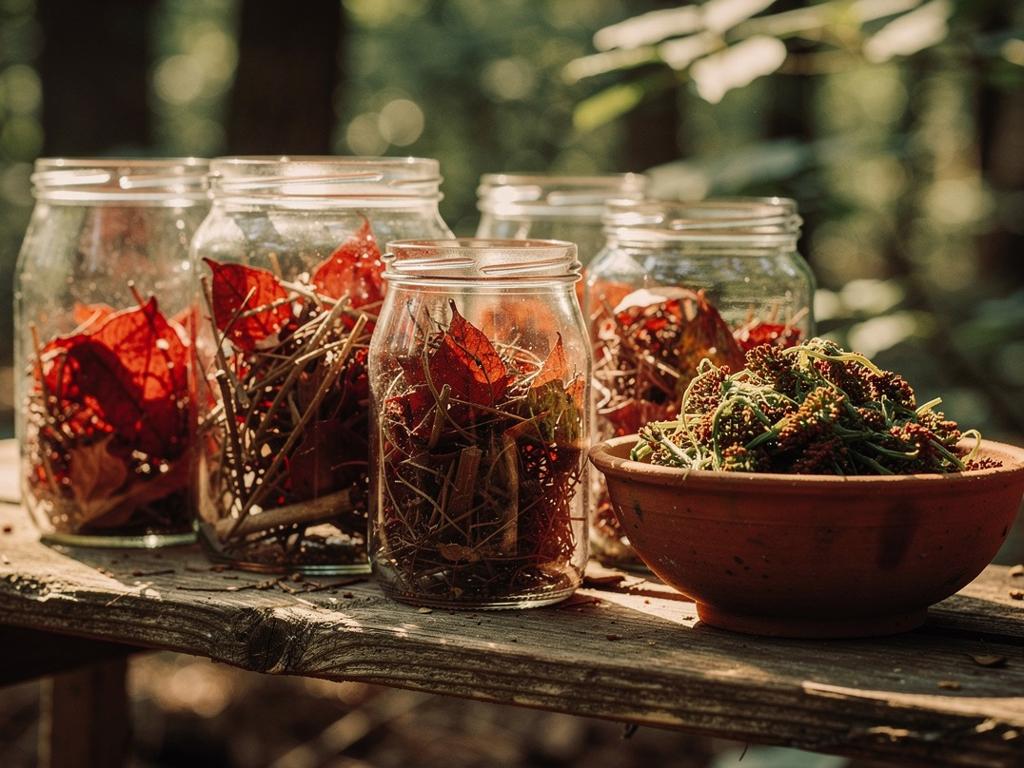
Ask most people booking their first ayahuasca retreat to name a master plant and you'll get the usual short list. Ayahuasca itself. Chacruna. Maybe San Pedro or bobinsana if they've been reading. Almost nobody says piñón colorado. And yet, if you spend any real time in the Peruvian Amazon around serious curanderos, this scruffy red-leaved shrub keeps turning up — in baths, in purges, in dietas, in the quiet work that happens between ceremonies. So let's talk about it. What piñón colorado is, what it's traditionally used for, why it matters to anyone thinking about plant medicine or a psychedelic retreat, and the honest caveats worth knowing before you drink anything a facilitator hands you. Piñón colorado is the mestizo Spanish name — literally “red piñón” — for Jatropha gossypiifolia, a shrub in the Euphorbiaceae family that grows wild across much of the Amazon basin and into the Caribbean. You'll spot it by the deep burgundy of its young leaves, the way the stems bleed a pale sap when broken, and the small clustered flowers that show up in the rainy months. In some regions it's called bellyache bush in English, which tells you something about its folk-medicine reputation. It's not psychoactive. Let's clear that up first because the word “master plant” confuses people. In the vegetalista tradition of the Upper Amazon, a master plant — planta maestra — isn't defined by whether it gets you high. It's defined by whether it teaches. Curanderos say certain plants, taken with the right preparation and discipline, transmit knowledge, protection, cleansing, or specific healing capacities. Ayahuasca is the loudest of these teachers. Piñón colorado is one of the quieter ones — a plant of protection, purification, and what old healers in Iquitos sometimes call limpieza profunda: deep cleaning. Think of the Amazonian plant repertoire less as a menu and more as an ecosystem of specialists. Ayahuasca opens the door. Chacruna carries the light through it. Bobinsana softens the heart. Ajo sacha protects against dark energies and physical illness. Piñón colorado sits in the protection-and-purging column — a plant reached for when someone is carrying heavy energy, when a dieta needs sealing, when a ceremony space needs cleansing before the icaros start. The uses fall into a few clear categories, and it helps to know them if you're considering a retreat where piñón colorado might appear. You won't necessarily drink it. In fact, in most retreat settings you probably won't. Its work is more often external and preparatory. Notice that most of these uses are supportive. Piñón colorado isn't the main event. It's the plant that prepares the ground, cleans the room, and closes the door on the way out. In a retreat context, it's often working in the background while ayahuasca gets all the attention. Here's why any of this is relevant to someone weighing whether to book an ayahuasca retreat: the presence — or absence — of plants like piñón colorado in a retreat's practice tells you something about how traditional and how careful the operation actually is. A retreat run by an experienced curandero from a vegetalista lineage will usually have a whole supporting cast of plants around the ayahuasca work. Floral baths before ceremony. Specific plants for specific dietas. Purgatives when someone arrives carrying serious trauma or addiction. A closing bath at the end. If the entire retreat is “drink ayahuasca three nights in a row and then fly home,” that's not traditional practice. That's ayahuasca tourism with the supporting infrastructure stripped out. This matters especially if you're coming to plant medicine for the hard reasons — addiction, depression, PTSD, patterns you can't shake. The ceremonial nights get the headlines, but people who've done serious healing work in the Amazon will tell you the between-ceremony days often carry the real weight. The baths. The dietas. The rest. The quiet plants doing quiet work. You don't need to become an ethnobotanist to vet a retreat. But you can ask a few pointed questions, and the answers will tell you a lot: A retreat that answers those questions specifically and calmly is a different animal from one that answers in marketing platitudes. Piñón colorado is not a plant to experiment with on your own. This isn't precious talk — it's a real toxicological point. Jatropha species contain compounds called phorbol esters and toxic proteins (curcin, in some Jatropha species) that can cause severe gastrointestinal distress, dehydration, and worse if the wrong part of the plant is ingested in the wrong amount. Curanderos who work with it have spent years learning how to prepare it. Random tea-making from leaves you found online is how people end up in emergency rooms. The safe use case for a retreat-goer is passive: you show up, an experienced maestro prepares a bath or a preparation, and you follow their instructions. That's it. Nobody should be drinking Jatropha preparations they made themselves from an internet recipe, and any facilitator handing out unprepared plant material without clear lineage training is a red flag. There's also the wider point about master plants in general. The romance around Amazonian plant medicine sometimes glosses over the fact that these are strong medicines with real contraindications. If you're on SSRIs, MAOIs, tramadol, lithium, or a range of other medications, some combinations with ayahuasca can be dangerous or fatal. Any retreat worth attending screens for this seriously. Any retreat that shrugs it off is not one to trust with your nervous system. Piñón colorado is a useful lens for understanding what the plant-medicine world actually looks like beneath the Instagram surface. It's not glamorous. It doesn't come with visions. It doesn't produce viral testimonials. It's a workmanlike plant in a tradition full of workmanlike plants, and its job is to support the deeper healing that the more famous medicines catalyse. People coming to ayahuasca for addiction recovery, trauma work, or long-standing depression often arrive expecting the ceremony itself to be the whole treatment. It rarely is. The ceremony opens something. The supporting plants, the dieta, the rest days, the icaros, the integration afterwards — that's where the change actually consolidates. Understanding that piñón colorado exists, and why it's used, is a small doorway into understanding how the whole system fits together. If any of this has sharpened your curiosity — and if you're the kind of person who'd rather know how the machinery works before committing to it — a range of curated ayahuasca and plant-medicine retreats led by traditionally trained curanderos can be browsed on our marketplace here. Whatever you choose, take your time with the decision. The plants have been around a long while. They'll still be there when you're ready.
Can Meditation Alone Cure Addiction? An Honest Look at What Sitting Still Really Does
Somebody on a meditation forum recently claimed they cured their addiction by sitting on a cushion. No rehab. No twelve steps. No ibogaine. Just breath, patience, and time. The post lit up with responses — some hopeful, some skeptical, a few quietly furious. And honestly? Both camps have a point. If you're reading this, you're probably weighing your own options. Maybe you've been sober for stretches and slid back. Maybe you're eyeing an ayahuasca retreat because nothing else has stuck. Maybe you're just curious whether a serious meditation practice could do what pills and meetings haven't. I've spent years around people working through addiction with psychedelics, master plants, and contemplative practice — sometimes all three — and the honest answer is more interesting than the internet debate suggests. Cravings aren't just thoughts. They're a full-body event — a tightening in the chest, a specific pull behind the eyes, a restlessness in the hands. Most of us try to suppress them or distract ourselves. Meditation trains you to do something stranger: sit with the sensation without acting on it. Not fight it. Not feed it. Just watch. Research on mindfulness-based relapse prevention (MBRP) has shown, over a couple of decades of studies, that people who learn to observe cravings without reacting relapse less often than people who use standard cognitive tools alone. There's a term for what happens — “urge surfing.” You notice the wave rising, you ride it, and you discover it always crests and falls. That's a real thing. Not mystical. Neurological. But here's what the enthusiasts leave out: sitting with a heroin craving on day three of withdrawal is not the same as sitting with an urge to check your phone. Withdrawal from serious substances is a medical event. Meditation is not a substitute for medically supervised detox. Anyone who tells you otherwise is either exceptionally lucky or hasn't been through it. Some people do quit through practice alone. I've met them. They tend to share a few features: their addiction was moderate rather than severe, they had stable housing and income, they were already curious about inner work before things got bad, and they were willing to sit for one to two hours a day for months. That's a lot of hours. Most people underestimate the dosage. The stories get flattened online. Someone writes “meditation cured my drinking” and leaves out the therapist, the supportive partner, the change of job, the six-month retreat, and the fact that they were drinking a bottle of wine a night — not the fifth of vodka before breakfast. Context matters. A tool that works for one nervous system on one substance may do very little for another. The truth most recovery communities dance around: what works is usually a stack, not a single thing. Practice, community, medical support, meaningful work, and — for a growing number of people — carefully held psychedelic experiences. This is the part where the meditation purists get uncomfortable and the plant-medicine crowd overpromises. Both are wrong in different directions. Ayahuasca, ibogaine, and psilocybin have all shown real, measurable effects on addiction in clinical trials and traditional settings. Ibogaine in particular has a striking record with opioid dependence — it can interrupt withdrawal and dissolve cravings for weeks or months at a time, giving people a window to rebuild their lives. Ayahuasca, used ceremonially, tends to work differently: it doesn't switch off the addiction, it shows you, sometimes brutally, what you've been running from. Psilocybin sits somewhere between the two — gentler than iboga, less confrontational than aya, and increasingly studied for alcohol and tobacco use disorders. None of these is a cure. They're pattern-interrupters. They crack the shell. What you do in the six months after the ceremony matters more than the ceremony itself. And this is where meditation quietly becomes essential — not as a replacement for plant medicine, but as the practice that lets the insight take root. Twenty minutes of an app-guided body scan while your coffee brews is a fine start, but it's not the practice people are talking about when they say meditation changed their relationship with a substance. That practice is closer to training for a marathon. It's uncomfortable. It reveals things you'd rather not see. It requires a teacher, usually, or at least a community. The techniques with the strongest track record for addictive patterns tend to be Vipassana (particularly the Goenka ten-day retreats, which are free and rigorous), Zen sitting, and the mindfulness-based relapse prevention protocols developed at the University of Washington. They share a common ingredient: they teach you to feel discomfort without editing it. That is the whole skill. Everything else is scaffolding. Expect the first few weeks to feel like nothing is happening. Then, somewhere around week six or eight, you'll notice a small gap opening between the urge and the action. That gap is where freedom lives. It doesn't close the door on relapse — it just gives you a choice you didn't have before. If you're trying to figure out whether meditation, plant medicine, or some combination is right for your situation, here are the questions I'd want you to sit with: Retreats — whether silent meditation ones or plant-medicine ones — are not magic. They're containers. A good one gives you a week or two where the noise falls away and you can meet yourself. A bad one leaves you dysregulated and more confused than you started. The difference is almost always the facilitators, not the location or the price tag. If you're considering a plant-medicine retreat specifically for addiction, look for places with medical screening, integration support built into the price, and a track record of working with recovery. Ask about their relationship with your medications if you're on any. Ask what happens if you have a crisis at 3 a.m. If they don't have clear answers, keep looking. For readers wanting to explore this route further, a range of plant-medicine retreats focused on addiction and recovery can be browsed on our marketplace here. Meditation alone might be enough for you. It might not. The person on that forum wasn't lying — they were just telling one version of a much longer story. Your story will be its own thing. Start where you can, be honest about what's working, and don't be afraid to add tools when a single one isn't enough.

From Fight-or-Flight to Steady Ground: Calming a Nervous System in Overdrive
The alarm goes off. Before your eyes are even fully open, your thumb is already on the phone, and within about ninety seconds you've absorbed a war headline, three unread work messages, and a photo of somebody's brunch in Lisbon. Your heart rate is up. You haven't left the bed. Welcome to Tuesday. This is what most of us call normal now, and it's quietly wrecking us. Chronic stress isn't dramatic. It doesn't announce itself. It just seeps into your sleep, your relationships, your patience, your gut, until one morning you realise you've been running on cortisol and cold brew for months. For people considering an ayahuasca ceremony or another plant-medicine retreat, this low-grade emergency state is often what got them looking in the first place — not a single crisis, but the slow suspicion that something needs to break the pattern. Let's talk about what's actually happening in the body, why burnout looks the way it does, and what genuinely helps — including, honestly, when a retreat might be the right move and when it isn't. Hans Selye, the researcher who first mapped stress physiology back in the 1930s, described a three-stage arc he called the General Adaptation Syndrome. Alarm, resistance, exhaustion. It's still the cleanest way to understand what's going on inside you when life won't let up. Alarm is the moment your system floods with adrenaline and cortisol. Heart faster, breath shallower, blood pumped to the muscles, digestion put on hold. Great for outrunning a predator. Less great for reading a passive-aggressive email from your boss. Resistance is what comes next — your body trying to hold the line, keep functioning, adapt. If the stressor resolves, you settle. If it doesn't, cortisol keeps dripping, sleep gets worse, immunity drops, you get foggy and irritable and slightly wrong somehow. Exhaustion is the third stage. This is where the system stops adapting and starts breaking down. Chronic fatigue, anxiety that has no obvious source, physical symptoms that don't quite add up on a blood panel. Your nervous system has been in the on position for so long it has forgotten how to switch off. Most of the retreat-seekers I've spoken with describe some version of this — not a breakdown, exactly, but a slow structural failure of the systems they used to rely on to feel okay. Burnout has a specific shape, and it's worth knowing before you're deep inside it. Occupational-stress researchers who use the Maslach Burnout Inventory watch for three patterns, and they show up in ordinary life too, not just at work. The first is emotional exhaustion — the sense that you've given everything you have and there's nothing left in the tank. Common in nurses, therapists, teachers, parents of small children, anyone who has been the person others rely on for a long time. The second is depersonalization, which sounds clinical but is really just the moment you start seeing other people as tasks, obstacles, or objects. You catch yourself being cynical about people you used to care about. The third is a sense of diminished accomplishment — you're producing work, checking boxes, and it all feels hollow. Nothing counts anymore. Practical tells: you're dreading Sunday nights. You've lost your appetite or you're eating everything in sight. You're drinking more than you used to. You have a shorter fuse than the person you want to be. You can't remember the last time you laughed without irony. Some of this overlaps with clinical depression, and if you're not sure which side of the line you're on, that's a conversation for a professional — not a retreat brochure. Here's the thing nobody in the mainstream wellness world quite says out loud: a lot of people who end up at an ayahuasca retreat, an ibogaine clinic, or a psilocybin ceremony are there because ordinary interventions ran out. They tried therapy. They tried the app. They tried the meditation cushion, the gratitude journal, the ten-day silent sit. Some of it helped. None of it cracked the pattern. Psychedelics — and ayahuasca in particular — seem to interrupt the loop in a way that ordinary practice sometimes can't. The current wave of research on psilocybin for depression and addiction, on MDMA for PTSD, and on ayahuasca for treatment-resistant depression points to something real: a temporary window in which the brain's default patterns loosen, and the person inside them gets a chance to see the pattern from outside. That's not magic. It's neurobiology plus intention plus, in the traditional context, a healer who knows what they're doing. The catch — and this is important — is that plant medicine is not a shortcut around the work. If you arrive at a retreat still in full-blown exhaustion, chronically under-slept, running on caffeine, and hoping the vine will fix your marriage in three nights, you'll probably be disappointed and possibly destabilised. The people who report the most durable benefit tend to have done some preparation: nervous-system regulation, honest therapy, a stretch of clean living before the ceremony. The medicine amplifies what's already in the room. Whether or not a retreat is in your future, there is a set of unglamorous practices that reliably reduces stress reactivity. None of these will trend on social media. They work anyway. One exercise I use with people preparing for a plant-medicine retreat is what some clinicians call the web of reactivity. It's simple and it works. Next time you catch yourself in a stress spiral, pause and write down five things: the situation (where, when, who, what), the automatic thoughts that appeared, the emotions in one word each, where you felt those emotions in your body, and the impulse to act that came with them. Then — and this is the whole point — ask where you could have inserted a breath. A pause. A hand on the sternum. A question like "is this true?" or "what am I actually afraid of?" You're not trying to eliminate the reactivity. You're trying to build the millisecond of space between trigger and response. Over months, that millisecond becomes a second, then five. That's what integration after a psychedelic experience looks like too, by the way. The medicine can crack the pattern open. The daily practice keeps it open. Honest counsel, because you deserve it: plant-medicine retreats are not a good idea for everyone, and not at every moment. If you're in active crisis, on certain medications (SSRIs and MAOIs interact seriously with ayahuasca), managing a psychotic-spectrum condition, or hoping the ceremony will make a decision for you, wait. Get stable first. Do the therapy. Regulate the nervous system enough that you can actually receive whatever the medicine has to show you. If, on the other hand, you've been circling the same pattern for years, you've done real work already, and you have the time and financial room to prepare properly, attend a well-run retreat, and integrate afterwards — a ceremony can be one of the more useful few days of your life. The key word there is well-run. Facilitator lineage matters. Screening protocols matter. Aftercare matters. A retreat that doesn't ask about your medications and mental health history is not a retreat you want to attend. If any of this is resonating and you want to look at what's actually available, a curated range of ayahuasca and plant-medicine retreats can be browsed on our marketplace here. Take your time with it. The decision is bigger than the booking.
Craving More Stories?
Join our ShopAyahuascaRetreats newsletter for the latest updates on thrilling
destinations and inspirational tales, delivered straight to your inbox!
We value your privacy. Your email address will never be shared or published.

MDMA for PTSD Returns to the FDA: What Resilient's Quiet Refile Means for Psychedelic Therapy
Something happened quietly this month that a lot of people considering plant medicine and psychedelic-assisted therapy should probably know about. Resilient — the for-profit spun out of the nonprofit that spent thirty-plus years pushing MDMA-assisted therapy toward legitimacy — has refiled its New Drug Application with the FDA. No press release. No fanfare. Their website is literally a domain-parking page. And yet this is arguably the most consequential moment for psychedelic healing in the United States since the original rejection back in 2024. If it goes through, MDMA becomes the first classical psychedelic-adjacent compound approved for a mental-health indication in this country. That would reshape the landscape not just for people with PTSD, but for anyone paying attention to how psychedelics, addiction recovery, master plants, and trauma work are treated by regulators. Let's unpack what's actually going on, and why it matters for you if you're weighing your own path through psychedelic healing. Back in the summer of 2024, the FDA issued what's called a Complete Response Letter — regulatory-speak for a polite but firm no. The letter, which eventually went public, pointed to three specific problems with the application. First, the trial hadn't systematically collected data on positive adverse events. That sounds counterintuitive — a positive adverse event? — but it's a real category. It captures things like unusual states of consciousness, spiritual experiences, and lasting shifts in perception that a regulator wants documented, even when they're welcome. Second, the durability data wasn't strong enough. In plain terms: did the benefits actually stick around after therapy ended? And third, a lot of the participants had used MDMA recreationally before joining the trial, which raises questions about whether the results generalise to a naive population. The agency also flagged concerns about functional unblinding. This is the elephant in the room for every psychedelic trial ever run — if you've been given the actual compound, you know. You know within twenty minutes. The placebo group knows too. That makes proper blinding nearly impossible and gives ammunition to skeptics. Rather than running an entirely new Phase 3 trial — which would have cost tens of millions and taken years — the company took a different route. They're leaning on data from other researchers' studies of the same compound, including a smaller VA study that includes long-term follow-up. There's also apparently at least one other third-party dataset in the mix. They ran a new Phase 1 safety study in 32 healthy volunteers, specifically designed to check the boxes the FDA had flagged: EKG monitoring, corrected QT interval measurements, careful cardiac safety assessment. And they conducted an internal audit of the original Phase 3 data to address protocol-violation concerns raised in the rejection letter. There's also a curious backdrop here. A recent memorandum of understanding between the FDA and the VA sets up formal data-sharing between the two agencies. Given how much the VA has invested in studying psychedelics — MDMA in particular for combat-related PTSD — it's reasonable to assume that pipeline could feed into regulatory decisions in ways it never has before. Here's where I'd pull back and talk to you directly, because a lot of readers of this kind of article are quietly weighing whether to book an ayahuasca retreat, look into an ibogaine program, or explore psilocybin for depression. What happens with MDMA at the FDA level shapes the environment you'll walk into. Approval doesn't mean you can suddenly walk into a clinic and get MDMA-assisted therapy at your local mental-health office. It means a narrow legal pathway opens, likely under a Risk Evaluation and Mitigation Strategy — a REMS — which the FDA uses to control who can prescribe, who can administer, and under what conditions. Reports suggest Resilient may be willing to accept a tight REMS to get across the finish line. That could include requirements like recording every dosing session in the post-market setting. Practically speaking, this means: None of that makes MDMA-assisted therapy accessible tomorrow. But it does begin to legitimise a category of healing that plant-medicine communities have known about for decades. Ayahuasca ceremonies, San Pedro sits, ibogaine treatment for addiction — these have operated in a legal gray zone or fully underground for most of their modern history. Regulatory approval for one substance shifts the cultural narrative around all of them. There's a temptation to see this as purely a scientific question. It isn't. Some advocates think approval is basically a done deal — the political and cultural winds have shifted, the current administration has been unusually open to psychedelics, and public sympathy for veterans with PTSD is high. But the FDA's Division of Psychiatry, which does the actual review work, is reportedly insulated from those external pressures. That division has its own institutional memory of the 2024 rejection. It's staffed by career reviewers who care about clean data, not vibes. So the outcome is genuinely uncertain, even if the mood music has changed. Meanwhile, other psychedelic candidates are stacking up behind Resilient. Compass Pathways and Usona Institute are both expected to submit psilocybin applications for depression later this year, and both hold priority-review vouchers that could compress their review windows to a couple of months. Definium is aiming to file an LSD-for-anxiety application in the first half of 2027. The queue is real, and the order of approvals will shape which conditions get treated first and which clinics rise to prominence. Now — a reality check. The FDA approving synthetic MDMA for PTSD doesn't validate or invalidate the traditional ayahuasca ceremony you might be researching. It doesn't tell you whether an ibogaine retreat in Mexico is the right call for your opiate dependency. It doesn't turn master plants into pharmaceuticals or make the shaman into a psychiatrist. Ayahuasca and other master plants have been used for centuries within specific cultural frames that regulatory approval can't touch. The container matters. The dieta matters. The intention matters. A carefully-run retreat with an experienced facilitator is doing something genuinely different from a clinical dosing session with a therapist trained in six weekends of manualised protocol. Which isn't to say one is better than the other. They're different tools for different people, and honestly, for some conditions — treatment-resistant addiction, deep intergenerational trauma, the kind of stuck patterns that don't yield to talk therapy — the traditional plant-medicine route may still be the more powerful option, even when a pharmaceutical alternative exists. What FDA approval does change is the conversation. Your skeptical brother-in-law will have a harder time dismissing your interest in psychedelic healing when MDMA-assisted therapy is being administered at a VA hospital forty minutes from his house. Insurance conversations will slowly begin. Employer benefits will start to shift. The stigma erodes, unevenly and slowly, but it erodes. If you're actively researching a retreat — and given where you're reading this, you probably are — the Resilient news is one more data point, not a reason to wait. Regulatory approval in the US will take years to translate into accessible clinical treatment. If you're dealing with real suffering right now, an approved American clinic in 2027 or 2028 isn't a solution to your 2026 problem. A few honest suggestions for the decision you're actually making: The regulatory story around MDMA will keep unfolding. Whether Resilient's refile succeeds or gets sent back for another round, the direction of travel is clear — psychedelic and plant-medicine healing is moving from the margins toward the mainstream, one carefully-audited dataset at a time. If any of this speaks to something you've been quietly considering, a curated range of ayahuasca and psychedelic retreats can be browsed on our marketplace here. Take your time with the decision. The medicines aren't going anywhere, and the right container is worth waiting for.
LSD for Anxiety: What the New Phase 3 Trial Results Actually Mean
Something quietly significant happened in psychedelic drug development this summer. A pharmaceutical version of LSD hit its primary endpoint in a Phase 3 trial for generalized anxiety disorder — the largest, most rigorous stage of clinical testing before a drug can be considered for approval. For anyone who's been watching the slow, halting return of psychedelics to mainstream psychiatry, that's not a small footnote. It's a real inflection point. And yet most of the coverage has been buried in industry newsletters and biotech press releases. So let's translate. What did the trial actually show? What does it mean for someone considering a psychedelic experience for their own anxiety or depression? And — the question nobody in a lab coat wants to answer directly — how does any of this relate to what people are already doing at ayahuasca retreats and psilocybin ceremonies around the world? The developer, a clinical-stage company focused on LSD-based therapeutics, reported that its Phase 3 study of a pharmaceutical LSD candidate met its primary endpoint in patients with generalized anxiety disorder (GAD). It also hit key secondary endpoints — meaning the drug didn't just squeak across the line on the main measure of anxiety reduction, but showed consistent effects across additional benchmarks the trial was designed to test. Phase 3 matters because it's the point where a treatment is tested at scale, against placebo, under the kind of regulatory scrutiny that determines whether it can be prescribed. Earlier phases prove safety and hint at effectiveness. Phase 3 is where a lot of promising drugs quietly fall apart. This one didn't. The GAD result also came only about two months after the same company reported positive Phase 3 data for LSD in major depressive disorder. Two Phase 3 wins in a single summer, on two of the most common and stubborn conditions in psychiatry, is the kind of run that changes how boardrooms and regulators talk about psychedelic medicine. Here's the thing about GAD: it's everywhere, and current treatments are mediocre. SSRIs help some people. Benzodiazepines work in the short term and create their own problems in the long term. Cognitive behavioral therapy is genuinely useful but slow, and many people simply don't have access to a good therapist. Meanwhile, the number of adults living with chronic, low-grade dread — the kind that hums under every meeting, every commute, every attempt to fall asleep — keeps climbing. Anxiety is also notoriously hard to treat with psychedelics in a research context. Depression trials have dominated the headlines because depressed patients often respond dramatically to a single dosing session. Anxiety is trickier. Some patients find that classic psychedelics can amplify fear before they ease it, which is why set, setting, and preparation matter so much. Running a controlled trial that actually reduces anxiety, on average, across dozens of patients — without the trial itself becoming a scary experience — is a real design challenge. That the study cleared its endpoints suggests the protocol handled that challenge reasonably well. It doesn't mean everyone in the trial had a smooth ride. It means the group, on balance, ended up meaningfully less anxious than the placebo group. Topline results are exactly that — the top of a much larger dataset that will be picked apart at conferences and in peer review over the next year. A few things worth keeping in mind before anyone declares LSD the new gold standard for anxiety: None of this is a knock on the results. It's just the honest frame for reading them. This is where a lot of readers get confused, and reasonably so. The company running these trials is developing what will eventually be a prescribed medication — a specific dose, a specific formulation, delivered under medical supervision inside a licensed clinic or hospital. It's LSD, chemically, but the entire delivery system around it is medical. Compare that to the reality of the broader psychedelic and plant medicine world. Right now, most people seeking psychedelic experiences for depression, anxiety, addiction, or stuck life patterns aren't waiting for the FDA. They're traveling to Peru, Costa Rica, Mexico, the Netherlands, or Jamaica to sit with ayahuasca, psilocybin, San Pedro, or ibogaine in ceremonial or retreat settings. The intention overlaps. The framework doesn't. Neither approach is universally better. They're answering slightly different questions: Different questions, different tools, different risks. Someone with severe GAD who has failed multiple medications may eventually benefit enormously from a licensed LSD protocol, if and when it becomes available. Someone whose anxiety is tangled up with grief, spiritual crisis, or a decade of unprocessed experience might find more of what they need in a well-run ayahuasca retreat with proper integration support. Some people, honestly, want both — a ceremony to break something open, and a therapist to help them make sense of it. Every successful Phase 3 readout does two things at once. It brings a specific drug closer to approval, and it changes the temperature of the whole field. Regulators, insurers, and clinicians start taking the category more seriously. Investors either pile in or pull back based on how the results are interpreted. And — this is the part most people miss — the cultural conversation shifts. When LSD, MDMA, or psilocybin move from “illegal drug of concern” to “Phase 3 clinical asset,” the taboo around discussing them cracks a little wider. Family doctors are more willing to talk about them. Employers offering mental health benefits start asking questions. People who wouldn't have considered a psychedelic experience five years ago begin to wonder, quietly, whether it might help them. That shift is why interest in ayahuasca retreats and psilocybin retreats has been climbing steadily even as clinical trials have moved slowly. The two worlds feed each other. The research legitimizes the conversation. The lived experiences — often gathered at retreats, described by returning participants — keep the human dimension in view. You probably didn't land here for a biotech update. You're likely somewhere in the process of asking whether a psychedelic retreat is right for you — for anxiety, depression, addiction, or something harder to name. The trial results above are useful context, but they don't answer your question. Let me try to answer it more directly. A few things to think about before you book anything: The research world is validating what many people have already been finding on the ground — that these compounds, held properly, can help with conditions where standard treatments have plateaued. The clinical version will arrive when it arrives. In the meantime, retreat-based options continue to be how most people encounter this work, and for the right person, in the right setting, they can be genuinely transformative. If any of this is prompting you to look further, a wide range of psychedelic and plant-medicine retreats can be browsed on our marketplace here. Take your time with the decision — the best retreat is rarely the first one you find, and the questions you ask beforehand tend to matter more than the ceremony itself.

Exercise and Brain Health: What a Review of 47 Studies Actually Found
Here's a question that keeps showing up in longevity research: if you had to pick one type of exercise to protect your brain as you age, which would it be? Running? Deadlifts? A daily walk? Turns out the answer is stranger — and more encouraging — than you'd think. A recent review pooling data from 47 clinical trials landed on an unlikely frontrunner. Water. Before you cancel your gym membership and start googling adult swim lessons, hold on. The picture is more nuanced than any headline can capture, and the practical takeaway is genuinely useful whether you swim, lift, stretch, or simply walk the dog. Let's unpack what the researchers actually found and what it means for the way you move. The study used something called a Bayesian network meta-analysis. In plain English, that's a statistical method that lets researchers compare interventions that were never tested head-to-head in the same trial. So instead of asking whether yoga beats jogging in one specific study, they modeled how every exercise style stacked up against every other one across the entire body of evidence. The sample included 1,815 adults over 60, drawn from 47 randomized controlled trials. Participants had tried a full menu of movement — aerobic training, resistance work, aquatic exercise, yoga, tai chi, HIIT, combined strength-and-cardio, and multicomponent programs that blended several styles into one. The outcome the researchers cared about was circulating BDNF: brain-derived neurotrophic factor. It's a protein your brain uses to grow and repair neurons, and low levels are associated with cognitive decline. Think of BDNF as fertilizer for your brain. BDNF isn't just a niche lab marker. Higher levels are linked to better memory, faster learning, and greater resilience against age-related conditions like Alzheimer's. Anything that reliably raises BDNF is worth paying attention to — and exercise is one of the few things that reliably does. When the numbers were crunched, aquatic exercise showed the largest estimated bump in BDNF. Behind it: mind-body practices like yoga and tai chi, then mixed programs that combined multiple styles. Traditional aerobic training, resistance work, and cardio-strength combos also raised BDNF meaningfully compared to sitting on the couch. Nothing lost. But water won. There's a catch, though, and the researchers are the first to flag it. The aquatic-exercise finding rests on just two studies. That's not nothing, but it's not enough to crown swimming the undisputed brain-health champion either. It's a promising signal that needs more research before anyone can say with confidence that water-based movement is uniquely powerful for the aging brain. What's more interesting than the ranking, honestly, is the pattern. Every category of movement they looked at raised BDNF compared to inactivity. The brain doesn't seem to demand one specific input. It responds to movement in many forms, which is the kind of finding that makes exercise science feel less like a competition and more like a permission slip. Probably not — or at least, not in the way the internet loves to frame it. Here's what the review suggests instead: The lesson isn't which one to pick. It's that a routine spanning several types of movement may be the smartest approach — one that keeps the body challenged in different ways and, incidentally, keeps you from getting bored. Another finding worth sitting with: the researchers didn't see a linear dose-response curve. Grinding out more sessions or pushing harder didn't consistently produce bigger brain gains. Many of the strongest results came from programs that ran about two to five months at moderate intensity. Some studies even found BDNF stayed elevated after the structured program ended, hinting that the benefits linger. So if you've been telling yourself you need to train like an athlete to protect your cognition, you can let that go. Consistency beats intensity here. A sustainable routine you'll actually do for years is worth more than a punishing plan you'll abandon in six weeks. Practical translation: build a movement week that touches a few different bases. It doesn't have to be complicated. Something like: That's not a prescription — it's a template. The best routine is the one you'll still be doing five years from now, not the theoretically optimal one you'll ditch by March. One thing worth naming: the review focused on physical movement, but the broader research on brain health increasingly points to practices that combine body, breath, and attention. Yoga and tai chi did well in this analysis, and they're not just exercise — they're contemplative practices too. That overlap is showing up in more and more studies about neuroplasticity, mood, and cognitive resilience. It's part of why so many people building a longer-term wellness routine end up combining physical training with something quieter — meditation, breathwork, silent time in nature, or a structured retreat that resets the nervous system. If a deeper dive into contemplative and body-based practices sounds interesting, our sister site collects meditation and mind-body retreats worth exploring. For readers who want to pair a movement routine with a more immersive contemplative reset, curated retreats can be browsed on our marketplace here. The larger point is this: your brain doesn't need a single perfect workout. It needs regular, varied, enjoyable movement — the kind you'll keep doing long after the novelty wears off. Swim if you love the water. Lift if you love the iron. Roll out a mat if that's your thing. The best evidence we have says the brain will thank you for any of it.
Brain Health Supplements or Plant Medicine? An Honest Look at Cognition, Mood, and Real Healing
Every few months a new brain supplement makes the rounds — creatine for cognition, citicoline for memory, lion's mane for neuroplasticity. The bottles look serious. The marketing sounds scientific. And people who've been quietly struggling with brain fog, low mood, or a mind that won't cooperate anymore start wondering if the answer really is a stick pack of powder dissolved in water each morning. I've spent years sitting in ceremony spaces and interviewing people who came to ayahuasca, psilocybin, and ibogaine after trying just about everything else — including shelves of supplements. So I want to do something a little different here. Let's actually walk through what the popular brain health supplements do, what the research really supports, and then talk honestly about where they fit (and don't fit) alongside plant medicine, psychedelics, and the deeper work of addiction recovery and healing. Nootropics — the umbrella term for anything sold to support cognition — generally work on a handful of mechanisms. They fuel cellular energy in neurons, provide raw materials for neurotransmitters, support blood flow, or nudge the pathways involved in neuroplasticity, which is the brain's capacity to form new connections. That last one matters, because neuroplasticity is also the mechanism most researchers point to when they try to explain why psychedelics seem to help people who've been stuck for years. The best-studied ingredients you'll see on labels include citicoline (often branded as Cognizin), creatine monohydrate, bacopa monnieri, lion's mane extract, acetyl-L-carnitine, L-theanine, and resveratrol. Some of these have solid clinical data behind them at specific doses. Others show up in proprietary blends at amounts too small to matter. Reading a supplement label like a skeptic is a useful life skill. Here's the honest part nobody in the supplement aisle wants to say out loud: even the best-formulated nootropic is a maintenance tool. It can sharpen a decent brain, ease mild fog, maybe support long-term cognitive aging. It's not going to lift a clinical depression, dissolve a trauma pattern you've carried since childhood, or interrupt an addiction. Those problems live in different neural territory. Because you'll see these names everywhere, here's a plain-language rundown of what's currently getting attention: If you're a generally healthy person who wants a small edge, any of the well-formulated options can be worth trying. Give any supplement 8 to 12 weeks before you decide if it's doing anything. The brain is slow. Your subjective sense of "sharper" on day three is almost always placebo. Here's where I want to be careful and direct with you. If you've landed on this article because you're researching plant medicine for depression, addiction, or trauma — and you're wondering whether you should just try supplements first — the answer isn't as simple as either camp will tell you. Depression that has resisted years of effort is not a citicoline deficiency. Alcohol use disorder is not going to yield to bacopa. Complex PTSD does not respond to lion's mane, no matter how many podcasts suggest otherwise. These conditions involve entrenched patterns in the default mode network, dysregulated stress systems, and often decades of learned avoidance. They need interventions that match their weight. This is the space where ayahuasca, psilocybin, ibogaine, and other master plants have quietly built a reputation over the last two decades. Not as miracles — anyone who tells you a single ceremony fixes everything is either selling you something or hasn't sat with enough people afterward. But as tools that can genuinely interrupt patterns and open a window of neuroplasticity that talk therapy alone often can't reach. The research coming out of Johns Hopkins, Imperial College London, and MAPS over the past ten years has been striking. Psilocybin, in clinical settings, has produced sustained reductions in treatment-resistant depression and end-of-life anxiety. Ibogaine, though harder to study because of its cardiac risks, keeps showing remarkable results for opioid dependence — a single properly-supervised session can eliminate withdrawal and interrupt cravings in ways nothing in conventional medicine can match. Ayahuasca, studied in Brazil and elsewhere, has shown antidepressant effects that hold up weeks after a single ceremony. The mechanism most researchers point to is a temporary but profound increase in neuroplasticity. The same pathways that nootropics gently nudge, psychedelics kick wide open — for a limited window, usually several weeks after the experience. That window is where the real work happens: therapy lands differently, old habits feel less magnetic, and self-narratives that felt like bedrock suddenly seem editable. This is also why integration matters more than the ceremony itself. A psychedelic experience without follow-up is a fireworks show. A psychedelic experience with real integration — journaling, therapy, somatic work, community, sometimes gentle supplements to support the recovering nervous system — is what actually changes lives. This is one of the most common questions I get, and it deserves a serious answer. Before a ceremony, most reputable retreats will ask you to stop certain supplements and medications weeks in advance. SSRIs and MAOIs are the big ones for ayahuasca because of the risk of serotonin syndrome. Stimulant-based nootropics, anything with 5-HTP, St. John's Wort, and often lithium fall into the same caution zone. Even seemingly innocent things — high-dose tyrosine, kratom, tryptophan — can interact badly. Read your retreat's preparation guide carefully and be honest with the facilitators about everything you're taking, including that gummy you forgot about. After a ceremony, in the integration window, some people find gentle cognitive support helpful. A modest creatine dose. Omega-3s. Magnesium for sleep. Nothing that revs up the system. The nervous system is often tender for weeks after deep psychedelic work, and piling stimulating nootropics on top of an already-plastic brain isn't usually kind to it. If you're genuinely well and want a cognitive edge — try a well-formulated supplement, give it a real trial, and don't expect miracles. If you're mildly foggy from perimenopause, long COVID, chronic stress, or just being human in your forties — supplements plus sleep, exercise, and honest lifestyle attention will probably help. But if you're here because you've been depressed for a decade, or you can't stop drinking, or something happened to you that still runs the show — no supplement stack is going to be the answer. That doesn't mean a psychedelic retreat is automatically your answer either. It means the honest conversation is with a therapist who understands trauma, ideally one open to plant medicine as part of a larger picture, and possibly with a reputable retreat facilitator who screens carefully and doesn't promise you the moon. Reputable retreats screen you medically. They ask about heart conditions, medications, and psychiatric history. They tell you no if you're not a fit. They have integration built into the program, not just a farewell breakfast. Anywhere that skips those steps is not a retreat — it's a liability event with candles. Brain supplements have a real place. They can support cognition, ease mild fog, and possibly protect long-term brain health when the ingredients and doses are honest. Treat them like what they are: maintenance tools for a healthy system. Plant medicine occupies a different category entirely. It's for the deeper stuff — the patterns that have outlasted every attempt to think, exercise, journal, or supplement your way past them. It works best when approached with respect, careful preparation, honest medical screening, and a plan for what happens after you come home. If that's the kind of work you're circling around, curated ayahuasca and psychedelic retreats vetted for safety and integration support can be browsed on our marketplace here. Take your time choosing. The right retreat is worth waiting for, and the wrong one is worse than none at all.
The 30-Second Habit: Why Micropractice Beats Long Meditation Sessions
You know the pattern. You come home from a retreat — maybe an ayahuasca ceremony in the Sacred Valley, maybe a psilocybin container in the Netherlands — and you promise yourself things will be different this time. Forty-five minutes of morning meditation. A gratitude journal. No more doomscrolling before bed. For about eleven days, you're a monk. Then a work deadline hits, the kids get sick, and the shiny new journal ends up under a pile of mail. This is one of the quietly devastating truths about psychedelic healing and plant medicine work: the ceremony is the easy part. What breaks people isn't the brew or the mushroom. It's the Tuesday morning three months later when the alarm goes off and the practice that was supposed to hold your integration is nowhere to be found. There's a growing body of research suggesting the fix isn't more discipline. It's shorter practice. Much shorter. The numbers are humbling. A recent study looking at nearly a thousand people who had been exposed to meditation found that fewer than one in four were still practicing daily some time later. And these are people who chose to learn. People who, on some level, wanted this. The dropout curve after a psychedelic retreat looks similar, from what facilitators tell me. In the first two weeks after ceremony, participants are lit up — journaling, meditating, eating clean, calling their mothers. By week six, most have quietly slipped back into old rhythms. By month three, a solid chunk are struggling with the same patterns the medicine seemed to dissolve. Why? Not because the insights were fake. The insights were real. The problem is that we package the follow-through as something enormous. A 45-minute sit. A daily yoga hour. A journaling ritual that requires candles and quiet and no children within fifty feet. In a real life — with jobs and kids and the noise of the world — this is unsustainable. Researcher Eli Susman spent a decade chasing this question and landed on a concept he calls micropractice: contemplative work in doses of 30 seconds or less. His own doctoral work showed that a 20-second daily practice of self-compassionate touch produced measurable improvements in stress and mental health — improvements on par with much longer, more elaborate interventions. Susman puts it bluntly: the issue isn't that long practices don't work. They do. It's that they're sold as something demanding more time than most people can honestly give. And an ideal practice you don't do is worse than a modest practice you do. Here's the piece that matters most for anyone integrating a psychedelic experience: the nervous system doesn't respond to grand gestures. It responds to repetition. An analysis of more than 280,000 meditation sessions logged on a popular app found no significant differences in outcomes based on session length. What did track with meaningful improvements in mood, equanimity, and resilience was consistency — showing up, however briefly, day after day. Two minutes daily beats forty minutes on Sunday. Every time. This maps onto what we already know about neuroplasticity. New neural pathways get carved by frequency, not by intensity. The brain is like a forest floor — a trail is made by many small steps, not by one dramatic leap. Ayahuasca or psilocybin may crack open the possibility of a new pathway; only daily practice etches it in. Susman writes that consistency reshapes patterns — not heroic effort once in a while, but showing up again and again, however you can. That last phrase is the key: however you can. Not however you imagine you should. However you actually can, on a normal, tired, distracted Wednesday. There's a related trap the psychology literature keeps circling around. Our brains treat our future selves as though they were different people entirely — calmer, more disciplined, less busy, magically freed from the current mess. Researchers call this lower present-future self-continuity, and it explains why we make ambitious plans for tomorrow that today's version of us would never accept. One study looking at things like blood donation, exercise, and saving money found that people's realistic predictions of their own behavior were almost identical to their idealized predictions. In other words, we quietly assume that Future Me will be living in perfect conditions — no work stress, no kids, no exhaustion, no bad night's sleep. So we plan a life for that mythical person, and then the actual person we are inherits the plan and can't execute it. The researchers found something interesting though: when participants were forced to acknowledge how unrealistic their predictions were, they made better plans. They designed for the person they actually are, not the person they imagine becoming. If you've just returned from a plant medicine ceremony, or you're about to book one, this is worth sitting with. The version of you who commits, mid-ceremony, to an hour of daily meditation is not the version who has to execute it. The everyday version has children, or insomnia, or a boss who calls at 7 a.m. Design for that person. Not the one you glimpsed in the visions. Here's what I've watched work — both in my own life and in people I've interviewed who've genuinely integrated a psychedelic experience over the long haul. Therapist Farzana Doctor, who works with a lot of people in caregiving professions, describes what happens when people don't have a small daily reset: they push through the day at full throttle and end up collapsed in front of the television with a bag of popcorn. Not the worst thing, she says. But not restorative either. A tiny practice — done consistently — brings the nervous system back into what she calls a window of capacity, the calm zone where you can actually make the choices your post-ceremony self intended. The psychedelic and ayahuasca space has a strange relationship with practice. Ceremonies are dramatic. Retreats are expensive. The container is intense. And then people come home and expect the intensity to sustain itself somehow. It doesn't. The magic of the medicine is that it shows you what's possible. The magic of the practice — the boring, tiny, repeated practice — is what makes the possibility real. The Shipibo maestros will tell you the same thing, though in different language: the medicine opens the door, but you have to walk through it every day. So if you're weighing a retreat right now, add this to your calculus. It's not just about the ceremony fee or the flight to Iquitos. It's about what you'll do on the mornings after. If the honest answer is I probably won't sustain an hour-long practice, that's fine. Plan for thirty seconds instead. Design the integration for the actual person coming home, not the imaginary one. For anyone curious about exploring this kind of work in a well-held container, a curated selection of ayahuasca and plant-medicine retreats can be browsed on our marketplace here. Whatever you choose, remember: the ceremony ends. The practice is what stays. And a practice you actually do — however small, however imperfect — beats the beautiful one that lives only in your imagination.
Dreaming of a Psychedelic Retreat?
We have the best deals and offers from thousands of organizers all over the world! Get them into your mailbox every week!
We value your privacy. Your email address will never be shared or published.
