 English
 Deutsch
 Français
 Nederlands
 Español
SHOP AYAHUASCA RETREATS BLOG
Piñón Colorado: The Amazonian Master Plant Few Retreat-Goers Have Heard Of

Fiona Holloway
August 14, 2026
Your ultimate guide to discover transforming ayahuasca and psychedelic experiences. Dive into serene destinations and elevate your consciousness to unparalled heights.
Discover Ayahuasca & Psychedelic Retreats NowSearch for ayahuasca & psychedelic retreats
Discover retreats, trainings, and holidays from all over the world
Ask most people booking their first ayahuasca retreat to name a master plant and you'll get the usual short list. Ayahuasca itself. Chacruna. Maybe San Pedro or bobinsana if they've been reading. Almost nobody says piñón colorado. And yet, if you spend any real time in the Peruvian Amazon around serious curanderos, this scruffy red-leaved shrub keeps turning up — in baths, in purges, in dietas, in the quiet work that happens between ceremonies.
So let's talk about it. What piñón colorado is, what it's traditionally used for, why it matters to anyone thinking about plant medicine or a psychedelic retreat, and the honest caveats worth knowing before you drink anything a facilitator hands you.
What Piñón Colorado Actually Is
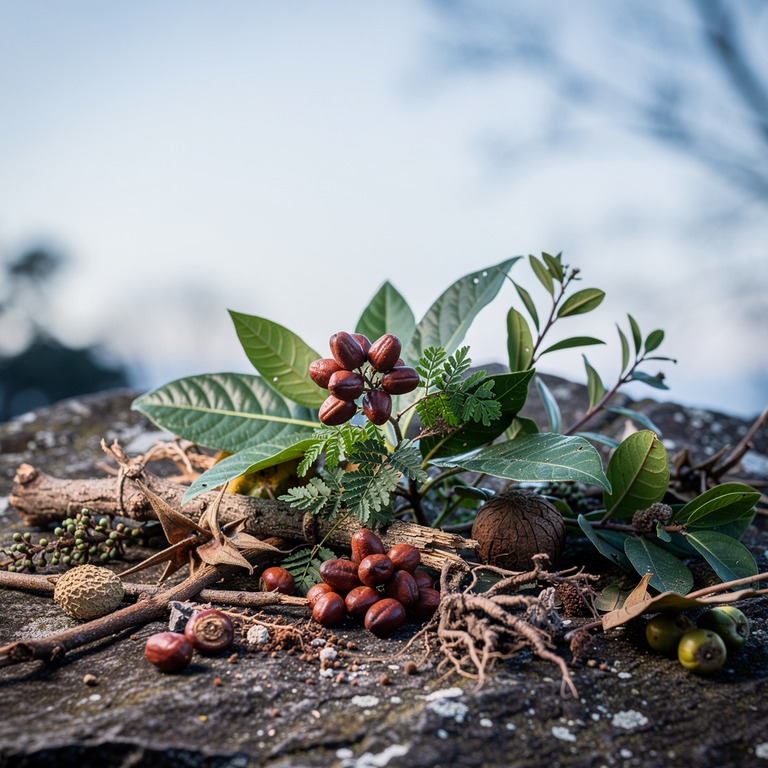
Piñón colorado is the mestizo Spanish name — literally “red piñón” — for Jatropha gossypiifolia, a shrub in the Euphorbiaceae family that grows wild across much of the Amazon basin and into the Caribbean. You'll spot it by the deep burgundy of its young leaves, the way the stems bleed a pale sap when broken, and the small clustered flowers that show up in the rainy months. In some regions it's called bellyache bush in English, which tells you something about its folk-medicine reputation.
It's not psychoactive. Let's clear that up first because the word “master plant” confuses people. In the vegetalista tradition of the Upper Amazon, a master plant — planta maestra — isn't defined by whether it gets you high. It's defined by whether it teaches. Curanderos say certain plants, taken with the right preparation and discipline, transmit knowledge, protection, cleansing, or specific healing capacities. Ayahuasca is the loudest of these teachers. Piñón colorado is one of the quieter ones — a plant of protection, purification, and what old healers in Iquitos sometimes call limpieza profunda: deep cleaning.
Where it fits in the shamanic pharmacy
Think of the Amazonian plant repertoire less as a menu and more as an ecosystem of specialists. Ayahuasca opens the door. Chacruna carries the light through it. Bobinsana softens the heart. Ajo sacha protects against dark energies and physical illness. Piñón colorado sits in the protection-and-purging column — a plant reached for when someone is carrying heavy energy, when a dieta needs sealing, when a ceremony space needs cleansing before the icaros start.
How Curanderos Traditionally Use It
The uses fall into a few clear categories, and it helps to know them if you're considering a retreat where piñón colorado might appear. You won't necessarily drink it. In fact, in most retreat settings you probably won't. Its work is more often external and preparatory.
- Floral baths (baños florales): Fresh leaves are macerated, sometimes with other plants like ruda, albahaca, or mucura, and used in cool baths before or after ceremony. The purpose is energetic cleansing — stripping off what the curandero would call heavy or sticky energy that a person is carrying.
- Steam and vapor cleanses: Leaves are boiled and the vapor used to purify a person or a ceremonial space.
- Topical applications: The sap has a long history in Amazonian and Caribbean folk medicine for skin issues, small wounds, and inflammation. This is standalone traditional medicine, not part of the ceremonial use.
- Purga preparations: In some lineages, small controlled doses of a piñón colorado preparation are used as a purgative — literally to make you throw up, clearing the body before beginning a stricter dieta. This is done under close supervision because the plant is toxic if handled wrong.
- Sealing a dieta: At the end of an isolated plant dieta, some maestros use piñón colorado in a closing bath to seal the work and mark the transition back to ordinary life.
Notice that most of these uses are supportive. Piñón colorado isn't the main event. It's the plant that prepares the ground, cleans the room, and closes the door on the way out. In a retreat context, it's often working in the background while ayahuasca gets all the attention.
Why This Plant Matters if You're Considering a Retreat
Here's why any of this is relevant to someone weighing whether to book an ayahuasca retreat: the presence — or absence — of plants like piñón colorado in a retreat's practice tells you something about how traditional and how careful the operation actually is.
A retreat run by an experienced curandero from a vegetalista lineage will usually have a whole supporting cast of plants around the ayahuasca work. Floral baths before ceremony. Specific plants for specific dietas. Purgatives when someone arrives carrying serious trauma or addiction. A closing bath at the end. If the entire retreat is “drink ayahuasca three nights in a row and then fly home,” that's not traditional practice. That's ayahuasca tourism with the supporting infrastructure stripped out.
This matters especially if you're coming to plant medicine for the hard reasons — addiction, depression, PTSD, patterns you can't shake. The ceremonial nights get the headlines, but people who've done serious healing work in the Amazon will tell you the between-ceremony days often carry the real weight. The baths. The dietas. The rest. The quiet plants doing quiet work.
Questions worth asking before you book
You don't need to become an ethnobotanist to vet a retreat. But you can ask a few pointed questions, and the answers will tell you a lot:
- Who is the lead curandero or facilitator, and what tradition are they trained in?
- Do you use supporting plants — floral baths, purges, specific dietas — around the ayahuasca ceremonies?
- What screening do you do for medical and psychiatric conditions before accepting participants?
- What does integration look like after the retreat ends?
- What happens if someone has a difficult reaction during ceremony?
A retreat that answers those questions specifically and calmly is a different animal from one that answers in marketing platitudes.
Safety, Toxicity, and Honest Caveats
Piñón colorado is not a plant to experiment with on your own. This isn't precious talk — it's a real toxicological point. Jatropha species contain compounds called phorbol esters and toxic proteins (curcin, in some Jatropha species) that can cause severe gastrointestinal distress, dehydration, and worse if the wrong part of the plant is ingested in the wrong amount. Curanderos who work with it have spent years learning how to prepare it. Random tea-making from leaves you found online is how people end up in emergency rooms.
The safe use case for a retreat-goer is passive: you show up, an experienced maestro prepares a bath or a preparation, and you follow their instructions. That's it. Nobody should be drinking Jatropha preparations they made themselves from an internet recipe, and any facilitator handing out unprepared plant material without clear lineage training is a red flag.
There's also the wider point about master plants in general. The romance around Amazonian plant medicine sometimes glosses over the fact that these are strong medicines with real contraindications. If you're on SSRIs, MAOIs, tramadol, lithium, or a range of other medications, some combinations with ayahuasca can be dangerous or fatal. Any retreat worth attending screens for this seriously. Any retreat that shrugs it off is not one to trust with your nervous system.
The Bigger Picture: Master Plants and Real Healing
Piñón colorado is a useful lens for understanding what the plant-medicine world actually looks like beneath the Instagram surface. It's not glamorous. It doesn't come with visions. It doesn't produce viral testimonials. It's a workmanlike plant in a tradition full of workmanlike plants, and its job is to support the deeper healing that the more famous medicines catalyse.
People coming to ayahuasca for addiction recovery, trauma work, or long-standing depression often arrive expecting the ceremony itself to be the whole treatment. It rarely is. The ceremony opens something. The supporting plants, the dieta, the rest days, the icaros, the integration afterwards — that's where the change actually consolidates. Understanding that piñón colorado exists, and why it's used, is a small doorway into understanding how the whole system fits together.
If any of this has sharpened your curiosity — and if you're the kind of person who'd rather know how the machinery works before committing to it — a range of curated ayahuasca and plant-medicine retreats led by traditionally trained curanderos can be browsed on our marketplace here. Whatever you choose, take your time with the decision. The plants have been around a long while. They'll still be there when you're ready.

Craving More Stories?
Join our ShopAyahuascaRetreats newsletter for the latest updates on thrilling
destinations and inspirational tales, delivered straight to your inbox!
We value your privacy. Your email address will never be shared or published.