 English
 Deutsch
 Français
 Nederlands
 Español
SHOP AYAHUASCA RETREATS BLOG
How Do Psychedelics Work? The Brain Science Behind the Trip

Finn Ashton
May 15, 2026
Your ultimate guide to discover transforming ayahuasca and psychedelic experiences. Dive into serene destinations and elevate your consciousness to unparalled heights.
Discover Ayahuasca & Psychedelic Retreats NowSearch for ayahuasca & psychedelic retreats
Discover retreats, trainings, and holidays from all over the world
If you're researching a retreat, you've probably already read a hundred descriptions of what an ayahuasca night feels like. The visions. The purge. The crying, the laughing, the strange clarity at sunrise. What you've maybe not read — and what tends to matter once the romance fades and the booking deposit is staring back at you — is what these substances are actually doing in the brain that produces all of that.
So let's get into it. Here's what the science currently says about how psychedelics work, in plain language, with the parts that are still guesswork clearly labelled as such. Whether you're considering ayahuasca for depression, psilocybin for stuck life patterns, or ibogaine for addiction, knowing the mechanism makes the experience less mysterious — and arguably safer to approach.
The Short Version: Psychedelics Hijack Your Serotonin System
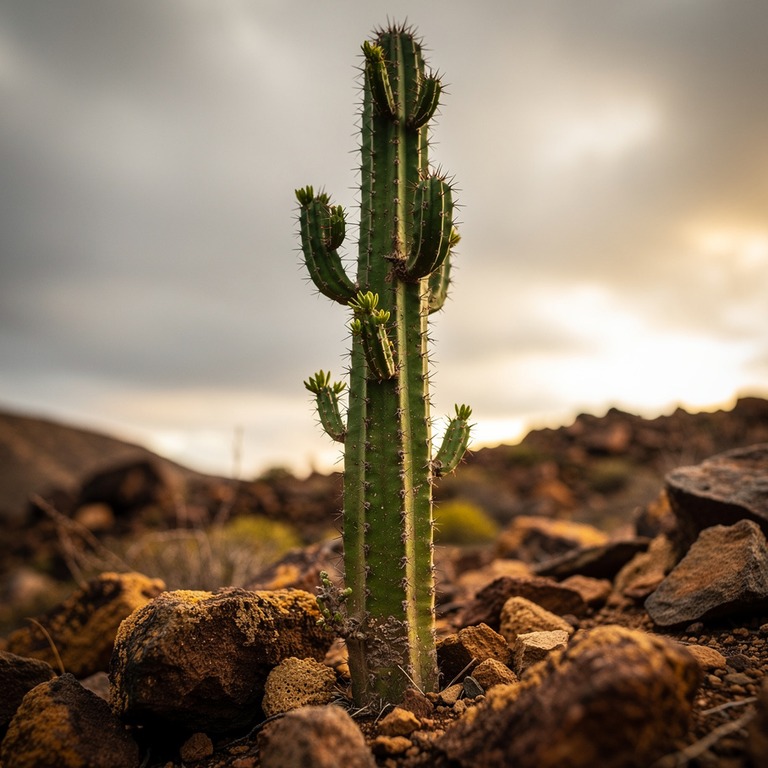
The classical psychedelics — psilocybin (the active compound in magic mushrooms), DMT (the molecule that gives ayahuasca its punch), LSD, and mescaline (from San Pedro and peyote) — all share one core trick. They bind to a specific receptor in the brain called the 5-HT2A receptor. That receptor is normally the home of serotonin, the neurotransmitter that most people have heard of in the context of antidepressants.
The psychedelic molecule shows up, fits the lock, and turns it — but it's not serotonin, and the neuron behaves differently as a result. Researchers have demonstrated this elegantly: give someone psilocybin alongside a drug called ketanserin, which blocks the 5-HT2A receptor, and the trip simply doesn't happen. No visuals, no ego dissolution, no insight. The molecule is still in your bloodstream. It just has nowhere to land.
This is also why some psychedelics hit harder than others. LSD binds to the 5-HT2A receptor extremely tightly, which is part of why a microscopic dose produces a twelve-hour experience. Mescaline has additional dopamine receptor activity, which is part of why a San Pedro ceremony feels different from a psilocybin one — warmer, more embodied, less reality-shattering.
Psychedelics Grow New Connections in the Brain
Here's the finding that got the research world genuinely excited over the past decade. Psychedelics promote neuroplasticity — the brain's ability to physically rewire itself, growing new branches between neurons and forming new circuits.
Why does this matter for someone considering a retreat? Because depression, addiction, and chronic anxiety appear to involve a kind of structural shrinkage in the brain. In depression specifically, the little branching extensions of neurons in the prefrontal cortex — the area that regulates mood and emotional response — literally wither. The neural architecture for flexible thinking and steady mood gets sparse. You stay stuck in the same grooves.
Lab studies have shown that LSD and DMT cause those branches to regrow. In some experiments, the growth was more pronounced than what ketamine produces, which is notable because ketamine is already considered a breakthrough treatment for stubborn depression. Block the 5-HT2A receptor and the neuroplasticity vanishes too — same receptor, multiple effects.
The practical takeaway: a single psychedelic experience may open a window of roughly two to four weeks during which the brain is unusually pliable. This is the integration window that experienced facilitators talk about. The substance does the chemistry; what you do in those weeks — therapy, journaling, ceremony, the hard conversations, new habits — is what carves the new grooves. Skip the integration and you've largely wasted the chemistry.
Brain Entropy: Why Things Feel So Strange
The researcher Robin Carhart-Harris proposed something called the entropic brain hypothesis around a decade ago, and it's held up surprisingly well. The idea borrows from physics. Entropy is a measure of disorder, of unpredictability, of how many possible states a system can be in.
Carhart-Harris and his team scanned people on LSD and psilocybin and found that brain activity becomes more entropic — less predictable, less locked into the familiar grooves. Normally-segregated brain regions start chatting with each other. The default-mode network, which is the chatterbox of the self, the inner narrator constantly running commentary about who you are and what people think of you, goes quiet. Without it, the boundary between self and not-self can blur. That's the famous ego dissolution.
Carhart-Harris's framework places ordinary waking consciousness in a middle zone:
- Low entropy states — deep sleep, rigid thinking, depression, addiction, OCD. The brain is stuck in a small set of repeating patterns.
- Normal waking — flexible enough to function, predictable enough to keep you alive.
- High entropy states — REM dreaming, early psychosis, near-death experiences, and psychedelic journeys. The brain runs many more possible patterns at once.
If you accept this framing, depression and addiction look less like chemical imbalances and more like ruts. Psychedelics shake the system out of its rut by temporarily injecting chaos. The lasting benefits — increased openness, less rigid thinking, better ability to break habits — may come from that shake-up. Worth noting: this same mechanism is why bad sets and bad settings produce bad trips. A chaotic brain in a chaotic environment with unprocessed trauma in the room is not a peaceful evening.
Brain Waves and the Waking Dream
A 2019 study put participants in an EEG and measured what DMT — the same molecule that makes ayahuasca what it is — does to the brain's electrical rhythms. The findings explain a lot.
Alpha waves, the brain rhythm associated with relaxed wakefulness, dropped sharply. Delta and theta waves, which dominate during dreaming, surged. In other words, the waking brain temporarily started running the same software it uses when you're deep in REM sleep, except the lights were on and the person was alert. The lead researcher described it as “dreaming with your eyes open,” which matches what people report after a strong DMT or ayahuasca experience almost word-for-word.
This helps explain why ayahuasca visions feel so much more vivid and meaningful than ordinary imagination. You're not picturing things. You're dreaming things, in the same neurological sense as a sleeping dream, while conscious enough to engage with them and remember them.
Aldous Huxley's Reducing Valve, Vindicated
Back in 1954, Aldous Huxley took mescaline and wrote The Doors of Perception. He borrowed an idea from the philosopher C.D. Broad: the brain, Broad argued, doesn't create consciousness so much as filter it. There's more sensory and mental information available at any moment than you could possibly use, so the brain runs a reducing valve that narrows the firehose down to a manageable trickle. You see what helps you survive and ignore the rest.
Huxley's claim was that psychedelics temporarily loosen the valve. More gets through. Colours, meanings, connections, memories, sensations the brain ordinarily suppresses as irrelevant. For seventy years this was a poetic metaphor. Then neuroimaging caught up.
When researchers first scanned people on psilocybin, they expected to see more brain activity. Instead, certain hub regions — particularly the default-mode network — went quieter. With the filter dialled down, suppressed material can flood the conscious mind. This is, mechanistically, why people on ayahuasca recover memories they'd forgotten, see connections they'd missed, and confront emotional content they'd been managing to avoid for decades.
What This Means for Choosing a Retreat
None of this is academic if you're trying to decide whether to fly to Peru, Costa Rica, or the Netherlands and drink something that will rearrange your nervous system for a night. A few practical implications follow from the science:
- Set, setting, and facilitation matter enormously. A brain in high-entropy, low-filter mode is unusually suggestible and unusually vulnerable. The container around you — the people, the music, the physical safety, the trauma-awareness of the staff — gets imprinted. Pick carefully.
- Integration is the work. The neuroplasticity window is real but finite. A retreat that hands you ceremony after ceremony and then waves goodbye at the airport is selling you the chemistry without the carving. Ask what integration support looks like — calls, group meetings, recommended therapists — before you book.
- Medication interactions are not optional homework. SSRIs and other serotonergic medications occupy the same receptors psychedelics need. Ayahuasca specifically contains MAO inhibitors, which combine dangerously with several common antidepressants and even some foods. A reputable retreat will screen for this. If they don't ask, that's a red flag.
- Mental health history matters. Personal or family history of psychotic disorders changes the calculation significantly, because the same entropy-increasing mechanism that helps depression can destabilise a brain already prone to psychosis.
The science doesn't make psychedelics magic and it doesn't make them safe by default. It makes them a tool — a powerful one, increasingly well-understood, with a mechanism of action that genuinely lines up with the experiences people have been describing for thousands of years. The Amazonian shamans who built ayahuasca traditions didn't know about 5-HT2A receptors. They knew the medicine showed people what they'd been hiding from themselves. Turns out those are two ways of describing the same thing.
If reading this has made you more curious rather than less, the next step is to look closely at specific retreats — their facilitators, their screening processes, their integration support — and find one that matches what you're actually after. A curated selection of ayahuasca and psychedelic plant-medicine retreats can be browsed on our marketplace here. Take your time with the decision. Whatever the brain is doing under these molecules, it deserves a thoughtful container around it.
Craving More Stories?
Join our ShopAyahuascaRetreats newsletter for the latest updates on thrilling
destinations and inspirational tales, delivered straight to your inbox!
We value your privacy. Your email address will never be shared or published.