 English
 Deutsch
 Français
 Nederlands
 Español





Reset. Heal. Grow.
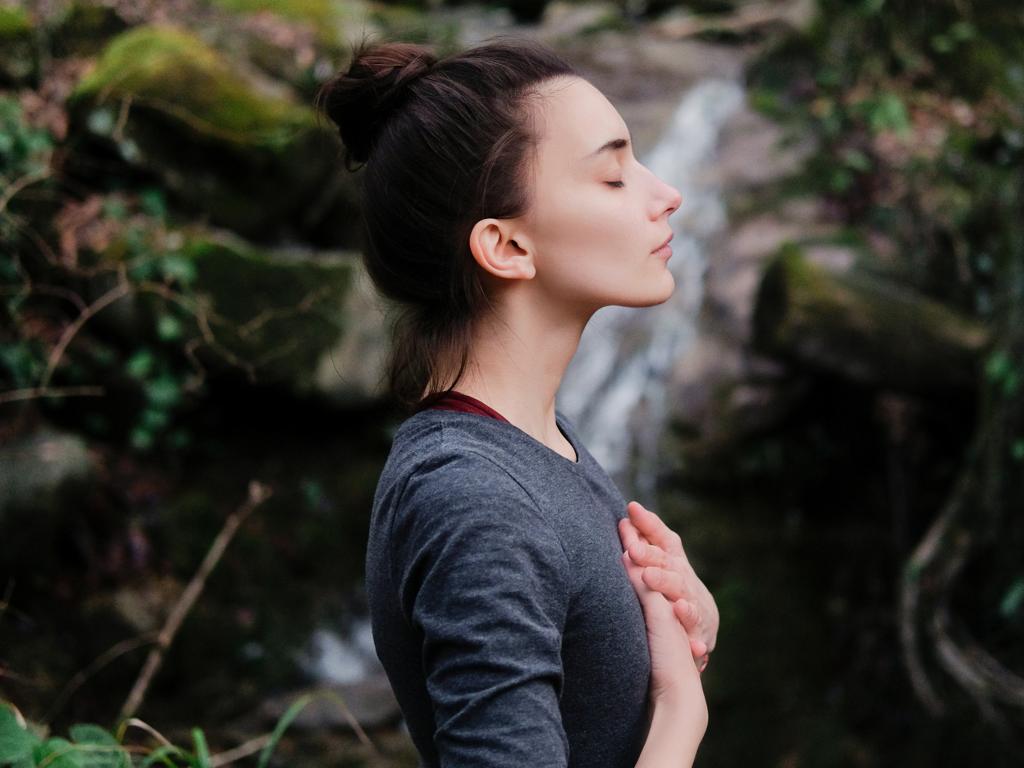
Transcendental Meditation vs. Mindfulness: Which Practice Fits You
Walk into any meditation conversation long enough and someone will eventually ask the question: what's the actual difference between Transcendental Meditation and mindfulness? It sounds like splitting hairs. It isn't. The two practices feel completely different from the inside, ask different things of you, and tend to attract very different people. If you've been circling meditation for a while — maybe alongside a curiosity about plant medicine, maybe just looking for something steadier than your current anxiety — knowing which one you're signing up for matters. I've sat with both. I've also watched people quit one and thrive on the other, then swap a year later. There's no universal winner. But there is a right fit for where you are right now, and the goal of this piece is to help you find it without spending six months and a few hundred dollars discovering the hard way. Transcendental Meditation — TM for short — was brought to the West in the late 1950s by Maharishi Mahesh Yogi. It's a mantra-based practice. You sit comfortably, eyes closed, and silently repeat a specific sound the teacher assigns you. You do this for about twenty minutes, twice a day. That's it. No visualization, no breath counting, no scanning your body, no trying to be present with your thoughts. The mantra is the whole game. The pitch is effortlessness. You're not supposed to concentrate hard. You're not supposed to fight off intrusive thoughts. When the mind wanders — and it will, constantly — you just gently return to the mantra. Practitioners describe a kind of settling, where the mantra becomes fainter and fainter until consciousness slips into something they call “pure awareness.” Whether that's a real altered state or a fancy name for a deep nap depends on who you ask. Practical reality check: TM is taught through a formal organization, and learning it costs money. In the U.S., the standard course runs somewhere between several hundred and around a thousand dollars depending on income, and it's typically delivered over four sessions with a certified teacher. You also get a personal mantra and follow-up check-ins. Some people love the structure. Others find the price tag and the trademark-protected vibe off-putting. Mindfulness is the broader, scruffier cousin. It traces back to Buddhist contemplative traditions — particularly vipassana — but the modern secular version most people encounter was shaped by Jon Kabat-Zinn in the late 1970s when he developed Mindfulness-Based Stress Reduction for hospital patients dealing with chronic pain. From there it spread into clinics, schools, corporate boardrooms, and roughly every meditation app on your phone. The practice itself is simple to describe and surprisingly hard to do. You pay attention, on purpose, to what's happening right now — usually your breath, sometimes your body, sometimes sounds — and when your mind drifts, you notice it drifted and come back. The “noticing” is the practice. You're not trying to empty your head. You're training the muscle that catches you mid-spiral and brings you back to the room. Mindfulness is essentially free to start. There are dozens of solid teachers, books, and free apps. You can learn the basics from a YouTube video and be practicing this afternoon. There's no mantra, no certified intermediary, no required teacher — though working with a real human teacher, especially for longer retreats, makes an enormous difference once you get past the beginner phase. This is the part people rarely explain well. The mechanics are easy to describe; the felt sense is what actually matters. TM, when it's working, feels like sinking. The mantra drops away from your active attention. Time gets weird. You'll come out of a twenty-minute session and have no idea where it went. Many people report a clean, rested feeling — like a power nap that didn't leave them groggy. The practice is doing something to your nervous system, and you can feel it after. Mindfulness feels almost the opposite. You're awake. You're noticing. You're watching your thoughts roll past like train cars and clocking how often you got distracted by the one about your inbox. It can feel boring. It can feel uncomfortable, especially when whatever you've been avoiding floats up into awareness. It's less about transcending the mind and more about getting to know it — including the parts you'd rather not. Here's the honest answer: it depends on what you're after and how your particular brain works. That last point deserves a paragraph of its own. People who arrive at meditation through an interest in ayahuasca, psilocybin, or other plant medicines often find that mindfulness practice gives them a vocabulary and a steadiness they badly need. Ceremonies tend to surface a lot of material at once. The ability to notice a thought or sensation, label it, and let it move through without clamping down — that's mindfulness in action. It's also exactly what experienced facilitators try to teach you the night before a ceremony, usually badly, in about ten minutes. A few things that get mangled in casual conversation, because they matter if you're choosing: Yes. Plenty of long-term meditators eventually use both — TM in the morning for the nervous-system reset, mindfulness in the evening or during the day for the awareness training. They're not in competition. They do different jobs. If you're starting from scratch, though, pick one and stay with it for at least eight weeks before evaluating. Jumping between techniques in the first few months is how people convince themselves meditation doesn't work for them, when really they just haven't given any single practice enough runway. For some readers, this question about meditation is sitting next to a bigger question — whether to do a silent retreat, attend a plant-medicine ceremony, or take some kind of deeper step into the inner work. Meditation, in either form, is the strongest preparation you can give yourself for any of that. It builds the muscle of staying present when things get strange, which is the single most useful skill in a ceremony space and the most useful skill in ordinary life when ordinary life is hard. If you're at the point where you're weighing a retreat as part of the picture, the curated ayahuasca and plant-medicine retreats available on our marketplace here are worth a slow scroll — many of them weave daily meditation into the schedule, which makes the integration far gentler than the alternative. Whichever practice you land on, the work is the same: show up, sit down, do the boring thing for a while, and let it change you over months rather than minutes. That's where the real shift lives.
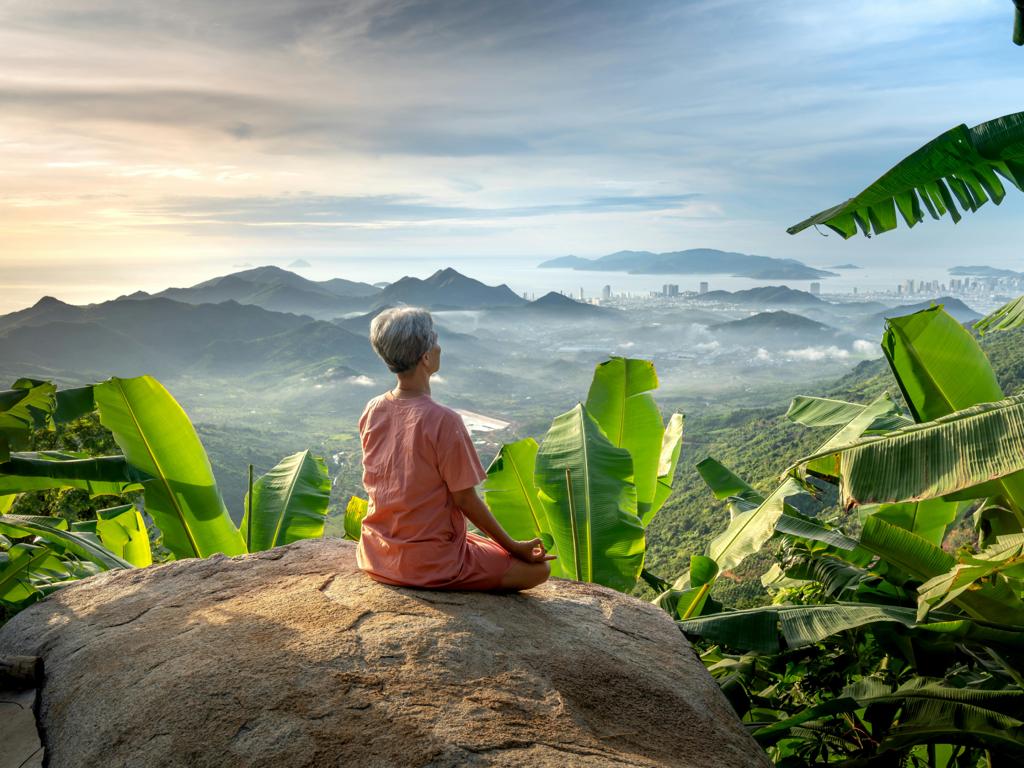
Wise Speech in Hard Times: A Buddhist Practice for Speaking Up
There's a particular kind of silence that lives in the body. You feel it in the throat first — that small clench when you know you should say something but the room is wrong, the person is powerful, the cost feels too high. Most of us learned this silence young. We were rewarded for it. And then one day, somewhere around your thirties or forties or later, you start to notice the silence is costing you something the approval never paid back. This is a piece about that — about wise speech as a contemplative practice, about what Buddhist teaching has to say when fear shows up and tells you to keep your mouth shut. It's also, quietly, about what plant medicine retreats and meditation traditions have in common: they both eventually ask you to stop hiding. Picture a crowded street. Riot gear, a curfew, clergy standing on one side and uniformed officers on the other. A small group has gathered to pray and to ask, plainly, for less cruelty. Someone steps forward to speak with no notes, no plan, just the recognition that fear is moving through the whole scene like weather — and not just their own fear. Fear coming off the officers. Fear coming off the soldiers down the block. Everyone braced. What do you say in that moment? Most of us don't know, because most of us have spent a lifetime learning how to not be in moments like that. The body has been trained to make itself small. To smile. To find an exit. The training works — until it stops working, which is usually around the time you realize the world is asking something else of you. This is where contemplative practice earns its keep. Not as a relaxation tool. As a way of staying in the room when every cell wants to leave. One of the most useful translations of dukkha I've encountered isn't “suffering” — it's the inability to be with what is. That phrase hits differently once you start watching your own reactions in real time. The flinch away from a hard conversation. The scroll instead of the sit. The third drink. The story you tell yourself about why now isn't the right time. Plant medicine work tends to walk people straight into this same recognition, often more abruptly. Ayahuasca, psilocybin, San Pedro — they each have their own way of removing the exits. You can't change the subject inside the ceremony. The thing you've been avoiding sits down across from you and waits. And what most facilitators will tell you, if they're honest, is that the medicine itself isn't the healing. The healing is in what you do after — how you carry that recognition back into the conversations and choices of ordinary life. Which brings us back to speech. Because almost everyone I've spoken with after a serious psychedelic experience eventually says some version of the same thing: I need to start telling the truth more. Sometimes that's truth to a partner. Sometimes to a parent. Sometimes to a boss, a sibling, a system. The medicine surfaces it. The Eightfold Path gives it a structure. Inside the traditional Buddhist framework, sila — ethical conduct — sits at the heart of the path. And inside sila, Wise Speech (sometimes called Right Speech) is one of the most quietly demanding practices on offer. The classical formulation asks four things of what comes out of your mouth: that it be true, kind, useful, and timely. Sounds simple. Try it for a week. Most of us discover we've been running on autopilot — saying what smooths the room, what gets us out of conflict, what makes us look good, what punishes someone we're angry with. Wise Speech isn't just about not lying. It's about a kind of presence behind the words. And the harder edge of the teaching, the one people skip past, is this: say what needs to be said. Silence in the face of harm is also a form of speech. I think of how the teacher Ruth King has put it — something close to: my intention is to live in a way that allows other people to feel safe around me. That's not the same as being agreeable. Agreeable people aren't always safe. Safety, in this sense, is the felt sense that the person across from you is grounded enough to tell you the truth without weaponizing it. You might be reading this while quietly weighing a retreat — ayahuasca in Peru, psilocybin in the Netherlands or Jamaica, an ibogaine program for addiction, a long silent meditation course somewhere far from your phone. I want to offer one practical observation from years of watching people make this decision and live with the consequences. The retreat itself is rarely the hard part. The hard part is the integration. And integration is, in a very literal sense, a speech practice. It looks like: If you have no practice at speaking what needs to be spoken in ordinary life, the after-glow of a ceremony will fade and the old patterns will re-form around the insight like skin growing over a splinter. Plant medicine can give you the clarity. It can't give you the spine. The spine is built afterward, one slightly uncomfortable conversation at a time. People sometimes hear “practice wise speech” and reach for grand gestures — the confrontation, the long-overdue letter, the resignation. There's a place for those. But the practice mostly happens in much smaller frames. The compliment you actually mean instead of the reflexive one. The honest answer when someone asks how you are. The moment in a meeting when you say the obvious thing nobody is saying. The text where you apologize first. Each of these costs something. A small pulse of fear. A flicker of how-will-they-take-it. Wise Speech as a practice is the willingness to feel that pulse and speak anyway — not because the fear is wrong, but because you've stopped letting it decide for you. Over time, the pulse gets quieter. Not because the world becomes safer, but because you do. This is also, by the way, what every halfway-decent integration coach will tell you. The work after a psychedelic experience isn't to chase another peak. It's to bring the insight down into how you talk to your kid, how you handle the email that annoyed you, what you do when someone you respect says something cruel at dinner. If you want to start working with wise speech in a more deliberate way — whether or not a retreat is on your horizon — a handful of practices have held up well over the years: What I keep coming back to, both in meditation circles and in the plant medicine world, is that the dharma isn't asking us to become fearless. It's asking us to become honest in the presence of fear. That's a very different and much more achievable assignment. You don't need the fear to go away. You just need to stop letting it write your script. The same is true on the retreat side. The medicines and the meditations don't deliver a finished person. They deliver a clearer view of who you've been and what you've been avoiding, and then they hand the work back to you. Which is, I think, the most respectful thing they could possibly do. If any of this is resonating and you're curious about exploring the territory more directly, a curated range of ayahuasca and plant medicine retreats can be browsed on our marketplace here. And whether you ever sit in a ceremony or not — the smaller practice is always available. The next slightly difficult sentence is waiting somewhere in your week. See if you can say it.


7 Types of Meditation Explained: Which Practice Fits You Best
Search “types of meditation” and you'll drown in lists. Fifteen styles. Twenty-two styles. Every blog seems to have a longer count than the last, and somewhere around the eighth bullet point, they all start to blur together. If you're new to sitting practice — or if you've tried it once, hated it, and are wondering whether you picked the wrong style — that's a real problem. So let's slow this down. There are a handful of meditation approaches that actually matter for most people, and each one solves a specific problem. Anxiety. Stress. Self-criticism. A mind that won't sit still for ninety seconds. The trick isn't to try them all — it's to match the right practice to what you're actually carrying. This is also worth saying upfront: meditation often comes up alongside conversations about psychedelics, plant medicine, and master plants. People who sit with ayahuasca or psilocybin tend to discover, sometimes the hard way, that integration without a contemplative practice is like trying to remember a dream you never wrote down. Even if you have zero interest in plant medicine, the right meditation style still rewards you. Let's get into it. Most meditation practices fall into one of a few rough families. Knowing the families first makes the specific styles easier to choose between. None of these is better than the others in the abstract. They're just different doors into the same house. What follows is the seven specific practices I'd point a new meditator toward, and who each one actually serves. If you've never meditated and you sit down expecting to wrangle your own mind into stillness, you're going to fail. That's not pessimism, that's physics. A wandering mind needs something to wander back to, and a steady voice gives it that anchor. Guided meditation is exactly what it sounds like: a teacher (live or recorded) walks you through the session. They cue your breath, point your attention, sometimes layer in soft music or a singing bowl. There are pauses, but you're rarely left alone for long. For absolute beginners, this is the on-ramp. It's also a lifesaver for people whose anxiety spikes the moment a room goes quiet. The honest downside: some people find the voice itself distracting. If a soothing narrator makes you grit your teeth, guided isn't your style and that's fine. Move on. Silent (or unguided) practice strips away the scaffolding. No music. No narrator. Maybe a teacher opens the session with an intention, then steps back. You sit. You breathe. Whatever shows up, shows up. This is a bigger ask than it sounds. Ten minutes of silence with your own mind can feel longer than an hour of guided practice, especially in the first weeks. Silent retreats — the kind that run three, seven, or ten days — push this much further. People emerge from those changed, and sometimes shaken. It's not casual. Silent practice is also where intermediate meditators tend to settle in for the long haul. Once you stop needing the voice, the silence becomes the point. Vipassana goes back about 2,500 years, to the time of the Buddha himself. The word means something close to “seeing things as they actually are.” In practice, it's a blend of two skills: samatha, which is steady attention, and vipassana, which is clear-eyed observation of whatever your attention lands on. What makes this style genuinely useful for anxiety is its core insight: most suffering comes from how we react to sensations, not from the sensations themselves. You learn to notice a thought, register it, and let it pass without grabbing on. After enough hours, this becomes a reflex outside of meditation too — in traffic, in arguments, at 3 a.m. when the brain decides to inventory every regret you've ever had. Vipassana retreats are famously intense. Ten days of silence, no phones, no eye contact, sometimes ten hours a day of sitting. Many people who sit ayahuasca or psilocybin find that prior Vipassana experience makes the journey easier — you've already built the muscle of watching difficult content without flinching. Mindfulness gets used as an umbrella term for nearly everything these days, but the actual practice is specific. You focus on the present moment — breath, body, sounds, whatever — and when the mind wanders (it will), you note it without judgment and return. The goal isn't a blank mind. The goal is a friendlier relationship with the one you've got. Ten to thirty minutes a day is enough to feel changes within a few weeks: less reactive in meetings, slower to bite at small irritations, a fractional pause between stimulus and response that didn't exist before. This is the style I'd recommend to a working professional who wants something portable and sustainable. It travels well. You don't need a cushion or an altar — though both are nice. Zazen translates roughly as “seated meditation,” and that's pretty much the whole instruction. You sit, usually facing a wall, often with eyes half-open and softly downcast. You follow the breath. Thoughts arise and pass like clouds across a sky you happen to be watching. There's no narration, no visualization, no chant. Zen practitioners sometimes call this “just sitting” — shikantaza in Japanese — and it sounds simpler than it is. The discipline is in not adding anything. No story about how the meditation is going. No grading yourself. You sit, the breath happens, time passes. Beginners can absolutely start here, but most find it easier after they've spent some time with guided or mindfulness practice first. Once you know what your wandering mind feels like, Zen gives you a clean place to keep practicing the return. If you talk to yourself the way you'd never talk to a friend, this one is for you. Metta — from the Theravada Buddhist tradition — is the systematic cultivation of warmth, first toward yourself, then toward people you love, then toward neutral strangers, and finally toward people you can't stand. That last category is where it stops being cute and starts being real work. Sessions usually involve repeated phrases: may I be safe, may I be happy, may I be at ease. The phrases feel hollow at first. After a while they don't. Something softens. Therapists sometimes recommend Metta for depression and chronic self-criticism because it does something cognitive therapy struggles to do — it changes the felt tone of how you relate to yourself. I'm grouping these because they share a basic premise: that there's a flow of energy in the body that can be directed with attention. Chakra meditation moves through seven focal points from the base of the spine to the crown of the head, often visualizing color or light at each. Qigong does something similar with breath and gentle movement, drawing from Chinese medicine's framework of qi. How you feel about this depends partly on how literal you want to be. Some practitioners describe genuine sensations of warmth and movement; others treat it as a useful metaphor for paying close attention to specific regions of the body. Both camps tend to report the same thing after enough practice: a steadier baseline, a clearer sense of when something is “off,” and — interestingly — better recall and processing of meaningful experiences, including psychedelic ones. A few honest filters to narrow it down: One more thing worth saying: meditation isn't a competition, and it isn't a personality trait. The person who sits ten minutes a day for a year will outpace the person who white-knuckles a thirty-day retreat and then quits. Consistency wins. Always has. For readers exploring how contemplative practice fits alongside plant medicine — preparing for a ceremony, integrating afterward, or simply building a steadier mind before any of that — a range of meditation-friendly plant-medicine retreats can be browsed on our marketplace here. Pick a practice, sit with it for a few weeks, and let the rest reveal itself.

Silent Meditation Retreats: An Honest Guide for Curious Beginners
Sitting in silence for seven days sounds peaceful until you actually try it. Then the mind shows up — loud, opinionated, weirdly obsessed with a conversation you had in 2014 — and you remember why most of us fill every quiet moment with podcasts. A silent meditation retreat is a deliberate confrontation with that noise. Done well, it can quiet years of mental static. Done badly, or done too soon, it can rattle you in ways you didn't sign up for. This is the honest version of what a silent retreat is, what to expect, and how to figure out if you're ready for one — or whether you'd be better served by something else first. I write mostly about plant medicine and psychedelic retreats, and I bring that lens here on purpose: many people who land in ayahuasca or psilocybin ceremonies eventually find themselves curious about silent practice, and vice versa. The two paths talk to each other more than most people realise. A guided ten-minute sit on your phone is a snack. A silent retreat is a fast. The format itself is the medicine — no music, no soothing voice in your ear, no notifications, often no eye contact, no reading, no journaling for some traditions, no phone. Just you, a cushion, a schedule, and whatever your nervous system has been postponing. Most retreats sit somewhere on a spectrum. On one end, vipassana courses in the S.N. Goenka tradition run a strict ten days with two hours of sitting before breakfast and roughly eleven hours of practice total. On the other end, weekend retreats at insight meditation centres or Hridaya-style settings include some teachings, gentle movement, and a softer ramp into silence. Zen sesshins, Tibetan retreats, and Christian contemplative weeks each have their own flavour. Pick the wrong one for your temperament and you'll spend three days wondering if you've made a terrible mistake. The shared thread is that no one talks. Not at meals. Not in the hallways. Not even, ideally, with your eyes. The first time you eat a slow, silent dinner with thirty strangers, it feels comically awkward. By day three, it feels like the most natural way humans have ever shared a meal. Schedules vary, but the rhythm is recognisable across traditions. Here's a fairly typical retreat day, give or take an hour: Walking meditation matters more than people expect. After your third hour on the cushion, the slow, deliberate pace of a walking session feels like a gift from the gods. Meals, also — eating a single raisin for ten minutes sounds absurd until you do it and notice your jaw has been clenched for two decades. One thing newcomers underestimate: the boredom. Real, gnawing, almost physical boredom on day two or three. That's not a sign you picked the wrong retreat. It's usually the doorway. The mind exhausts its familiar entertainment loops and starts to settle into something quieter underneath. Silent retreats aren't for everyone, and certainly not for everyone right now. I'd push back gently on the idea that you should just leap into a ten-day vipassana because someone in your podcast feed said it changed their life. Some people genuinely aren't in a stable enough place for that much unstructured contact with their own psyche. A few honest questions worth sitting with before you book: None of these are dealbreakers in isolation. They're just signals worth taking seriously. A good teacher would rather you wait six months and come prepared than show up unready and get rattled. Here's where the worlds I usually write about start to overlap. A growing number of people come to silent meditation after a profound ayahuasca, psilocybin, or San Pedro experience, looking for a way to keep deepening the work without another ceremony. Others move in the opposite direction — they've sat through years of vipassana courses and find themselves curious about whether plant medicine might unlock something that pure silence hasn't. Both paths are valid, and they genuinely complement each other. Silent practice builds the capacity to be with what arises without flinching, which is exactly the skill that makes a difficult ceremony tolerable. A well-integrated psychedelic experience, in turn, can melt some of the defences that years of sitting have only nudged. Many seasoned meditators I've spoken with describe their first ayahuasca night as “twenty years of practice compressed into eight hours” — which is partly true and partly the kind of thing people say in afterglow. The honest version: psychedelics show you the territory; silence teaches you to live there. If you're using silent retreat as integration after a psychedelic experience, give yourself a buffer. Three to six weeks is a reasonable minimum. Walking straight from a Peruvian maloca into a ten-day vipassana is more than most nervous systems can metabolise gracefully. The silent meditation world is mostly trustworthy — many centres run on donations, the teachers tend to be career practitioners, and the lineages are well established. But it's not immune to bad actors or simply bad fits. A few practical filters: Cost varies wildly. Goenka vipassana courses are donation-based and astonishingly affordable. Insight Meditation Society and Spirit Rock in the US charge moderate fees with sliding scales. Boutique retreats in Bali, Costa Rica, or Tuscany can run well into four figures for a week. None of these tiers is automatically better than another — what matters is fit. Most retreats send a packing list. Read it. Then pack lighter than you think. A few things people consistently wish they'd brought: And leave the journal at home for your first one, unless the retreat explicitly invites journaling. The urge to write is often the mind's way of converting raw experience back into a story it can manage. Letting that urge pass unmet is part of the practice. The re-entry is strange. Speech feels loud and slightly fake for the first day. Driving feels insane. The supermarket — all that colour, all those choices — can knock you sideways. Some people cry in the car park. Some feel a quiet, settled clarity that lasts weeks. Some feel nothing for three days and then notice, gradually, that they're less reactive than they used to be. Whatever shows up, protect the transition. Don't book a red-eye flight the night your retreat ends. Don't schedule a tough conversation for the next morning. Give the new baseline a few days to settle into your normal life before you ask it to perform. If silence is what you're craving — or if you're looking for the contemplative ground to support deeper plant-medicine work down the line — a retreat is one of the most reliable investments you can make in your own inner life. For readers who want to take this further, a range of curated meditation and plant-medicine retreats can be browsed on our marketplace here. Either way, go in with realistic expectations, the right teacher, and a willingness to be bored. The rest takes care of itself.

Silent Meditation Retreats: An Honest Guide to Sitting in Stillness
How much actual silence have you had today? Not background-music silence. Not nobody-is-talking-but-the-phone-is-buzzing silence. Real, uninterrupted quiet — the kind where you can hear yourself blink. For most of us, the honest answer is: almost none. We move through days stitched together by notifications, podcasts, traffic, group chats, and the low hum of our own running internal monologue. After enough years of that, the nervous system forgets what stillness even feels like. Which is probably why you ended up here, reading about silent meditation instead of doom-scrolling. This is a practical guide. What silent meditation actually is, where it came from, what happens in your head during a long sit, and what to expect if you decide to book a silent retreat. I'll be honest about the uncomfortable parts too, because the glossy version doesn't help anyone make a real decision. The phrase sounds redundant. Isn't all meditation silent? You sit, you close your eyes, you breathe. Quiet by definition, right? Not quite. A lot of what gets called meditation today is guided — a teacher's voice, a soundtrack, a body-scan recording on an app. Useful, especially for beginners, but it's a different beast. Silent meditation is the unguided cousin. No voice. No music. No bells (well, sometimes one bell to mark the start and end). Just you, your breath, and whatever your mind decides to throw at you. That last part is the catch. The silence on the outside reveals how loud it is on the inside. People who try a serious silent sit for the first time are often shocked by the sheer volume of mental chatter. The practice isn't really about achieving silence — it's about being still enough to notice everything that isn't. There's a useful middle ground worth knowing about. Semi-guided sessions bookend silence with brief instruction — a teacher sets an intention at the start, lets you sit for thirty or sixty minutes, then closes the session with a few words. This is how a lot of beginners ease in. Fully unguided is the traditional form: you arrive, you sit, time passes, you stand up. No one tells you when to focus on your breath or whether you're doing it right. That's both the freedom and the difficulty of it. Silent meditation isn't a wellness trend. It's roughly two and a half thousand years old, with roots in the Buddhist tradition of Vipassana — a word that translates loosely as seeing things as they really are. After the Buddha's enlightenment, he spent the rest of his life teaching variations of this technique across what's now northern India. The practice nearly disappeared from India over the centuries that followed but was preserved, almost by accident, in Burma (now Myanmar). In the twentieth century, a Burmese-Indian teacher named S.N. Goenka brought a stripped-down, secular version back to India and then to the West. The ten-day silent Vipassana retreats people talk about today — the ones with no talking, no phones, no eye contact, no reading — descend directly from that lineage. You can read more about the tradition on Wikipedia's entry on Vipassanā if you want the longer history. This matters because it tells you something about what you're walking into. Silent meditation wasn't designed as a stress-management tool. It was designed as a path toward understanding the nature of the mind. The fact that it also lowers cortisol and helps people sleep better is, in the original framing, almost a side effect. Here's what the brochures rarely spell out: the first two or three days of a silent retreat are often miserable. Not in a dramatic way. In a quiet, gnawing, oh-god-what-have-I-done way. The schedule is brutal by modern standards. Wake-up bell around 4 a.m. Sitting sessions of an hour or longer, repeated through the day, with breaks for simple vegetarian meals and walking. No talking to other students. No journaling. No music. Your phone is locked away. By day two, your knees hurt, your back hurts, and your mind has started serving up every unresolved memory it can find, like a search algorithm that finally got some bandwidth. And then — usually somewhere between day three and day five — something shifts. The chatter doesn't stop, exactly, but you stop being so identified with it. You notice a thought arise and pass without chasing it. You feel a sensation in your shoulder and don't immediately need to interpret it. The shoulders themselves drop a little. You start to understand, in a felt way rather than a conceptual one, what teachers mean when they talk about awareness. What people typically report after a silent retreat: I'll be direct. Long silent retreats are not the right starting point for everyone. If you're in the middle of an acute mental-health crisis, recently bereaved, or working through unprocessed trauma without any therapeutic support, ten days alone with your mind can do more harm than good. Reputable retreat centers will sometimes screen for this. Less reputable ones won't. This is also worth saying given who tends to read posts like this: silent meditation and plant medicine sit in adjacent neighborhoods of the inner-work world, and people often consider both. They do different things. A psychedelic ceremony tends to crack you open quickly; silent meditation teaches you, slowly, how to live inside the opening. Many of the most grounded plant-medicine practitioners I know also sit regularly. The two practices feed each other, but neither is a substitute for the other. Silent retreats vary enormously. Some are donation-based and run by experienced lineage teachers. Some are five-star resort experiences with optional silence. Both can be valuable; they're just different products. A few things worth asking before you book: Cost varies wildly. Donation-based Vipassana courses in the Goenka tradition are genuinely free at point of entry, supported by past students. Boutique silent retreats in places like Bali, Costa Rica, or the south of France can run several thousand dollars for a week. Neither pricing model is automatically better; the question is what fits your situation and what kind of container you need. You don't need to fly anywhere to find out whether this practice resonates. Try sitting in unguided silence for twenty minutes a day for two weeks. No app, no music, no podcast. Set a timer, find a spot, watch your breath, and notice what your mind does. If after two weeks you're still curious — even if you're also frustrated — that's a good sign. A retreat will deepen what's already begun. If after two weeks you feel only resistance and nothing else, that's also useful information. Maybe the timing isn't right, or maybe a guided practice or a different modality is a better entry point. There's no rule that says silent meditation has to be your path. For readers who feel ready to take this further, a range of meditation and contemplative retreats — including silent sits and integration-focused programs — can be browsed on our marketplace here. Take your time choosing. The right container makes an enormous difference, and the silence will still be there when you're ready for it.
Craving More Stories?
Join our ShopAyahuascaRetreats newsletter for the latest updates on thrilling
destinations and inspirational tales, delivered straight to your inbox!
We value your privacy. Your email address will never be shared or published.


Zen Meditation at Home: A Practical Guide for Beginners
Most of us don’t need another productivity hack. We need permission to stop. Zen meditation — or zazen, as practitioners call the sitting form — is one of the oldest, plainest answers to that craving. No app. No special clothes. Just you, a cushion, and the quiet stubbornness to sit down again tomorrow. If you’ve been circling this practice for a while, wondering whether it’s worth the trouble, this guide is for you. I’ll walk through what Zen actually is, where it came from, what science has bothered to measure, and how to set up a sustainable home practice without turning your spare room into a Kyoto temple. Zen is a form of Buddhist meditation that emphasises direct experience over doctrine. The word itself comes from the Chinese Chan, which traces back to the Sanskrit dhyana — roughly, “meditative absorption.” The practice predates almost every wellness trend you’ve heard of by about fifteen centuries, having taken shape in China around the 6th century CE before spreading through Korea, Japan, and eventually the West. Unlike guided visualisations or mantra-based techniques, Zen asks you to do something deceptively simple: sit, breathe, and notice. You don’t chase thoughts. You don’t banish them either. You let them drift across the mind the way clouds drift across a window. The aim isn’t a blissed-out trance — it’s a clear, awake presence with whatever is actually happening. Practitioners often describe it as the opposite of escapism. You’re not leaving the world; you’re finally arriving in it. Zen isn’t monolithic. Teachers across history have grouped the practice into rough categories, and knowing them helps you understand what kind of sitting you might actually be doing. For most beginners, Bompu Zen is the honest starting point. You can graduate to bigger questions later — or never. Both are fine. Meditation research has exploded in the past two decades, and Zen has had its share of attention. Studies on regular practitioners suggest measurable effects on attention, stress reactivity, and the recovery of focus after distraction. One often-cited experiment found that experienced Zen meditators returned to baseline breathing patterns faster after disruption than non-meditators — a small but interesting marker of mental regulation. Other research has looked at how Zen practice influences problem-solving and access to less filtered thinking. Practitioners who sat before a creative-association task tended to outperform those who didn’t. Read that result with a grain of salt — sample sizes are small, and meditation studies are notoriously hard to control. Still, the direction of the findings lines up with what experienced sitters describe: a quieter mind tends to make better decisions. The broader literature on meditation in general points to benefits across sleep, anxiety, mild depression, and emotional regulation. Zen isn’t a magic pill for any of these. It’s more like flossing — quietly cumulative, easy to skip, and unmistakably effective over years. The traditional story credits an Indian monk named Bodhidharma with bringing Chan to China in the 6th century. Whether the legends are accurate matters less than what came afterward: Chan absorbed strands of Taoism, became Seon in Korea by the 7th century, and crossed to Japan around the 12th, where the monk Dogen established the Soto school after returning from his own studies in China. Zen reached Europe and North America in fragmentary waves through the late 19th and early 20th centuries, with the scholar D.T. Suzuki doing much of the heavy lifting in translation. By the 1960s it had become part of the Western contemplative landscape, and by now it has been so thoroughly assimilated that most “mindfulness” apps owe Zen a quiet thank-you they’ll never send. Here’s the honest version. You don’t need a teacher to start, though you’ll probably want one eventually if the practice sticks. What you need first is a stable setup and a willingness to do the unglamorous thing — sit, again, tomorrow. Quiet corner. Same time every day if you can manage it. Mornings work for most people because the mind hasn’t fully loaded its to-do list yet. Ten minutes is plenty when you’re starting. Build up to twenty or thirty over weeks, not days. Forget the Instagram lotus. The best posture is the one you can sit in without grimacing. The classic Zen hand position is the cosmic mudra: right palm cradling the left, thumbs lightly touching to form a soft oval at the navel. If the thumbs collapse, you’re drifting. If they press hard, you’re tense. The mudra is a quiet feedback loop. Crown of the head lifts. Chin tucks slightly. Shoulders drop. The spine does the structural work so the rest of the body can let go. A collapsed posture invites a collapsed mind. This is the part beginners often skip. In traditional Zen, eyes stay half-open with an unfocused gaze on the floor about two or three feet ahead. It keeps you from drifting into daydreams or falling asleep. Closed eyes are fine if you’re struggling, but try the half-open gaze for a week and notice the difference. Don’t control the breath. Just feel it. When the mind wanders — and it will, constantly, often hilariously — return to the breath without scolding yourself. The returning is the practice. If you return a hundred times in ten minutes, you meditated a hundred times. That’s not failure. That’s the gym. Some honesty: the first weeks are usually uncomfortable. Your knee will hurt. Your back will protest. Your mind will produce shopping lists, old arguments, and elaborate fantasies about lunch. You’ll wonder if you’re doing it wrong. You’re not. This is the practice introducing itself. By week three or four, something subtle usually shifts. Not enlightenment — more like a small space opening between you and your own reactivity. You notice irritation before it becomes a snapped reply. You sleep slightly better. You stop checking your phone in the elevator. Small things, accumulating. If you’re drawn to Zen because you’re struggling with something heavier — addiction, depression, long-standing trauma — meditation can be a real ally, but it’s not a substitute for proper care. Sit, yes. Also talk to someone qualified. Home practice will carry you a long way. A residential retreat will carry you somewhere else entirely. Even a weekend of structured sitting — proper silence, multiple sessions a day, a teacher to ask the awkward questions — tends to compress months of insight into a few days. The catch is that retreats are uncomfortable on purpose. The structure exists precisely to confront the patterns you usually distract yourself away from. If you’re curious about going deeper, a range of curated meditation and contemplative retreats can be browsed on our marketplace here. Start tomorrow morning. Ten minutes. A cushion or a chair. The breath, the spine, the returning. That’s the whole thing. The rest is just practice.

8 Meditation Techniques That Pair Well With Plant Medicine Work
Here's something nobody mentions in the glossy retreat brochures: the people who get the most out of an ayahuasca ceremony usually already know how to sit with their own mind. Not perfectly. Not like a monk. But enough that when the brew kicks in and their thoughts start sprinting in fourteen directions, they have some practiced way of coming back to themselves. That's where meditation fits into the plant medicine picture. It's not a replacement for the work — drinking ayahuasca is its own beast — but it's the scaffolding. The thing that makes the experience navigable instead of overwhelming. And it's what most facilitators will gently suggest you build up in the weeks before you fly to Peru or Costa Rica or wherever you're headed. So let's talk about eight meditation techniques that genuinely help. Not as abstract spiritual practices, but as practical tools you can rehearse at your kitchen table, on your lunch break, or the night before a ceremony when your nervous system is already buzzing. Plant medicines amplify whatever is already in you. If you're a chronic ruminator, ayahuasca will hand you your rumination on a silver platter and ask what you'd like to do about it. If you've never paid attention to your breath, you're going to be very surprised by what happens in your chest at hour two. Meditation doesn't make any of that go away. What it does is give you a familiar place to land when things get strange. Maestros in the Shipibo tradition often say the medicine teaches you, but only if you can stay present long enough to listen. That capacity to stay — to not bolt mentally when something uncomfortable arises — is exactly what meditation trains. The research is also catching up. Studies from Johns Hopkins and Imperial College have repeatedly shown that participants with even a basic mindfulness practice report more meaningful psychedelic experiences and better integration afterward. It's not magic. It's just that a trained attention is a better instrument than an untrained one. If you only learn one technique before sitting in a circle, make it this one. Mindfulness is the practice of noticing what's happening — thoughts, sensations, emotions — without grabbing them or pushing them away. You become a witness to your own inner weather. To practice: sit somewhere quiet. Close your eyes. Let your attention settle on the breath. When a thought arrives (and it will, immediately), name it gently — planning, worrying, remembering — and return to the breath. That's the whole game. You're not trying to empty your mind. You're training the muscle that brings you back. Why this matters in ceremony: ayahuasca will dredge up material. Sometimes beautiful, sometimes terrifying. The participants who flounder are usually the ones who fight what's arising. The ones who flow are the ones who can watch, breathe, and let it move through. Mindfulness is the rehearsal for that. Visualization is mental scene-painting. You construct an image in your mind — a forest, a body of water, a memory of safety — and you furnish it with sensory detail. The smell of pine. The sound of moving water. The temperature of the air. This one's a double-edged tool around plant medicine. On the plus side, having a practiced inner refuge is genuinely useful if a ceremony gets intense — you can return to a steady image while the rest of you rides the wave. On the minus side, ayahuasca and psilocybin do their own visualizing, and trying to direct the experience usually backfires. The smart move: use visualization in your preparation, not during the ceremony itself. Build a calm internal place you can reach for. Then, when the medicine begins its work, let go of the steering wheel. Focused meditation narrows your awareness to a single object. A candle flame. The sensation at your nostrils as breath moves in and out. The sound of a fan. The point of this is concentration — making your attention obedient. This is harder than it sounds. Most of us have attention that behaves like an unleashed puppy. Five seconds on the breath, then suddenly you're thinking about an email from 2023. In ceremony, focused attention is what lets you anchor to the icaros — the songs the curandero sings. Many people describe the icaros as a literal lifeline. You ride the melody through difficult passages. But you have to be able to actually listen, and listening, the deep kind, is a trained skill. You don't have to be religious for this one. Spiritual meditation is the practice of orienting yourself toward something larger than your individual story — call it God, the universe, nature, the mystery, whatever doesn't make you wince. Sit quietly. Acknowledge that you are small. Acknowledge that there are forces you don't understand. Ask for guidance, or just sit in not-knowing. Express gratitude for one or two specific things in your life. That's it. The reason this pairs well with plant medicine work is that ceremonies often dissolve the sense of self that we spend so much energy maintaining. People who arrive already comfortable with surrender — even in small doses — find this less terrifying than people who've never let go of anything. Lie down. Bring your attention to the crown of your head. Slowly, methodically, move it down through your body — forehead, jaw, throat, shoulders, chest, belly, hips, legs, feet. At each stop, notice what's there. Tightness. Warmth. Numbness. Don't try to fix it. Just notice. The body scan is gold for plant medicine work because so much of what comes up in ceremony shows up in the body first. Trauma lives in tissue. The medicine knows this. You'll often find yourself shaking, sweating, feeling pressure in your chest, before you have any cognitive grasp of what's happening. Participants who've spent time scanning their bodies in calm states have a vocabulary for these sensations. They know the difference between fear and excitement (often the same physiology, different interpretation). They can stay with discomfort instead of catastrophizing it. If twenty minutes on a cushion sounds like punishment, walking meditation might be your way in. Walk slowly — slower than feels natural — and pay attention to the lift, swing, and placement of each foot. Notice the shift of weight. Notice the air on your skin. This is especially useful at retreats, where you'll often have downtime between ceremonies. A slow walk through the jungle, paying actual attention rather than scrolling through your mental to-do list, becomes its own kind of medicine. Many retreat centers in the Amazon basin specifically encourage this — wandering trails between sessions, observing without commentary. It's also a great technique for the day after a ceremony, when sitting still can feel impossible because so much is still moving in you. Yoga, in the contemplative sense (not the gym-class sense), is meditation in motion. You move through postures, link them to breath, and use the physical challenge to crowd out mental noise. The body becomes the anchor. Most psychedelic retreats include some yoga in the daily schedule for exactly this reason. After a ceremony, the body has been through something. Gentle movement helps the nervous system reset and metabolize whatever's been stirred up. You don't need to be flexible. You don't need a fancy mat. A basic sun salutation, done with attention to breath, will do more for ceremony preparation than three weeks of trying to force yourself onto a meditation cushion. Repeating a sound, word, or phrase — out loud or in your head — gives the mind something to chew on so it stops chewing on you. Om. So hum. A phrase in your own language: I am here. I am safe. I am loved. Pick something honest, not a slogan. Chanting also pairs interestingly with the icaros in ayahuasca ceremonies. The Shipibo have used song for centuries to shape the energetic field of a ceremony. When you arrive with your own quiet practice of mantra, you're already attuned to the idea that sound can move things. It doesn't feel as foreign. Here's the honest part. Reading about meditation techniques is the easy bit. Sitting down five days a week for six weeks before your retreat is the hard bit. If you've got a retreat booked for two or three months out, you have plenty of runway to build something real. Even fifteen minutes a day, consistently, will change how you arrive. Plant medicines and meditation are pointing at the same territory from different doors. Meditation does it slowly, in increments, over years. Plant medicine does it suddenly, in hours, sometimes brutally. They're complementary, not competitive — and most experienced facilitators will tell you the people who integrate their psychedelic experiences best are the ones who had, or developed, a sitting practice. The retreat itself is the catalyst. The meditation is what makes the catalyst stick. Without some kind of ongoing contemplative practice, the insights from a ceremony tend to fade in three to six months. With practice, they have somewhere to live. If you're weighing a retreat right now and the timing feels right, a curated selection of ayahuasca and plant-medicine retreats can be browsed on our marketplace here. Take your time with the choice — and in the meantime, start sitting. Even five minutes today is worth more than any amount of reading.


What Is Vipassana Meditation? Origins, Practice, and Honest Caveats
Vipassana is the kind of practice people whisper about at retreat centers — the one your friend disappeared into for ten silent days and came back vaguely different. Two and a half thousand years old, taught by the Buddha himself, and still strangely intact after all that time. If you've been circling the idea of sitting a course, or you're just curious why anyone would voluntarily stay silent for over a week, it helps to understand what Vipassana actually is before you commit. This is a contemplative technique, not a plant medicine — worth saying upfront. There's no substance involved, no facilitator pouring you a cup of anything. Just you, your breath, your body, and a lot of time to notice what's going on inside both of them. That said, plenty of people who eventually find their way to ayahuasca or psilocybin retreats started with sitting practice. The two worlds share more terrain than you might think. The word Vipassana translates roughly as “seeing things as they really are.” It traces back to Gotama the Buddha around 528 BCE, who spent the last forty-five years of his life teaching it as a path out of suffering. For about five centuries it spread across India, peaking during Emperor Asoka's reign in the third century BCE. Then, as these things go, it largely vanished from the country of its birth. What kept it alive was a quiet chain of teachers in Myanmar. Generation after generation, they preserved the technique while it faded elsewhere. The modern revival owes most of its momentum to S.N. Goenka, a Burmese-born businessman of Indian descent who trained under Sayagyi U Ba Khin and began teaching in 1969. Goenka's gift was making the practice accessible without stripping its depth — he framed it as a secular, universal tool rather than a religious requirement. That framing is why you can walk into a Vipassana center today without subscribing to any particular faith. The Theravada Buddhist tradition still holds Vipassana as a central practice, but the courses Goenka's network offers are deliberately non-sectarian. You'll hear chanting on recordings. You won't be asked to convert to anything. If you've ever used a meditation app, you've probably done some version of śamatha — calming, breath-focused mindfulness. Sit, follow the breath, notice when the mind wanders, come back. It's foundational, and it works. Most people benefit enormously from it. Vipassana takes that foundation and adds something specific: a slow, systematic scan of the body, paying close attention to whatever sensation arises — itch, ache, warmth, tingle, numbness — without reacting to it. Where śamatha says let the thought pass like a cloud, Vipassana says sit with the sensation underneath the thought and watch it change. You're not analyzing. You're not narrating. You're observing the raw data of being in a body, and you're learning that every sensation, pleasant or excruciating, eventually shifts on its own. The technical name for this is equanimity toward impermanence. The practical name is: you stop flinching at your own life quite so much. Cravings get less sticky. Aversions get less sharp. The story your nervous system has been telling itself about what's tolerable starts to loosen. The standard introduction to Vipassana in the Goenka tradition is a ten-day residential course. They're offered worldwide and run on donations — no fee for first-time students. That generosity isn't a marketing hook; it's structural. Past students who got something from the course fund the next batch. Here's the honest version of what you sign up for: Days three and four are when most people hit the wall. The knee pain becomes biblical. The mind generates elaborate fantasies about quitting, leaving, finding the nearest pizza. People do leave. Most stay. By day seven, something shifts — not always pleasant, but undeniably real. By day ten, when silence breaks, you'll watch a roomful of strangers fumble awkwardly back into language and realize you've all just been through something together that none of you can quite describe. This is the question worth sitting with — pun fully intended — before you book anything. Vipassana is not a wellness vacation. It's not a spa. It's not particularly gentle. It can surface trauma, grief, rage, and material you've been successfully avoiding for decades. For some people, that's exactly the medicine. For others, it's the wrong tool at the wrong time. Vipassana tends to suit people who: It can be a poor fit, or actively harmful, for people in acute psychiatric crisis, those with untreated severe PTSD, or anyone who interprets ten days of forced introspection as a kind of test they need to pass. The centers screen for some of this, but not all of it. Be honest on the application. If a therapist is helping you stay upright right now, talk to them first. A lot of readers find their way to silent meditation after a psychedelic experience cracks something open and they realize they need a sustainable practice to integrate it. The reverse also happens — long-time meditators eventually become curious about whether ayahuasca, psilocybin, or another master plant might show them something their cushion has been pointing at for years. The traditions aren't competing. They're doing different jobs. Psychedelics tend to dissolve; meditation tends to refine. A weekend ayahuasca retreat can hand you an insight in eight hours that you wouldn't have stumbled into on your own in eight years — but you still have to live with that insight, embody it, and not let it evaporate. That's where sitting practice earns its keep. Conversely, a daily meditation practice without occasional rupture can become its own kind of comfortable rut. If you're someone weighing both paths, you don't have to choose. Many of the most grounded facilitators in the plant-medicine world have decades of silent retreat behind them. The skills transfer. If a full ten-day course feels like jumping off a cliff, start small. Twenty minutes a day for a month will tell you a lot about whether the technique resonates. Find a quiet spot — a corner of the bedroom, a chair by a window, even (genuinely) the bathroom if that's your only privacy. Sit cross-legged on a cushion or upright in a chair with both feet on the floor. Close your eyes. Spend the first few minutes following the breath at the nostrils. Then begin slowly scanning attention from the crown of your head down to your toes, lingering on each small area, noticing whatever sensation is there — or noticing the absence of sensation, which is also data. Don't try to feel anything in particular. Don't congratulate yourself when something pleasant arises or recoil when something uncomfortable does. Just watch. When the mind wanders, bring it back to wherever you were on the body. Begin again. That's the whole instruction. You'll be bad at it. Everyone is. The badness is the practice. If something in this stirs your curiosity and you want to explore the wider landscape of contemplative and plant-medicine work together, a range of integration-focused and meditation-adjacent retreats can be browsed on our marketplace here. Whatever path you choose, the willingness to sit honestly with your own mind — for ten days or twenty minutes — is the part that actually changes things.
Dreaming of a Psychedelic Retreat?
We have the best deals and offers from thousands of organizers all over the world! Get them into your mailbox every week!
We value your privacy. Your email address will never be shared or published.
