 English
 Deutsch
 Français
 Nederlands
 Español
SHOP AYAHUASCA RETREATS BLOG
8 Meditation Techniques That Pair Well With Plant Medicine Work
Liam Beckett
May 24, 2026
Your ultimate guide to discover transforming ayahuasca and psychedelic experiences. Dive into serene destinations and elevate your consciousness to unparalled heights.
Discover Ayahuasca & Psychedelic Retreats NowSearch for ayahuasca & psychedelic retreats
Discover retreats, trainings, and holidays from all over the world
Here's something nobody mentions in the glossy retreat brochures: the people who get the most out of an ayahuasca ceremony usually already know how to sit with their own mind. Not perfectly. Not like a monk. But enough that when the brew kicks in and their thoughts start sprinting in fourteen directions, they have some practiced way of coming back to themselves.
That's where meditation fits into the plant medicine picture. It's not a replacement for the work — drinking ayahuasca is its own beast — but it's the scaffolding. The thing that makes the experience navigable instead of overwhelming. And it's what most facilitators will gently suggest you build up in the weeks before you fly to Peru or Costa Rica or wherever you're headed.
So let's talk about eight meditation techniques that genuinely help. Not as abstract spiritual practices, but as practical tools you can rehearse at your kitchen table, on your lunch break, or the night before a ceremony when your nervous system is already buzzing.
Why Meditation Matters Before a Psychedelic Retreat
Plant medicines amplify whatever is already in you. If you're a chronic ruminator, ayahuasca will hand you your rumination on a silver platter and ask what you'd like to do about it. If you've never paid attention to your breath, you're going to be very surprised by what happens in your chest at hour two.
Meditation doesn't make any of that go away. What it does is give you a familiar place to land when things get strange. Maestros in the Shipibo tradition often say the medicine teaches you, but only if you can stay present long enough to listen. That capacity to stay — to not bolt mentally when something uncomfortable arises — is exactly what meditation trains.
The research is also catching up. Studies from Johns Hopkins and Imperial College have repeatedly shown that participants with even a basic mindfulness practice report more meaningful psychedelic experiences and better integration afterward. It's not magic. It's just that a trained attention is a better instrument than an untrained one.
1. Mindfulness — The Foundation You'll Lean On in Ceremony
If you only learn one technique before sitting in a circle, make it this one. Mindfulness is the practice of noticing what's happening — thoughts, sensations, emotions — without grabbing them or pushing them away. You become a witness to your own inner weather.
To practice: sit somewhere quiet. Close your eyes. Let your attention settle on the breath. When a thought arrives (and it will, immediately), name it gently — planning, worrying, remembering — and return to the breath. That's the whole game. You're not trying to empty your mind. You're training the muscle that brings you back.
Why this matters in ceremony: ayahuasca will dredge up material. Sometimes beautiful, sometimes terrifying. The participants who flounder are usually the ones who fight what's arising. The ones who flow are the ones who can watch, breathe, and let it move through. Mindfulness is the rehearsal for that.
2. Visualization — Useful, With a Caveat
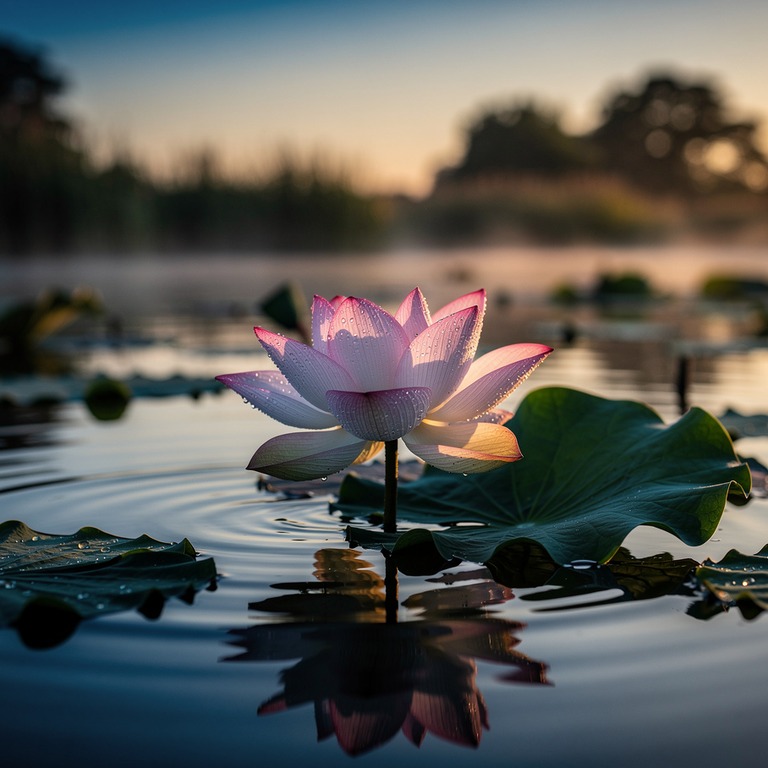
Visualization is mental scene-painting. You construct an image in your mind — a forest, a body of water, a memory of safety — and you furnish it with sensory detail. The smell of pine. The sound of moving water. The temperature of the air.
This one's a double-edged tool around plant medicine. On the plus side, having a practiced inner refuge is genuinely useful if a ceremony gets intense — you can return to a steady image while the rest of you rides the wave. On the minus side, ayahuasca and psilocybin do their own visualizing, and trying to direct the experience usually backfires.
The smart move: use visualization in your preparation, not during the ceremony itself. Build a calm internal place you can reach for. Then, when the medicine begins its work, let go of the steering wheel.
3. Focused Attention — Training the Spotlight
Focused meditation narrows your awareness to a single object. A candle flame. The sensation at your nostrils as breath moves in and out. The sound of a fan. The point of this is concentration — making your attention obedient.
This is harder than it sounds. Most of us have attention that behaves like an unleashed puppy. Five seconds on the breath, then suddenly you're thinking about an email from 2023.
In ceremony, focused attention is what lets you anchor to the icaros — the songs the curandero sings. Many people describe the icaros as a literal lifeline. You ride the melody through difficult passages. But you have to be able to actually listen, and listening, the deep kind, is a trained skill.
4. Spiritual Meditation — Or Just Sitting With Something Bigger
You don't have to be religious for this one. Spiritual meditation is the practice of orienting yourself toward something larger than your individual story — call it God, the universe, nature, the mystery, whatever doesn't make you wince.
Sit quietly. Acknowledge that you are small. Acknowledge that there are forces you don't understand. Ask for guidance, or just sit in not-knowing. Express gratitude for one or two specific things in your life. That's it.
The reason this pairs well with plant medicine work is that ceremonies often dissolve the sense of self that we spend so much energy maintaining. People who arrive already comfortable with surrender — even in small doses — find this less terrifying than people who've never let go of anything.
5. Body Scan — The Most Underrated Preparation Tool
Lie down. Bring your attention to the crown of your head. Slowly, methodically, move it down through your body — forehead, jaw, throat, shoulders, chest, belly, hips, legs, feet. At each stop, notice what's there. Tightness. Warmth. Numbness. Don't try to fix it. Just notice.
The body scan is gold for plant medicine work because so much of what comes up in ceremony shows up in the body first. Trauma lives in tissue. The medicine knows this. You'll often find yourself shaking, sweating, feeling pressure in your chest, before you have any cognitive grasp of what's happening.
Participants who've spent time scanning their bodies in calm states have a vocabulary for these sensations. They know the difference between fear and excitement (often the same physiology, different interpretation). They can stay with discomfort instead of catastrophizing it.
6. Walking Meditation — For People Who Can't Sit Still
If twenty minutes on a cushion sounds like punishment, walking meditation might be your way in. Walk slowly — slower than feels natural — and pay attention to the lift, swing, and placement of each foot. Notice the shift of weight. Notice the air on your skin.
This is especially useful at retreats, where you'll often have downtime between ceremonies. A slow walk through the jungle, paying actual attention rather than scrolling through your mental to-do list, becomes its own kind of medicine. Many retreat centers in the Amazon basin specifically encourage this — wandering trails between sessions, observing without commentary.
It's also a great technique for the day after a ceremony, when sitting still can feel impossible because so much is still moving in you.
7. Yoga as Meditation — Moving the Body, Quieting the Mind
Yoga, in the contemplative sense (not the gym-class sense), is meditation in motion. You move through postures, link them to breath, and use the physical challenge to crowd out mental noise. The body becomes the anchor.
Most psychedelic retreats include some yoga in the daily schedule for exactly this reason. After a ceremony, the body has been through something. Gentle movement helps the nervous system reset and metabolize whatever's been stirred up.
You don't need to be flexible. You don't need a fancy mat. A basic sun salutation, done with attention to breath, will do more for ceremony preparation than three weeks of trying to force yourself onto a meditation cushion.
8. Mantra and Chanting — Vibration as Anchor
Repeating a sound, word, or phrase — out loud or in your head — gives the mind something to chew on so it stops chewing on you. Om. So hum. A phrase in your own language: I am here. I am safe. I am loved. Pick something honest, not a slogan.
Chanting also pairs interestingly with the icaros in ayahuasca ceremonies. The Shipibo have used song for centuries to shape the energetic field of a ceremony. When you arrive with your own quiet practice of mantra, you're already attuned to the idea that sound can move things. It doesn't feel as foreign.
How to Actually Build the Habit
Here's the honest part. Reading about meditation techniques is the easy bit. Sitting down five days a week for six weeks before your retreat is the hard bit.
- Start with five minutes. Not twenty. Five.
- Pick one technique. Probably mindfulness or body scan. Stick with it for at least two weeks before adding anything else.
- Same time each day. Mornings tend to stick best because nothing has hijacked your schedule yet.
- Don't grade your sessions. "Bad" sessions count just as much as good ones — they're often where the real training happens.
- Use a timer so you're not constantly checking how long you've been sitting.
If you've got a retreat booked for two or three months out, you have plenty of runway to build something real. Even fifteen minutes a day, consistently, will change how you arrive.
The Quiet Connection Between Sitting and Ceremony
Plant medicines and meditation are pointing at the same territory from different doors. Meditation does it slowly, in increments, over years. Plant medicine does it suddenly, in hours, sometimes brutally. They're complementary, not competitive — and most experienced facilitators will tell you the people who integrate their psychedelic experiences best are the ones who had, or developed, a sitting practice.
The retreat itself is the catalyst. The meditation is what makes the catalyst stick. Without some kind of ongoing contemplative practice, the insights from a ceremony tend to fade in three to six months. With practice, they have somewhere to live.
If you're weighing a retreat right now and the timing feels right, a curated selection of ayahuasca and plant-medicine retreats can be browsed on our marketplace here. Take your time with the choice — and in the meantime, start sitting. Even five minutes today is worth more than any amount of reading.
Craving More Stories?
Join our ShopAyahuascaRetreats newsletter for the latest updates on thrilling
destinations and inspirational tales, delivered straight to your inbox!
We value your privacy. Your email address will never be shared or published.