 English
 Deutsch
 Français
 Nederlands
 Español
SHOP AYAHUASCA RETREATS BLOG
Silent Meditation Retreats: An Honest Guide to Sitting in Stillness

Ezra Caldwell
June 5, 2026
Your ultimate guide to discover transforming ayahuasca and psychedelic experiences. Dive into serene destinations and elevate your consciousness to unparalled heights.
Discover Ayahuasca & Psychedelic Retreats NowSearch for ayahuasca & psychedelic retreats
Discover retreats, trainings, and holidays from all over the world
How much actual silence have you had today? Not background-music silence. Not nobody-is-talking-but-the-phone-is-buzzing silence. Real, uninterrupted quiet — the kind where you can hear yourself blink.
For most of us, the honest answer is: almost none. We move through days stitched together by notifications, podcasts, traffic, group chats, and the low hum of our own running internal monologue. After enough years of that, the nervous system forgets what stillness even feels like. Which is probably why you ended up here, reading about silent meditation instead of doom-scrolling.
This is a practical guide. What silent meditation actually is, where it came from, what happens in your head during a long sit, and what to expect if you decide to book a silent retreat. I'll be honest about the uncomfortable parts too, because the glossy version doesn't help anyone make a real decision.
So What Is Silent Meditation, Exactly?
The phrase sounds redundant. Isn't all meditation silent? You sit, you close your eyes, you breathe. Quiet by definition, right?
Not quite. A lot of what gets called meditation today is guided — a teacher's voice, a soundtrack, a body-scan recording on an app. Useful, especially for beginners, but it's a different beast. Silent meditation is the unguided cousin. No voice. No music. No bells (well, sometimes one bell to mark the start and end). Just you, your breath, and whatever your mind decides to throw at you.
That last part is the catch. The silence on the outside reveals how loud it is on the inside. People who try a serious silent sit for the first time are often shocked by the sheer volume of mental chatter. The practice isn't really about achieving silence — it's about being still enough to notice everything that isn't.
Semi-Guided vs. Fully Unguided
There's a useful middle ground worth knowing about. Semi-guided sessions bookend silence with brief instruction — a teacher sets an intention at the start, lets you sit for thirty or sixty minutes, then closes the session with a few words. This is how a lot of beginners ease in. Fully unguided is the traditional form: you arrive, you sit, time passes, you stand up. No one tells you when to focus on your breath or whether you're doing it right. That's both the freedom and the difficulty of it.
Where the Practice Comes From
Silent meditation isn't a wellness trend. It's roughly two and a half thousand years old, with roots in the Buddhist tradition of Vipassana — a word that translates loosely as seeing things as they really are. After the Buddha's enlightenment, he spent the rest of his life teaching variations of this technique across what's now northern India.
The practice nearly disappeared from India over the centuries that followed but was preserved, almost by accident, in Burma (now Myanmar). In the twentieth century, a Burmese-Indian teacher named S.N. Goenka brought a stripped-down, secular version back to India and then to the West. The ten-day silent Vipassana retreats people talk about today — the ones with no talking, no phones, no eye contact, no reading — descend directly from that lineage. You can read more about the tradition on Wikipedia's entry on Vipassanā if you want the longer history.
This matters because it tells you something about what you're walking into. Silent meditation wasn't designed as a stress-management tool. It was designed as a path toward understanding the nature of the mind. The fact that it also lowers cortisol and helps people sleep better is, in the original framing, almost a side effect.
What Actually Happens When You Sit in Silence for Days
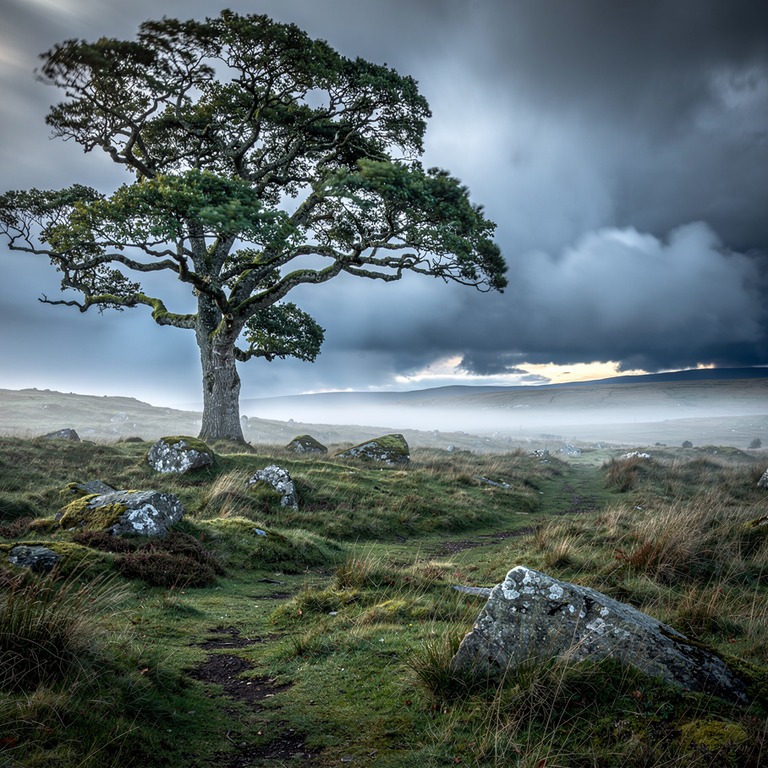
Here's what the brochures rarely spell out: the first two or three days of a silent retreat are often miserable. Not in a dramatic way. In a quiet, gnawing, oh-god-what-have-I-done way.
The schedule is brutal by modern standards. Wake-up bell around 4 a.m. Sitting sessions of an hour or longer, repeated through the day, with breaks for simple vegetarian meals and walking. No talking to other students. No journaling. No music. Your phone is locked away. By day two, your knees hurt, your back hurts, and your mind has started serving up every unresolved memory it can find, like a search algorithm that finally got some bandwidth.
And then — usually somewhere between day three and day five — something shifts. The chatter doesn't stop, exactly, but you stop being so identified with it. You notice a thought arise and pass without chasing it. You feel a sensation in your shoulder and don't immediately need to interpret it. The shoulders themselves drop a little. You start to understand, in a felt way rather than a conceptual one, what teachers mean when they talk about awareness.
What people typically report after a silent retreat:
- A clearer sense of which thoughts are habitual loops versus actual signals worth acting on.
- More space between stimulus and reaction — the famous "pause" that makes you less reactive in arguments and traffic.
- Surfaced grief, anger, or memory that needed processing and now has somewhere to go.
- A weirdly persistent quiet that lingers for days or weeks after returning home.
- Sometimes: nothing dramatic at all, just a sense of having rested deeply.
Who Silent Meditation Is — and Isn't — For
I'll be direct. Long silent retreats are not the right starting point for everyone. If you're in the middle of an acute mental-health crisis, recently bereaved, or working through unprocessed trauma without any therapeutic support, ten days alone with your mind can do more harm than good. Reputable retreat centers will sometimes screen for this. Less reputable ones won't.
This is also worth saying given who tends to read posts like this: silent meditation and plant medicine sit in adjacent neighborhoods of the inner-work world, and people often consider both. They do different things. A psychedelic ceremony tends to crack you open quickly; silent meditation teaches you, slowly, how to live inside the opening. Many of the most grounded plant-medicine practitioners I know also sit regularly. The two practices feed each other, but neither is a substitute for the other.
Good Candidates
- People who've done shorter daily meditation for at least a few months and feel ready to go deeper.
- People who suspect a lot of their stress is internal noise rather than external circumstance.
- People doing integration work after a psychedelic experience and want a tool to keep deepening it.
- People who can take a full week or longer away from work without their phone catching fire.
Probably Not the Right Moment
- Anyone in active psychiatric crisis or on the wrong side of a major medication change.
- People with untreated severe trauma and no therapist or guide to land back with.
- People expecting a wellness vacation. A silent retreat is not a spa.
How to Choose a Silent Retreat Without Getting Burned
Silent retreats vary enormously. Some are donation-based and run by experienced lineage teachers. Some are five-star resort experiences with optional silence. Both can be valuable; they're just different products.
A few things worth asking before you book:
- Who's teaching? Look for a teacher with years of their own practice and a clear lineage or training background. Vague credentials are a yellow flag.
- What's the daily schedule? If it's not published, ask. You want to know how many hours of sitting per day and whether walking meditation is built in.
- What's the screening process? Good centers ask about mental-health history. If they don't, that tells you something.
- What kind of support is available if things get hard? Most serious centers offer brief check-ins with a teacher even during silent periods. Confirm this exists.
- What's the food and lodging actually like? Simple is fine and often preferable. But know what you're signing up for — a shared dorm with 5 a.m. bells is not for everyone.
Cost varies wildly. Donation-based Vipassana courses in the Goenka tradition are genuinely free at point of entry, supported by past students. Boutique silent retreats in places like Bali, Costa Rica, or the south of France can run several thousand dollars for a week. Neither pricing model is automatically better; the question is what fits your situation and what kind of container you need.
Starting at Home Before You Commit
You don't need to fly anywhere to find out whether this practice resonates. Try sitting in unguided silence for twenty minutes a day for two weeks. No app, no music, no podcast. Set a timer, find a spot, watch your breath, and notice what your mind does. If after two weeks you're still curious — even if you're also frustrated — that's a good sign. A retreat will deepen what's already begun.
If after two weeks you feel only resistance and nothing else, that's also useful information. Maybe the timing isn't right, or maybe a guided practice or a different modality is a better entry point. There's no rule that says silent meditation has to be your path.
For readers who feel ready to take this further, a range of meditation and contemplative retreats — including silent sits and integration-focused programs — can be browsed on our marketplace here. Take your time choosing. The right container makes an enormous difference, and the silence will still be there when you're ready for it.
Craving More Stories?
Join our ShopAyahuascaRetreats newsletter for the latest updates on thrilling
destinations and inspirational tales, delivered straight to your inbox!
We value your privacy. Your email address will never be shared or published.