 English
 Deutsch
 Français
 Nederlands
 Español



Reset. Heal. Grow.
Datura: Why This Plant Isn't the Psychedelic You Think It Is
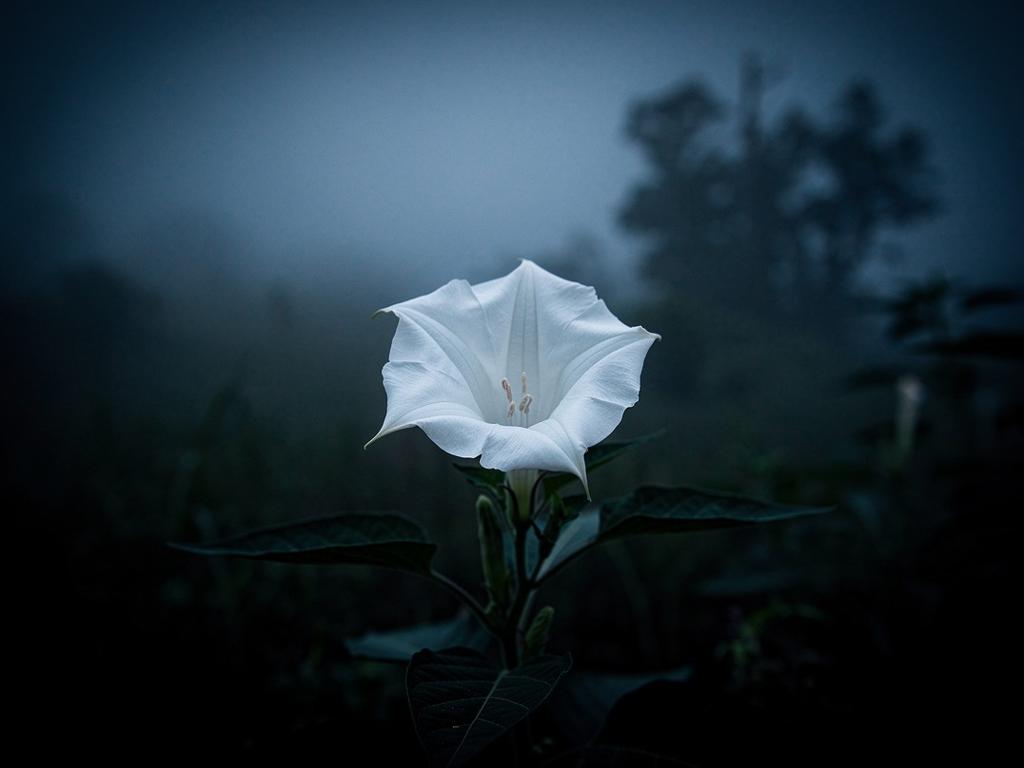
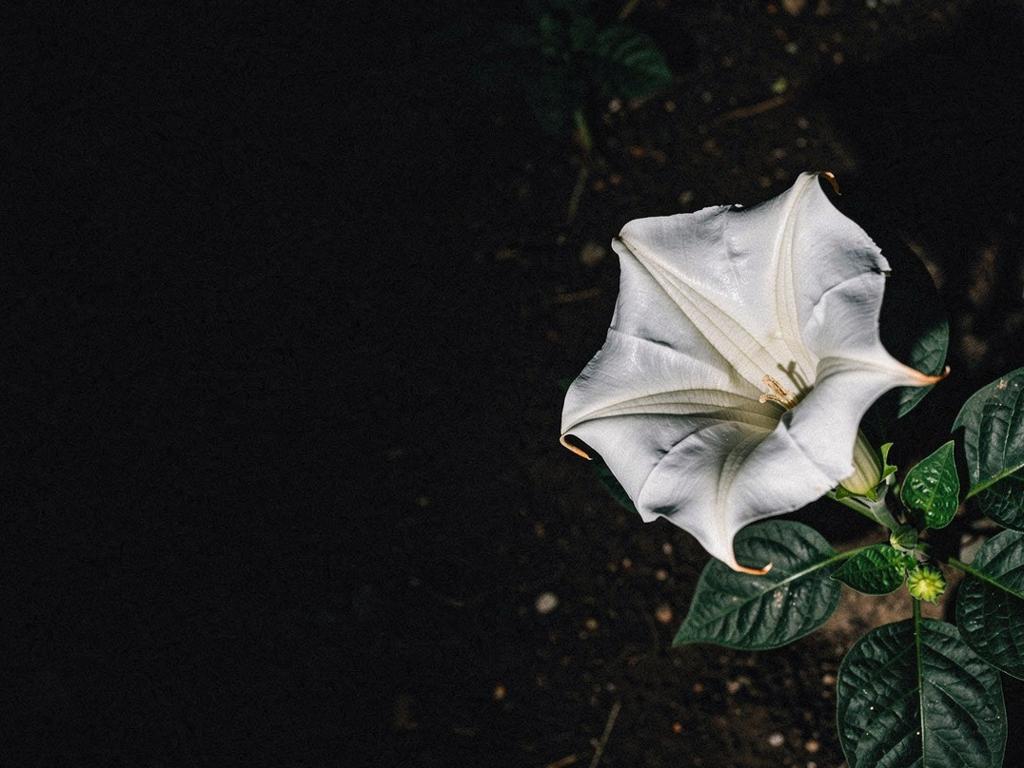
Every few months, someone shows up in a psychedelic forum asking a version of the same question: I have access to a lot of datura growing wild near my house. Should I try it? The answers, from anyone who actually knows the plant, tend to arrive fast and unanimous. Don't. And if you're still curious after reading this, probably still don't. Datura sits in a strange corner of the plant medicine world. It's technically a psychoactive plant with a long history of shamanic use, which makes people file it mentally next to ayahuasca or San Pedro. That's a mistake. Datura is not really a psychedelic in the way most seekers use the word. It's a deliriant, and the difference matters more than almost anything else you'll read about it. Datura is a genus of flowering plants in the nightshade family — cousins to belladonna, mandrake, and henbane. The trumpet-shaped flowers are genuinely beautiful, which is part of the problem. They look inviting. They grow in ditches, backyards, and vacant lots across most of the world. In some regions the plant is so common that people treat it as a weed. The active compounds are tropane alkaloids — mainly scopolamine, atropine, and hyoscyamine. These are the same chemicals that, in tiny medical doses, are used for motion sickness patches and pre-surgical dry-mouth medications. In the doses required to produce a visionary experience, they cross into a completely different territory. This isn't serotonergic psychedelia like psilocybin or DMT. It's anticholinergic delirium, and the phenomenology is closer to a high fever with hallucinations than to a mushroom trip. People who've taken datura and lived to describe it coherently — which, notably, is not everyone who tries it — rarely describe insight or beauty. They describe convincingly real hallucinations of people who aren't there, entire conversations with phantoms, complete loss of the ability to distinguish thought from reality, and days of physical wreckage afterward. Talk to almost any curandero, ayahuascero, or seasoned Western facilitator about datura and you'll get some version of a wince. In parts of the Amazon and the American Southwest, datura and its relatives (toé, brugmansia, jimsonweed) are known and occasionally used — but almost always in tiny, calibrated doses, often blended into other preparations by people with decades of training. It's treated as one of the most dangerous plant teachers in the pharmacopoeia. Not the deepest. Not the wisest. The most dangerous. The reasons are practical and specific: This distinction gets lost constantly, so it's worth spelling out. Classical psychedelics — psilocybin, LSD, DMT, mescaline — work primarily on serotonin receptors. You know you've taken something. You can usually navigate. The visions feel meaningful, sometimes overwhelming, but there's a persistent thread of self that observes. Deliriants work by blocking acetylcholine, a neurotransmitter involved in memory, attention, and the basic distinction between what's happening in the room and what's happening in your head. Under a deliriant, that distinction dissolves. You don't hallucinate a shimmering pattern on the wall. You hallucinate your dead grandmother sitting on the couch, and she's completely real, and you have a full conversation with her, and later you'll insist it happened. That's a categorically different kind of experience — and it's why people who work with plant medicines for healing don't reach for datura. The plant does have a place in traditional practice, but usually as a plant to be studied, respected, and largely avoided rather than ingested. Some Indigenous teachers describe it as a jealous or trickster spirit — a plant that can teach, but which extracts a heavy price and doesn't much care about the wellbeing of the person who approaches it carelessly. Here's the specific pattern that shows up in those online questions. Someone finds datura growing near their house. It's free. It's legal in most places (because nobody wants to eat it). They've read that it's psychoactive. They start thinking, why not? Availability isn't a signal. Poison hemlock is also free and grows wild. The fact that a plant is easy to obtain tells you nothing about whether it belongs in your body. The plants that humans have gathered around ceremonially — the ones with real healing potential — are usually the ones with a long apprenticeship attached. You don't work with ayahuasca alone in your kitchen because you found some vine. You don't work with iboga because you ordered root bark online. The same principle applies here, with more urgency, because datura will hurt you faster and less predictably than either. If you're drawn to plant medicine because you're stuck — depressed, addicted, traumatized, feeling like your life has flattened out — datura is the wrong door. It won't give you what you're looking for, and there's a real chance it takes something from you instead. The impulse behind the search is legitimate. The plant isn't the answer. If you've been reading about plant medicine and something in you keeps returning to the idea that a psychedelic experience might help, there are more established paths worth researching first. Ayahuasca ceremonies in Peru, Costa Rica, or increasingly Europe. Psilocybin retreats in Jamaica, the Netherlands, and legal-therapeutic settings in Oregon and Colorado. Ibogaine programs in Mexico for people specifically working on addiction. San Pedro (huachuma) circles in the Andes for something gentler and more heart-centered. Each of those has real risks and real screening requirements — cardiac issues, medication interactions, mental-health histories all matter. But they're worked with in structured settings by people who've done it thousands of times, who know how to hold a difficult experience, and who don't leave you alone in the middle of the night wondering what's real. That kind of container is the actual medicine, arguably more than the plant itself. A few practical questions worth asking before you commit to any retreat: If any of those questions get vague answers, keep looking. The good operators expect the questions. They're the ones you want. Datura will still be growing in the ditch when you get back. It'll keep growing there. That's fine. Some plants are worth admiring from a distance, and this is one of them. For those interested in exploring plant medicine through paths with better safety records and genuine therapeutic depth, a curated selection of ayahuasca, psilocybin, and other plant-medicine retreats can be browsed on our marketplace here.
Low Testosterone in Your 50s? Why Age Isn't Always the Culprit
You're 52. You're tired in a way sleep doesn't quite fix. Your jeans fit differently around the middle, your sex drive has quietly slipped down the priority list, and somewhere in the back of your mind a voice keeps whispering it's just what happens now. Maybe. But probably not the whole story. Testosterone gets treated like a straightforward decline curve — you age, it drops, end of discussion. The research says something more interesting. In older men, low testosterone is often less about the calendar and more about what's happening metabolically, and that distinction changes what you should actually do about it. A recent review looking at male hypogonadism — the clinical term for consistently low testosterone — dug into how much of the midlife dip is genuinely age-driven versus driven by conditions that happen to become more common as men get older. Obesity, type 2 diabetes, metabolic syndrome, chronic illness, and even certain medications all showed up as significant players. The takeaway isn't that aging doesn't matter. It does, especially past about 65 or 70, when the testes themselves start producing less efficiently. But for men in their 40s, 50s, and early 60s, the more common pattern is what researchers call functional hypogonadism — testosterone is low because something else in the body is off, not because the biological clock has run out. That's a big deal, because functional hypogonadism is often reversible. Body fat, particularly around the waist, kept coming up. In one study cited in the review, 44% of men with a waist circumference of 43 inches or more had biochemically low testosterone. That's not a small correlation — that's nearly half. What makes this tricky is the loop it creates. Low testosterone makes it harder to hold onto muscle and easier to store fat. Extra fat — especially visceral fat around the organs — actively suppresses testosterone production. Once you're in the cycle, it self-reinforces. Which is exactly why chasing the number in isolation, without addressing the metabolic picture underneath, tends to disappoint. Here's where a lot of men go wrong. They read a list of symptoms, recognize themselves in most of them, and decide the case is closed. The problem is that fatigue, low mood, brain fog, and even weight gain overlap with a dozen other things — sleep apnea, depression, thyroid issues, chronic stress, poor sleep hygiene, plain old burnout. The symptoms most tightly linked to genuinely low testosterone are sexual: reduced libido, fewer spontaneous morning erections, and erectile changes. Those are the ones clinicians take most seriously as signals. Fatigue and mood are relevant but noisier. Testing matters just as much as symptoms — and it matters how you test. Testosterone fluctuates dramatically across the day, peaking in the morning. Guidelines suggest a fasting blood draw between 7 and 11 a.m., followed by a second confirmatory test on a different day. A single low reading proves almost nothing. Treatment decisions made off one number are how men end up on lifelong hormone therapy they didn't need. Say you've done the testing properly and the results are consistently low. The temptation, especially with the rise of men's health clinics advertising testosterone therapy on billboards, is to jump straight to a prescription. Slow down. The review outlines a smarter sequence. The way testosterone gets talked about in the wellness corners of the internet — as a single dial you can crank up to reclaim youth, energy, and virility — misses the point. Hormones are downstream of a lot of other things. Sleep. Body composition. Stress load. Alcohol. Underlying illness. Emotional state. Whether you've been sitting for eleven hours a day for the last decade. Men who quietly go on testosterone without addressing any of that often feel better for a while and then plateau, because the underlying terrain hasn't changed. The ones who see the biggest, most durable improvements tend to be the ones who used the low number as a prompt to look at the whole system — and, sometimes, at the parts of their lives they'd been avoiding. This is where things get more interesting than a hormone panel. A lot of the men who arrive at midlife with flatlined energy, low libido, and a nagging sense that something's off aren't just metabolically stuck — they're psychologically stuck. Unresolved stress, buried grief, chronic overwork, a marriage on autopilot, a career they stopped believing in years ago. The body keeps score, and eventually the labs reflect it. Some men explore that terrain through therapy or somatic work. Others through meditation retreats, breathwork, or plant-medicine ceremonies — ayahuasca, psilocybin, and ibogaine have all drawn men in this age bracket looking to interrupt patterns they can't seem to change on their own. None of that is a testosterone treatment. It's not meant to be. But addressing the deeper why behind the stuckness sometimes shifts things that no supplement stack ever touched. If you're in your 40s or 50s and suspect your testosterone is low, here's a reasonable sequence before you commit to hormone therapy: Midlife is a fair time to take your body seriously. It's also a fair time to notice that the tiredness and the flatness and the loss of spark might be pointing at more than a hormone. For readers who feel that pull toward deeper inner work as part of the picture, a curated range of psychedelic and plant-medicine retreats can be browsed on our marketplace here. Whatever route you take, get the number, get the context, and treat the whole man — not just the lab result.

The Role of Music in Ayahuasca Ceremony: Why Icaros Matter More Than You Think
Sit in enough ayahuasca ceremonies and you start to notice something odd. The medicine gets most of the credit — the vine, the brew, the visions. But the thing that actually steers the night, the thing that decides whether you sink into stillness or spiral into chaos, is often the music. Specifically, the icaros the shaman is singing over you at three in the morning while you're trying to remember your own name. This is the piece of the ayahuasca experience that gets talked about least in glossy retreat brochures. And it's arguably the most important variable in the whole equation. So let's talk about it honestly — what icaros actually are, why musicianship matters so much, and how to gauge whether the ceremony you're considering is being held by someone who knows what they're doing musically, or someone who's winging it with a rattle. Icaros are the medicine songs of the Amazonian curanderos. They're not entertainment. They're not background ambience. In the traditional Shipibo, Asháninka, and mestizo lineages, icaros are considered the working tool of the ceremony — the way the shaman navigates the space, calls in specific plant spirits, protects participants, moves stuck energy, and closes the doors when it's time to come back. Each icaro is learned in dieta, the long solo retreats a curandero undertakes with individual master plants. The song isn't composed in a Western sense. It's said to be given by the plant itself during that dieta. Which means when you hear a Shipibo maestra singing an icaro for bobinsana or ajo sacha or noya rao, you're hearing decades of relationship with those specific plants coming through her voice. That's not a marketing claim. That's the technology. The songs work on the ceremony the way a rudder works on a boat. Fast, sharp icaros tend to intensify the visions and the movement of energy. Slow, whispered icaros settle a room down when things are getting turbulent. A skilled maestro can feel when one participant is spiralling and direct a song at them specifically — sometimes leaning right over them, singing an inch from their crown. If you've ever been on the receiving end of that, you know it's not metaphorical. Something shifts. Here's the uncomfortable truth: not every ceremony is held by a competent musician. Ayahuasca has gone global in the last fifteen years, and the demand for facilitators has vastly outrun the supply of people trained in the traditional song lineages. Plenty of well-meaning facilitators know how to brew the medicine, hold a container, and offer beautiful integration circles the next day. Fewer have spent the years in dieta required to actually sing the ceremony. What does poor musicianship look like in practice? It looks like long stretches of silence when the room clearly needs holding. It looks like the same repetitive chant looped for an hour because the facilitator only knows a handful of songs. It looks like tempo that never changes, no dynamics, no sense of when to lift the room and when to bring it down. In a strong ceremony, the music breathes. In a weak one, it drones or disappears entirely. Participants tend to describe the difference in surprisingly consistent language. A well-sung ceremony feels held. You can let go because someone is clearly at the wheel. A poorly-sung ceremony feels loose — the medicine is there, the intention is there, but there's nothing catching you when the wave hits. That's when difficult journeys turn into genuinely difficult experiences, and integration afterwards becomes a much heavier lift. You can't fully know until you're there. But there are honest signals to look for before you book. Ask questions. A reputable retreat will answer them plainly. Some retreats now hire visiting maestros from Shipibo communities specifically because their in-house facilitators know the medicine but not the songs. That's an honest arrangement and, done respectfully, it works well. What you want to avoid is a retreat that treats music as decoration — playing recorded ambient tracks, or leaving long silences filled only by the sound of participants purging. This is where things get interesting, and where the plant-medicine world genuinely disagrees with itself. Some contemporary ceremonies — especially those held outside the Amazonian tradition — use guitar, harmonium, mantras from Indian traditions, ecstatic vocal improvisation, or curated playlists of instrumental music. The Santo Daime church has its own elaborate hymn tradition (hinários) that's musically very different from Shipibo icaros but every bit as functional in ceremony. Is one better than the other? Honestly, no. What matters is coherence and skill. A ceremony held with a live musician who genuinely knows how to read a room and adjust in real time is worlds apart from one running Spotify in the background. The medicine responds to intention and attention. If the music-holder is paying close attention to the room and playing from a place of years of practice, the tradition matters less than the presence. That said, if you're specifically drawn to the Amazonian lineage — if you want the Shipibo tradition or the Peruvian mestizo tradition — then you want icaros sung by someone trained in that lineage. Don't accept a substitute and call it the same thing. They're related, but they're not interchangeable. If you're weighing your first ayahuasca retreat, add musicianship to your shortlist of things to evaluate. Most first-timers focus almost entirely on location, price, and vibe of the marketing photos. Those matter, but they matter less than who's going to be singing over you at 2am when your ego is dissolving and you need someone to hold the shape of the room. A few practical things to do: The ceremony is going to ask a lot of you. Preparation, dieta, travel, money, time off work, the vulnerability of the experience itself. Give yourself the best shot by making sure the people running the room know how to sing it. If something in this piece resonates and you want to look at options where the musical tradition is taken seriously, a curated set of ayahuasca retreats can be browsed on our marketplace here. The medicine is powerful. The songs are what shape that power into something you can actually use.
Ayahuasca and the Experience of Love: What the Vine Actually Shows You
Ask ten people who've sat with ayahuasca what the medicine showed them, and at least half will say something about love. Not the greeting-card kind. Something stranger. Something they usually struggle to put into words without sounding like they've joined a cult. This is one of the most common — and most misunderstood — themes that comes up in ayahuasca ceremonies. If you're researching a retreat and you keep bumping into phrases like “I felt loved for the first time in my life” or “the vine is pure love”, you probably want to know what that actually means before you spend three thousand dollars and a week of vacation days finding out for yourself. So let's talk honestly about it. What the love experience really tends to look like in ceremony, why it's so central to the tradition, what it isn't, and how it lands for people working through trauma, addiction, and the kind of stuck patterns that brought most of us to plant medicine in the first place. The Shipibo, Shuar, and other Amazonian lineages don't really use the English word love the way we do. Their frameworks talk about the plants as teachers, as grandmothers, as beings with intelligence. What Western participants call a “love experience” often maps onto what curanderos describe as being met by the spirit of the medicine — a kind of relational recognition that has no exact translation. When a ceremony goes deep, something shifts in how the nervous system relates to itself and to others. People who spent decades bracing against the world describe, sometimes for the first time, a sense of being held without conditions. Not by another person. By something larger and harder to name. That experience is what tends to get labeled love afterward, because we don't have a better word for it in English. The interesting part is how consistent this is across wildly different backgrounds. Bankers, veterans, addicts, therapists, cynics — they come back with variations of the same report. That consistency is one reason researchers studying psychedelic-assisted therapy pay attention to what they clinically call the “connectedness” dimension of these experiences. Here's where writing about ayahuasca gets slippery. Language flattens it. But a few patterns show up often enough that they're worth naming. None of this happens on demand. Plenty of ceremonies deliver terror, tedium, physical purging, or nothing much at all before they deliver anything resembling love. Anyone selling you a guaranteed heart-opening is lying, and probably charging extra for it. The reason so many people arrive at ayahuasca via addiction recovery, depression, or trauma work isn't because the medicine is a magic detox. It's because most of these conditions have, at their core, a broken relationship with self-worth. Addiction is often what happens when someone can't tolerate being alone with themselves. Depression frequently runs on a soundtrack of I'm-not-enough. Trauma teaches the body that being seen equals being unsafe. What ayahuasca seems to do — when it works — is temporarily suspend those verdicts long enough for the person to experience themselves differently. Not through analysis. Through direct experience. You can spend ten years in talk therapy learning that you deserve love, and still not feel it in your body. One good ceremony can install that felt sense in a night. That's not a promise. That's a pattern. The catch is that the experience alone doesn't rewire anything permanently. What matters is what you do with it in the months afterward — the integration work, the habits you change, the relationships you either repair or let go. Ayahuasca opens a door. Walking through it is a separate job. One thing worth flagging: the love that shows up in ceremony isn't always pleasant. This surprises people. Sometimes it arrives as an unbearable tenderness for a version of yourself you'd rather not look at. Sometimes it feels like being cracked open, which is not exactly a spa treatment. Participants regularly describe crying for hours, not because they're sad, but because the defenses that kept them from feeling anything are finally down and the backlog is enormous. Bliss is a nervous-system state. Love, in this context, is closer to a structural rearrangement. One passes. The other, if you tend to it, sticks around and quietly changes how you show up in your marriage, your work, your recovery meetings, your Tuesday afternoons. Here's a hard truth: the people who go into ceremony specifically hunting for a love experience tend to get something else. The vine has a way of delivering what you need rather than what you asked for. Still, there are things you can do that make the ground more fertile. A word of caution. The marketing around ayahuasca has gotten glossy, and the language of love, connection, and awakening sells retreat spots. Some of the operators leaning hardest on that vocabulary are the ones you should be most skeptical of. Legitimate retreat centers tend to describe their work in careful, sober terms. They talk about safety protocols, medical screening, the lineage of their facilitators, how many years the maestro has been serving medicine. They don't promise transformation. They create conditions in which it becomes possible. If a website reads like a spiritual travel brochure — soft-focus photos, testimonials about finding your true self, no mention of contraindications with SSRIs or the actual risks — treat that as a warning sign. Real medicine work is not a wellness weekend, and the people who understand that will tell you so plainly. The people who get the most out of ayahuasca, in my observation, aren't the ones with the most spectacular ceremonies. They're the ones who quietly change their lives afterward. Who leave the bad relationship. Who go back to school. Who finally start therapy. Who stop drinking and mean it this time. Who call their mother. The love that shows up in ceremony is real. But it's more like a seed than a fruit. What grows from it depends on soil, weather, and the years of small daily choices that no shaman can make for you. If you're weighing whether to sit with this medicine, take the decision seriously — this isn't a vacation, and it isn't for everyone. For readers who want to explore what's out there, a range of vetted ayahuasca retreats can be browsed on our marketplace here. Whatever you decide, decide it with clear eyes and a plan for what comes after.
Do You Actually Need All Those Wellness Trends? An Honest Look
The first question people ask me at wellness gatherings these days isn't about sleep, or breathwork, or even ayahuasca anymore. It's about peptides. What are you stacking? Which pharmacy? Are you on BPC-157 yet? My answer usually disappoints them. I'm not on any of it. Not because I think it's snake oil — some of it clearly isn't — but because I haven't found a specific problem I'm trying to solve. And that, according to an integrative medicine physician I spent a long afternoon talking to recently, is exactly the right instinct. His framing has stuck with me. Every intervention should be matched to a specific need. Otherwise you're just spending money and adding variables to a system you don't fully understand — your own body. That principle, taught to him in his fellowship, applies to a lot more than peptides. It applies to full-body scans, supplement stacks, hormone panels, cold plunges, red light panels, and yes — even the plant-medicine retreats many of us in this world care deeply about. We talked about Bryan Johnson, the tech founder who has turned his own body into a public science experiment. Nobody's putting him down. The effort is genuine. But his regimen is a case study of one — not a template for how the rest of us should live. When the culture keeps signaling that more is always better, more supplements, more testing, more interventions bolted onto each other, it becomes very easy to lose the plot. The counter-instinct is quieter and less Instagrammable: figure out the smallest, most targeted thing that will actually help your body do what it already knows how to do. That's it. That's the whole game. Everything else is either specific medicine for a specific problem or a very expensive hobby. This matters for anyone considering a retreat too. Plant medicine can be profound. It can also become another line item on a spiritual shopping list — something you stack on top of ten other modalities without really letting any of them land. Ask yourself what you're actually trying to solve before you book anything. Peptides are a useful test case because they're everywhere right now. They're short chains of amino acids. Some have been part of mainstream medicine for decades — insulin is a peptide, collagen is a peptide, and the GLP-1 medications currently reshaping the obesity conversation (semaglutide, tirzepatide) fall into the same broad family. Then there are the stacks that dominate every corner of health-adjacent social media. The so-called Wolverine stack — BPC-157 with TB-500 — is marketed for tissue repair and inflammation. The Glo stack leans on GHK-Cu, a copper peptide sometimes paired with KPV, aimed at skin and general repair. Some of the research is genuinely interesting. Some of it is extrapolated from rodent studies and vibes. A few caution points worth flagging. People with precancerous lesions should be careful with anything that boosts VEGF, a growth factor involved in building new blood vessels — you don't want to accidentally feed something you'd rather starve. Sourcing is another minefield. Compounded peptides from sketchy suppliers can be contaminated or mislabeled, so a certificate of analysis from a certified pharmacy isn't optional; it's the bare minimum. I asked where a serious person should actually start. Not a curious dabbler — someone who genuinely wants to move the needle on their long-term health. The answer wasn't a $2,000 panel. It was your blood pressure. Cardiovascular disease remains the top killer in the United States. Blood pressure is the single most predictive vital sign for it, and you can walk into any pharmacy in the country and check yours for free. That's the starting line. Not NAD infusions. Not a stool test. A cuff. From there, a sensible baseline includes a comprehensive metabolic panel, a complete blood count, thyroid, sex and adrenal hormones, a lipid panel, advanced cardiac markers, inflammatory markers, and micronutrient testing. Rechecked every three to six months, or every 90 days if someone's on hormone replacement or another active intervention. Hemoglobin A1c gives you a 90-day picture of blood glucose; a fasting insulin adds important context. Only after that do the deeper dives — advanced stool tests, SIBO breath tests, DUTCH hormone panels, mold panels — start to earn their place. Full-body scans? More skepticism than you'd expect. They surface a lot of benign findings that generate genuine anxiety and follow-up biopsies for things with a very low likelihood of mattering. That energy is often better spent elsewhere. Here's where the whole philosophy of less-but-smarter really shows up. Before ordering a $500 microbiome test, try answering these seven questions honestly: That's it. Free. Slightly awkward. Wildly informative. A thoughtful clinician can extract a huge amount from those answers — often as much as a fancy panel would reveal in the first pass. Testing still has its place, but it belongs downstream of the conversation, not upstream. I think about this a lot in the context of people preparing for a ceremony. So many folks arrive at an ayahuasca or psilocybin retreat with digestive systems in open rebellion, then blame the medicine for a rough night. Ayahuasca in particular will find every weak link in your gut. The purge is real. Doing the boring work — the dieta, cleaning up what you eat for a few weeks beforehand, actually paying attention to what your body is telling you — pays off in ways the marketing brochures don't advertise. The physician I spoke with admitted he used to be the wellness police in his own household. Every label scrutinized. Getting on his parents' case about their grocery cart. Then he watched people live richly into their 70s, 80s, and 90s while still enjoying their lives, and something loosened. His view on alcohol shifted too. The online consensus has swung hard toward zero as the only defensible number. Going back through the actual research told a more nuanced story. He's not telling anyone to start drinking. But he does see something real in what happens when people share a glass of wine over a meal with people they love. Context is almost everything. The same nuance applies to the psychedelic space. A weekend of ceremony is not a magic reset. It's one input into a life, and its value depends enormously on what surrounds it — the community, the integration, the food you eat the following month, whether you actually make the changes the medicine seemed to demand of you. The most transformed people I've met after retreats weren't the ones stacking every modality. They were the ones who picked one or two things and went deep. If you're reading this because you're considering ayahuasca, psilocybin, ibogaine, or another plant medicine, the same principle holds. Ask what you're actually trying to solve. Depression that hasn't shifted with therapy or medication? An addiction pattern you've circled for years? Grief that never fully processed? A creeping sense of being stuck in a life that no longer fits? Those are real, specific problems, and plant medicine has helped a lot of people move through them. What plant medicine is less useful for: general upgrading, vague self-optimization, or adding one more experience to the pile because everyone in your friend group did it last year. If you can't name what you're trying to solve, you'll have a harder time recognizing whether the medicine actually helped. A few practical checks before you book anything: The through-line, whether we're talking peptides or plant medicine, is the same. Small, targeted steps that stack into something real beat a maximalist regimen you can't sustain. If a facilitator or a clinician promises you a total transformation from one intervention, be a little suspicious. Real change tends to look like 5% better, then 10%, then a life that quietly stops resembling the one you had a year ago. For readers who want to explore this more concretely, a carefully curated range of ayahuasca and plant-medicine retreats can be browsed on our marketplace here. Start with what you're trying to solve. The rest follows from there.
Craving More Stories?
Join our ShopAyahuascaRetreats newsletter for the latest updates on thrilling
destinations and inspirational tales, delivered straight to your inbox!
We value your privacy. Your email address will never be shared or published.
When Meditation Feels Like a Drug: Understanding the Bliss States
Somewhere around the twenty-minute mark, the room starts to hum. Your body goes warm, then weightless. Colors behind your eyelids sharpen. There's a grin creeping across your face that you didn't authorize. If you've ever come out of a meditation session wondering whether you accidentally microdosed something at breakfast — you're not alone, and you're not broken. You're experiencing something contemplative traditions have talked about for two thousand years, and something psychedelic practitioners recognize immediately. This overlap between deep meditation and plant medicine isn't a coincidence. Both practices work on the same nervous system, both reshape the same default patterns of thought, and both can drop you into states that feel unmistakably altered. For people researching ayahuasca or a psychedelic retreat, understanding this bridge matters — because how you relate to bliss on the cushion tells you a lot about how you'll relate to it in ceremony. The short answer: your brain is a pharmacy, and sitting quietly for long enough hands it the keys. Sustained attention on the breath alters activity in the default mode network — the same brain region that quiets down under psilocybin and ayahuasca. Deep breathing shifts your blood chemistry. Long stillness triggers endogenous DMT release, according to some researchers, though the science there is still cooking. What you feel is real. That warmth spreading through your chest, the pleasant dissolution of body boundaries, the sudden certainty that everything is fine — those are neurochemical events, not imagination. Buddhist teachers have names for these states going back centuries. The Pali canon calls them piti and sukha: rapture and bliss, two of the classical factors of absorption. Yogic traditions describe them as ananda, the intrinsic joy that surfaces when mental chatter drops away. Here's the thing that nobody warns you about in the beginner apps: some people are naturally wired to hit these states quickly. Others sit for years and barely feel a flicker. Genetics, nervous system type, trauma history, and even how much sleep you got last night all play a role. If meditation feels like a substance to you, you may simply have a nervous system that responds strongly to stillness. That's a gift and a complication. Every serious teacher I've spoken to says the same thing when a student comes in glowing about their new blissed-out sits: enjoy it, don't chase it, don't build your identity around it. In contemplative traditions, pleasant states are considered signs that concentration is developing — useful markers, not the destination. The moment you start meditating for the high, you've turned the practice into another form of seeking, and seeking is exactly what you sat down to release. This is where the parallel with plant medicine gets sharp. Ayahuasca ceremonies produce their own version of this trap. First-timers often expect ecstatic visions and cosmic downloads. Sometimes they get them. But experienced facilitators will tell you that the participants who benefit most are often those who sat through discomfort, not those who surfed the pretty parts. The medicine, like the meditation cushion, isn't optimizing for your entertainment. That said — bliss is not a moral failing. If your practice is generating spontaneous joy, that's a legitimate byproduct of doing something right. The mistake is either clinging to it (and being disappointed when it fades) or pathologizing it (and trying to shut it down). Neither approach serves you. Notice it, appreciate it, keep going. If you're regularly experiencing altered states from meditation, a few practical adjustments help you stay grounded without killing the goose. One more thing: some people find that intense meditation practice destabilizes them. It's rare, but it happens. The clinical term is sometimes called meditation-related difficulty, and it's under-discussed in beginner spaces. If your sits are producing anxiety, dissociation, or a lingering sense of unreality that doesn't fade after a few hours, back off the intensity and consult someone qualified. Same rule applies to psychedelic work. If you're researching an ayahuasca or psilocybin retreat and you already get lifted from meditation, you're probably wondering what the ceremony experience will actually feel like for you. Honest answer: meditation-induced bliss and plant medicine are cousins, not twins. The territory overlaps, but the intensity is not comparable. Ayahuasca can dismantle your sense of self for four to six hours. Psilocybin can wash your normal identity out to sea for a whole afternoon. Ibogaine can put you on a thirty-hour journey through your own biography. What meditation offers, even at its most intense, is usually a version of these states you can step out of by opening your eyes. The medicines don't give you that off-switch. But — and this matters — people with a stable meditation practice tend to fare much better in ceremony. They've already learned to observe intense states without panicking. They know how to return to breath when things get overwhelming. They understand that difficult passages are not emergencies. These are the exact skills that separate a fruitful ayahuasca night from a scary one. If you're already comfortable with altered states from sitting, you have a genuine advantage. If meditation reliably alters your consciousness, a few things are worth considering before you book a ceremony. The bridge between contemplative practice and plant medicine has been walked for a long time. Amazonian shamans traditionally combine ayahuasca work with periods of solitude, silence, and dietary restriction — a form of extreme meditation, essentially. Buddhist monks in some lineages have historically incorporated plant allies. These aren't opposing paths; they're two doors into the same house. If your meditation practice is showing you that consciousness has more rooms than you thought, and you're curious about exploring those rooms with the help of ancestral plant medicine, a range of ayahuasca and psilocybin retreats can be browsed on our marketplace here. Take your time choosing. The same discernment you're bringing to your practice is exactly the discernment that matters most when picking a place to sit with medicine.
Does Ayahuasca Actually Help With Depression? An Honest Look
Someone asked me last month, over a bad hotel coffee in Cusco, whether ayahuasca had actually fixed his depression. He'd been to two ceremonies. He wanted a straight answer. And the honest reply is the one nobody wants to hear: sometimes yes, sometimes no, and mostly it depends on what happens after you leave the maloca. The question of whether ayahuasca genuinely helps depression is one of the most searched topics in the plant medicine world right now. It's also one of the most poorly answered. You get glowing testimonials on one side and dire warnings on the other, and somewhere in the middle sits the person who's tried every SSRI on the pharmacy shelf and is quietly wondering if a jungle brew might be the thing that finally shifts something. This piece is for that person. Let's start with what we know, because there's more evidence now than there was even five years ago. Small clinical studies out of Brazil, the UK, and the US have looked at ayahuasca's effect on treatment-resistant depression — people who haven't responded to conventional antidepressants. The results have been genuinely interesting. A single ceremony, in controlled conditions, has produced rapid reductions in depressive symptoms that sometimes last weeks. Not always. But often enough that neuroscientists have stopped rolling their eyes. The mechanism seems to involve DMT's action on serotonin receptors, combined with the harmala alkaloids in the vine that keep the DMT active in your system for hours. Brain imaging shows increased connectivity between regions that don't usually talk to each other much, and a quieting of the default mode network — the part of your brain responsible for the endless internal monologue of self-referential thinking. If you've been depressed, you know that monologue intimately. It's the one that reminds you you're a failure while you're brushing your teeth. So the biology has a plausible story. But biology is only half of it. Here's what most articles skip: the substance alone probably doesn't do the heavy lifting. What seems to matter is the container — the ceremony, the facilitator, the intention, the days of preparation, the community around you, the songs, the darkness, the fact that for one night you have permission to fall apart without anyone rushing to fix you. Depression, for a lot of people, is a kind of long-term dissociation. You've stopped feeling. You've built walls around old grief, old rage, old shame, because feeling them was more than you could carry at the time. Ayahuasca has a knack for taking those walls down. Sometimes gently. Sometimes not gently at all. The tears people cry in ceremony aren't performance — they're the release of stuff that's been sitting there for decades. This is why doing it in the wrong setting can make things worse, not better. A weekend ceremony with a facilitator you don't trust, no screening, no integration, no follow-up? That's a recipe for opening something you can't close. If you're going to try this, the container matters more than the brew. The romanticised version is that you drink, you have visions, you meet an ancestor, you cry, you're healed. The reality is messier. Most people I've spoken with describe their first ceremony as some combination of physical discomfort (nausea and purging are part of it, not a side effect), emotional flooding, and long stretches of just lying on a mat wondering when it will end. The visionary content, when it comes, isn't always cinematic. Sometimes it's a memory from age seven. Sometimes it's the sudden, visceral knowledge that you've been lying to yourself about your marriage. Sometimes it's nothing much at all — and the real work happens two weeks later when you're back home and can't stop crying at a bus stop. A well-run ayahuasca retreat typically includes: Prices range wildly. A legitimate week-long retreat in Peru usually runs somewhere between $1,500 and $4,000. If you find one for $400, ask why. If you find one for $10,000, ask why too. From what participants and facilitators report — and this tracks with the emerging clinical data — ayahuasca seems most useful for depression that has an emotional or trauma-based origin. Depression that's downstream of unresolved grief. Depression tied to childhood adversity. Depression that lives alongside a persistent sense of disconnection or meaninglessness. Depression where you basically know what's wrong but can't seem to feel your way through it. It seems less useful — and sometimes actively unhelpful — for depression rooted primarily in biological or biochemical factors, severe bipolar conditions, active psychosis risk, or acute suicidal crisis. It's also not a magic wand for depression maintained by ongoing external circumstances. If you drink ayahuasca and then return to the job that's crushing you and the relationship that's draining you, the brew will not save you. It might just show you, in high definition, exactly what needs to change. Here's where most people fail, and here's the part almost nobody talks about honestly. The ceremony is the easy part. Integration — the weeks and months after — is where healing actually happens or doesn't. Integration means taking the insights, the emotional openings, the new perspective on old wounds, and translating them into daily life. It means therapy, often. It means changing habits. It means having hard conversations with people you've been avoiding. It means sitting with what came up rather than papering over it because life is busy. People who report the most lasting benefit from ayahuasca are almost always the ones who did the unglamorous integration work afterward. A useful rule of thumb: budget as much time and money for integration as you did for the retreat itself. If you spent $3,000 and two weeks in the jungle, plan on $3,000 and several months of integration work back home — therapy, breathwork, journaling, community, whatever supports you. Skip that and the retreat becomes a very expensive vacation with vomiting. A few honest questions to sit with before booking anything: If those questions land well, and you've done the reading, and you're picking a retreat with a real reputation and proper screening, then plant medicine may be worth exploring. If several of them raise flags, the answer isn't necessarily no — it's just not yet. Ayahuasca isn't a cure. It's a tool, and a demanding one. For some people it opens a door that nothing else could. For others it's the wrong medicine entirely, or the right medicine at the wrong moment. What separates the people who report genuine, lasting relief from depression from those who don't isn't the ceremony itself — it's how carefully they chose their setting, how honestly they faced what came up, and how seriously they took the work afterward. If, after reading all of this, you still feel called to explore further, a curated selection of vetted ayahuasca retreats can be browsed on our marketplace here.
Cleaning the Mind: Why Inner Hygiene Matters More Than You Think
Here's a strange thing about being human. We'll shower twice a day in summer, run the washing machine every few days, brush our teeth before bed without even thinking about it — and then let our minds accumulate weeks of unprocessed resentment, low-grade anxiety, and stale mental chatter without so much as a rinse. Nobody taught us that the mind needs cleaning too. Nobody handed us the equivalent of a toothbrush for the psyche. The idea sounds almost silly when you say it out loud. Wash your mind? With what? But if you've ever sat in a plant-medicine ceremony, gone through a serious depression, or done real work in therapy, you already know the answer. The mind holds residue. It clings to old arguments, old shames, old stories we told ourselves at seventeen. And unlike a sweaty shirt, that residue doesn't wash itself out on the spin cycle. Physical hygiene is easy to picture — soap, water, floss, done. Mental hygiene is harder because the thing you're cleaning is also the thing doing the cleaning. It's like trying to wash a sponge with itself. But the practice, at its core, is straightforward: you make regular, deliberate time to notice what's accumulating in your head and let some of it go. That looks different for different people. For some it's twenty minutes of meditation before the day starts. For others it's a long walk without headphones, or journaling before bed, or a weekly therapy session. For a growing number of people, it looks like a plant-medicine retreat once every couple of years — a deep clean rather than a daily wipe-down. None of these are magic. All of them work because they interrupt the default mode, the one where your mind just keeps running the same loops on repeat. The interesting part is how quickly you notice the difference when you stop. Skip your shower for three days and other people notice. Skip your mental hygiene for three months and you notice — you're snappier, more reactive, weirdly tired, convinced your life is worse than it actually is. The signals are quieter but they're there. Because it's invisible, mostly. Nobody comments on your unwashed mind at the dinner table. Your boss doesn't send you home from the office because your thoughts smell. The consequences of skipping mental care show up slowly, in patterns rather than moments — the third relationship that ended for the same reason, the recurring back pain your doctor can't explain, the promotion you sabotaged without quite meaning to. There's also a cultural piece. Most of us grew up in households where nobody sat down and talked about their inner life with any real seriousness. Feelings were things you managed, suppressed, or joked about. The tools for looking inward weren't part of the curriculum. So even when we sense something's off, we don't always know where to start, and the default is to distract — scroll, drink, work, repeat. And frankly, cleaning the mind can be unpleasant in a way that showering isn't. Nobody dreads a hot bath. Plenty of people dread sitting alone with themselves for an hour, because they know what might come up. That's honest. It's also exactly the reason the practice matters. In Amazonian traditions, certain plants are called master plants — teachers, essentially, that show you things about yourself that ordinary thought can't reach. Ayahuasca is the best-known, but there are others: tobacco (mapacho), San Pedro (huachuma), bobinsana, chiric sanango, and a long list of others depending on the lineage. The traditional framework treats these plants as intelligences you sit with, learn from, and sometimes get taken to school by. What ties them to the mental hygiene idea is this: in the shamanic view, humans accumulate heaviness — call it emotional debris, trauma, unprocessed grief, other people's projections you took on and never gave back. The plants, and the ceremonies built around them, are one of the older technologies humans have for clearing that heaviness out. Not the only one. Not necessarily the right one for everyone. But an old one, and by many accounts an effective one. An ayahuasca ceremony isn't a spa treatment. It can be physically hard, emotionally brutal, and psychologically demanding in ways that surprise people who thought they signed up for a mystical vacation. But when it works — and for many people it does work — the sense afterward is often described the same way: lighter. Like something was carrying weight for you that you didn't know you were carrying. Psychedelic-assisted work has quietly become one of the more studied approaches to stubborn mental patterns — addiction, treatment-resistant depression, PTSD, end-of-life anxiety. Psilocybin, MDMA, ibogaine, ayahuasca, and 5-MeO-DMT are all in various stages of clinical research, and the results, especially for people who've exhausted conventional options, have been striking enough to make even skeptical psychiatrists pay attention. But here's where I want to be careful. Psychedelics are not a shortcut. They're not a subscription service for mental hygiene. Anyone who's spent time in this world will tell you the ceremony is maybe twenty percent of the work — the other eighty is preparation and integration, the unglamorous months before and after where you actually change how you live. Skip the integration and the effects fade. Do the integration well and the effects compound. A few things worth knowing if you're considering this path: Even if you never go anywhere near a plant medicine, the underlying principle holds. The mind needs regular attention. Twenty minutes a day of something — meditation, breathwork, walking without a phone, sitting with a journal — will do more for you over a year than any single peak experience. What I've noticed in people who take this seriously, whether they're monks or bankers or nurses or retired teachers, is a certain quality of presence. They don't necessarily seem happier in the shiny Instagram sense. They seem clearer. Less cluttered. Like their mental house has been swept recently. When something hard happens, they process it and move on rather than adding it to the pile. You don't need a guru or a jungle to start. You need honesty about the fact that you have an inner life and it's been getting neglected. The rest is just practice — showing up, day after day, and being willing to look at what's actually there. Daily practice is the shower. Occasionally, though, a person needs the equivalent of a full deep clean — the kind of experience that reorganises the whole house rather than just wiping down the counters. That's often when people start looking into retreats. A week or ten days somewhere quiet, held by people who know what they're doing, with real time to unpack whatever's been sitting in the corner for years. Not everyone needs this, and not everyone should do it. But if you've been circling the idea for a while, if the same patterns keep showing up in your life and nothing you've tried has really shifted them, it's worth looking into carefully. For readers who want to take this further, a range of curated plant-medicine and psychedelic retreats can be browsed on our marketplace here — read widely, ask hard questions, and give yourself time to choose well. The mind you're carrying around is the only one you get. Might as well keep it clean.
Inner Weather vs. Outer World: What Ayahuasca Teaches About State
There's a question that comes up in almost every pre-ceremony conversation I've had with people about to sit with ayahuasca for the first time. Usually it arrives around the third cup of tea, when the nerves start showing through the excitement. It sounds something like: what if I'm not in the right headspace when I drink? Fair question. And one worth taking seriously, because the honest answer isn't the reassuring one most retreat brochures give. Your internal state going into a ceremony matters. A lot. It shapes what you meet in the medicine, how you meet it, and what you carry out the other side. But it doesn't work the way most people think it does — and the relationship between your inner weather and the outer container (the maloca, the shaman, the jungle, the other participants) is stranger and more interesting than a simple set-and-setting talk suggests. Anyone who's read about psychedelics for more than five minutes has bumped into the phrase set and setting. Timothy Leary popularized it in the sixties, and it's mostly held up. Set is your mindset — mood, intention, expectations, unresolved stuff you're dragging into the room. Setting is the physical and social environment — the space, the people, the music, the guide. What tends to get flattened in the retelling is that these two aren't separate variables you can tune independently. They're constantly rewriting each other. A tense internal state distorts a beautiful setting into something threatening. A well-held setting can quiet an anxious mind before you've even taken a sip. When people talk about a ceremony going well or going sideways, they're often describing the interaction between the two more than either one alone. Ayahuasca, in my experience, exposes this loop faster than almost anything. Within an hour of drinking, the boundary between what's happening inside you and what's happening around you gets porous. A drop of rain on the roof can feel like it's landing inside your chest. Someone across the maloca purging can trigger your own wave of nausea. The shaman's icaros aren't background music — they're rewiring what you're perceiving in real time. Most people researching a psychedelic retreat spend weeks comparing venues. Which lodge has the best reviews. Which shaman studied under whom. Which jungle setting looks the most cinematic. All of this matters — genuinely. But it's the second layer of the decision, not the first. The first layer is you. What are you bringing to this? Not just your intention, but the actual emotional weather system of your life right now. Are you in the middle of a divorce? Grieving? Coming off a demanding work stretch with three hours of sleep a night? On antidepressants you haven't tapered? Newly sober, or still using? These aren't disqualifiers necessarily — but they change what the medicine does and what you need from the container. A few honest questions worth sitting with before you book anything: If you can't answer these clearly, that's useful information. Not a signal to abandon the idea — a signal that you might need more preparation time than the retreat's four-week countdown allows. Reputable ayahuasca retreats take the internal-state question seriously. You'll usually be asked to complete a health questionnaire covering medications, mental-health history, and physical conditions. Good ones will actually read it and disqualify people when appropriate — some SSRIs, certain heart conditions, personal or family history of psychosis. If a retreat approves everyone who applies, that's a red flag worth noticing. Then there's the dieta. The pre-ceremony preparation typically includes cutting out alcohol, recreational drugs, red meat, pork, fermented foods, refined sugar, spicy food, and sexual activity for anywhere from three days to two weeks before you arrive. Some traditions extend this significantly. The dieta isn't superstition — it's partly about avoiding dangerous interactions (tyramine-rich foods with MAOIs is a real risk), partly about quieting the nervous system so the medicine has less noise to cut through. What retreats generally don't do, or don't do well, is help you prepare psychologically in depth. That work is yours. Some centers offer pre-arrival calls or integration coaching for an extra fee. Most give you a PDF and a reading list. If you're going in with real trauma, addiction, or a mental-health history, having your own therapist — ideally one who's psychedelic-literate — is worth more than any retreat's included preparation. You can't force yourself into the right frame of mind. Anyone who's tried to meditate their way out of anxiety knows this. But you can create conditions where the shift is more likely, and you can drop practices that are actively working against you. Some things that tend to help in the weeks before ceremony: None of this is about becoming spiritually pure before you arrive. It's about lowering the noise floor so you can actually hear what the medicine has to say. Here's the uncomfortable part nobody in the retreat industry loves discussing: sometimes the setting is the problem. A poorly trained facilitator, a group that's too large to hold safely, a lodge with lax screening — these can turn a manageable inner state into a nightmare. I've heard enough stories from people who came home worse than they arrived to take this seriously. The main failures I've seen or heard about tend to fall into a few patterns. Ceremonies where the shaman is clearly using substances themselves or has a sketchy reputation locally. Retreats that pack thirty or forty people into a single ceremony with two facilitators. Places that push participants to drink more than they're comfortable with, or shame people for asking to sit out. Male facilitators who cross physical boundaries with female participants during vulnerable states — this happens, and it happens in centers with good online reviews. Vetting a retreat is more than reading testimonials. Ask how many participants per ceremony. Ask what medical screening they do. Ask what happens if someone has a psychiatric emergency at 3 a.m. Ask about the facilitators' training lineage and how long they've been serving medicine. Talk to at least two people who've been there, not just the ones the center connects you with. The ceremony ends. You fly home. Within a week or two, the ordinary world reasserts itself — the emails, the traffic, the family dynamics, the job you might now be questioning. This is where the real work starts, and where most people underestimate what they're in for. Whatever internal state you cultivated for the retreat has to survive contact with your regular life. Insights that felt bulletproof in the maloca can dissolve in a week of ordinary stress. This is normal. It's also why integration — the slow, unglamorous work of translating what you learned into how you actually live — matters more than the ceremony itself. Practical integration looks like: a weekly call with an integration coach or therapist for at least a month. Continued journaling. Community, ideally with others who've done similar work. Slow reintroduction of the substances and habits you cut out, with honest attention to whether they still serve you. Concrete behavior changes rather than just new beliefs. And patience — real integration takes six to twelve months, not two weeks. If you've read this far, you're probably taking the decision seriously, which is the right instinct. Plant medicine is genuinely powerful. It's also genuinely available, in more places and more forms than ever, which means the responsibility of choosing well falls increasingly on you rather than on the culture around you. Trust internal signals as much as external credentials. If a retreat's marketing feels off, that matters. If a facilitator won't answer specific questions, that matters. If your gut says wait another six months, listen. The medicine isn't going anywhere. For readers who want to explore what's out there, a range of vetted ayahuasca and plant-medicine retreats can be browsed on our marketplace here — but the more important research is the kind you do about yourself before you ever look at a booking page.
Ibogaine for Addiction Recovery: What to Know Before You Go
Ibogaine has a strange reputation. Somewhere between miracle cure and cautionary tale, it sits in a corner of the plant-medicine world that most people only find when they're desperate — usually after conventional addiction treatment has stopped working. If you're reading this, you might be one of them. Or you might be the friend, partner, or parent of someone who is. Either way, you deserve a straight answer about what this medicine is and what it isn't. I've spent time around ibogaine facilitators, sat with people the week before and the week after their sessions, and read enough clinic intake forms to know the terrain. What follows isn't hype. It's the stuff I wish someone had told me when I first started asking questions. Ibogaine is a psychoactive alkaloid extracted from the root bark of the iboga shrub, which grows in the forests of Gabon and neighboring parts of Central Africa. For centuries it's been used by the Bwiti tradition in initiation ceremonies — long, dark, music-soaked nights meant to introduce a person to themselves and to their ancestors. That's the older story. The newer story starts in 1962, when a young heroin user named Howard Lotsof took ibogaine recreationally and noticed something odd: he didn't want heroin anymore. No cravings. No withdrawal to speak of. He spent the rest of his life trying to get the medical world to pay attention. Slowly, it has. Today ibogaine sits alongside ayahuasca and psilocybin as one of the most studied psychedelics for addiction, especially opioid dependence. Chemically, ibogaine is unusual. It's not really a classical psychedelic like LSD or DMT — the experience is longer, heavier, more dreamlike than visionary. And it does something to opioid receptors that no other substance does, which is why it can collapse a physical withdrawal that would otherwise take a week into a matter of hours. The short version: because nothing else worked. That's the story I've heard most often. People who've cycled through rehab, methadone, suboxone, twelve-step meetings, therapy — sometimes all of the above, sometimes several times — and still find themselves reaching for the same bottle or the same needle six months later. Ibogaine seems to do two things at once. On the physical side, it dramatically reduces or eliminates the acute withdrawal symptoms from opioids. People who should be in agony report feeling functional within a day. On the psychological side, the long dream-state that follows dosing tends to surface memories, patterns, and buried decisions — the roots of why someone started using in the first place. That combination is what practitioners mean when they call it an interrupter. It doesn't cure addiction. It creates an opening. What you do with that opening is the actual work. And it's the part that gets glossed over in most of the marketing. A responsible ibogaine session looks less like an ayahuasca ceremony and more like a hospital stay. That's not a criticism — it's the standard of care. You should expect: The experience itself is often described as a waking dream. Vivid visual sequences, autobiographical replay, sometimes conversations with figures who feel like ancestors or teachers. It's rarely euphoric. Many people describe it as work — necessary, humbling, occasionally frightening. The afterglow, which practitioners call the gray day, can last a week or two and is a strange, quiet, thoughtful window that's considered prime time for integration. Here's where I get blunt. Ibogaine has killed people. Not many, statistically, but the deaths that have occurred were almost always preventable — undiagnosed heart conditions, undisclosed drug interactions, underground providers with no medical setup, or people who dosed themselves at home after buying root bark online. The medicine interacts badly with methadone, certain antidepressants, stimulants, and a long list of prescription drugs. Some interactions require a full taper off other substances weeks before dosing. A reputable clinic will make you jump through these hoops. If a provider skips the medical screening or waves off your questions about heart health, walk away. That's not caution talking — that's the actual line between a healing experience and a fatal one. There are legal considerations too. Ibogaine is a Schedule I substance in the United States, which is why almost every legitimate treatment center operates in Mexico, Costa Rica, Portugal, New Zealand, or the Netherlands. Traveling to one of those places is not a bureaucratic inconvenience — it's currently the only way to receive treatment with proper medical oversight. If you've decided to look seriously at this path, the quality of the provider is the single most important variable. More important than location, price, or how nice the photos on the website look. Some things to ask about before you send a deposit: Cost varies wildly, roughly $5,000 to $15,000 for a full program, and the cheap end is often cheap for a reason. This is not the place to bargain-hunt. People sometimes arrive at ibogaine after hearing about ayahuasca, or vice versa. They're related in the sense that both are considered master plants — teacher medicines that show you something about yourself — but they work quite differently. Ayahuasca is generally taken over multiple ceremonies across a week, tends to be more emotionally cathartic, and doesn't have the same physical interruption effect on opioid dependence. Ibogaine is usually one big session, medically intensive, and specifically potent for addiction. Neither is better. They're different tools. If your primary issue is active opioid or stimulant addiction with physical dependence, ibogaine is the one most researchers are looking at. If you're dealing with trauma, depression, or a stuck life pattern without a substance component, ayahuasca or psilocybin retreats tend to be the more common starting points. Some people, over years, end up sitting with several of these medicines. There's no rule that says you pick one. Here's the thing nobody wants to hear: the ceremony is the easy part. Integration — the weeks and months of actually rebuilding a life without the substance — is where most of the work happens, and where most relapses occur if that work gets skipped. People who do well after ibogaine tend to have a plan in place before they leave the clinic. Therapy scheduled. Support group meetings on the calendar. A change in environment if the old one was tied to using. Sometimes a follow-up microdose protocol, though that's still an area of active exploration. What they don't do is fly home, feel great for two weeks, and assume they're fixed. The medicine opens a door. Walking through it is on you. If any of this resonates and you want to look at actual programs, a curated selection of ibogaine and other plant-medicine retreats can be browsed on our marketplace here. Take your time with the decision. This is one of the few choices in life where slow, careful, and thorough beats brave and impulsive every single time.
Dreaming of a Psychedelic Retreat?
We have the best deals and offers from thousands of organizers all over the world! Get them into your mailbox every week!
We value your privacy. Your email address will never be shared or published.
