 English
 Deutsch
 Français
 Nederlands
 Español
SHOP AYAHUASCA RETREATS BLOG
Why Ayahuasca Feels Like Dying: The DMT and Near-Death Experience Connection

Finn Ashton
May 23, 2026
Your ultimate guide to discover transforming ayahuasca and psychedelic experiences. Dive into serene destinations and elevate your consciousness to unparalled heights.
Discover Ayahuasca & Psychedelic Retreats NowSearch for ayahuasca & psychedelic retreats
Discover retreats, trainings, and holidays from all over the world
Ask anyone who has sat through an ayahuasca ceremony to describe what happened, and somewhere in their answer — usually after a long pause — you will hear the word death. Not metaphorical death. Not poetic death. Actual, full-bodied, oh-god-this-is-it death. People talk about being unmade. About watching their own ego dissolve like sugar in hot water. About meeting something on the other side of the curtain and coming back changed.
For a long time, that language got brushed off as the kind of thing people say when they cannot find better words. Turns out it might be more literal than anyone guessed. A growing body of research on ayahuasca, psychedelics, and the master plants of the Amazon suggests that what users describe lines up — sometimes eerily — with what people report after genuine near-death experiences. And that overlap might be the key to understanding why plant medicine seems to help with addiction, depression, and the kind of trauma that talk therapy struggles to touch.
The Vine of the Dead Was Named for a Reason
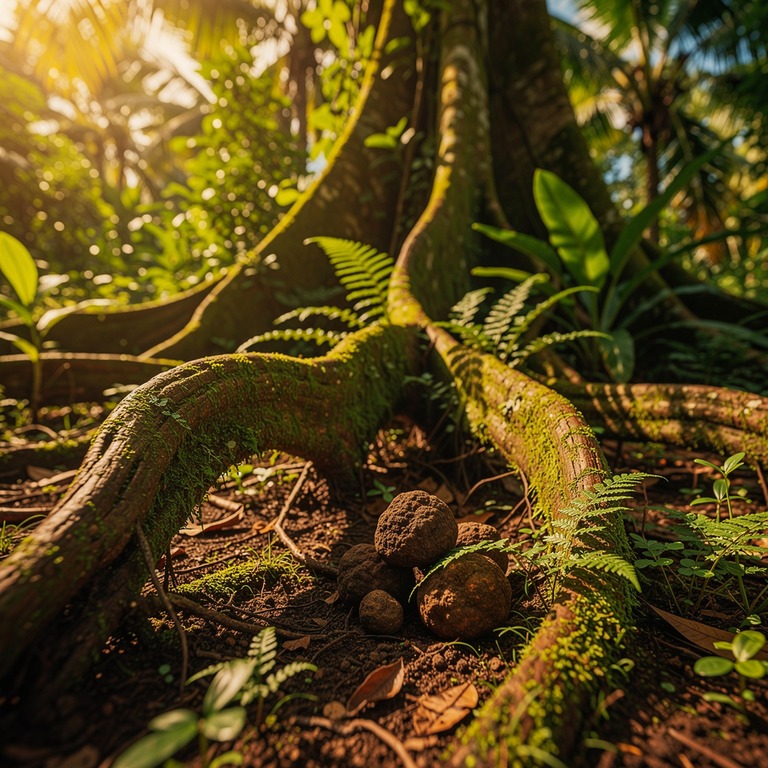
The word ayahuasca comes from Quechua. Translations vary, but the two most common are “vine of the soul” and “vine of the dead.” That second one is not a marketing flourish. Indigenous communities in the upper Amazon have used the brew for centuries, and the language they use to describe it has always pointed in the same direction: the medicine takes you somewhere close to where the dying go.
The pharmacology backs up the poetry. Ayahuasca is a combination of two plants — most commonly the Banisteriopsis caapi vine and the Psychotria viridis leaf. The leaf contains DMT, a tryptamine your own brain produces in small amounts. The vine contains MAO inhibitors, which keep your gut from instantly destroying the DMT so it can actually reach your bloodstream. Drink the brew, and within forty minutes your body is processing one of the most potent psychedelics on the planet.
When researchers give people pure intravenous DMT in a lab, the trip is short — twenty minutes or so. The ayahuasca version stretches for hours. Either way, the doorway it opens looks remarkably similar to the one described by people who have flatlined on an operating table.
What the DMT Study Actually Found
European researchers ran a small but pointed experiment to test the comparison directly. Thirteen healthy adults, all with some prior psychedelic experience, came in for two sessions a week apart. They were told they would receive DMT once and a placebo once, without knowing the order. In practice, the first session was always placebo — a way of helping participants relax into the setting before the real dose hit.
After each session, they filled out a standardized near-death-experience questionnaire — the same one used to assess people who report NDEs after cardiac arrest, car accidents, or surgical complications. Every single participant on DMT scored high enough to qualify as having had a near-death experience. On fifteen of the sixteen measures, DMT scored higher than placebo. Ten of those differences were statistically significant.
The strongest overlaps were the ones you would expect if you have read accounts of either experience:
- A sense of being separated from the body
- Entering an unearthly environment that felt more real than real
- Encountering presences, beings, or intelligences
- Time bending, stretching, or disappearing entirely
- An undertow of peace and joy beneath the strangeness
- Heightened, almost painful clarity of perception
The researchers described the similarity between the DMT group and a matched group of actual NDE survivors as “striking.” Not identical — DMT users were more likely to report racing thoughts and seeing deceased relatives, both of which are rarer in spontaneous NDEs — but the family resemblance is unmistakable.
Why a Brush With Death Might Heal You
Here is where this gets interesting for anyone weighing whether to book a retreat. People who survive genuine near-death experiences tend to come back different. Decades of survey work has documented a recognizable cluster of changes: less fear of dying, more concern for other people, deeper appreciation of nature, diminished interest in possessions and status, a quieter sense of self-worth that does not need propping up.
That list reads almost exactly like the list of long-term effects reported after psychedelic experiences. Reduced death anxiety. A pull toward the natural world. Improvements in mood, in mental health, in the basic capacity to be present in your own life. Researchers studying psilocybin for end-of-life distress have noted the same pattern in terminal cancer patients — one session, lasting outcomes, often described in the same language NDE survivors use.
The hypothesis taking shape is that mystical-type experiences — the kind that make you feel small, connected, and temporarily unmoored from your usual identity — are the active ingredient. The chemistry gets you to the doorway. Whatever you experience on the other side does the actual work. That is why facilitators talk so much about set, setting, and intention: the molecule is reliable, but the experience around it is what determines whether the medicine lands as healing or just as a wild night.
What This Means If You Are Considering an Ayahuasca Retreat
If the prospect of an ego-dissolving, near-death-equivalent experience sounds either thrilling or terrifying, you are paying attention. It should sound like both. People who go in expecting a spa weekend with extra visuals tend to have a rough time. People who go in understanding that they are signing up for something genuinely difficult — and who choose their retreat accordingly — tend to come out the other side describing it as one of the most important weeks of their life.
A few honest things worth knowing before you book:
- The hard part is the point. Tim Ferriss famously described his ayahuasca experience as being torn apart and killed a thousand times a second for two hours. He also said it dissolved decades of anger. Both of those things are usually true at once.
- Screening matters. Reputable retreats ask about your medications, your psychiatric history, and your cardiovascular health for good reason. MAO inhibitors interact badly with SSRIs and a long list of other drugs. A retreat that does not ask is a retreat to walk away from.
- Integration is not optional. The week after the ceremony is where the changes either take root or evaporate. Plan for it before you go. Block off quiet days. Find a therapist or integration circle in advance.
- The facilitator is the medicine too. A skilled curandero or facilitator can steer you back from the edge of a difficult passage. An untrained one cannot. Ask about lineage, training, and what happens if someone has a hard time at three in the morning.
Where Master Plants Fit Into Addiction and Trauma Recovery
The reason so many people end up looking into plant medicine in the first place is that conventional treatment did not finish the job. Addiction recovery built on willpower and meetings can save your life and still leave the underlying ache untouched. Antidepressants can keep you upright without quite letting you feel anything. Trauma therapy can take years to crack open material that a single ceremony seems to surface in one night.
This is not a recommendation to ditch your psychiatrist. It is an observation about why the master plants — ayahuasca, San Pedro, iboga, psilocybin mushrooms — have become a quiet undercurrent in conversations about recovery. They appear to do something different. Whether you frame that something as a chemically induced near-death experience, a mystical opening, or a neurobiological reset depends on which language you find useful. The reported outcomes are similar either way.
None of this is a guarantee. The research is still young, dosing protocols are still being worked out, and some people simply do not respond — or respond in ways that require more support than a one-week retreat can offer. Treat any promise of certain healing as a red flag. The honest version is that plant medicine, in the right context, opens a door. What you do with what you find on the other side is the actual work.
The Quiet Paradox
The European researchers ended their paper with a line from Stephen Batchelor that has stayed with me since I first read it: by meditating on death, we paradoxically become conscious of life. That is the whole thing, really. The reason a brush with the edge — chemical or otherwise — seems to recalibrate people is that it briefly strips away the assumption that there will always be more time. What gets left behind, when the trip ends and the body comes back online, is a strange, raw appreciation for the fact of being here at all.
If something in this resonates and you want to look at what is actually out there, a curated selection of ayahuasca and plant-medicine retreats can be browsed on our marketplace here. Take your time with the decision. The vine of the dead has been waiting a long time. It will still be there when you are ready.
Craving More Stories?
Join our ShopAyahuascaRetreats newsletter for the latest updates on thrilling
destinations and inspirational tales, delivered straight to your inbox!
We value your privacy. Your email address will never be shared or published.