 English
 Deutsch
 Français
 Nederlands
 Español
SHOP AYAHUASCA RETREATS BLOG
What a Kambo Ceremony Actually Feels Like: One Woman's First Time with the Frog

Stella Vance
May 26, 2026
Your ultimate guide to discover transforming ayahuasca and psychedelic experiences. Dive into serene destinations and elevate your consciousness to unparalled heights.
Discover Ayahuasca & Psychedelic Retreats NowSearch for ayahuasca & psychedelic retreats
Discover retreats, trainings, and holidays from all over the world
The first time I heard someone describe kambo, they called it “twenty minutes of dying, then you feel reborn.” That's the kind of sentence that either makes you walk away or quietly book a flight. If you've found your way to this article, you probably already know which camp you're in — you're curious about plant medicine, you've maybe done ayahuasca or are circling around it, and now you're wondering whether this strange frog-secretion ritual is something worth sitting for.
This is one person's account of a first kambo ceremony, told honestly, with the gross bits left in. It's not a sales pitch. It's not a warning either. It's the kind of description I wish I'd had before I sat down on the floor, half-naked, and let a stranger burn my back.
So what is kambo, really?
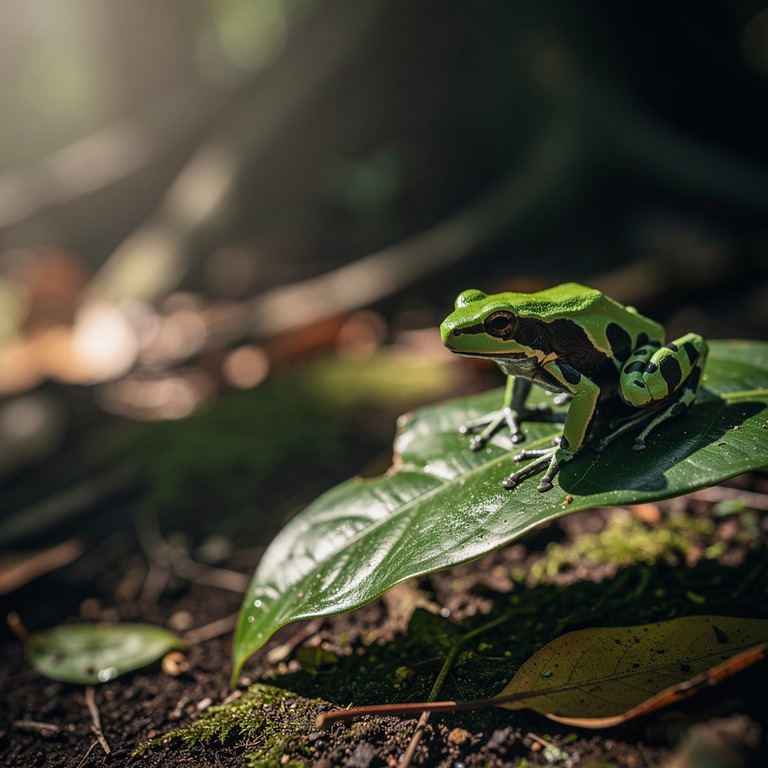
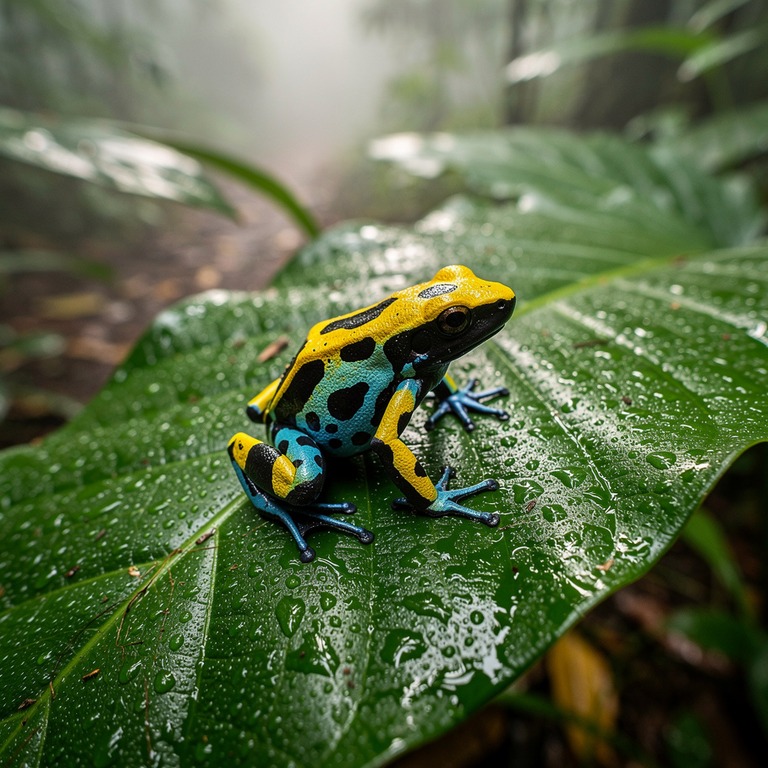
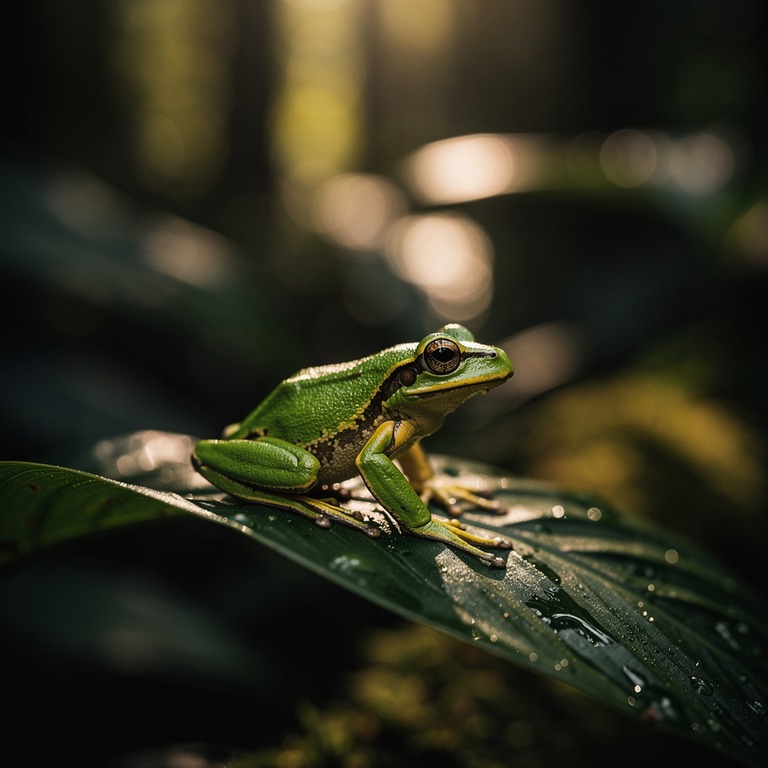
Kambo is the dried secretion of the giant monkey frog — Phyllomedusa bicolor — a bright green tree frog found across the western Amazon. Indigenous groups including the Matsés, Katukina, and Yawanawá have used it for generations as a hunting medicine, an immune tonic, and a way to clear what they call panema: bad luck, heaviness, stuck energy. The frog isn't killed. A practitioner mimics its call, the frog comes down, a small amount of secretion is scraped from its back, and it's released. The dried film is then reactivated with saliva or water and applied to small burns on the skin.
What happens next is the part nobody can quite prepare you for. The peptides in the secretion — there are dozens of them, some of which have legitimate medical research behind them — flood your system within seconds. Your face flushes hot. Your heart pounds. Your blood pressure drops, then spikes. You may feel your tongue swell, your stomach turn, your skin tingle. Within a few minutes, most people purge — vomiting up the two or three liters of water they were asked to drink beforehand. The whole acute phase lasts twenty to forty minutes. Then, for many people, comes a strange lightness that's difficult to describe and even harder to forget.
The day I sat down with the frog
I'd been having a rough run of months. A long relationship had ended. Friendships were thinning out in that quiet way they do when you're shifting. I was raising kids, rebuilding a small business, and pretending I was fine. The standard self-care toolkit — lemon water, journaling, the occasional yin yoga class — had stopped touching it.
A friend mentioned a practitioner staying at his house. I felt the pull. I've learned to trust that pull, even when I can't justify it. With ayahuasca, the call had been almost nagging for years before I finally went. With kambo, it was softer — more of a tap on the shoulder than a shout.
I arrived on a Monday morning, fasted since the night before. The house sat behind a row of others in a quiet northern village, surrounded by flat green fields. My friend hugged me at the door and I burst into tears for no obvious reason. He just held on, smiled, said “good that you came,” and led me inside.
The water — all of it
Before any kambo touches your skin, you drink. A lot. At least a liter and a half, usually closer to three. Lukewarm, because cold water on an empty stomach during this process is its own kind of cruelty.
The water isn't for hydration. It's the vehicle for the purge. When the secretion hits and the body decides to expel everything, you want something in there to expel. People who don't drink enough tend to dry-heave for an uncomfortably long time. People who drink enough release a clean wave and feel better fast.
I was about two liters in when the practitioner walked in. I'd been picturing an older man with weathered hands, speaking Portuguese or Spanish I'd struggle to follow. Instead, a tattooed European in his late thirties walked through the door, whistling a tune I didn't recognize, smiled at me like we'd known each other for years, and pulled me into a hug. The cliché of what a healer “should” look like fell apart in about four seconds. That, I'd later realize, is part of the lesson.
Fire, frog, and the twenty minutes
The application itself is quick and surprisingly low-drama. A thin stick is heated in a candle flame until it glows. The practitioner uses it to make small superficial burns — usually two or three on the upper arm for a first-timer, sometimes on the back, shoulders, or legs depending on what they read in your body. The burns sting briefly. They're not deep. They leave small round scars that fade over months, which many practitioners and participants think of as a kind of map.
The reactivated kambo paste is dabbed onto the open burns. Within ten to twenty seconds, the medicine arrives. For me it came as heat — a flooding warmth that started in my belly and rose to my face. My lips felt thick. My pulse drummed in my ears. My head felt swollen, like I'd descended too fast in an aeroplane.
What surprised me most was that I could stay present with it. I'd been bracing for terror. Instead I found something closer to intense observation. I'd given birth three times without medication. I'd sat in ayahuasca ceremonies. My body, it turned out, knew how to ride a wave of discomfort. I breathed. I noticed. I waited.
The practitioner whistled the whole time — a melodic, repetitive song that genuinely did seem to hold the room. He squeezed my shoulders, pressed deep into points on my stomach that other bodyworkers had always zeroed in on, sprinkled water scented with something herbal across my skin. When the third burn went on, the nausea rose fast. I leaned over the bucket and let it go. A startling volume of water came out. Then I was empty, and quiet, and the heat in my head began to recede.
Is kambo safe? The honest answer
This is the question that matters most if you're reading this and thinking about booking something. Kambo is generally well-tolerated by healthy adults, but it is not without risk, and the risks are not theoretical.
- Cardiovascular stress. Your blood pressure and heart rate fluctuate sharply. People with heart conditions, a history of stroke, or uncontrolled hypertension should not sit for kambo.
- Water intoxication. Hyponatremia — too much water, too little sodium — has caused serious harm and at least a few deaths in kambo settings. A competent practitioner monitors water intake carefully. Drinking three liters in twenty minutes without guidance is dangerous.
- Pregnancy, recent surgery, serious mental illness, certain medications. All contraindications. A real practitioner will screen for these and turn people away.
- SSRIs and serotonergic drugs. Less of a direct interaction issue than with ayahuasca, but still worth disclosing.
The single most important variable is who's holding the space. Ask about training lineage. Ask how many ceremonies they've facilitated. Ask what they screen for. Ask what happens if something goes wrong — is there a phone signal, a vehicle, a plan? A practitioner who waves these questions off is one to walk away from.
What kambo is good for — and what it isn't
People come to kambo for a lot of reasons. Chronic inflammation. Depression that won't lift. Lyme disease and other lingering infections. Brain fog after a hard year. A sense that something is stuck and won't move. The research on the peptides — particularly dermorphin, deltorphin, and phyllocaerulein — is genuinely interesting, but the clinical picture is still thin. The traditional framing of kambo as a cleansing and clearing medicine has held up better than most of us cynical Westerners expected.
What kambo isn't: a magic eraser. It won't undo years of trauma in a single session. It won't replace therapy, integration, or the slower work of changing your life. People who treat it as a quick fix tend to come away disappointed. People who treat it as one tool in a wider practice tend to come away grateful.
For those weighing whether plant medicine of any kind might help with addiction, depression, or stuck patterns, kambo is often a useful early step — physically intense but shorter and less psychologically disorienting than ayahuasca, ibogaine, or psilocybin. Some people use it as preparation before a bigger ceremony. Others find it's enough on its own.
The aftermath, and what surprised me most
Within an hour of the ceremony ending I was eating fruit, laughing about something inconsequential, and feeling lighter than I had in months. Not euphoric — that word always sounds like marketing. Just lighter. The static in my head had quieted. The grief I'd been carrying was still there, but it had room to breathe around it.
That clarity held for about a week before normal life began to reassert itself, which is roughly what experienced participants had told me to expect. Kambo isn't subtle, but its gifts are. You don't get a personality transplant. You get a window. What you do with the window is the actual work.
If you've read this far and something in you is still leaning forward, that's worth paying attention to. Curated kambo ceremonies and broader plant-medicine retreats can be browsed on our marketplace here, with practitioner backgrounds and screening protocols laid out so you can make a clear-eyed choice. Whatever you decide, do the boring due diligence first — the frog will still be there when you're ready.
Craving More Stories?
Join our ShopAyahuascaRetreats newsletter for the latest updates on thrilling
destinations and inspirational tales, delivered straight to your inbox!
We value your privacy. Your email address will never be shared or published.