 English
 Deutsch
 Français
 Nederlands
 Español
SHOP AYAHUASCA RETREATS BLOG
Walking Meditation and Plant Medicine: Why Movement Matters After Ceremony

Stella Vance
September 1, 2026
Your ultimate guide to discover transforming ayahuasca and psychedelic experiences. Dive into serene destinations and elevate your consciousness to unparalled heights.
Discover Ayahuasca & Psychedelic Retreats NowSearch for ayahuasca & psychedelic retreats
Discover retreats, trainings, and holidays from all over the world
Most people who come home from an ayahuasca retreat expect the hard part to be the ceremony itself. It usually isn't. The hard part is the Tuesday afternoon three weeks later when the insights start to fade, the old patterns creep back, and you're staring at your phone wondering whether any of it was real. This is where a boring, unglamorous practice earns its keep: walking meditation. Not the sit-in-lotus, incense-burning kind. The kind where you put one foot down, notice it, put the other foot down, notice that too, and keep going for twenty minutes.
I've watched a lot of people return from plant medicine work — ayahuasca, psilocybin, San Pedro, the occasional ibogaine journey — and the ones who integrate well almost always have some kind of embodied daily practice. Walking meditation is the one I recommend most, because it works for people who can't sit still, people whose knees hate the cushion, and people whose nervous systems are still buzzing from what they experienced in the maloca.
Why walking meditation pairs so well with psychedelic work
Ayahuasca and other master plants tend to shake loose a lot of material. Emotional, somatic, spiritual — call it what you like. When the ceremony ends, that material doesn't just evaporate. It sits in the body, waiting for a channel. Sitting meditation is one channel, but it can also intensify the noise for people who are already flooded. Walking gives the nervous system somewhere to go.
There's something about the rhythm of steps — left, right, left, right — that seems to organize a scattered mind without demanding anything from it. You don't have to be still. You don't have to concentrate hard. You just have to walk and notice. For someone in the messy weeks after a ceremony, that low bar is exactly the point.
Neuroscientists talk about bilateral stimulation — the same principle behind EMDR therapy — as a way of helping the brain process difficult material. Whether or not you buy the mechanism, the felt experience is clear: walking helps thoughts move through instead of sticking.
What actually happens when you try it
Here's the practice, stripped of any mystical dressing. You pick a stretch of ground — a hallway, a garden path, a quiet street, a patch of forest. Twenty steps is enough. You walk slowly. Slower than you think. You notice the lift of one foot, the swing forward, the placement, the shift of weight. At the end of your stretch, you turn around and go back. That's it.
The first ten minutes are usually terrible. Your mind will offer you a shopping list, a work grievance, a memory from 2009 that has no business surfacing. Fine. You notice, you return to the feet. Somewhere around minute twelve, if you're lucky, something quiets. Not always. Sometimes the whole session is just noticing that your mind is a raccoon on espresso. That counts too.
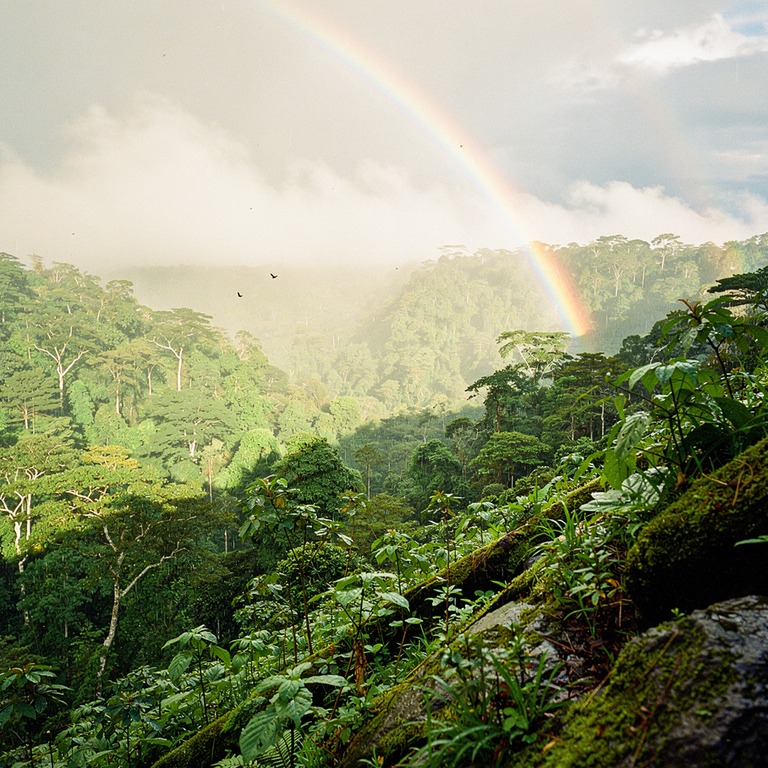
People fresh out of a retreat often report that walking meditation is where the download from ceremony finally lands. An insight that felt abstract during the icaros suddenly makes sense while you're pacing a jungle path. A grief that wouldn't move on the mat starts to move on the trail. The body was waiting to be asked.
How to build it into your integration
The window for integration after a plant medicine experience is longer than most people think. The first month is critical, but the shifts keep unfolding for six months, sometimes a year. A daily walking practice — even a short one — gives that unfolding somewhere to happen.
A few things that help:
- Same time each day. Morning tends to be best for most people, before the day hijacks your attention.
- Same route, at least at first. Familiarity lets the mind stop navigating and start noticing.
- No headphones. I know. It's boring. That's the medicine.
- Ten to twenty minutes is plenty. This isn't a workout.
- If you're processing something heavy from ceremony, keep a small notebook nearby. Insights show up mid-walk and disappear if you don't catch them.
You don't need a special outfit, a meditation cushion, or an app. This is one of the few contemplative practices that costs nothing and requires no equipment, which is probably why it's survived for a couple of thousand years in Buddhist traditions across Asia.
Is walking meditation a substitute for a retreat?
No. And it's not meant to be. A daily walking practice is what supports the work — it doesn't replace it. The people I know who've genuinely shifted long-standing patterns, whether that's addiction, depression, or the low-grade dread of a life that stopped fitting, almost all did it through some combination of intensive experience (ceremony, retreat, therapy) and daily embodied practice.
What walking meditation does is keep the door open. Between ceremonies, between therapy sessions, between whatever brought you here and whatever comes next. It's the connective tissue.
I've had participants tell me that the walking practice they picked up during a retreat was the single most important thing they brought home. More than the journal, more than the dieta rules, more than the WhatsApp group with the other participants. Just the daily habit of walking slowly and paying attention.
Common mistakes people make
The biggest one is treating it like exercise. It isn't. If you're getting a workout, you're going too fast. The point is attention, not cardio.
The second mistake is expecting fireworks. Walking meditation is deliberately undramatic. You will not have visions. You will not weep. What you will get, if you stick with it, is a slow rewiring of your relationship to your own body and your own thoughts. That's a lot less exciting than a ceremony and probably more important in the long run.
The third mistake is quitting after three days because nothing happened. Give it a month. The changes are cumulative and often invisible until they aren't.
Where this fits in the bigger picture
Plant medicines get most of the attention in the psychedelic healing conversation, and for good reason — they crack things open that decades of talking hadn't touched. But the crack itself isn't the healing. The healing is what you do with what came through. That work is quiet, unphotogenic, and mostly happens on ordinary days when nobody's watching.
Walking meditation is one of the plainest tools for that quiet work. It travels with you. It doesn't care what tradition you come from. It asks almost nothing and offers a lot, if you're patient.
If you're still in the research phase — reading about ayahuasca, weighing whether a psychedelic retreat is the right move, wondering how people actually put the pieces back together afterward — start walking now. You'll be ahead of the curve. And when the ceremony does come, whether it's next month or next year, your body will already know how to listen.
For readers who want to take the next step, a range of curated ayahuasca and plant-medicine retreats with strong integration support can be browsed on our marketplace here. Whatever you decide, the practice is free, and it starts the moment you put one foot in front of the other.


Craving More Stories?
Join our ShopAyahuascaRetreats newsletter for the latest updates on thrilling
destinations and inspirational tales, delivered straight to your inbox!
We value your privacy. Your email address will never be shared or published.