 English
 Deutsch
 Français
 Nederlands
 Español
SHOP AYAHUASCA RETREATS BLOG
Types of Psychedelic Mushrooms: A Field Guide to Psilocybin Species and Fly Agaric
Ezra Caldwell
May 27, 2026
Your ultimate guide to discover transforming ayahuasca and psychedelic experiences. Dive into serene destinations and elevate your consciousness to unparalled heights.
Discover Ayahuasca & Psychedelic Retreats NowSearch for ayahuasca & psychedelic retreats
Discover retreats, trainings, and holidays from all over the world
Walk into any conversation about psychedelics long enough and someone will say the word “mushrooms” as if it refers to a single thing. It doesn't. The world of psychedelic mushrooms is wider, weirder, and more geographically scattered than most people realize — over 180 known species, several different genera, and at least two completely separate chemical mechanisms producing the trip. If you're researching plant medicine seriously, or considering a psilocybin retreat, knowing what's actually inside the cap matters.
This guide walks through the main families of psychedelic mushrooms, what makes them chemically distinct, and why the iconic red-and-white Amanita muscaria is its own strange beast — related to the others mostly in shape, not in spirit.
What Counts as a Psychedelic Mushroom?
A psychedelic mushroom is any fungus that contains a compound capable of meaningfully shifting perception, mood, or cognition. The vast majority owe their effects to psilocybin — a prodrug that the body quickly converts into psilocin, the actually-active molecule. Psilocin slots into serotonin receptors in the brain (the 5-HT2A site, mostly), and that's where the visuals, the time dilation, and the rearranging of inner furniture come from.
People have been eating these mushrooms for a long time. Cave murals in Spain dating back roughly 6,000 years appear to depict Psilocybe hispanica. Desert rock art in Algeria, older still, suggests mushroom use stretching back seven to nine millennia. The Maya consumed Psilocybe cubensis. The Aztecs called certain species teonanácatl — “flesh of the gods.” Whatever you make of that lineage, mushrooms have arguably the longest documented relationship with humans of any psychedelic.
The Swiss chemist Albert Hofmann — the same person who first synthesized LSD — isolated psilocybin and psilocin from Psilocybe mexicana in the late 1950s. That moment basically opened the modern scientific chapter on these fungi. Everything since, including the current clinical trials on psilocybin for depression, end-of-life anxiety, and addiction, traces back to that little Mexican mushroom.
The Psilocybe Genus: The Heart of the Story
Most psychedelic mushrooms people will encounter — at a ceremony, at a retreat, in a research paper — belong to the genus Psilocybe. It's the largest grouping, with around 117 species, and contains nearly all the famous names.
A few worth knowing:
- Psilocybe cubensis — the one most people mean when they say “magic mushrooms.” Easy to cultivate, widely distributed, and home to popular strains like Golden Teacher and Penis Envy. Most legal retreats serving psilocybin are working with cubensis.
- Psilocybe semilanceata — the liberty cap. Small, pointed, bell-shaped. Grows wild across the UK, parts of Europe, and the Pacific Northwest. Notoriously potent for its size.
- Psilocybe cyanescens — the wavy cap. Found in temperate climates, sometimes appearing in absurd numbers in wood-chipped flowerbeds. Considerably stronger than cubensis by weight.
- Psilocybe azurescens — named and described by the mycologist Paul Stamets. Among the most potent psilocybin mushrooms documented. Grows along the Oregon coast.
- Psilocybe mexicana — historically significant, modestly potent, the species that started modern psychedelic chemistry.
- Psilocybe tampanensis — known for producing sclerotia, the underground “truffles” that are legally sold in the Netherlands. The legal gray area that lets Dutch retreats operate openly hinges on this distinction.
You'll also see Psilocybe baeocystis (bottle caps), Psilocybe pelliculosa, and Psilocybe aztecorum, the latter possibly being one of the original teonanácatl species. Each has its own potency profile, its own habitat, and its own enthusiasts.
Beyond Psilocybe: The Other Psilocybin Mushrooms
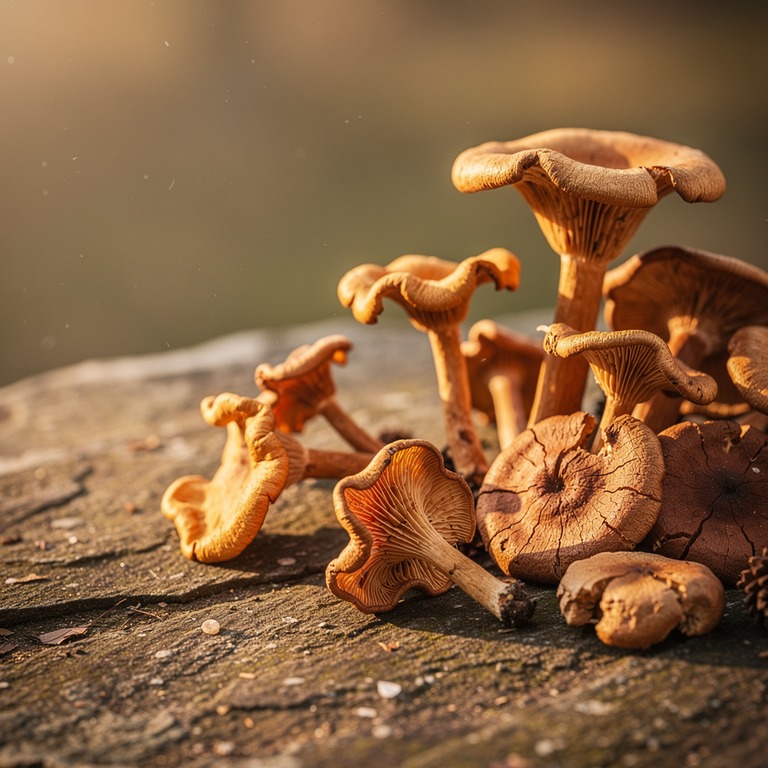
Psilocybe gets the spotlight, but psilocybin shows up in roughly a dozen other genera. The chemistry is the same — psilocybin, psilocin, sometimes baeocystin — but the mushrooms look and grow differently.
Panaeolus is probably the most notable runner-up. Panaeolus cyanescens (sometimes called Copelandia cyanescens, or just “blue meanies”) is significantly more potent than your average cubensis. It's a tropical and subtropical mushroom, common in cattle pasture across Hawaii, parts of Mexico, and Southeast Asia. Panaeolus cinctulus — the banded mottlegill — is less potent but more widely distributed.
Other genera include Gymnopilus, Pluteus, Inocybe, Hypholoma, and a handful of less common groupings. Inocybe aeruginascens deserves a quick mention because it's one of only two known natural sources of aeruginascin, a compound that some researchers have informally called “the CBD of magic mushrooms” for its apparent ability to soften the rougher edges of a trip. Whether that holds up under proper clinical scrutiny is still an open question.
The point isn't that you need to memorize all this. The point is that “magic mushrooms” isn't a single substance — it's a category that includes everything from the laboratory-bred Penis Envy to obscure species growing on rotting logs in northern Spain.
Fly Agaric: A Different Mushroom Entirely
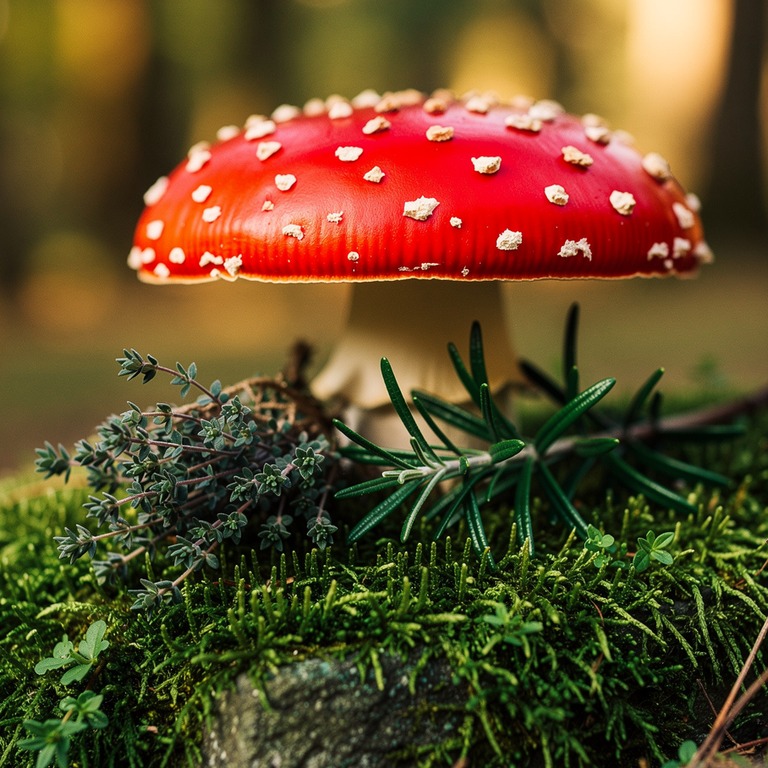
And then there's Amanita muscaria. The red cap with white dots. The mushroom in every video game, fairy tale, and Mario world. It is psychoactive — but it is not a psilocybin mushroom, and lumping it in with the others is a category error worth correcting.
Amanita muscaria belongs to a genus that includes some of the most toxic fungi on Earth. The Amanitas as a group are responsible for the overwhelming majority of fatal mushroom poisonings worldwide. Fly agaric itself is technically classed as poisonous, though actual deaths from it are vanishingly rare and almost always involve massive overdoses or confusion with a more dangerous relative.
The active compounds in fly agaric are muscimol and ibotenic acid, with smaller amounts of muscazone and muscarine. When you eat the mushroom, your body converts ibotenic acid into muscimol — the more potent of the two. Crucially, muscimol doesn't touch serotonin receptors at all. It acts on the GABA system, which is roughly the brain's brake pedal. That's why an Amanita experience is described so differently from a psilocybin one: less kaleidoscopic, more dreamlike, often sedating, sometimes outright dissociative.
Effects can include:
- Heavy sedation alternating with bursts of energy
- Vivid, dreamlike visuals — often with eyes closed
- A feeling of being detached from the body or environment
- Confusion and altered sense of size or proportion (the “Alice in Wonderland” association is not an accident)
- Physical side effects: nausea, sweating, twitching, watery eyes, lowered heart rate
Indigenous shamans across Siberia — particularly the Koryak and Evenki peoples — have used fly agaric ritually for centuries, sometimes consuming it directly, sometimes drinking the urine of someone who already had (muscimol passes through the body largely intact, which is grim but pharmacologically interesting). It is, in every meaningful sense, a different medicine than psilocybin.
How to Choose Which Mushroom Matters for You
If you're considering a retreat or ceremony, the practical question isn't usually “which species?” — most legitimate facilitators are working with Psilocybe cubensis or Psilocybe tampanensis truffles, and that's a known, well-mapped experience. The more useful questions are about dose, setting, screening, and integration support.
A few things genuinely worth asking before you commit:
- What species and what dose? A reputable retreat should answer this clearly. If they're cagey, that's a flag.
- How is the medical screening done? Psilocybin interacts poorly with SSRIs, lithium, and certain heart conditions. A real facilitator will ask you about all of it.
- What does integration look like? The ceremony is the easy part. The week, month, and year after is where the work actually happens.
- Who's holding space? Credentials matter less than experience and temperament. Ask how many ceremonies they've sat. Ask what they do when someone has a hard time.
The fly agaric question is a different conversation. Amanita muscaria retreats exist, but they're rarer, less standardized, and worth approaching with extra caution. The compound profile is genuinely different and the experience can be physically rougher. It's not for first-timers.
A Last Word on Respecting the Fungus
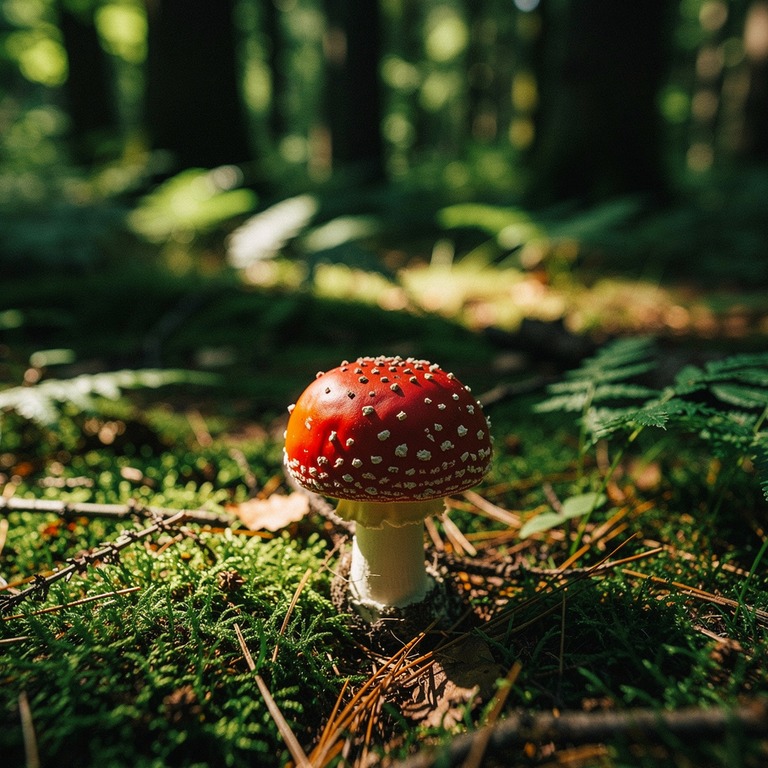
One thing that gets lost in the listicle-style coverage of psychedelic mushrooms: these are old organisms with old relationships to people. The species names matter less than the relationship you build with whichever one you sit with. Curiosity is good. Reverence is better. A bit of fear, in the proper sense — taking the thing seriously — is probably the most underrated ingredient in a good psychedelic experience.
For readers who want to take this further, a range of curated psilocybin and plant-medicine retreats can be browsed on our marketplace here. Whichever direction you go, the mushroom you choose deserves the same care you'd give any teacher worth the name.
Craving More Stories?
Join our ShopAyahuascaRetreats newsletter for the latest updates on thrilling
destinations and inspirational tales, delivered straight to your inbox!
We value your privacy. Your email address will never be shared or published.