 English
 Deutsch
 Français
 Nederlands
 Español
SHOP AYAHUASCA RETREATS BLOG
The Three Poisons of Buddhism: Practices to Loosen Their Grip

Cleo Adler
September 11, 2026
Your ultimate guide to discover transforming ayahuasca and psychedelic experiences. Dive into serene destinations and elevate your consciousness to unparalled heights.
Discover Ayahuasca & Psychedelic Retreats NowSearch for ayahuasca & psychedelic retreats
Discover retreats, trainings, and holidays from all over the world
There's an old Buddhist diagnosis of why we suffer that I keep coming back to, especially in the days after a ceremony or a hard week or a conversation I wish I'd handled better. It says the mess we make of our inner lives comes down to three things: wanting, pushing away, and checking out. The tradition calls these the three poisons — greed, hatred, and delusion — and almost every spiritual bruise you can name traces back to one of them.
What I find remarkable is how honest the framework is. It doesn't ask you to believe anything supernatural. You can test it against your own week and see if it holds up. It usually does.
Why Buddhism Points the Finger at These Three
Most religions agree that suffering exists and that wisdom and kindness reduce it. Buddhism goes further and names the mechanism. According to the second noble truth, we suffer because we misread reality. We keep expecting things — including ourselves — to be solid and permanent. They aren't. Everything shifts. Everything ends. And yet we cling to a made-up center called “me,” and organize our whole life around defending it.
Once you've built that fortress, the three poisons run the operation. You chase what feels good for the self (attachment). You shove away what threatens it (aversion). And everything that neither flatters nor threatens you gets ignored (indifference). The old texts picture these as a rooster, a snake, and a pig — the greedy one, the angry one, and the checked-out one, chasing each other in a circle at the hub of the wheel of existence.
From those three, the tradition says, sprout the “eight worldly concerns” — pleasure and pain, praise and blame, fame and obscurity, gain and loss. That list is really just shorthand. In practice, the ego finds infinite ways to slice the world into for-me and against-me. That slicing is the whole problem.
What Freedom From the Poisons Actually Feels Like
Here's the thing: you already know what it feels like to be free of them, even if only for a minute. Think of someone you love without conditions — a child, a partner, a friend, an old dog. In the moment you'd trade your comfort for theirs without a second thought, the poisons simply aren't there. No grasping. No aversion. No fog. Just a clear, warm attention that costs you nothing.
That's the state the practices below are trying to make more available. Not as a peak experience, but as a baseline. Below are three angles on the same work — mindfulness, love, and letting go. You don't have to pick one. They stack.

1. Mindfulness: Meeting the Poisons Without Taking Them Personally
The Pali word for the poisons is kilesas. Translators have called them defilements, afflictions, stains — but the phrasing I like best is “torments of the heart.” That's what they are. They aren't character flaws stamped into you at the factory. They're weather systems that pass through, and if you're not paying attention, you'll mistake them for the sky itself.
The trap is identification. The moment you tell yourself “I'm a greedy person” or “I'm an angry person,” you've handed the poison a permanent lease. Mindfulness cuts that lease short by treating each surge of craving or resentment as a thing to be observed rather than a thing to be. You get better at whatever you rehearse — so if you meet greed with more grasping (even grasping for it to go away), you strengthen greed. If you meet anger with more anger, you know how that story ends.
A Simple Three-Step Practice
- Notice it. Name the kilesa the moment it shows up — as a tightness in the chest, a heat in the face, a loop in the mind. Recognition alone shifts something. Once a habit is conscious, it can be worked with.
- Let it be there. Don't try to make it disappear. Feel it fully, without commentary about whether you should be feeling it. Resistance is fuel.
- Look into it. Ask: is this permanent? Is this actually who I am? Will acting on it deliver the happiness it's promising? Almost always, the honest answer is no. That noticing dissolves a lot of the charge.
A small example. A friend of mine adopted a dog who snores like a chainsaw. For months she'd wake up furious every night. The snoring didn't change. Her relationship to it did — she started noticing the annoyance, letting it exist without arguing with it, and watching it pass. Now she sleeps. The dog still snores. This is what practice looks like in real life. Small, unglamorous, effective.
2. Love: The Heart Practices as Antidote
The second angle is the heart. Three classical practices — generosity (dana), loving-kindness (metta), and tonglen — map cleanly onto the three poisons. They're not sentimental. They're specific medicines for specific illnesses.
Generosity treats greed. Craving is rooted in a felt sense of scarcity — that there isn't enough, that you aren't enough. Giving something away, whether it's money, time, attention, or a genuine listening ear, quietly contradicts that belief. Every act of dana is a small piece of evidence that you already have enough to share. Repeat it often enough and the panic-hoarding reflex starts to relax.
Loving-kindness treats hatred. Aversion depends on the story that some people are fundamentally separate from you — that they're on the other team. Metta practice is the deliberate, repeated wish for the wellbeing of yourself, then those you love, then those you're neutral about, and finally those you can't stand. James Baldwin wrote that people cling to their hates because they sense that once the hate is gone, they'll have to face the pain underneath it. That's exactly what metta gently exposes.
Tonglen treats delusion. The core delusion is the sense of being a separate self, cut off from everyone else's suffering. Tonglen practice inverts our normal reflex — instead of breathing in pleasant things and pushing away unpleasant ones, you breathe in the suffering of others and breathe out relief and space. It sounds counterintuitive. It works. Over time it dissolves the wall between “my pain” and “their pain” and reveals what was always true — that they were never separate.
A note on trauma, because it matters here. A lot of us are walking around with unmetabolized personal and collective trauma — pandemic aftermath, generational grief, the weight of histories most of us didn't consent to inherit. One hallmark of trauma is the conviction that you're alone in your suffering and somehow to blame for it. That's hatred pointed inward, and it thickens the fog. Tonglen doesn't erase trauma, but it slowly reintroduces the truth that suffering is shared. That alone can loosen a lot.

3. Letting Go: The Practice Underneath All the Practices
Underneath greed, hatred, and delusion is one common muscle — grasping. Attachment is grasping at what you want. Aversion is grasping at the version of reality where the unwanted thing isn't there. Ignorance is grasping at a familiar story about who you are and what the world is, and refusing to look at anything that contradicts it. Three flavors, one grip.
So the question that sits at the start of the Buddhist path and at every step after is a plain one: of the things you're holding on to, which are you afraid to put down? Your honest answer says more about who you think you are than any personality test ever will. Is it the boxes in the basement? A story about your career? A grudge you've carried for a decade? A spiritual identity? Even the framework of Buddhism itself can become something you clutch.
This isn't a moral judgment. The thing in your hand isn't necessarily bad. Renunciation, in this sense, isn't about giving up pleasure or possessions. It's about noticing where the grip has become the problem — where you're holding so tightly that the holding itself is what's hurting.
Where Plant Medicine Fits Into This Conversation
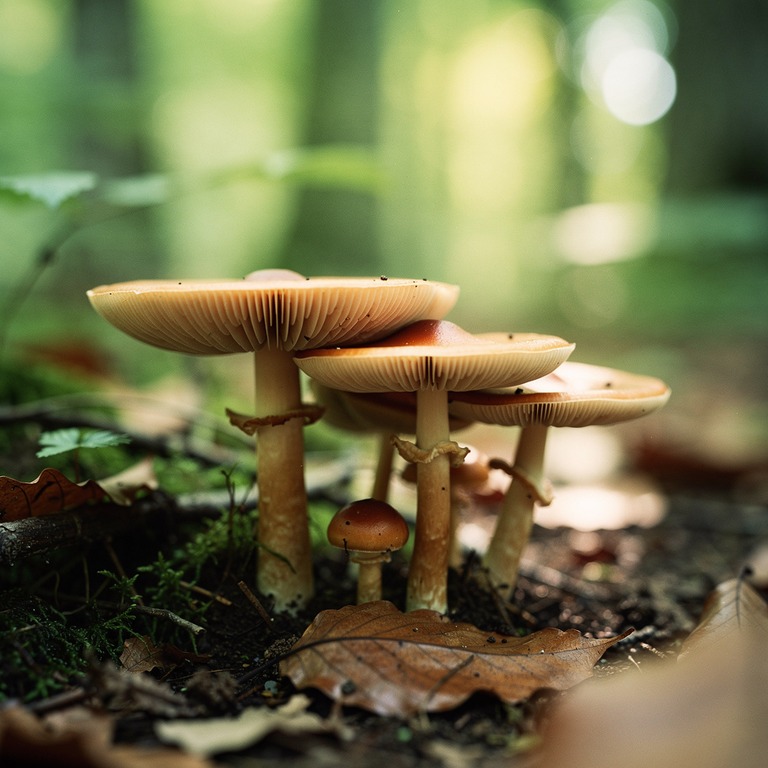
People who sit with ayahuasca or psilocybin often describe experiences that look, from a distance, like a chemically assisted crash course in exactly this teaching. The self-concept loosens. The grip weakens. You watch your attachments, your resentments, and your convenient fictions from a small distance and understand — often for the first time — that you aren't any of them. That's a real experience. It can also be brief.
The three poisons framework becomes useful in the days and weeks after such an experience, because it gives you language for what you saw and a set of practices for keeping the door open. A single ceremony can show you the room. Mindfulness, the heart practices, and the daily work of letting go are how you keep walking back in when the door starts to close. Integration, in other words, is not a mystery. It's just this — noticing the poisons in real time and choosing a different response, over and over, until the choosing becomes second nature.
If any of this resonates and you're weighing a retreat as part of your own inquiry, a range of curated plant-medicine and psychedelic retreats can be browsed on our marketplace here. Whatever you do next, the work is the same — see the grasping, meet it kindly, and let a little more of it go each time.


Craving More Stories?
Join our ShopAyahuascaRetreats newsletter for the latest updates on thrilling
destinations and inspirational tales, delivered straight to your inbox!
We value your privacy. Your email address will never be shared or published.