 English
 Deutsch
 Français
 Nederlands
 Español
SHOP AYAHUASCA RETREATS BLOG
The Strongest Psychedelics Explained: What Each One Actually Does
Finn Ashton
June 12, 2026
Your ultimate guide to discover transforming ayahuasca and psychedelic experiences. Dive into serene destinations and elevate your consciousness to unparalled heights.
Discover Ayahuasca & Psychedelic Retreats NowSearch for ayahuasca & psychedelic retreats
Discover retreats, trainings, and holidays from all over the world
Ask ten people which psychedelic is the strongest and you'll get ten different answers, usually delivered with a kind of evangelical certainty. The truth? Potency is slippery. A drug that knocks you sideways at 25 micrograms isn't necessarily more profound than one that takes a whole cactus button to register. And profundity isn't strength — not really.
Still, some compounds belong in a category of their own. They alter perception so completely that the word “hallucinogen” feels like a polite understatement. If you're researching plant medicine, weighing a psychedelic retreat, or just trying to understand what people mean when they talk about ayahuasca, master plants, or ego death, it helps to know the territory. Here's an honest rundown of five of the most potent psychedelics on the planet — what they are, where they come from, and what they actually do to a human being.
How Do You Even Measure “Strongest”?
Before the list, a quick reality check. Strength can mean dose required (LSD wins by a landslide — micrograms vs. grams). It can mean intensity per minute (DMT). It can mean depth of psychological territory covered (ayahuasca, ibogaine). It can mean how unrecognisable reality becomes (salvia, 5-MeO-DMT). None of these scales line up neatly.
That's why “strongest psychedelic” lists are always a bit silly. But they're also genuinely useful, because the differences between these compounds matter — especially if you're thinking about working with one in a ceremonial setting. The wrong medicine in the wrong context is, at best, a wasted weekend. At worst, it's a psychiatric emergency.
DMT — The Spirit Molecule, In Two Flavours
DMT is the active ingredient that makes ayahuasca, well, ayahuasca. But it exists in two forms that behave quite differently. N,N-DMT is the more common molecule, present in trace amounts across countless plants and animals — possibly even in human brain tissue, though that science is still messy. It's what Amazonian shamans have brewed into ayahuasca for centuries, combining it with the Banisteriopsis caapi vine to make it orally active.
5-MeO-DMT is the cousin. Structurally similar, experientially very different. It's found in the venom of the Sonoran Desert toad and in certain South American snuffs like yopo. Recent clinical interest has paired it with ibogaine in addiction-recovery protocols, with some striking early results for people coming off opioids.
Smoked or vaporised, N,N-DMT lasts maybe ten or fifteen minutes and produces what users describe as visits to entirely other realms — geometric patterns, machine elves, encounters with what feel like sentient beings. Ayahuasca, by contrast, stretches that experience over four to six hours and tends to be more emotionally and somatically loaded. There's purging. There's reckoning. People often describe it as the medicine showing them something they've spent years avoiding.
5-MeO-DMT is a different animal entirely. Less visual, more annihilating. Users frequently describe it as a kind of ego death by demolition — the self simply isn't there for a while. Some find it transformative. Others find it terrifying. It is not a recreational substance, and frankly, even the word “experience” feels too small for what it does.
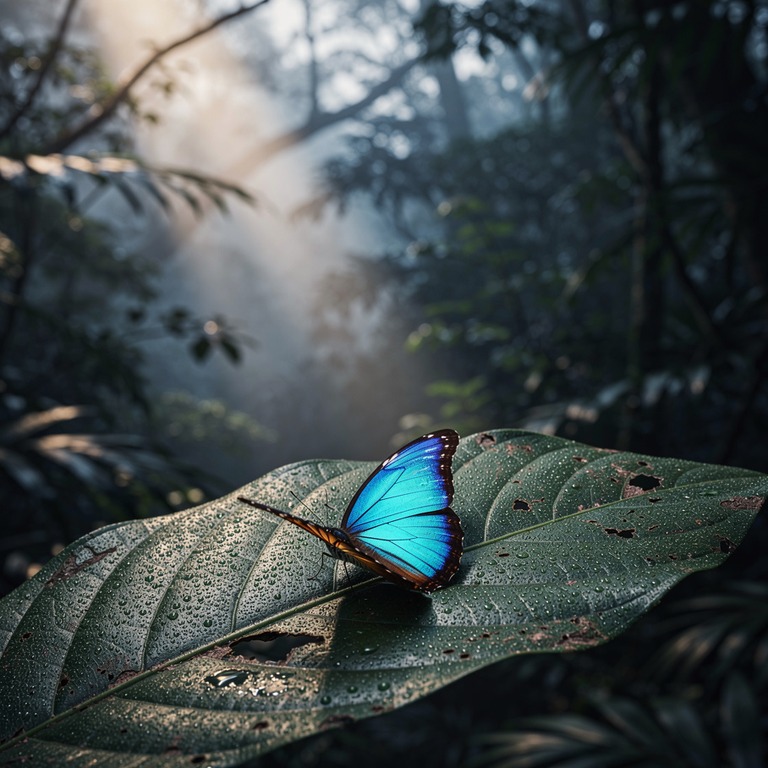
Mescaline — The Cactus Path
Mescaline is the active alkaloid in peyote, San Pedro (huachuma), and a handful of related cacti. Indigenous communities across Mexico, Peru, and the southwestern United States have worked with these plants for thousands of years — long before any anthropologist showed up to write about it. The Native American Church still uses peyote sacramentally in the U.S., and San Pedro ceremonies remain a living tradition throughout the Andes.
The mescaline experience is often compared to psilocybin, but that comparison undersells it. Where mushrooms can feel emotional and weather-like, mescaline tends to feel lucid. Clear. Almost philosophical in its rhythm. Visuals are vivid, particularly in open landscapes — desert, mountains, big sky country. Indoors, the medicine can feel slightly cramped, as if it wants horizon.
One thing seasoned San Pedro drinkers mention: thoughts come and go without the heaviness you might get on LSD. Big questions surface and then dissolve, leaving something gentler behind. Ego dissolution is absolutely possible, but it tends to arrive softly, more like a tide than a wave. That said, “gentle” here is relative. A full dose of mescaline is still a full-day commitment to a profoundly altered state.
LSD — The Microgram Heavyweight
Acid is in a class of its own when it comes to per-milligram potency. Twenty-five micrograms — a millionth of a gram, twenty-five times over — is enough to feel something. A standard recreational dose is around 100 micrograms. The amount of LSD that would fit on the tip of a pin could send a grown adult on a twelve-hour ride.
Albert Hofmann synthesised it in 1938 at Sandoz Laboratories. It went on to become the central sacrament of the 1960s counterculture, the subject of CIA mind-control experiments, and eventually the most demonised psychedelic in the Western imagination. The “bad trip” mythology that surrounds acid is largely a product of context — people taking unknown doses, in unsafe settings, often with no preparation whatsoever.
What LSD actually does, in a held space with intention behind it, is open up an enormous internal landscape. Visuals are present but not dominant. The real work happens in thought. Patterns become visible — the ones you run in your relationships, your career, your grief. People often emerge from a well-handled acid journey describing it as the most useful day of their adult life. Others get stuck in a thought loop for ten hours and emerge rattled. Set and setting genuinely are everything here.
Salvia — The One Nobody Talks About Honestly
Salvia divinorum, the Mazatec seer's sage, is the wild card. It's legal in many places where every other psychedelic is illegal, which has led to the persistent and dangerous assumption that it must therefore be mild. It is not.
Extract preparations sold online can be a hundred times stronger than the natural leaf. Smoked, salvia produces a five-to-fifteen-minute experience that is genuinely unlike anything else on this list. Users frequently report a sensation of being pulled sideways at speed, of fusing with objects in the room, of becoming a wall or a piece of furniture. The Mazatec tradition uses the chewed leaf in a quiet, dark, ceremonial context with a trained curandera present. The teenage version — smoking a 20x extract on a friend's couch — has almost nothing to do with that.
If you take salvia at all, take it seriously. Start absurdly low. Have a sober person with you. And understand that this plant has a teaching reputation in Mexican shamanic medicine for a reason — it's a master plant in its own right, and it doesn't suffer casual use lightly.
MDMA — Not Technically Psychedelic, But Worth Including
MDMA is the outlier here. Strictly speaking, it's an entactogen and a stimulant, not a classical psychedelic. But its therapeutic relevance — particularly in trauma work — is too significant to leave off any list of powerful mind-altering substances.
Synthesised by Merck in 1912, MDMA spent decades quietly in the background before therapists discovered in the 1970s that it could open emotional doors with remarkable speed. Couples therapy, PTSD work, deep grief — for a few years, before prohibition closed the window, clinicians reported astonishing results. That clinical research has now resumed, with Phase 3 trials for PTSD treatment producing some of the most promising outcomes psychiatry has seen in a generation.
The recreational version is a different conversation. The empathic warmth that makes MDMA therapeutically valuable also makes it appealing on a dance floor, and the comedown — depleted serotonin, low mood, sometimes lasting days — is the price. At higher doses or with frequent use, the after-effects can be genuinely rough. It also has real physical risks: elevated heart rate, blood pressure, body temperature, and dangerous interactions with other medications. This isn't a substance to improvise with.
Choosing What's Actually Right For You
Here's the part nobody tells you: the strongest psychedelic isn't the best one. It's just the strongest. The medicine that will help you depends entirely on what you're trying to address, what your nervous system can handle, and the context you'll be in.
- For deep emotional excavation and integration with a long lineage of ceremonial practice: ayahuasca.
- For addiction interruption, particularly opioid dependence: ibogaine, sometimes paired with 5-MeO-DMT.
- For trauma and PTSD in a clinical or guided setting: MDMA-assisted therapy or psilocybin.
- For lucid self-examination in nature: San Pedro or peyote, in traditional context.
- For a shorter, more contained psychedelic threshold experience: psilocybin mushrooms, which didn't make this potency list but remain one of the most widely useful medicines available.
None of these are casual choices. Reputable retreats screen participants medically and psychologically for good reason — these substances interact dangerously with SSRIs, lithium, stimulants, and a long list of cardiovascular and psychiatric conditions. A facilitator who doesn't ask hard questions about your medication list and mental health history before booking you is a facilitator to walk away from.
A Last Word On Strength
The point of working with plant medicine isn't to find the biggest hammer. It's to find the right key. Some of the most transformative ceremonies happen on what would be considered modest doses, in well-held containers, with skilled facilitators who know when to intervene and when to simply hold space. The medicine does its work whether or not you're hanging off the edge of the universe.
If you're seriously considering this path — for addiction, for trauma, for the stuck feeling that's been following you around for too many years — the question to sit with isn't “which is the strongest?” It's “which tradition, which setting, and which group of people will actually hold me well?” For readers who want to take that further, a curated range of ayahuasca and psychedelic retreats can be browsed on our marketplace here. Take your time with the choice. The right medicine, met properly, has a way of finding you when you're ready.
Craving More Stories?
Join our ShopAyahuascaRetreats newsletter for the latest updates on thrilling
destinations and inspirational tales, delivered straight to your inbox!
We value your privacy. Your email address will never be shared or published.