 English
 Deutsch
 Français
 Nederlands
 Español
SHOP AYAHUASCA RETREATS BLOG
The Predictive Shadow: How Your Nervous System Braces for Rejection Before It Happens

Cleo Adler
August 27, 2026
Your ultimate guide to discover transforming ayahuasca and psychedelic experiences. Dive into serene destinations and elevate your consciousness to unparalled heights.
Discover Ayahuasca & Psychedelic Retreats NowSearch for ayahuasca & psychedelic retreats
Discover retreats, trainings, and holidays from all over the world
A woman glances at me in the checkout line. That's it. That's the whole event. She might be counting the items in her cart, wondering if she left the stove on, or just letting her eyes rest somewhere neutral. My rational mind knows this. My body, however, has already filed a report and drawn conclusions.
Something in my chest tightens. My shoulders make themselves smaller. A quiet interrogation begins — what did she see, what did that mean, what did I do — and by the time I catch up to what's happening, I've already dimmed myself down. Smile smaller. Eyes elsewhere. Less reachable. All before she's even looked away.
This is the predictive shadow at work. It's a pattern I've watched in myself for years and heard described, in slightly different language, by nearly everyone I've met at a plant medicine retreat. It's one of the quiet reasons people end up sitting with ayahuasca in the first place.
The Brain as a Prediction Machine
Neuroscience has a fairly unsentimental take on what's happening in these moments. Your brain isn't really perceiving reality in real time. It's forecasting reality, then comparing the forecast against incoming information and adjusting on the fly. The technical name for this is predictive processing, and one of its more influential frameworks — Karl Friston's Free Energy Principle — suggests the nervous system is more or less allergic to surprise.
Surprise is expensive. Preparing for a threat that never arrives is cheap. Given the choice, the brain picks cheap every time. It would rather brace for a rejection that never comes than get caught off guard by one it didn't see coming. Efficient? Yes. Kind to your social life? Not really.
This is why a neutral glance from a stranger can trigger the same low-grade defensiveness as an actual social threat. Your system isn't responding to what's in front of you. It's responding to a pattern-match with everything that came before.
Why the Body Reacts Before You Think
Here's the part that catches people off guard when they start paying attention: the feeling arrives first. Thought shows up afterward, out of breath, trying to explain what the body already decided.
You feel the tightening, the pulling-inward, the subtle shift in posture. Then the mind gets to work manufacturing reasons. She probably thought I looked weird. He seemed judgmental. That silence meant something. The narrative isn't the cause. It's the cover story. And once the story is in place, it feeds back into the feeling, and the loop closes on itself.
If someone grew up in an environment where certain people weren't emotionally safe — a critical parent, an unpredictable partner, a decade of playground cruelty — the nervous system doesn't easily default to neutral around anyone who resembles that category. This isn't insecurity in the shallow sense. It's a survival system doing exactly what it was built to do, just in contexts where it's no longer useful.

Active Inference: How Prediction Shapes What Actually Happens
The trickier layer is what neuroscientists call active inference. We're not passive observers running predictions in the background. We're constantly shaping our behavior around those predictions, and our behavior then shapes what unfolds.
So the guardedness isn't invisible. It shows in the face, in the posture, in a slightly clipped tone. The other person picks it up — often without knowing they're picking it up — and mirrors it back. They become a little cooler, a little more distant. And then the nervous system exhales, satisfied: see, I was right.
You've just watched your own prediction manufacture the outcome it feared. And it feels like proof.
The Strange Comfort of Being Correct
There's a payoff in this pattern that nobody likes to admit. Being right feels good, even when what you're right about is bleak. Confirmed suspicion is calmer than open uncertainty. The nervous system files it under threat identified, threat managed and moves on.
The cost is that connection dies quietly in the process. You'd rather be correct and alone than mistaken and reached-toward. You'd rather brace than be surprised. Over enough years, the nervous system stops distinguishing between prediction and protection — they become the same thing.
And the deeper tragedy is this: you rarely meet the person actually standing in front of you. You meet the shadow your brain casts over them before they've fully arrived.
Where Plant Medicine Enters the Picture
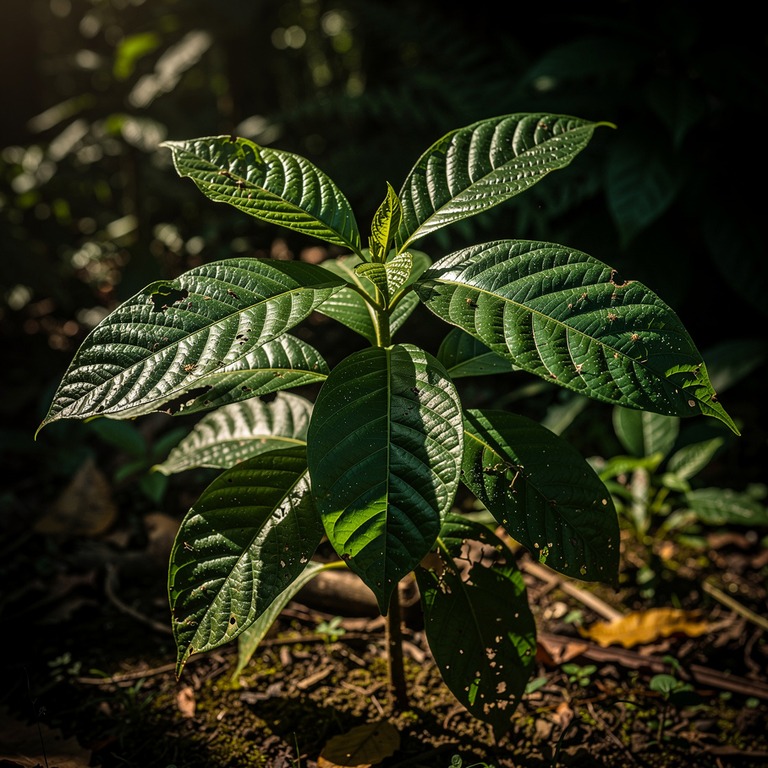
I don't want to overstate this, so I'll be direct. Ayahuasca doesn't erase the predictive shadow. Neither does psilocybin, ibogaine, or any of the master plants people travel great distances to sit with. What they can do — and what a lot of people describe after ceremony — is temporarily loosen the machinery enough that you can see it running.
People come out of ayahuasca ceremonies saying things like I saw how I've been treating everyone like they were my mother, or I watched myself flinch away from love for two hours straight. That kind of seeing is hard to get to through ordinary reflection because the predictive layer moves faster than conscious thought. Plant medicine, at its best, slows the layer down enough that the pattern becomes visible instead of just felt.
This is why so many people considering a psychedelic retreat are, underneath the surface story, hoping to interrupt something automatic. Addiction, depression, chronic anxiety, relationship patterns that repeat with different faces — a lot of these live in the predictive shadow. The work isn't glamorous. It's mostly noticing.
A Practice You Can Try Right Now
You don't need a ceremony to start with this. When you catch yourself sliding into the predictive shadow — the reflexive tightening around a neutral moment — try separating the situation into three honest columns:
- What actually happened. Just the observable facts. A woman looked at me. My friend didn't text back for four hours. My boss walked past without saying hello.
- What I predicted it meant. The story that arrived a half-second later. She thought I looked strange. He's angry at me. She's about to fire me.
- What I genuinely know. Almost always: very little. I cannot read faces reliably. I don't know what someone was thinking. They might be tired, unwell, distracted, or just have a resting expression that doesn't match their mood.
The point of the exercise isn't to force the feeling away. That doesn't work, and trying makes it louder. The point is to notice the gap between what happened and what your nervous system decided about it — and to stay in that gap a beat longer than usual. Long enough for the moment to be something other than memory replaying itself.
Integration Is Where the Real Work Lives
Anyone who's done real work with plant medicine will tell you the ceremony is maybe twenty percent of the process. The other eighty is what you do afterward, in the weeks and months when you're back at your kitchen table trying not to fall back into the old grooves.
The predictive shadow is patient. It's been running your interactions for decades. A single ayahuasca night, no matter how profound, won't unwrite it. What can start to shift the pattern is the repeated, unglamorous practice of catching it in the act — noticing the tightening, naming the prediction, and choosing to stay present anyway. That's integration. That's the work.
If any of this is resonating and you've been quietly wondering whether a retreat might help you interrupt patterns like these, a range of curated ayahuasca and plant medicine retreats can be browsed on our marketplace here. Whatever you choose, the more important part is this: if you're never wrong about people, you're also never fully present with them. You're just running a very accurate simulation of a past that isn't happening anymore.



Craving More Stories?
Join our ShopAyahuascaRetreats newsletter for the latest updates on thrilling
destinations and inspirational tales, delivered straight to your inbox!
We value your privacy. Your email address will never be shared or published.