 English
 Deutsch
 Français
 Nederlands
 Español
SHOP AYAHUASCA RETREATS BLOG
Staying on the Spot: A Meditation Practice for Building Real Resilience

Luca Reeves
September 1, 2026
Your ultimate guide to discover transforming ayahuasca and psychedelic experiences. Dive into serene destinations and elevate your consciousness to unparalled heights.
Discover Ayahuasca & Psychedelic Retreats NowSearch for ayahuasca & psychedelic retreats
Discover retreats, trainings, and holidays from all over the world
There's a phrase I keep coming back to: mind the business that belongs to you. It sounds like something a grandmother would say while shelling peas on a porch. But sit with it for a minute and it becomes something else — a quiet instruction for staying inside your own life when everything around you is pulling you out of it.
That pulling is the whole problem, isn't it? You wake up, check the phone before your feet hit the floor, and by 8 a.m. you've already loaned your attention to twenty strangers. By evening you can't remember what you actually thought about that day. Just what you reacted to. Meditation teachers have a name for the opposite of that scattering. They call it staying on the spot. Coming home to yourself. Returning, again and again, to the one place your attention actually belongs.
Why Staying With Yourself Is Harder Than It Sounds
Most of us think we're paying attention most of the time. We're not. We're time-sharing our nervous system with a hundred half-open browser tabs — the argument from last week, the email we haven't answered, the thing our sister said at Thanksgiving three years ago, the vague dread about Tuesday. The mind wanders. That's what minds do. The trouble isn't that it wanders; the trouble is we don't notice when it does, and we don't come back.
Staying on the spot is a small, honest practice. You sit. You breathe. When you notice you've left, you come back. That's basically the whole thing. It sounds too simple to matter, which is exactly why most people underestimate it. The people who actually do it, day after day, tend to become noticeably harder to knock off center. They're not calmer because life got easier. They're calmer because they stopped abandoning themselves every time something loud happened.
What This Practice Isn't
It isn't emptying your mind. Nobody empties their mind, and if a teacher tells you they do, they're either lying or they're a houseplant. It also isn't about achieving some special state. You're not chasing bliss. You're just learning to notice where your attention has drifted to, and gently escorting it back. Over and over. That's the whole reps-and-sets of it.
A Guided Practice: Coming Home to the Breath
Here's a version of the practice you can do in ten minutes, right now, wherever you're reading this. Read through it once, then try it. Or read a step, do the step, then read the next.
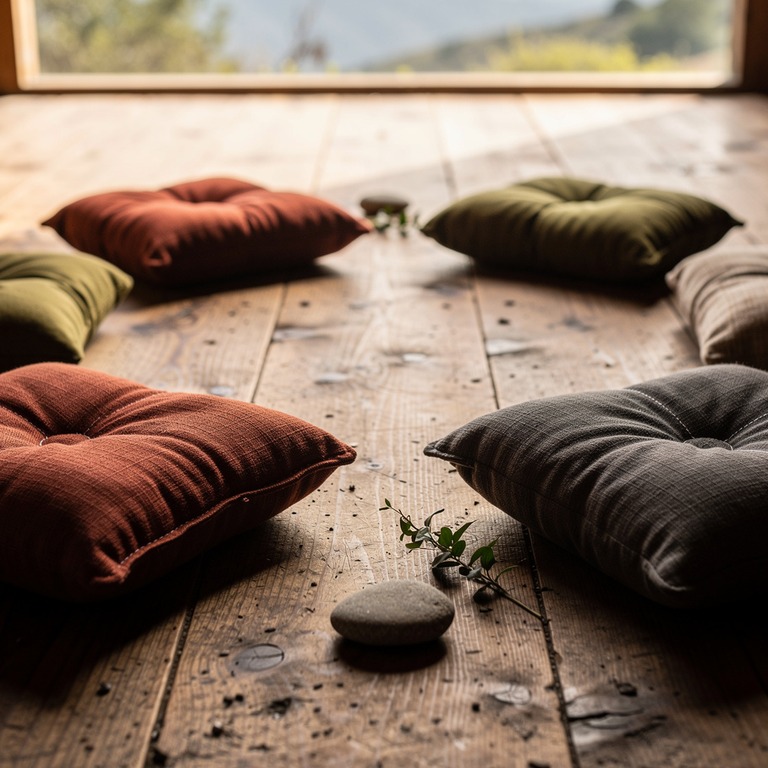
- Get comfortable. Sit however works for your body — a chair, a cushion, the edge of the bed. Spine tall but not stiff. Shoulders soft. Alert but not braced. If you're wound up, take a long exhale before you start. Longer than feels natural.
- Arrive. Close your eyes, or let your gaze soften and drop toward the floor a few feet in front of you. Notice you're here. Notice the sounds in the room. Notice the weight of your body against whatever's holding it up. You're not doing anything yet. You're just showing up.
- Find the breath. Let your attention settle on the sensation of breathing. Not controlling it — just watching. The air coming in, the air going out. Some people picture the breath as a welcome mat at the front door of themselves. Every inhale is a small hello, come in. Every exhale is a small you can rest here.
- Notice when you leave. You will. Everyone does. Somewhere around minute two you'll realize you've been mentally drafting a text message or replaying an old conversation. That noticing is the practice. It's not a failure — it's the whole point. Someone has to be the one who notices, and that someone is you waking up.
- Come back gently. No self-scolding. No ugh, I'm terrible at this. Just — oh, wandering — and return to the breath. If it helps, silently say breathing in, breathing out. Or count exhales one to ten, and when you lose the count (you will), start over at one. The goal isn't to reach ten. The goal is to notice and return.
- Thank yourself. Before you finish, place a palm on your chest for a moment. Acknowledge that you sat with yourself. That's not small. Most people go entire weeks without doing that.
- Come back to the room. Open your eyes. Take a normal breath. Notice if anything feels different, or if it doesn't. Either is fine.
Do that once a day for a couple of weeks and something shifts. Not dramatically at first. You just start catching yourself sooner — the moment before you snap at your partner, the moment before you doom-scroll for an hour, the moment before you say yes to something you don't want to do.
How This Practice Relates to Deeper Healing Work
Readers here often ask why we cover contemplative practices alongside plant medicine and psychedelic healing. The honest answer is that they're the same skill set at different volumes. A meditation practice teaches you to notice where your attention has gone and bring it back. A ceremony — ayahuasca, psilocybin, whatever the modality — puts that same capacity under much more intense conditions. If you've never practiced coming back to yourself in ordinary life, coming back to yourself in the middle of a difficult journey is going to be genuinely hard.
Facilitators I trust almost always ask new participants whether they have some kind of daily practice. Not because you need to be a monk to sit in ceremony. Because the people who tolerate the hard passages best are the ones who've learned, in small ways, to stay with discomfort instead of fleeing it. Ten minutes on a cushion isn't preparation for a psychedelic experience, exactly. But it's rehearsal for the same muscle.
What Meta-Attention Actually Is
There's a phrase for what happens when you notice you've been distracted. It's called meta-attention — paying attention to how you're paying attention. It sounds like jargon, but it's the entire game. The mind wanders; that's automatic. The noticing is not automatic. Meta-attention is what you're training, quietly, every time you catch yourself and return. Over months, it starts to show up outside of meditation too. You notice you're irritated before you say the thing. You notice you're bored before you reach for the phone. You notice you're sad instead of eating your way through the pantry.
That's the resilience part. Not stoicism. Not never getting knocked over. Just noticing sooner, coming back sooner, minding the business that actually belongs to you.

Making the Practice Stick
A few things I've watched help people actually keep this going, rather than abandoning it after week two:
- Same time, same place. The morning, before the day gets loud, is often easier. Attach it to something you already do — after brushing your teeth, before coffee.
- Short is better than nothing. Five minutes daily beats forty-five minutes on Sunday. This is a habit, not a heroic act.
- Expect a boring middle. Around week three, most people find it dull. That's normal. The dullness is often where the interesting shifts start happening underneath.
- Don't grade yourself. A session where you wandered a hundred times and came back a hundred times is a great session. That's a hundred reps.
- Find your people. Sitting alone works. Sitting with others, in a group or on a retreat, works faster. There's something about shared silence that deepens the practice in a way solo work rarely matches.
If this kind of contemplative foundation is something you want to explore in a more immersive setting — whether alongside plant medicine work or on its own — a range of retreats that weave meditation into their healing containers can be browsed on our marketplace here. Wherever you practice, though, the instruction stays the same: notice where you went, come home, thank yourself for showing up. That's the whole path, one breath at a time.


Craving More Stories?
Join our ShopAyahuascaRetreats newsletter for the latest updates on thrilling
destinations and inspirational tales, delivered straight to your inbox!
We value your privacy. Your email address will never be shared or published.