 English
 Deutsch
 Français
 Nederlands
 Español
SHOP AYAHUASCA RETREATS BLOG
Sharing a Mushroom Trip with a Partner: What Actually Happens

Finn Ashton
September 28, 2026
Your ultimate guide to discover transforming ayahuasca and psychedelic experiences. Dive into serene destinations and elevate your consciousness to unparalled heights.
Discover Ayahuasca & Psychedelic Retreats NowSearch for ayahuasca & psychedelic retreats
Discover retreats, trainings, and holidays from all over the world
Somewhere around the ninety-minute mark of my first shared psilocybin experience, my partner started laughing at a ceiling fan. Not a polite laugh. A full-body, tears-streaming, cannot-catch-breath laugh. I watched him for what felt like an hour before I realized I was laughing too, and neither of us could remember what had started it. That's the strange gift of taking mushrooms with someone you love — the interior world you usually keep private suddenly has a witness, and sometimes the witness is losing it right alongside you.
Couples ask about shared psychedelic experiences all the time. Is it romantic? Is it dangerous? Will it fix us or break us? The honest answer is: it depends on more variables than most people want to hear about. But if you're weighing whether to journey together — whether as part of a psychedelic retreat, a guided session, or something quieter at home — there are things worth knowing before you dose.
Why couples consider journeying together
People come to plant medicine and psychedelics for a lot of reasons, and pairs tend to arrive with a specific one: they want to see each other, or be seen, in a way ordinary life keeps blocking. Sometimes it's about deepening intimacy that has gone a bit stale. Sometimes it's about working through resentment that talk therapy hasn't cracked. And sometimes — this is the one people don't like to admit — it's about not wanting to go alone.
That last motivation isn't shameful, but it's worth naming. A psychedelic is not a security blanket. Bringing your partner because you're scared to face the medicine solo is different from choosing shared ceremony as a genuine relational practice. The first can go sideways fast; the second, done thoughtfully, can be one of the more remarkable things two humans do together.
Master plants and psychedelic compounds — psilocybin mushrooms, ayahuasca, San Pedro, even MDMA in the more therapy-adjacent contexts — have a long history of being used communally. What's newer, at least in the modern West, is the framing of the romantic dyad as the container. That's a very particular thing, and it deserves its own thinking.
What a shared trip actually feels like
Here's the thing nobody tells you: even when two people take the exact same dose from the exact same batch at the exact same time, you are not on the same trip. You are on two adjacent trips that occasionally intersect. Your partner's silence at hour two might mean bliss or might mean quiet terror, and unless you ask, you won't know which.
In the good stretches, shared journeys can produce moments of near-telepathic understanding — a look across the room that carries a whole conversation, an intuitive certainty about what the other person needs, a felt sense of the relationship as its own living thing separate from either of you. People describe seeing their partner as if for the first time, or noticing tenderness they'd been too armored to feel for months.
The harder stretches are harder because you cannot fully retreat. If unresolved conflict surfaces mid-trip — and it often does, because psychedelics have a way of dredging up whatever you've been avoiding — you can't exactly excuse yourself and go for a walk. You're in it. Together. For hours.
The intimacy question
A common assumption is that shared psychedelic experiences are inherently erotic. Sometimes they are. More often they're something else — a dissolution of the usual boundaries between two people that has nothing to do with sex. Many couples report that the deepest shared experiences involved barely touching each other, or lying in parallel silence for hours, or crying about something that happened years ago.
If you're going in hoping for a specific outcome — better sex, a proposal, a healing conversation — you'll likely miss whatever the medicine actually offers. Psychedelics are notoriously bad at delivering on agendas.
The risks people don't talk about
Let's get concrete. Shared psychedelic experiences carry all the standard considerations — physical safety, mental health history, medication interactions, legal status where you live — plus a relational layer that solo work doesn't have.
- Emotional contagion. If one person spirals into a difficult passage, the other often follows. This can amplify a hard experience considerably.
- Power dynamics. If there's any imbalance in your relationship — one person more dominant, more anxious, more experienced with psychedelics — it will show up magnified. Sometimes usefully. Sometimes not.
- Buried material surfacing at the wrong moment. An affair you never disclosed, a resentment you've been sitting on, a doubt about the relationship — psychedelics tend to bring these up whether you're ready or not.
- No neutral witness. When you journey alone with a trained facilitator or sitter, there's someone whose only job is to hold space. When you journey as a couple with no third party, you're each other's sitter — and if things get hard, that's a lot to ask.
None of this means don't do it. It means don't do it casually. The couples I've seen have the most integrative shared experiences are the ones who spent weeks preparing, worked with a facilitator or therapist beforehand, and had a plan for what to do if the session went somewhere unexpected.
How to prepare if you're thinking about it
Preparation for a shared psychedelic experience is really two kinds of preparation running in parallel: your individual work, and the relational work between you. Skip either one and the trip gets harder to metabolize afterward.
On the individual side, the usual guidance applies. Get honest about your mental health history — psilocybin and other psychedelics carry real risks for people with certain psychiatric conditions or on certain medications, particularly SSRIs and lithium. Read about set and setting until you're sick of the phrase. Consider whether you've done any solo work with the medicine first, because journeying together for the first time on your first-ever experience is a lot to hold.
On the relational side, there are conversations most couples avoid that suddenly become non-optional:
- What do you each want from this — specifically, honestly, without softening it for the other person?
- What are you afraid might come up? Name it before the medicine names it for you.
- What's your agreement if one of you needs space during the experience? Silence? A separate room? A signal?
- Who's sitting for you, if anyone? Is there a facilitator, a trusted friend, a professional? Or are you truly alone in the house?
- What's your integration plan for the days and weeks after — because that's when the real work happens.
Couples who take this preparation seriously often end up saying the conversations before the ceremony were as valuable as the ceremony itself. Which, if you think about it, is quietly telling.
Should you do it at a retreat or at home?
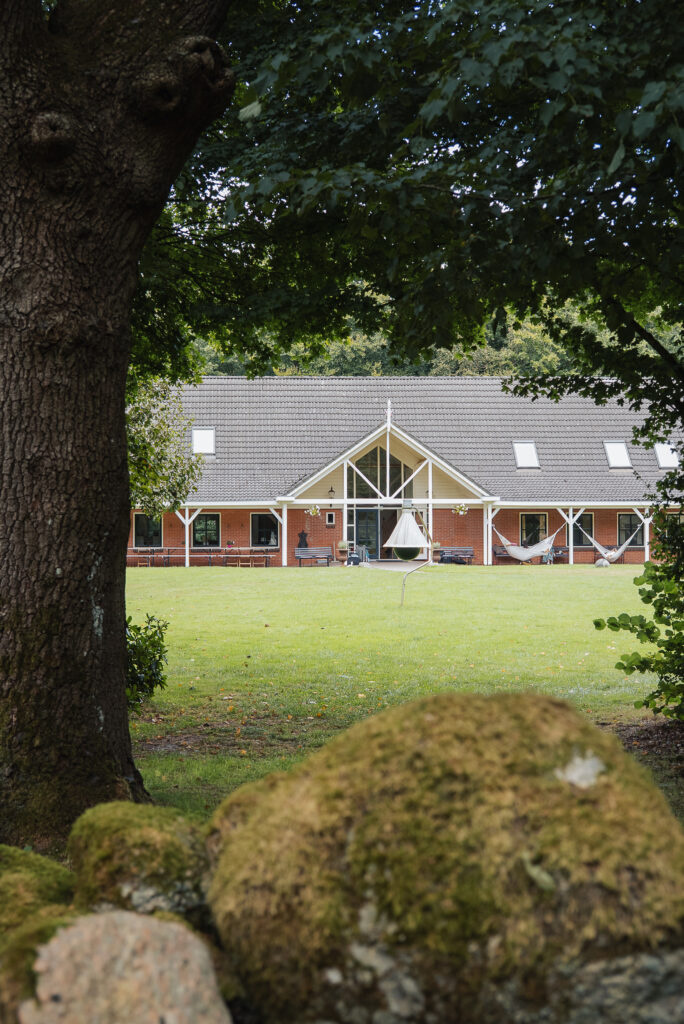
This is the question I get asked most, and the honest answer is: for most couples considering their first shared psychedelic experience, a professionally facilitated retreat is the safer container. Not because home experiences can't be beautiful — they absolutely can — but because a retreat provides three things that are hard to replicate on your own kitchen floor: a trained facilitator who can intervene if something goes hard, other people who are not you or your partner (which matters more than you'd think), and a structured integration process afterward.
Some retreats explicitly welcome couples and have experience holding relational dynamics in the container. Others prefer that partners attend as individual participants and process separately. Both approaches have merit. If you're leaning toward a retreat, ask directly how they handle couples — the answer will tell you a lot about how thoughtful the operation is.
At-home experiences work best for couples who already have significant individual experience with the medicine, a strong relationship baseline, and a clear plan. They also require honest conversations about legality where you live, which for most readers in most places means this is not casual territory.

Integration is where the trip actually happens
The mistake couples make most often isn't during the journey — it's after. The days and weeks following a shared psychedelic experience are when the material either integrates into your relationship or dissolves back into forgetfulness. Insights that felt permanent at hour four have a way of fading by day ten if nothing structural changes.
Concretely, that means: talking about what came up, even the parts that were uncomfortable. Journaling separately before comparing notes, so you don't accidentally rewrite each other's memories. Not making major life decisions in the first two weeks, because your judgment is calibrated differently than usual. And — this one matters — being patient with each other during the emotional weather that often follows a big journey.
Some couples find working with an integration therapist or coach makes a real difference, particularly if the experience surfaced something significant. Others do their integration through long walks and honest conversations. There's no single right way, but there is one wrong way, which is pretending the experience was just a fun evening and moving on.
A last honest word
Sharing a psychedelic experience with a partner is not a shortcut to intimacy, nor is it a repair tool for a struggling relationship. What it can be, done with care, is a form of shared vulnerability that most couples never access — a few hours in which two people who thought they knew each other completely find out they've been missing entire rooms.
If you're seriously considering this and want to explore a supported setting rather than going it alone, a range of couples-friendly psilocybin and plant-medicine retreats can be browsed on our marketplace here. Whatever you decide, take the preparation as seriously as the medicine itself — the couples who do are almost always glad they did.
Craving More Stories?
Join our ShopAyahuascaRetreats newsletter for the latest updates on thrilling
destinations and inspirational tales, delivered straight to your inbox!
We value your privacy. Your email address will never be shared or published.