 English
 Deutsch
 Français
 Nederlands
 Español
SHOP AYAHUASCA RETREATS BLOG
Self-Compassion Meditation: A Quiet Practice for Anyone Doing Deep Inner Work

Stella Vance
September 23, 2026
Your ultimate guide to discover transforming ayahuasca and psychedelic experiences. Dive into serene destinations and elevate your consciousness to unparalled heights.
Discover Ayahuasca & Psychedelic Retreats NowSearch for ayahuasca & psychedelic retreats
Discover retreats, trainings, and holidays from all over the world
There's a moment that catches almost everyone off guard on a psychedelic retreat. It usually shows up on night two or three, somewhere between the icaros and the sweat. You've spent hours watching your own patterns play out on the inside of your eyelids, and suddenly the loudest voice in the room is the one in your own head. And it isn't kind.
That voice — the inner critic, the self-judge, whatever you want to call it — is one of the biggest obstacles to real healing from ayahuasca, psilocybin, ibogaine, and other master plants. You can drink the medicine. You can sit with the best facilitators in Peru or Costa Rica. But if the part of you receiving the experience is still fundamentally at war with itself, the insights don't fully land. They bounce off. This is why almost every experienced facilitator I've spoken with keeps returning to the same quiet skill: self-compassion. And why a short daily practice, learned before you ever step into the ceremony space, might be the most underrated preparation you can do.
Why Self-Compassion Matters More Than You Think in Plant Medicine Work
Ayahuasca in particular has a reputation for showing people the parts of themselves they've spent decades avoiding. Old shame. Patterns from childhood. The specific ways you've hurt people or been hurt. The addictions you've built to avoid feeling any of it. This isn't a bug of the medicine — it's arguably the point. But without something to hold all of that with, the experience can curdle into a very long night of self-loathing.
Self-compassion is that holding. It's not the same as self-esteem, which is fragile and depends on you being impressive. It's not letting yourself off the hook either. It's the capacity to meet what's arising — the mess, the grief, the parts you don't like — without turning on yourself. In psychedelic-assisted recovery work, particularly with addiction, this capacity is often the difference between a breakthrough and a re-traumatisation.
Here's the awkward truth: most of us are astonishingly bad at it. We can extend patience to a struggling friend without a second thought. When it comes to ourselves, we ration kindness like it's a scarce resource. A short meditation practice, done regularly, starts to change that ratio.
A Twelve-Minute Self-Compassion Practice You Can Actually Do
What follows is a script you can read slowly — pausing after each step for a breath or two — or record on your phone and play back. It draws on classic loving-kindness and compassion practices from the vipassanā tradition, adapted for people who are preparing for or integrating a plant-medicine experience. Nothing exotic. No incense required.
- Turn your attention inward. Soften your eyes, whether they're closed or half-open. Let your shoulders drop a full inch. Notice where the body is holding on and, without forcing anything, let it hold on a little less.
- Set an intention to meet yourself as you actually are. Not the improved version. Not the one you'll be after the next ceremony. The one who showed up this morning, with the specific mood and the specific worries.
- Bring to mind someone you already feel compassion for. A close friend going through something. A family member. Even a pet. Notice what that soft, protective feeling is like in the body. That's the raw material.
- Imagine that person turning their attention toward you. They see what's hard about your life right now. They aren't offering advice or trying to fix you. They're just present, with the same gentleness you'd offer them.
- Silently offer yourself a few simple phrases. Something like: I care about what's hard for me. May I be held with compassion. May my heart be at peace. The phrases matter less than the direction — kindness, pointed inward.
- Notice what pushes back. A voice that says you don't deserve it. Numbness. Irritation. Whatever shows up is exactly what needs the compassion. Don't argue with it. Just keep offering.
- Sit with whatever is here for another minute or two. Then, when you're ready, open your eyes.
That's it. Twelve minutes, give or take. If you do this for a week straight before a retreat, you'll notice something has shifted in how you talk to yourself when the medicine starts working.
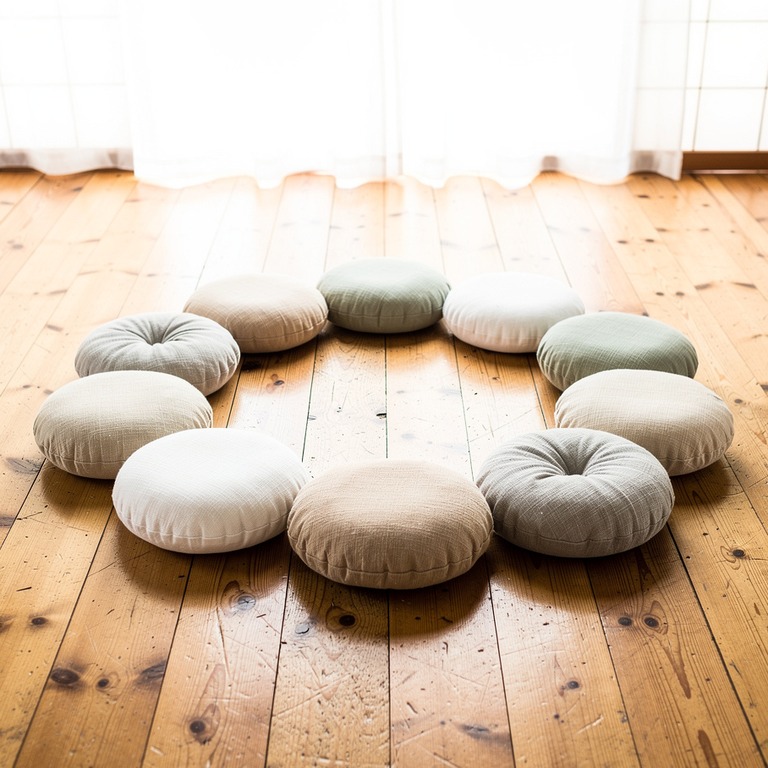
How This Practice Weaves Into Ayahuasca and Psychedelic Preparation
Most reputable ayahuasca retreats these days include some form of preparation guidance — the dieta, dietary restrictions, journaling prompts, sometimes group calls in the weeks before you arrive. What almost none of them can do for you, from a distance, is build the interior muscle of self-kindness. That's homework, and it's the kind of homework that pays off in ways you won't fully appreciate until you're three hours into a ceremony wondering why your chest is on fire.
Facilitators I trust often say something like this: the medicine will show you what needs to be seen; your job is to be someone who can bear to look. Self-compassion is what makes looking bearable. It's what lets you sit with the memory of the person you were during your drinking years, or the way you treated a partner, or the version of you who's been quietly depressed for a decade — without collapsing into shame or dissociating away.
For readers considering plant medicine for addiction specifically, this matters double. Addiction runs on shame. It uses shame as fuel. Any psychedelic-assisted recovery work that doesn't include a strong self-compassion component tends to leave the deeper engine running. Ibogaine can interrupt the physical craving. Ayahuasca can show you the pattern. But integrating either into a lasting change requires you to be able to look at yourself with something other than contempt.

What to Do When Self-Compassion Feels Impossible
Here's where I'll be honest. When people first try this practice, a fair number of them report that it doesn't work — or worse, that it makes them feel awful. Offering kindness to yourself surfaces the very belief that you don't deserve it. That's not a sign the practice is failing. That's the practice working exactly as designed.
A few things that help when this happens:
- Start smaller. If offering yourself compassion feels fake, offer it to a version of you from long ago — you at seven, you at twelve. That's often more accessible.
- Drop the phrases if they feel hollow. Just place a hand on your chest (yes, this is a somatic thing, and yes, it works) and breathe. The gesture alone is doing something.
- Don't chase a specific feeling. The point isn't to feel warm and fuzzy. The point is to change your relationship to what's already here.
- Give it two weeks before you decide. Compassion practices are cumulative. The first session often feels like nothing. The tenth often doesn't.
If you're preparing for a retreat and this practice consistently brings up material that feels too big to hold alone — old trauma, active suicidal ideation, dissociation — that's important information. Bring it to the retreat intake conversation. A good facilitator will want to know. A great one will help you decide whether now is the right time to sit with the medicine at all.
Bringing It All Together
The plant medicines get most of the attention in this space, and I understand why. They're dramatic. They rearrange furniture inside people that talk therapy couldn't move in a decade. But the quieter practices — the ones you do alone, in the morning, without any substance at all — are what determine whether the dramatic experience actually becomes a changed life.
Self-compassion isn't glamorous. It won't show up in anyone's retreat highlights reel. It's just the slow, patient work of learning to be on your own side. Do it for a few weeks before you sit with ayahuasca, ibogaine, psilocybin, or any of the master plants, and you'll walk into the ceremony space as a different kind of listener — one the medicine actually has a chance of reaching.
If you're weighing whether to book a retreat and want to see what's actually out there, a curated range of ayahuasca and plant-medicine retreats can be browsed on our marketplace here. Take your time with the decision. And in the meantime — twelve minutes tomorrow morning. See what happens.

Craving More Stories?
Join our ShopAyahuascaRetreats newsletter for the latest updates on thrilling
destinations and inspirational tales, delivered straight to your inbox!
We value your privacy. Your email address will never be shared or published.