 English
 Deutsch
 Français
 Nederlands
 Español
SHOP AYAHUASCA RETREATS BLOG
Psilocybin vs Psilocin: What's Actually Happening Inside a Magic Mushroom
Axel Hartley
May 24, 2026
Your ultimate guide to discover transforming ayahuasca and psychedelic experiences. Dive into serene destinations and elevate your consciousness to unparalled heights.
Discover Ayahuasca & Psychedelic Retreats NowSearch for ayahuasca & psychedelic retreats
Discover retreats, trainings, and holidays from all over the world
If you've spent any time researching psilocybin mushrooms — maybe because you're weighing up a retreat, maybe because a friend won't shut up about microdosing — you've probably bumped into two words that get used almost interchangeably: psilocybin and psilocin. They sound like the same thing. They're not. And the difference, while small on paper, matters a lot once those molecules are inside your body doing their work.
Here's the short version. Psilocybin is what's in the mushroom. Psilocin is what actually gets you high. One is a prodrug — basically a delivery package — and the other is the active ingredient your brain responds to. Everything else in this article is just unpacking that single distinction and why it shapes the experience of a psychedelic retreat or ceremony.
What Is Psilocybin, Exactly?
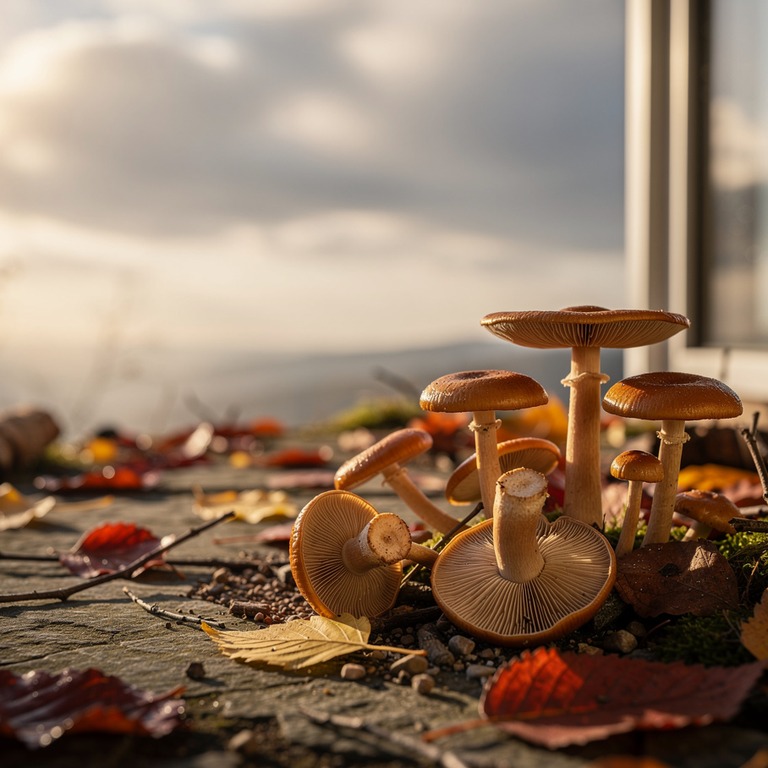
Psilocybin is the naturally occurring compound found in more than 200 species of mushrooms — most famously the various Psilocybe species, including P. cubensis, P. semilanceata (liberty caps), and P. azurescens. Chemically, it's classed as a tryptamine, which means it shares a structural backbone with serotonin, the neurotransmitter that regulates mood, sleep, and a long list of other things you generally want regulated.
The molecule itself is technically called 4-phosphoryloxy-N,N-dimethyltryptamine. That phosphoryl group hanging off the front is the important bit — it's why psilocybin, on its own, doesn't actually do much. Swallow it in its pure form and it just sits there politely, waiting to be transformed. Your stomach acid and an enzyme called alkaline phosphatase do the work of stripping that phosphate off, and what's left behind is psilocin. The real deal.
This is why psilocybin is described as a prodrug — a compound that has to be converted in the body before it becomes pharmacologically active. Most of the psilocybin you ingest is metabolised within roughly 20 to 40 minutes, which lines up neatly with how long it usually takes for the first effects of a mushroom dose to creep in.
So What's Psilocin Then?
Psilocin is psilocybin minus that phosphate group — known to chemists as 4-hydroxy-N,N-dimethyltryptamine, or 4-HO-DMT if you like things spicy. It's the molecule that actually binds to your serotonin receptors and produces the experience people travel halfway around the world to have.
The receptor that matters most here is the 5-HT2A receptor, found throughout the cortex. When psilocin docks onto it, the brain's normal hierarchy of activity gets reshuffled. Regions that don't usually talk to each other start chatting. The default mode network — the network associated with self-referential thinking, ego, the running monologue of "I, me, mine" — quiets down. That quieting is what researchers increasingly believe gives psychedelics their therapeutic punch.
Psilocin is also present in fresh mushrooms in smaller amounts than psilocybin, but it degrades quickly. This is part of why dried mushrooms are more predictable to dose than fresh ones, and why a mushroom that's been sitting in a damp bag for two weeks may have lost some of its kick.
Why Does the Difference Actually Matter?
For someone considering a psilocybin retreat or ceremony, the practical answer is: it doesn't change what you eat, but it changes how you understand what's happening to you. Mushrooms contain psilocybin. Your body converts it to psilocin. Psilocin is what produces the trip. That's the chain.
But there are a few real-world implications worth knowing:
- Onset time. Because your body has to do the conversion work, mushrooms take longer to come on than synthetic psilocin would. Most people feel the first stirrings 20 to 45 minutes after eating dried mushrooms on an empty stomach. Lemon tek (soaking ground mushrooms in citrus juice) is rumoured to begin some of that conversion outside the body, which is why people swear it hits faster and harder, though the science here is thinner than the internet would have you believe.
- Duration. A typical psilocybin journey lasts four to six hours. That's because psilocin has a half-life of around 50 minutes and gets steadily broken down and excreted. Knowing this helps if you're an hour in and panicking — there's a finite arc to this.
- Legal status. In most jurisdictions, both psilocybin and psilocin are scheduled. A few places — Oregon's regulated service centres, parts of Australia for treatment-resistant depression, and the famously grey-area truffle scene in the Netherlands — have carved out exceptions. If you're researching a retreat, the legal framework of the country you're flying to is something you want to verify rather than assume.
- Dosage predictability. Mushroom potency varies between species, between batches of the same species, and even between caps and stems on the same mushroom. This is one reason facilitated retreats tend to feel safer than dosing yourself from a bag someone handed you — experienced ceremony leaders know how to read their batch.
What This Means If You're Considering a Psilocybin Retreat
People come to psilocybin for all kinds of reasons. Depression that hasn't budged after three antidepressants. Grief that's calcified into something that no longer feels like grief. Addiction patterns. End-of-life anxiety. The general sense that something in their life has gone quietly wrong and conventional tools haven't fixed it. Plant medicine and psychedelic healing have moved from fringe to almost-mainstream over the last decade for a reason — clinical trials at Johns Hopkins, Imperial College London, and NYU have produced results that are genuinely hard to ignore.
But the molecule is only part of the picture. What actually does the therapeutic work is the combination of psilocin in your bloodstream, a safe and intentional setting, skilled facilitation, and — critically — what you do in the weeks and months after the experience. Integration is where the real change happens or doesn't. A weekend of profound visions followed by going back to the same routines tends to produce a great story and not much else.
When you're evaluating a retreat, the chemistry is a given. What's not a given is the quality of preparation, the facilitator-to-participant ratio, the medical screening (psilocybin is contraindicated with SSRIs, lithium, and certain heart conditions, among other things), and the integration support afterwards. Ask about all of it. A reputable place will answer plainly. A sketchy one will dodge.
A Quick Word on Master Plants and the Broader Picture
Psilocybin mushrooms sit within a much wider family of what indigenous traditions call master plants — plant teachers used for centuries in healing and ceremonial contexts. Ayahuasca, San Pedro, peyote, iboga, and psilocybin mushrooms all belong, loosely, to this lineage, though each has its own culture, chemistry, and risks. Mushrooms don't have the same multi-thousand-year Amazonian ceremonial tradition that ayahuasca does, but indigenous use of psilocybin in Mesoamerica — particularly by the Mazatec people in Oaxaca — goes back centuries and shaped how the modern psychedelic revival understands these compounds at all.
The reason this context matters: a retreat is not just about ingesting a chemical. The container around it — the music, the silence, the facilitator's experience, the people sitting next to you — is at least half of what determines whether the experience lands as healing or as a long, confusing night.
The Honest Caveats
Psilocybin is generally considered one of the physically safer psychedelics — non-addictive, low toxicity, no recorded overdose deaths from the substance itself. That doesn't mean it's safe for everyone. People with a personal or family history of schizophrenia or bipolar disorder are usually screened out of clinical trials and reputable retreats for good reason. Bad trips happen. They're not always catastrophic, but they're not always quickly metabolised either — psychological aftershocks can linger for weeks.
Also worth saying plainly: psychedelics are not a shortcut. They can crack something open, but you still have to do the work of building something different in the space that opens up. The mushrooms don't do that part. You do.
If any of this lands for you, and you're at the stage of looking into where and how to do this properly, a curated selection of psilocybin retreats can be browsed on our marketplace here. Take your time with the decision — the right retreat is worth waiting for.
Craving More Stories?
Join our ShopAyahuascaRetreats newsletter for the latest updates on thrilling
destinations and inspirational tales, delivered straight to your inbox!
We value your privacy. Your email address will never be shared or published.