 English
 Deutsch
 Français
 Nederlands
 Español
SHOP AYAHUASCA RETREATS BLOG
Psilocybin vs. LSD: Which Psychedelic Is Right for Your Healing Journey?
Axel Hartley
August 16, 2026
Your ultimate guide to discover transforming ayahuasca and psychedelic experiences. Dive into serene destinations and elevate your consciousness to unparalled heights.
Discover Ayahuasca & Psychedelic Retreats NowSearch for ayahuasca & psychedelic retreats
Discover retreats, trainings, and holidays from all over the world
The question comes up in almost every conversation I have with people considering their first serious psychedelic experience: mushrooms or LSD? It sounds like a matter of taste, like picking red wine over white. It isn't. These two substances behave differently in the body, feel different in the mind, and tend to serve different kinds of inner work. Choosing between them — or deciding they're both worth exploring — is a real decision, and it deserves more than a Reddit shrug.
I've sat with both. I've watched close friends have life-shifting experiences with psilocybin and equally profound ones with LSD. I've also seen people pick the wrong molecule for their situation and spend eight hours wishing they'd chosen differently. So let's walk through what actually separates these two, why it matters for anyone considering a psychedelic retreat or ceremony, and how to think about which one might suit you.
Two Very Different Molecules, Two Very Different Rides
Psilocybin is the psychoactive compound in what most people call magic mushrooms — dozens of species in the Psilocybe genus, growing on every inhabited continent. Humans have been eating them ceremonially for thousands of years. The Mazatec people of Oaxaca were using them in healing rituals long before Western scientists ever heard the word. Psilocybin converts to psilocin in your body, binds to serotonin receptors, and shows you something. What it shows you tends to feel old. Earthy. Bodied.
LSD is a laboratory child. Albert Hofmann synthesized it in 1938 from ergot fungus, discovered its psychoactive punch by accident five years later, and gave the twentieth century a new tool for exploring consciousness. It's a semi-synthetic molecule active at doses measured in micrograms — extraordinarily potent by weight. It also hits serotonin receptors, but with a different affinity profile, and the experience it produces reflects that. Cleaner, in a sense. More electric. More architectural.
Both are classic serotonergic psychedelics. Both can produce ego dissolution, mystical experiences, and lasting shifts in perspective. But the texture of the two journeys is genuinely distinct, and that texture matters more than most first-timers realize.
What Do Mushrooms Actually Feel Like?
A moderate psilocybin dose — say, 2 to 3.5 grams of dried Psilocybe cubensis — usually comes on within 30 to 60 minutes. There's often a wave of nausea in the first hour. Your body might feel heavy, or trembly, or both. Colors deepen. Patterns emerge in wood grain, in fabric, in the veins of leaves. And then, somewhere in hour two, the thing you came for arrives.
People often describe mushrooms as feeling alive — as if there's an intelligence in the experience meeting them halfway. This is why psilocybin sits so comfortably alongside ayahuasca and other master plants in the plant medicine world. It has a personality. It can be tender. It can also be blunt in ways that leave you laughing and crying at the same time. Emotional material tends to come up in waves, often connected to specific memories, relationships, or unresolved grief.
The whole experience typically runs four to six hours, with a gentle taper. The comedown is usually kind. Many people sleep well the night of a mushroom journey and wake up quiet, reflective, sometimes changed in ways they can't yet articulate. That afterglow is one reason psilocybin has become the darling of clinical research into depression, end-of-life anxiety, and addiction recovery.
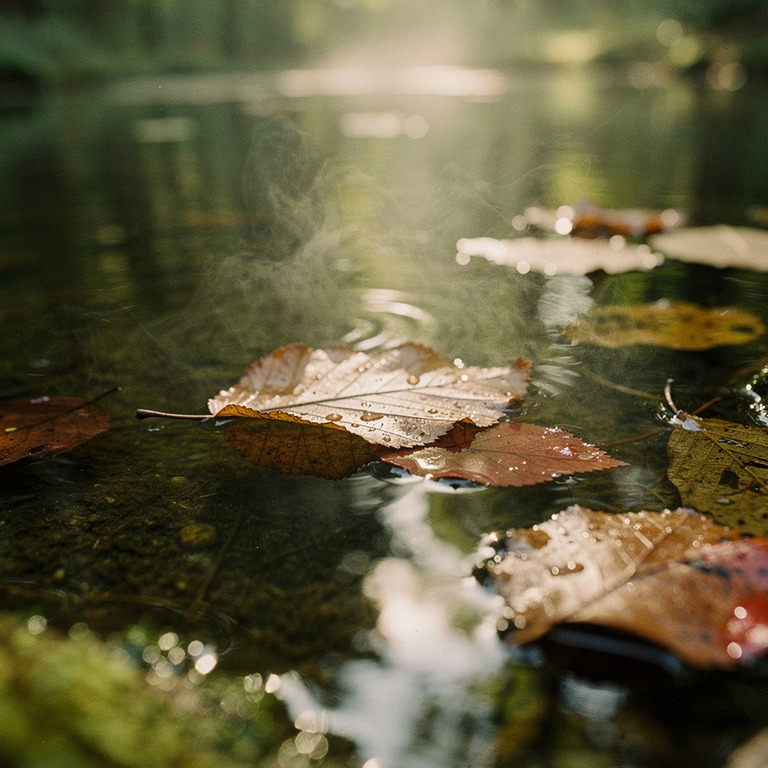
What Does LSD Actually Feel Like?
LSD is a longer trip — 8 to 12 hours is normal, and the last stretch can drag if you're tired. The come-up is subtler than mushrooms and less physical. You don't get that gut-level nausea. Instead you get a slow-building buzz, a sharpening of the visual field, a sense that your mind is speeding up while the world is holding still.
The character of an LSD experience skews cerebral. Ideas cascade. Connections between disparate concepts feel obvious and important. Visuals are often geometric — fractals, breathing walls, tracers, the shimmer of pattern behind ordinary surfaces. Emotionally, LSD can be intense, but it's rarely as tender as psilocybin. It's more likely to hand you a philosophical breakthrough than a good cry. That's a generalization, of course. Set and setting shape everything.
LSD also has more of a stimulant edge. Your jaw might clench. Sleep won't come easily even after the trip ends. Some people love this quality — the sustained clarity, the long runway for exploring an idea or a landscape. Others find it exhausting, especially in the final hours when the visuals fade but the wakefulness lingers.
Which One Is Better for Healing Work?
Here's where the choice really matters. If your interest in psychedelics is therapeutic — if you're circling this question because of depression, anxiety, addiction, trauma, or a stuck life pattern — psilocybin is usually the more suitable starting point. There are a few reasons.
- Duration. A 5-hour experience is easier to hold, easier to integrate, and easier to fit into a ceremonial container than a 10-hour marathon.
- Emotional accessibility. Mushrooms tend to open the heart more directly. For trauma work, that matters.
- Research base. The clinical trials showing psilocybin's promise for treatment-resistant depression, alcohol use disorder, and existential distress in cancer patients are substantial and growing. LSD has less recent clinical scaffolding, though that's slowly changing.
- Ceremonial fit. Most reputable psychedelic retreats offering non-ayahuasca work use psilocybin — whether in the form of mushroom tea, dried fruit, or truffles in the Netherlands, where Psilocybe truffles remain legal.
LSD has its place. Some people, especially those wrestling with rigid thinking, creative blocks, or entrenched worldviews, find that LSD's cognitive flexibility is exactly the medicine they need. It's also easier to microdose consistently because the material is stable and precisely dosable. But for the kind of deep, felt-sense healing that draws most people to plant medicine, mushrooms tend to be the better tool.
How to Choose If You're Booking a Retreat
Most people don't actually get to choose the molecule at a retreat — they choose the retreat, and the medicine comes with it. Ayahuasca retreats offer ayahuasca. Psilocybin retreats offer psilocybin. LSD retreats are much rarer, partly because of legal risk and partly because the long duration doesn't lend itself to a traditional ceremonial format.
So the real practical question is: what kind of experience are you drawn to? If you want the earthy, embodied, plant-medicine texture — ayahuasca or psilocybin. If you want something more cerebral and less rooted in indigenous tradition, LSD is harder to find in a supported retreat setting but does exist in some European contexts. Ask yourself:
- Am I looking to feel something I've been avoiding, or think something I haven't been able to think?
- How long a session do I have the stamina for?
- Do I want a facilitator with roots in a specific tradition, or a more clinical, secular container?
- What's my nervous system like on a hard day — does it need softening or sharpening?
Your honest answers point somewhere. A skilled facilitator can help you sort the rest.
Safety, Legality, and the Boring but Important Stuff
Both substances are classic psychedelics with excellent physiological safety profiles at recreational and ceremonial doses. Neither is addictive in the pharmacological sense. Neither has a known lethal dose in humans through direct toxicity. That said, they are not without risk.
People with personal or family histories of schizophrenia, bipolar I, or psychotic disorders should generally avoid both. SSRIs blunt the effects and can complicate the experience. Certain heart conditions raise the stakes. And the psychological risk — a genuinely difficult trip that leaves you shaken for weeks — is real for anyone, especially without proper support. This is the argument for doing this work in a container with experienced people rather than solo in your apartment on a Tuesday.
Legally, psilocybin is decriminalized or legally accessible in a growing number of jurisdictions — Oregon and Colorado in the U.S., the Netherlands for truffles, Jamaica for mushrooms outright. LSD remains a controlled substance in nearly every country. This is another reason you'll find far more psilocybin retreats than LSD ones.
The Honest Answer
If someone asked me which I'd recommend for a first serious psychedelic experience with healing intentions, I'd say mushrooms, in a proper setting, with people who know what they're doing. If they asked me which I'd recommend for a curious mind wanting to expand its philosophical horizons on a long free Saturday with a trusted friend, I might say LSD. Neither answer is universal. Both are honest.
The deeper truth is that the molecule matters less than the container. A well-held psilocybin ceremony with skilled facilitators will do more for you than a chaotic LSD session with acquaintances, and vice versa. Preparation, intention, setting, and integration shape the outcome as much as the substance itself. If you're drawn to explore psilocybin in a supported ceremonial setting, a curated range of psilocybin retreats can be browsed on our marketplace here. Take your time with the decision. This is worth doing well.

Craving More Stories?
Join our ShopAyahuascaRetreats newsletter for the latest updates on thrilling
destinations and inspirational tales, delivered straight to your inbox!
We value your privacy. Your email address will never be shared or published.