 English
 Deutsch
 Français
 Nederlands
 Español
SHOP AYAHUASCA RETREATS BLOG
Psilocybin Mushrooms and Human Consciousness: Ancient Roots, Modern Healing
Fiona Holloway
June 16, 2026
Your ultimate guide to discover transforming ayahuasca and psychedelic experiences. Dive into serene destinations and elevate your consciousness to unparalled heights.
Discover Ayahuasca & Psychedelic Retreats NowSearch for ayahuasca & psychedelic retreats
Discover retreats, trainings, and holidays from all over the world
Here's a fact that takes a second to sit with: psilocybin — the molecule responsible for the visions, the ego-loss, the long quiet weeping that people describe after a mushroom ceremony — has been around roughly 65 million years longer than we have. The little brown caps people now line up to take in clinical trials were already making their compound when the dinosaurs were still smoking. We are the newcomers in this relationship, not the mushrooms.
That single piece of context changes how the conversation around psychedelics and addiction lands. We aren't inventing anything. We're catching up to something that humans have been working with — ritually, medicinally, carefully — for thousands of years. And the science finally has the tools to ask why it works.
What the Genomic Research Actually Tells Us
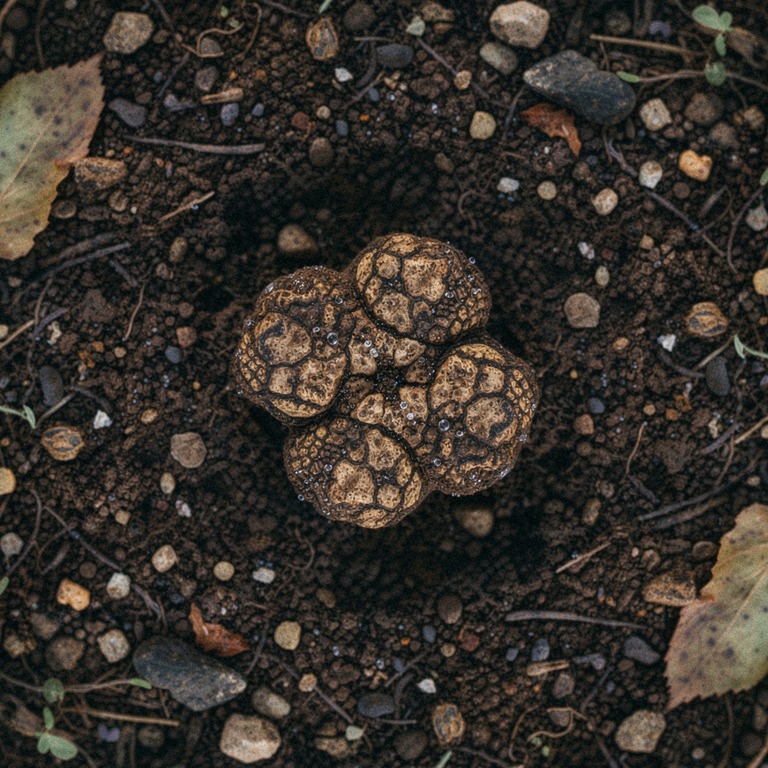
A 2024 paper in the Proceedings of the National Academy of Sciences sequenced dozens of Psilocybe species, many of them rare specimens pulled out of museum drawers. The researchers traced the gene cluster responsible for producing psilocybin and psilocin and found two distinct genetic patterns within it. The split between those two lineages happened around 57 million years ago. The capacity to produce the compound itself? Roughly 65 million years old — emerging right around the time non-avian dinosaurs were on their way out.
This matters for a few reasons. First, it suggests psilocybin isn't an evolutionary accident. Mushrooms that put energy into building a complex psychoactive molecule presumably got something out of it — possibly defense against insects, possibly something subtler involving the soil microbiome. Second, it confirms that the relationship between fungi and animal nervous systems is ancient and ongoing. Our brains and these molecules co-evolved on the same planet, in overlapping ecological niches, for tens of millions of years.
The practical upside of mapping the genetics is that scientists can now study how psilocybin is synthesized at the molecular level. That opens doors for cleaner therapeutic formulations and a better understanding of why slightly different mushroom species produce dramatically different experiences.
A Three-Thousand-Year Track Record
Long before any of this was in a peer-reviewed journal, the people of Mesoamerica were eating these mushrooms for serious reasons. The Mazatec called them teonanácatl — "flesh of the gods." Archaeological evidence places ceremonial use back at least three thousand years, threading through the Aztec, the Mixtec, and into living traditions you can still encounter today in Oaxaca.
This wasn't recreation. Mushrooms were consumed by healers and religious authorities, in specific settings, with specific intentions: contacting ancestors, diagnosing illness, settling grief, asking questions of the unseen. Stone carvings and pre-Columbian codices depict the experience and its spiritual weight. Similar fungal traditions show up on other continents, with different species and different cosmologies but a remarkably consistent thread — the idea that certain mushrooms are teachers, not products.
The continuity matters. When something keeps reappearing across unrelated cultures over millennia, it's worth taking seriously even if you don't share the metaphysics. The framing those cultures used — preparation, ceremony, an experienced guide, a return ritual afterward — turns out to track surprisingly well with what current clinical protocols are reinventing under different names.
Why Researchers Keep Coming Back to Addiction
Of all the things modern trials have looked at, the results in addiction recovery are some of the most striking. Studies at Johns Hopkins on smoking cessation have shown abstinence rates that conventional pharmacology can only dream about. Trials for alcohol use disorder have produced sustained reductions in heavy drinking days. Smaller studies have looked at cocaine and opioid use with cautiously promising results.
What seems to be happening, mechanistically, is a window of neuroplasticity. Psilocybin temporarily loosens the grip of habitual brain networks — especially the default mode network, which is the chatter-loop most of us live inside. For a few hours, the rigid patterns that keep addiction running on autopilot become negotiable. People often describe seeing their own behavior from outside, without the usual defensiveness. Then comes the hard part: the integration weeks that follow, when those insights either get embedded into daily life or fade back into noise.
This is why the substance alone isn't the medicine. A pill in a sterile room is not the same intervention as a held, prepared experience with skilled support before and after. The traditions knew this. The clinical data is now confirming it.
What the trials are showing in plain language
- Treatment-resistant depression — meaningful reductions in symptoms sustained for months after one or two sessions in several controlled studies.
- End-of-life anxiety in cancer patients — significant drops in death anxiety, often persisting for years.
- Smoking cessation — long-term abstinence rates substantially higher than standard care in early trials.
- Alcohol use disorder — fewer heavy drinking days following supervised psilocybin sessions paired with therapy.
- OCD — early data suggests reductions in compulsive symptoms, though sample sizes remain small.
None of this means psilocybin is a miracle, and the field has earned the right to be cautious about overpromising. But the signal across independent labs is real, and it's the reason regulators in several countries are quietly rewriting their frameworks.
The Stranger Ideas: Fungal Intelligence and the Stoned Ape
Once you start reading in this area, you bump into theories that sit at the edge of testable science. Some are interesting. Some are pure vibes. Worth knowing the difference.
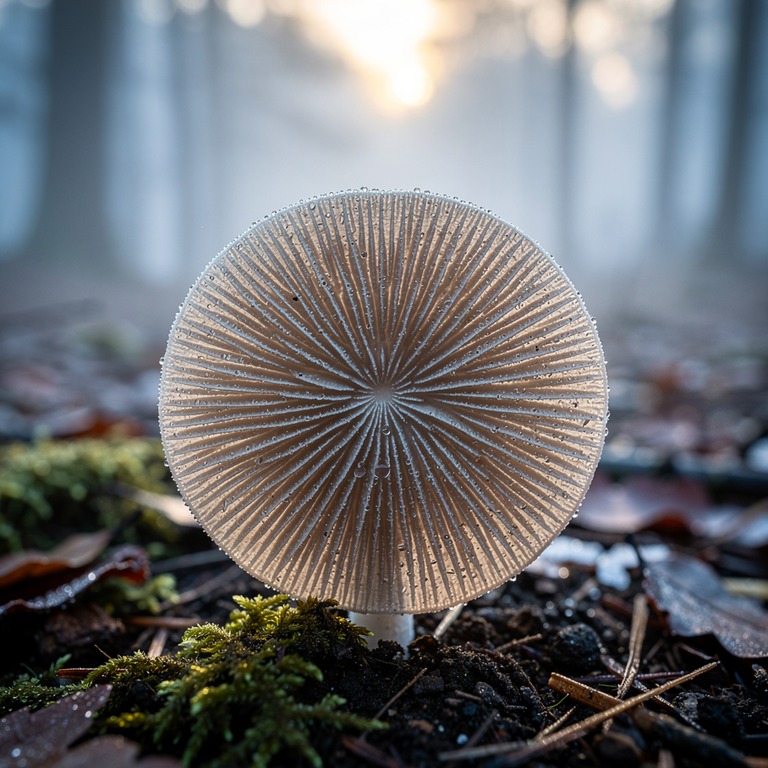
Mycelium — the underground web of fungal threads that Psilocybe species (and most other mushrooms) actually live as — does some genuinely strange things. It conducts electrical signals. It redistributes nutrients between unrelated plants. It responds to damage and threat in ways that look adaptive. Some researchers have argued, half-seriously, that mycelial networks resemble externalized neurological systems. Whether any of this rises to "intelligence" in the sense we mean for animals is a wide-open question. Probably not in the way we usually think about it. Possibly in some other way we don't yet have words for.
Then there's Terence McKenna's stoned ape hypothesis — the idea that early hominids eating psilocybin mushrooms on the African savanna got a cognitive boost that helped drive the emergence of language and self-aware thought. It's a great story. It is also almost entirely speculative, with no fossil evidence and significant timeline problems. Treat it as mythology, not science. Mythology can still be useful — it just shouldn't be confused with data.
So Should You Actually Consider a Retreat?
If you've read this far, you're probably not researching mushrooms abstractly. You're trying to figure out whether a psilocybin retreat — in Jamaica, the Netherlands, Mexico, or wherever it's legally accessible — is a reasonable next step for something specific in your life. Depression that hasn't responded to SSRIs. A drinking pattern that's stopped feeling optional. Trauma that talk therapy hasn't moved. A general sense of being stuck.
A few honest things to weigh:
- Set and setting are not marketing terms. The container — who's holding the space, what the preparation looks like, how integration is structured afterward — matters at least as much as the dose. A skilled facilitator in a quiet, intentional setting is a fundamentally different experience from a well-meaning friend with a bag of dried caps.
- Screen for contraindications before you book anything. Personal or family history of psychosis, certain cardiac conditions, and some medications (notably SSRIs and lithium) are real reasons to pause. A reputable retreat will ask. A red-flag retreat won't.
- Be realistic about what one weekend can do. Psilocybin opens a window. What you build in that window — and especially in the weeks after — is the actual work. People who treat the ceremony as the destination tend to be the ones disappointed three months later.
- Cost varies wildly. Legitimate retreats generally run somewhere between $1,500 and $6,000+ depending on length, location, group size, and the depth of integration support. Suspiciously cheap usually means corners cut on the things that matter most.
- Integration is not optional. If a retreat doesn't offer or require some form of follow-up — group calls, one-on-one sessions, written practices — that's a strong sign the operators see the ceremony as the product rather than as one piece of a longer process.
The mushrooms have been doing this work, in one form or another, since before we existed. The question for anyone considering a retreat in 2026 isn't whether psilocybin "works" — the research has moved well past that. The question is whether your particular situation, your support system, and your reasons for going are aligned enough to make the experience useful rather than disorienting.
If something here resonates and you want to look at what's actually available, a range of vetted psilocybin and plant-medicine retreats can be browsed on our marketplace here. Take your time with the decision. The mushrooms aren't going anywhere — they've waited 65 million years already.

Craving More Stories?
Join our ShopAyahuascaRetreats newsletter for the latest updates on thrilling
destinations and inspirational tales, delivered straight to your inbox!
We value your privacy. Your email address will never be shared or published.