 English
 Deutsch
 Français
 Nederlands
 Español
SHOP AYAHUASCA RETREATS BLOG
Mescaline Explained: What San Pedro and Peyote Actually Do
Fiona Holloway
September 4, 2026
Your ultimate guide to discover transforming ayahuasca and psychedelic experiences. Dive into serene destinations and elevate your consciousness to unparalled heights.
Discover Ayahuasca & Psychedelic Retreats NowSearch for ayahuasca & psychedelic retreats
Discover retreats, trainings, and holidays from all over the world
Mescaline is the quiet one. While ayahuasca gets the documentaries and psilocybin gets the clinical trials, mescaline — the psychedelic alkaloid found in San Pedro, peyote, and a handful of other cacti — has been sitting patiently in the background of human history for something like six thousand years. Longer, maybe. It's arguably the oldest plant medicine we can prove humans have been using, and yet most people considering a psychedelic retreat today have barely heard of it.
That's a shame, because mescaline occupies a very particular niche in the world of psychedelics and plant medicines. It's long. It's warm. It's more embodied than heady. And for a certain kind of seeker — often someone who's tried ayahuasca and found it too intense, or someone drawn to gentler, more sustained states — it can be exactly the right door to walk through.
What Mescaline Actually Is
Chemically, mescaline is a phenethylamine — a different family from the tryptamines like psilocybin and DMT. That difference matters. It's part of why the experience has a distinct signature: less kaleidoscopic, more painterly. Colors deepen rather than dissolve. Objects gain a kind of significance rather than warping into abstraction.
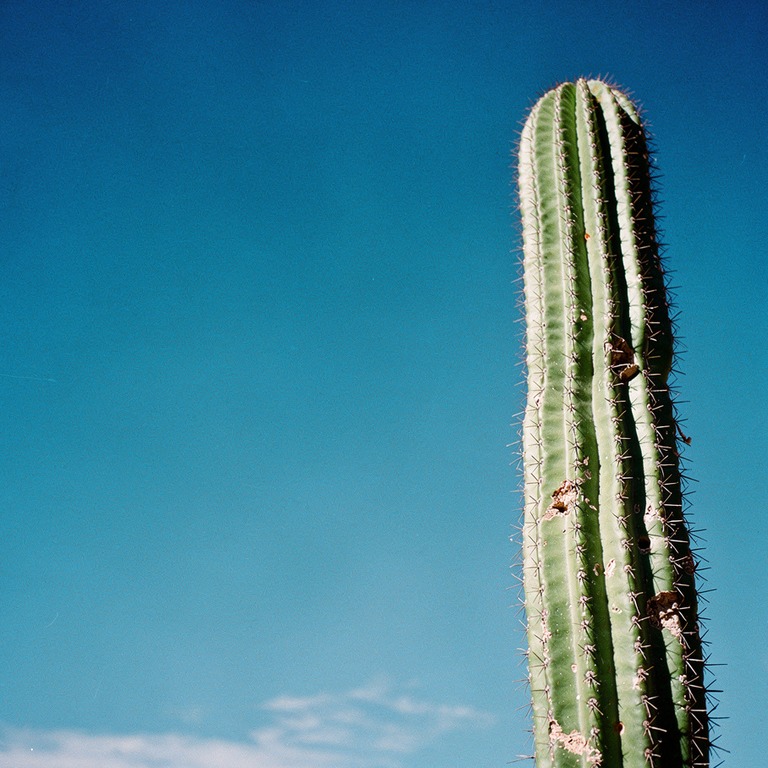
The two cacti most people encounter it through are San Pedro (Echinopsis pachanoi, also called huachuma) from the Andes, and peyote (Lophophora williamsii) from the deserts of northern Mexico and the southwestern United States. San Pedro grows fast and tall — a healthy plant can reach several meters. Peyote is a slow, small button that takes over a decade to mature, which is one reason its wild populations are in trouble and why ethical retreats almost never work with it.
There are also synthetic mescaline and other mescaline-containing cacti like the Peruvian torch. But when we talk about mescaline in a retreat or ceremonial context, we're almost always talking about San Pedro brewed as a thick, bitter green drink.
How a San Pedro Ceremony Actually Feels
Here's the honest truth about mescaline: it's a long day. Where a psilocybin trip runs four to six hours and ayahuasca hits like a freight train for four hours and lets you off, San Pedro is a twelve-hour arc. You drink in the morning. You are still in the medicine at sundown.
The come-up is slow. Most people describe an hour or two of nothing much, then a low nausea, then a gradual brightening — as if someone were slowly turning up the saturation on the world. The peak, if you can call it that, is more of a plateau. You feel physically strong. You want to walk. You notice your body wants to be outside, moving, touching things.
The emotional character is what usually surprises first-timers. San Pedro is often called a heart medicine, and while that phrase gets thrown around loosely in retreat brochures, there's something to it. People cry, but not often the wracking, purge-heavy crying of an ayahuasca night. It's more like the crying you do when you finally realize something you've been avoiding for years is actually simple.
- Expect 10–14 hours from first sip to baseline.
- Expect some nausea in the first two hours — it usually passes.
- Expect to want to be outside, in nature, in sunlight.
- Expect insights that feel obvious rather than mystical.
Is Mescaline Legal? The Short, Frustrating Answer
Mescaline itself is a Schedule I substance in the United States, which means it's illegal to possess in pure form. But the cacti that contain it live in a stranger legal space. San Pedro is legal to grow ornamentally in the U.S. — you can buy one at a garden center — but illegal to prepare for consumption. Peyote is federally illegal except for enrolled members of the Native American Church, who have a specific religious exemption.
In Peru, where San Pedro ceremonies are part of a continuous curanderismo tradition going back millennia, the plant is legal and ceremonies are openly available. Mexico allows peyote use within recognized indigenous contexts. In much of Europe, the raw cactus is a legal gray area, though extracted mescaline is not.
The practical upshot: if you want to sit with San Pedro or huachuma in a proper ceremonial container, you're most likely going to Peru or, in some cases, Ecuador. A handful of legal jurisdictions elsewhere host it too, but the center of gravity is the Andes.
Mescaline for Addiction and Depression: What the Research Shows
The clinical evidence base for mescaline is thin compared to psilocybin, but it's growing. A large observational study published a couple of years ago tracked people using mescaline outside clinical settings and found significant self-reported reductions in depression and anxiety symptoms months later. Roughly two-thirds of participants who came in with a mental-health diagnosis reported that their symptoms had improved or resolved.
The addiction angle is even more interesting. The Native American Church has, for over a century, quietly used peyote as the ceremonial center of what may be one of the more effective indigenous responses to alcoholism in the Americas. Researchers who have studied members of the NAC consistently find lower rates of alcohol dependence than in matched populations. It's not a randomized controlled trial, but it's a pattern that's held up across multiple studies.
None of this makes mescaline a treatment. It makes it a candidate — one of several plant medicines that appear to help people rearrange the wiring underneath addictive or depressive patterns. The mechanism is likely a mix of the acute psychedelic experience, the ceremonial context that surrounds it, and the community reinforcement that follows. Take any one of those away and the effect weakens.
Choosing a San Pedro Retreat: What to Look For
If you're seriously considering a mescaline retreat, the choice of place matters more than the choice of medicine. A badly-held San Pedro day is not dangerous the way a badly-held ayahuasca night can be, but it can be a wasted day at best and a genuinely destabilizing one at worst. A few things to look for:
- A curandero or facilitator with lineage, not just a website. Ask how they learned, from whom, for how long. Vague answers are a red flag.
- Small groups. San Pedro is best held in groups of six to twelve. Anything over twenty and you're at a festival, not a ceremony.
- Preparation and integration built in. A one-day drop-in is almost always a mistake. Look for at least three or four days, with real conversation before and after.
- Honest talk about medical screening. Mescaline interacts with SSRIs, MAOIs, and certain heart medications. A retreat that doesn't ask about your medications is not looking out for you.
- An outdoor setting. San Pedro wants sun, wind, and open ground. A ceremony held entirely indoors is missing something structural.
How Mescaline Compares to Other Plant Medicines
The most useful way to think about mescaline is by contrast. Compared to ayahuasca, it's less confrontational and less purge-focused — you're unlikely to spend the night hunched over a bucket. Compared to psilocybin, it's longer, more embodied, and less prone to the mind-loops that mushrooms sometimes produce. Compared to ibogaine, it's dramatically gentler and doesn't require the medical supervision ibogaine demands.
What you give up with mescaline is speed. Ayahuasca can crack a lifelong pattern open in a single night. Psilocybin can deliver a mystical experience in four hours. Mescaline works more like a long walk through your own interior — steady, cumulative, and often surprisingly practical. People often come away with concrete decisions rather than cosmic revelations. Sell the house. Leave the job. Call the brother you haven't spoken to.
That practicality is part of why huachuma is sometimes recommended as a first plant medicine for people who are curious but wary. It's easier to integrate because the insights tend to arrive already dressed for daily life.
A Few Honest Cautions
Mescaline is not for everyone. If you have a personal or family history of psychosis or bipolar I, no responsible facilitator will sit you with any classical psychedelic, and that includes San Pedro. If you're on serotonergic medication, you need to have a real conversation with a doctor about tapering, and no retreat should be pressuring you to do this on their timeline.
The long duration is also worth taking seriously. Twelve hours in an altered state is genuinely tiring. People often underestimate how much stamina a mescaline day requires, and the day after tends to be a low, quiet one — not a bad low, but a low. Plan for that.
Finally, be honest with yourself about why you're going. Mescaline is not a shortcut around therapy, and the people who benefit most from these ceremonies almost always have some kind of ongoing psychological support in their regular life. The medicine opens doors; the walking through them is still your job.
Mescaline is one of the most interesting corners of the plant-medicine world, and it's slowly getting the attention it deserves. If any of this has landed for you and you want to look at what's actually available, a curated selection of San Pedro and huachuma retreats can be browsed on our marketplace here. Take your time with the decision — the plant has been waiting six thousand years, so a few more weeks of research won't hurt.

Craving More Stories?
Join our ShopAyahuascaRetreats newsletter for the latest updates on thrilling
destinations and inspirational tales, delivered straight to your inbox!
We value your privacy. Your email address will never be shared or published.