 English
 Deutsch
 Français
 Nederlands
 Español
SHOP AYAHUASCA RETREATS BLOG
Meditation Without Sitting Still: A Practical Guide for Restless Minds

Axel Hartley
September 23, 2026
Your ultimate guide to discover transforming ayahuasca and psychedelic experiences. Dive into serene destinations and elevate your consciousness to unparalled heights.
Discover Ayahuasca & Psychedelic Retreats NowSearch for ayahuasca & psychedelic retreats
Discover retreats, trainings, and holidays from all over the world
Here's something no one tells you when you first get curious about meditation: sitting still on a cushion for forty minutes is not the only doorway in. For some people it's not even a good doorway. If you've tried it, felt your back seize up around minute six, watched your thoughts race harder than they do at your desk, and quietly concluded you're just bad at this — you're not. You've picked a form that doesn't match your nervous system yet.
This matters more than it sounds, especially for readers weighing a psychedelic or plant-medicine retreat. Nearly every serious ayahuasca center, ibogaine clinic, and psilocybin container asks participants to have some kind of contemplative practice going in. Not because sitting cross-legged is sacred, but because a mind that has learned to notice itself — even a little — handles a ceremony infinitely better than one that hasn't.
So let's talk about what meditation actually is when you strip away the incense and the Instagram photos, and how to build a practice that works if stillness feels like torture.
Why Sitting Meditation Doesn't Click for Everyone
The traditional posture — legs folded, spine straight, eyes half-closed — was developed in cultures where people squatted and sat on the floor from childhood. Most of us didn't. We sat in chairs from age four onward and now our hips are locked and our lower backs have opinions. That's a physical problem, not a spiritual one.
There's also a nervous-system piece. People carrying trauma, chronic anxiety, or the residue of long-term addiction often find that going still and quiet doesn't produce calm — it produces the opposite. The body has been running from something, and the moment you take away the running, the something catches up. This is well-documented in trauma-informed circles, and it's the reason more teachers now start beginners with movement-based practice instead of dropping them straight onto a cushion.
None of this means you can't eventually sit. It means the cushion might be the finish line rather than the starting line.
What Meditation Actually Is (It's Simpler Than You Think)
Strip away the vocabulary and meditation is just this: paying attention, on purpose, to something happening right now, and gently coming back when you drift. That's the whole thing. The object of attention can be your breath, sure. It can also be your feet on the pavement, the sensation of warm water on your hands while you wash a dish, the sound of traffic three blocks over, or the taste of coffee before you've started scrolling.
The mechanism doing the work isn't the object. It's the noticing-and-returning. Every time your mind wanders and you bring it back without beating yourself up, you're doing a rep. Neuroscientists have measured this — the returning is what thickens the parts of the brain associated with attention and emotional regulation. Not the staying. The returning.
Once that clicks, meditation stops being an event on your calendar and starts being something you can do while walking to the train.

Practices That Don't Require Sitting Still
Here are the forms I most often recommend to people who bounce off traditional sitting. Try one for two weeks before you judge it.
- Walking meditation. Slow or normal pace, outside if possible. Feel each foot land. When your mind wanders — and it will, constantly — notice the wandering and come back to the feet. Twenty minutes of this is more useful than an hour of white-knuckled sitting.
- Body scan while lying down. Flat on your back, moving attention slowly through the body from feet to head. Ten to twenty minutes. Yes, you might fall asleep at first. That's fine. Your nervous system probably needs it.
- Breath counting during ordinary tasks. Count breaths from one to ten while doing dishes, folding laundry, waiting in line. Restart at one when you lose track. You will lose track a lot.
- Loving-kindness (metta) phrases. Silently repeating short well-wishes — for yourself, for someone you love, for someone you're neutral about, for someone difficult. Can be done anywhere. Surprisingly potent for anyone in early addiction recovery.
- Somatic tracking. Sit or lie down and simply notice whatever sensation is loudest in the body without trying to change it. Pain, tension, tingling, nothing at all. Watch it shift.
- Open-eye nature attention. Sit outside. Look at one thing — a tree, a patch of grass, moving water. When attention drifts, return to the visual object. Feels less like meditation and more like remembering how to see.
Notice what these have in common: none of them require you to fight your body into a shape it doesn't want to hold.
How This Connects to Plant Medicine and Psychedelic Work
If you're researching an ayahuasca retreat, an ibogaine program, or a psilocybin container, the value of any contemplative practice — sitting or otherwise — is enormous. Master plants and psychedelics don't heal you the way an antibiotic heals an infection. They surface material. What you do with that material during and after is where the actual change lives.
A regular practice does three specific things for a psychedelic journey. It teaches you to stay with intense sensation without immediately trying to escape it, which is the entire skill required in ceremony. It gives you a familiar internal reference point when the experience gets disorienting. And it builds the attention muscle you'll need afterward, during integration, when insights that felt permanent on night three start to fade by week two.
Facilitators I trust will often tell first-timers to spend at least a month before their retreat doing some daily form of noticing — even ten minutes counts. Not to become a monk. To make sure that when the medicine opens something, there's someone home to receive it.

Building a Practice That Actually Sticks
Most people who fail at meditation fail for the same three reasons, and none of them are lack of discipline.
- They start too big. Forty-five minutes on day one is a recipe for quitting by day four. Start with five. Yes, five. Do five for two weeks before you consider ten.
- They pick the wrong form. If sitting feels awful, walk. If walking bores you, try metta. The right practice is the one you'll actually do tomorrow, not the one that looks best in a book.
- They measure the wrong thing. Success isn't a quiet mind. Success is showing up. Some of my most useful sits have been the ones where my mind was a hurricane and I kept returning to the breath anyway. That's the practice. The hurricane is the workout.
One more thing that helps: tie the practice to something you already do. Right after morning coffee. Right before you brush your teeth at night. Right when you get in the car after work. Motivation is unreliable. Habit stacking is not.
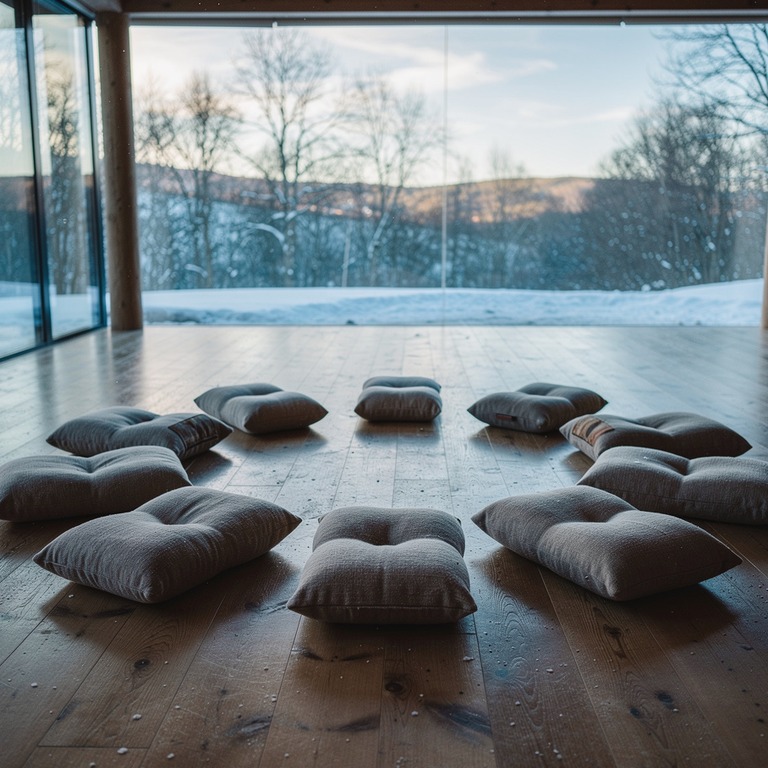
What Changes, and How Long It Takes
The honest answer is that noticeable change usually shows up somewhere between week three and week eight of consistent practice, and it rarely looks like what you expected. Nobody I know suddenly became serene. What most people describe is a small gap opening up between a triggering event and their reaction to it. The gap is where choice lives. Everything downstream — better sleep, less reactivity, more patience with the people you love, a quieter relationship with cravings if you're in recovery — flows from that gap getting slightly wider.
For readers thinking about a plant-medicine retreat, that gap is also what makes integration possible. The insights that arrive during a ceremony need somewhere to land. A regular practice, however scrappy and inconsistent, is what builds that landing pad.
If some of what you've read here resonates and you're weighing whether a psychedelic or plant-medicine retreat could be a next step, a curated selection of ayahuasca, psilocybin, and ibogaine retreats can be browsed on our marketplace here. Whichever direction you go, start the practice today, in whatever form actually fits your life. Five minutes of walking attention this afternoon will do more for you than another six months of planning to start.

Craving More Stories?
Join our ShopAyahuascaRetreats newsletter for the latest updates on thrilling
destinations and inspirational tales, delivered straight to your inbox!
We value your privacy. Your email address will never be shared or published.