 English
 Deutsch
 Français
 Nederlands
 Español
SHOP AYAHUASCA RETREATS BLOG
Magnesium and Muscle: The Overlooked Mineral That May Matter as Much as Protein
Luca Reeves
August 7, 2026
Your ultimate guide to discover transforming ayahuasca and psychedelic experiences. Dive into serene destinations and elevate your consciousness to unparalled heights.
Discover Ayahuasca & Psychedelic Retreats NowSearch for ayahuasca & psychedelic retreats
Discover retreats, trainings, and holidays from all over the world
Protein has been having a very long moment. Every fitness influencer, longevity podcaster, and functional-medicine doc seems to circle back to the same refrain — eat more protein, lift heavy things, live forever. And honestly, they’re not wrong. But a study out this year suggests we may have been ignoring a quieter player in the muscle-preservation game: magnesium.
For readers who spend time on plant-medicine retreats — where diet, body preparation, and long-term wellbeing all overlap — this is worth paying attention to. The way you feed your body in the months before and after ceremony shapes how you show up, how you recover, and how well your nervous system holds together through some genuinely intense work. Magnesium sits quietly at the center of a lot of that.
What the New Research Actually Found
Researchers looked at nearly 3,830 Korean adults over the age of 50, pulled from a nationally representative health survey. They measured two things: how much magnesium people were consuming, and how closely their eating patterns aligned with what the study called a “magnesium-rich diet” — heavy on leafy greens, seaweeds, nuts, legumes, whole grains, seeds, soymilk, and yes, coffee.
Then they compared those patterns to sarcopenia rates. Sarcopenia is that gradual, sneaky loss of muscle mass and strength that starts creeping in somewhere in your fifties and picks up speed from there. It’s the reason your grandfather can’t open a jar. It’s also, increasingly, understood as one of the strongest predictors of how well someone ages overall.
The results were striking. People in the top quartile of magnesium intake had roughly half the odds of sarcopenia compared to those in the bottom quartile. The same pattern showed up for the diet score. And crucially, the association held up after adjusting for protein intake, overall diet quality, and a slew of lifestyle variables.
Why This Matters More Than It Sounds
Here’s the thing. Current clinical guidelines for preventing muscle loss focus almost entirely on two things — protein and vitamin D. Magnesium barely gets mentioned. Yet magnesium is involved in hundreds of enzymatic processes in the body, including energy production, muscle contraction itself, and the regulation of chronic low-grade inflammation.
The researchers actually tested inflammation as a possible mechanism. A marker called C-reactive protein explained about 7% of the link between magnesium and muscle mass, and closer to 18% of the link between the magnesium-rich diet pattern and muscle mass. So inflammation is part of the story — but not the whole story. Most of the effect appears to run through other pathways researchers haven’t fully mapped yet.
And then there’s this eyebrow-raising detail: when the analysis accounted for magnesium, the associations for protein and vitamin D with sarcopenia became only marginal. That doesn’t mean protein has been oversold. It does mean magnesium might deserve a seat at the same table.
How Does Magnesium Connect to Plant-Medicine Work?
You might be wondering what any of this has to do with ayahuasca, psilocybin, or the broader world of psychedelic healing. Fair question. The connection is subtler than most people realize.
Serious plant-medicine work — a proper ayahuasca dieta, an ibogaine flood, a multi-day psilocybin container — asks a lot of your body. Purging, fasting, sleep disruption, emotional catharsis, sometimes days of restricted diet before ceremony. All of it stresses your electrolyte balance. Magnesium is one of the first minerals to get depleted under that kind of load, and depleted magnesium shows up as muscle cramps, restless legs, poor sleep, and a jittery nervous system that struggles to settle back down after a big experience.
Facilitators who’ve been doing this a long time will tell you that integration issues aren’t always spiritual. Sometimes people feel wrecked for weeks after a retreat because their body is simply running on empty. A boring nutritional deficit can masquerade as a stalled integration. If you’re preparing for a retreat, or coming home from one, feeding yourself well is not incidental — it’s foundational.
What a Magnesium-Rich Plate Actually Looks Like
The study built its magnesium-rich diet score around a handful of food categories. Nothing exotic. Nothing that requires a supplement stack. Just food.
- Leafy greens and seaweeds — spinach, kale, Swiss chard, wakame, nori.
- Nuts, seeds, and legumes — almonds, cashews, pumpkin seeds, black beans, lentils, edamame.
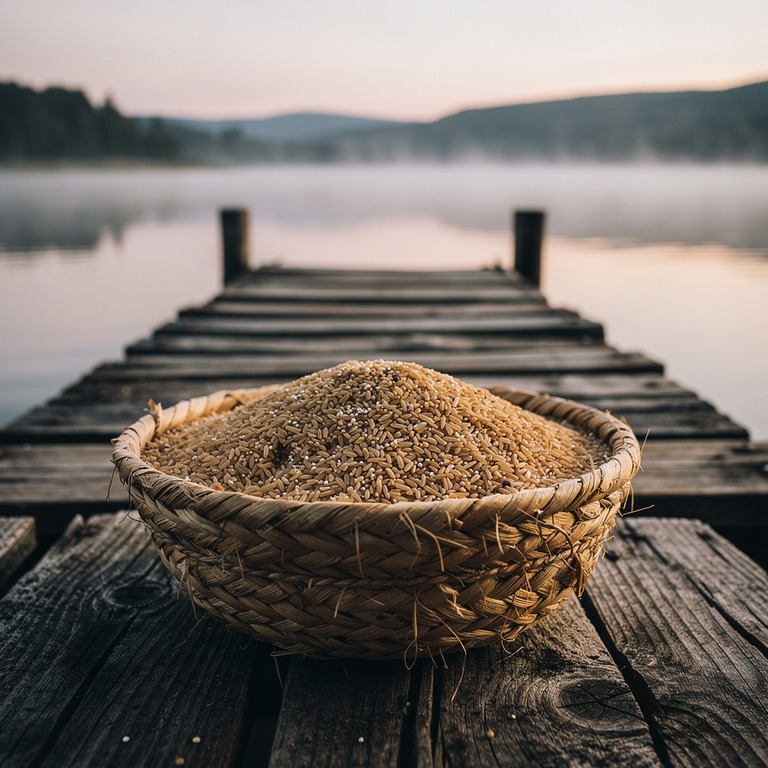
- Whole grains — brown rice, oats, quinoa, whole wheat.
- Soymilk — scored surprisingly high in the study.
- Coffee — a modest contributor, though not one you should rely on. Also, if you’re prepping for ayahuasca, most dietas ask you to drop coffee entirely in the weeks leading up.
The researchers were clear that it’s the overall pattern that matters, not any single hero food. A handful of almonds doesn’t undo a diet built around processed carbs and canola oil. But a plate that regularly features greens, beans, and whole grains alongside your protein — that’s the pattern the data seems to reward.
The Caveats Worth Naming
This was a cross-sectional study, which means researchers took a snapshot in time rather than following people for years. So we can’t say for certain whether magnesium-rich eating actually prevents muscle loss, or whether people with more muscle just happen to eat differently. The direction of the arrow isn’t proven.
The study also looked exclusively at Korean adults, which raises the usual questions about how well findings translate to other populations, food cultures, and body compositions. That said, the results were consistent across two independent measures — raw magnesium intake and dietary pattern score — which adds weight.
None of this is a reason to swap your steak for a supplement. It’s a reason to look at your plate honestly and ask whether the plants are doing their share of the work.
Building a Body That Can Hold the Work
There’s a phrase you hear around experienced ceremony facilitators — the medicine only goes as deep as your body can hold. Whether or not you buy that framing, the practical version is undeniable. A depleted, inflamed, magnesium-starved body has less capacity for anything demanding. That includes ceremony. That includes integration. That includes the ordinary work of getting older without losing yourself.
So if you’re thinking about a retreat — whether that’s ayahuasca in the Peruvian Amazon, psilocybin in the Netherlands, or something quieter and closer to home — take the boring pre-work seriously. Sleep. Water. Greens. Beans. Whole grains. The mineral scaffolding underneath the experience.
If any of this has you wondering what a well-supported plant-medicine journey actually looks like in practice, a curated selection of ayahuasca and psychedelic retreats can be browsed on our marketplace here. The work you do at the table starts long before you sit down in the maloca.


Craving More Stories?
Join our ShopAyahuascaRetreats newsletter for the latest updates on thrilling
destinations and inspirational tales, delivered straight to your inbox!
We value your privacy. Your email address will never be shared or published.