 English
 Deutsch
 Français
 Nederlands
 Español
SHOP AYAHUASCA RETREATS BLOG
Living With PMDD: What 20 Years of Misdiagnosis Taught Me About Reclaiming Yourself
Luca Reeves
September 12, 2026
Your ultimate guide to discover transforming ayahuasca and psychedelic experiences. Dive into serene destinations and elevate your consciousness to unparalled heights.
Discover Ayahuasca & Psychedelic Retreats NowSearch for ayahuasca & psychedelic retreats
Discover retreats, trainings, and holidays from all over the world
For roughly half of every month, I felt like a stranger inside my own head.
The other half, I was steady. Clear. The kind of person who answered messages on time, kept promises to herself, and moved through the day without flinching. Then, almost overnight, something inside me would tip over. A different woman would show up in my body — sharper, more brittle, convinced that everything good in my life was quietly falling apart.
It took me nearly twenty years to learn that this had a name: Premenstrual Dysphoric Disorder, or PMDD. And by the time I got there, I had lost count of the diagnoses, the medications, and the quiet moments where I wondered if maybe the darker version of me was the real one.
When the story you tell yourself becomes the problem
My symptoms started at fourteen, the same year my family lost almost everything after a bad business call from my dad. House, work, community — gone. Grief was the wallpaper of our lives. So when I began crying without warning, or lying in bed watching the light shift across the ceiling for hours, the explanation felt obvious. Of course I was struggling. Look at what had happened.
That explanation stuck around for a decade. It was convenient. It also wasn't quite right.
Between fourteen and twenty-five, I sat in enough clinicians' offices to lose track. I was told it was depression. Then anxiety. Then, briefly, bipolar disorder. Each label came with a new prescription pad and a new theory. None of them held up for long, because none of them accounted for the thing that was actually happening — a rhythm. A pattern. A version of me that arrived and left on a schedule my doctors weren't asking about.
After enough failed treatments, I stopped believing the labels and started believing something worse: that the problem was just me. Not chemistry, not biology, not a condition — me. Not disciplined enough. Not resilient enough. Not built for a normal life.
What it actually feels like to lose two weeks of every month
Here's what I want people who haven't lived this to understand. It wasn't a bad mood. It wasn't being cranky before my period. It was a full-scale personality shift that arrived with terrifying certainty.
During the good weeks, I could feel deeply secure in a relationship. Loved. Sure of the person next to me. Then, within a day or two, that same relationship would feel like a trap I needed to escape from, and I'd be halfway convinced I had to end things by dinner. It didn't present as fear. It presented as clarity. That's what made it so dangerous — I trusted the voice. I acted on it. I hurt people I loved based on it.
At work, the same thing. One week I could speak up on a call without a second thought. The next, unmuting my microphone felt physically difficult. I told colleagues I was tired, or overloaded, or needed a break — anything that sounded less alarming than the truth, which was that I genuinely didn't know why my own mind kept turning against me.
And my body was in on it too. Bloating that felt disproportionate. Migraines. A strange, floating exhaustion. A sense of being dropped into a body I didn't recognize. Food became its own quiet battlefield, with weeks where I felt like I was watching myself eat from across the room, unable to stop, followed by weeks of overcorrection. That cycle eventually contributed to an eating disorder I'm still unwinding.
The grief of the math
I got my first period at fourteen. By my early thirties, when I finally sat down and did the arithmetic, the number stopped me cold. Nearly two decades. If half of every month had been unlivable, that meant I had spent close to ten years — a full decade — trying to recover from my own biology.
The grief of that isn't only about looking back. It reshapes how you think forward. I'd always wanted kids. I'd been a nanny, an au pair, a teacher. Loving children was not the question. Consistency was. If I couldn't count on my own steadiness two weeks out of every four, what did that mean for a small person who was counting on me?
That was the question that finally pushed me to stop accepting the answers I'd been given.
How I finally figured out it was PMDD
I started tracking everything. Not in a wellness-influencer way — in a survival way. Sleep. Food. Mood. What I said in an argument and when. Which days I couldn't get out of bed. Which days I felt like myself again.
Once you see the pattern, you can't unsee it. Mine mapped almost exactly onto the second half of my cycle — the luteal phase. Around the same time, I started reading accounts from other women online describing symptoms that mirrored mine with unsettling precision. The acronym kept coming up: PMDD.
I built a document. Symptoms. Timeline. Every medication I'd tried. Every past diagnosis. I brought it to two OB-GYNs and asked, plainly, if this could be what I had. Both dismissed the idea. Neither seemed particularly familiar with the condition. I was told, essentially, that hormones weren't the right place to look and that I should go back to a psychiatrist.
I left those appointments with a specific kind of anger — the kind that comes from knowing something is wrong and realizing the person in the chair across from you has already decided not to look. But something had also shifted in me. I understood, finally, that no one was going to care about finding this answer as much as I did.
The third OB-GYN listened. That's where I got the diagnosis.

What PMDD actually is (and isn't)
PMDD is not severe PMS. It's a hormone-based mood disorder rooted not in abnormal hormone levels but in an abnormal sensitivity to the normal hormonal shifts of the menstrual cycle. Those shifts appear to affect neurotransmitters like serotonin, which is why the symptoms can look so much like a mood disorder — because functionally, during those days, they are one.
Estimates suggest PMDD affects somewhere between 3 and 8 percent of menstruating women. It's frequently mistaken for depression, anxiety, or bipolar disorder, which is why so many of us spend years bouncing between diagnoses that almost fit but never quite explain the cyclical nature of what's actually happening.
It's also serious. In its severest forms, PMDD is associated with dramatically elevated rates of suicidal thoughts and attempts. This is not a lifestyle inconvenience. It is a legitimate medical condition that deserves the same rigor and research funding we give other mood disorders — and doesn't yet get.
What has actually helped
I wish I could tell you there's a single fix. There isn't. What has worked for me has been layered, and it took time to assemble.
- The right form of hormonal birth control, arrived at through trial and error with a doctor who actually knew the condition.
- Targeted supplements — the ones with evidence behind them for PMDD specifically, not the general wellness aisle.
- Therapy, ongoing, with someone who understands cyclical mood disorders.
- Sleep protection during the luteal phase. Non-negotiable.
- Cycle tracking, so I know when the storm is coming and can plan around it.
- Honesty with the people closest to me about what happens during those days.
The single most useful mental tool I've built is this: no major life decisions during an episode. Not about relationships, jobs, moves, or money. If the thought arrives during the luteal phase, it waits. Sometimes it survives the wait and turns out to be real. Usually it doesn't.
Where plant medicine and integration fit into this conversation
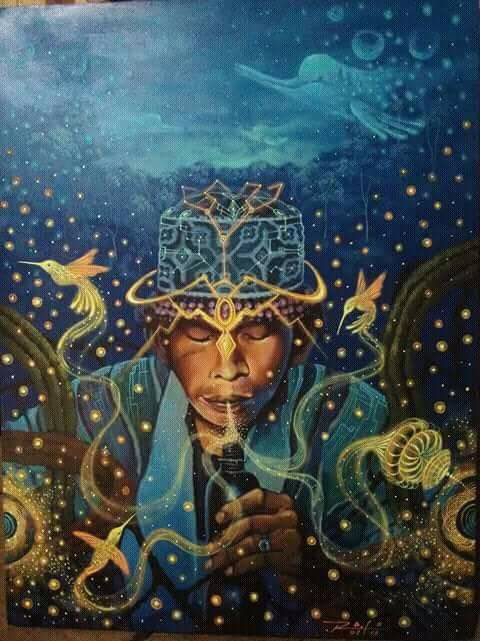
I'll add something the medical literature is only beginning to catch up with. A growing number of women I've spoken to living with PMDD, trauma, and disordered eating have found meaningful support through carefully guided psychedelic and plant-medicine experiences — psilocybin retreats, ayahuasca ceremonies, integration work afterward. It isn't a cure. It isn't for everyone. And it absolutely isn't a replacement for a proper diagnosis and ongoing medical care.
But for those of us who have spent years feeling fractured by our own biology, sitting with a skilled facilitator in a well-run retreat container can offer something that pharmaceuticals often can't: a felt sense of wholeness, even briefly, and the beginning of a different relationship with the parts of yourself you've been at war with. If that direction pulls at you, do the research slowly. Vet the facilitators. Ask about their screening protocols, especially around mood disorders and SSRIs. And treat integration afterward as more important than the ceremony itself.
What I want other women to hear
If something in your life feels cyclical, intense, and deeply out of alignment with the person you know yourself to be during your clearer weeks — pay attention to that. Track it. Write it down for three months before you dismiss it. Bring your data to a doctor and, if that doctor waves you off, bring it to another one. Then another.
You are not too much. You are not failing at being a person. You may simply be dealing with a condition that most of the medical world hasn't been trained to see, and the responsibility of connecting the dots has fallen, unfairly, to you.
Give yourself the same rigor you would give a friend describing these symptoms. You'd believe her. You'd help her look. Do that for yourself.
For readers exploring how plant-medicine work might complement the healing they're already doing around mood, trauma, or cyclical suffering, a range of curated psychedelic and plant-medicine retreats can be browsed on our marketplace here. Whatever path you choose, the first step is the same — trusting that what you've been feeling is real, and worth investigating properly.
Craving More Stories?
Join our ShopAyahuascaRetreats newsletter for the latest updates on thrilling
destinations and inspirational tales, delivered straight to your inbox!
We value your privacy. Your email address will never be shared or published.