 English
 Deutsch
 Français
 Nederlands
 Español
SHOP AYAHUASCA RETREATS BLOG
Inside the Ayahuasca Vine: What New Genetics Reveal About Mariri
Fiona Holloway
June 7, 2026
Your ultimate guide to discover transforming ayahuasca and psychedelic experiences. Dive into serene destinations and elevate your consciousness to unparalled heights.
Discover Ayahuasca & Psychedelic Retreats NowSearch for ayahuasca & psychedelic retreats
Discover retreats, trainings, and holidays from all over the world
Walk into a well-tended ayahuasca garden in the Brazilian Amazon and ask the caretaker what's growing on those big wooden trellises. You probably won't hear a single Latin name. You'll hear three or four — tucunacá, caupuri, pajezinho — each with its own personality, its own preferred soil, its own reputation in ceremony. For decades, scientists nodded politely at this folk taxonomy and filed everything under one species: Banisteriopsis caapi. The plant medicine community kept insisting the vines were not all the same. Now a small group of geneticists in the Amazon has started checking, and the early results are interesting enough to reshape how we think about ayahuasca itself.
If you're researching an ayahuasca retreat — or just trying to understand what's actually in the cup — this is the kind of background that helps. The vine isn't a single ingredient. It's a family of master plants, and the differences between them may be larger than anyone outside the tradition realized.
Why The Vine Matters More Than People Think
Ayahuasca, at its simplest, is a brew of two plants cooked together for hours. The chacruna shrub (Psychotria viridis) contributes DMT — the molecule responsible for the visions. The mariri vine contributes beta-carbolines, which switch off an enzyme in your gut called monoamine oxidase. Without that off-switch, DMT taken orally is destroyed before it ever reaches your brain. You'd drink the tea and feel essentially nothing.
So the vine isn't a supporting actor. It's the reason the medicine works at all. And here's where it gets interesting: the beta-carbolines themselves are mildly psychoactive. They influence mood, dreaming, and the texture of the experience long after the DMT has burned off. Curanderos have always said the vine carries the wisdom of the brew, that chacruna provides the light but mariri provides the teaching. From a pharmacology standpoint, that framing is more accurate than most outsiders give it credit for.
Which raises an obvious question. If there are multiple genetic varieties of mariri, and each produces a slightly different chemical profile, then strictly speaking, no two ayahuasca brews are pharmacologically identical. The ceremony you sit in next month and the one your friend sat in last year may be cousins, not twins.
What The Recent DNA Study Actually Found
The work came out of the National Institute of Amazon Research, where a graduate student named Thalita Zanquetta Luz set out to test whether short stretches of DNA — what biologists call barcodes — could reliably tell different vine lineages apart. Her advisor was a geneticist who happens to be a member of União do Vegetal, one of Brazil's main ayahuasca churches. The church supplied 120 vine samples from four states across the Amazon basin.
The findings, published in Genetic Resources and Crop Evolution, were striking on two fronts. First, the genetic markers cleanly separated the three named ethnovarieties the church had been growing for years. The folk taxonomy held up under DNA. Second — and this is the part that should make any plant nerd lean forward — the researchers identified twelve distinct lineages clustered inside those three big groups. There's more diversity inside the vine than the single-species label has ever suggested.
One number stands out. The team reported genetic distances of up to 28% between certain varieties. That's not a small difference. That's a number large enough to raise the question of whether some of these vines should be classified as separate species entirely. The researchers are careful — they say more work is needed before redrawing the family tree — but the door is open.
How Curanderos Knew All Along
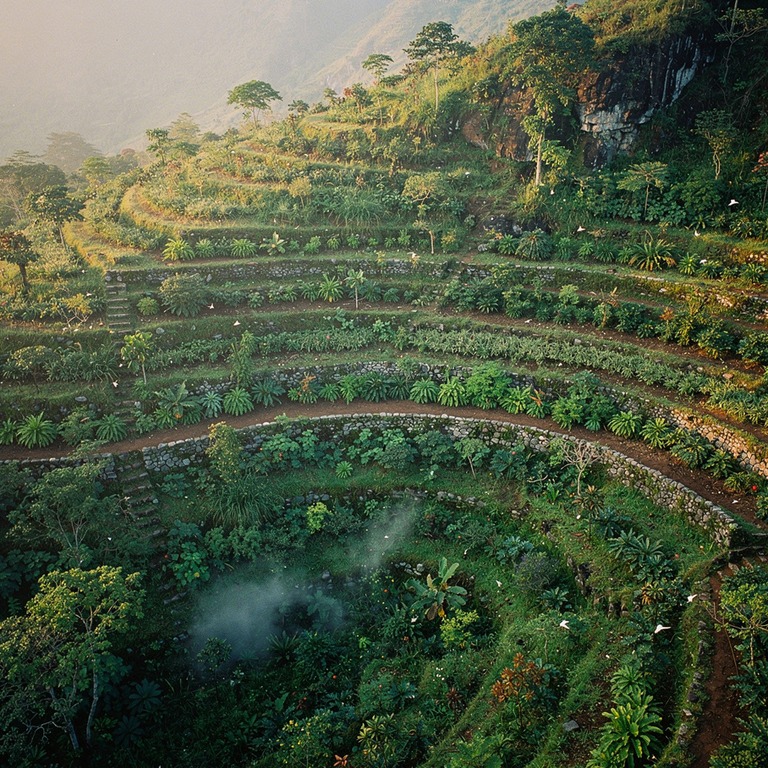
Here's the part that always gets me. None of this is news to traditional users. UDV members have been propagating tucunacá, caupuri, and pajezinho as distinct plants for generations. They cut stakes from the parent vine and root them out — vegetative propagation — which means each daughter vine is a clone of the mother. The lineages stay clean. The names stay meaningful. The knowledge passes down through the people who actually work the gardens.
Indigenous and mestizo curanderos across the upper Amazon describe even more varieties — vines that produce gentler journeys, vines that bring stronger purging, vines that feel suited to specific kinds of healing work. A maestro in Peru might name half a dozen tipos of yagé, each with its own character and its own ceremonial role. Outsiders tend to hear this and assume it's poetic. The genetics are starting to suggest it's botany.
One of the researchers on the new paper put it well: traditional knowledge and scientific knowledge are independent. Neither needs to certify the other. What's happening here is that two ways of knowing the same plant are confirming each other in real time, and that's a quietly significant moment for how Western science engages with plant medicine.
What This Means For Anyone Considering A Retreat
If you're weighing a psychedelic retreat — for depression, for addiction recovery, for working through trauma, or because life has gotten stuck in ways you can't quite name — the news about vine diversity isn't urgent. You don't need to memorize ethnovarieties before you book. But there are a few practical things worth filing away.
- The brew is not standardized. Two reputable centers can offer genuinely different experiences in part because their vines are different. This is not a flaw. It's the nature of working with whole plants rather than isolated molecules.
- Ask where the medicine comes from. A serious retreat will know who grows their vine, where, and how it's prepared. Vague answers — "we get it from a shaman" — are a softer red flag than people realize.
- Strength varies. The beta-carboline content can shift dramatically between batches. A cup that barely touched you at one center might floor you at another. Trust the facilitators when they suggest a starting dose, even if you've sat before.
- The vine is sacred work, not industrial agriculture. Ethical centers think about conservation, propagation, and the cultural lineage they're plugged into. That care tends to show up in the rest of how they run ceremonies, too.
None of this is meant to scare you off. Plant medicine has helped a remarkable number of people break patterns they couldn't break any other way, and the early clinical research on ayahuasca for treatment-resistant depression is genuinely promising. The point is just that the medicine deserves to be treated as a living biological reality, not a uniform product.
A Master Plant Still Hiding In Plain Sight
Mariri has been used ceremonially for at least a few hundred years and possibly much longer. It has its own genus, its own pharmacology, its own ceremonial vocabulary in dozens of indigenous languages. And yet, until very recently, nobody in a lab had checked whether the varieties traditional users describe were genetically distinct. That's a strange gap. It says something about which knowledge counts as knowledge, and which gets left out of the journals.
The same INPA team and collaborators at Brazilian universities are now working on full genome sequences for both mariri and chacruna. The hope is to map the vine's biogeography — to figure out where it originated, how it spread, and where the highest genetic diversity sits today. That kind of work could eventually help locate a center of origin for the master plant, the way researchers have done for cacao and cassava. It might also help protect wild populations as ayahuasca tourism continues to grow and demand for vines keeps climbing.
For now, the takeaway is more modest. The plant on the trellis is not what the textbooks said it was. It's more varied, more complicated, and more worthy of attention than the single-species shorthand suggested. The curanderos were right. The geneticists are catching up.
Bringing It Back To Your Own Decision
If you've read this far, you're probably not casually curious — you're considering something. Maybe a retreat in Peru, maybe somewhere in Brazil, maybe somewhere closer to home where psilocybin or another plant medicine is the focus. The vine research is one small piece of a much larger landscape you'll have to navigate. Preparation matters. Choosing facilitators you trust matters even more. And what you do in the weeks and months after a ceremony — the integration work, the conversations, the slow rewiring — often matters most of all.
If something in this has nudged you closer to taking the next step, a range of ayahuasca and plant-medicine retreats can be browsed on our marketplace here. Take your time with the choice. The vine has been around for a very long time, and it'll still be there when you're ready.
Craving More Stories?
Join our ShopAyahuascaRetreats newsletter for the latest updates on thrilling
destinations and inspirational tales, delivered straight to your inbox!
We value your privacy. Your email address will never be shared or published.