 English
 Deutsch
 Français
 Nederlands
 Español
SHOP AYAHUASCA RETREATS BLOG
How Ayahuasca's Chemistry Actually Works: DMT, Harmine, and the Synergy Question

Luca Reeves
May 17, 2026
Your ultimate guide to discover transforming ayahuasca and psychedelic experiences. Dive into serene destinations and elevate your consciousness to unparalled heights.
Discover Ayahuasca & Psychedelic Retreats NowSearch for ayahuasca & psychedelic retreats
Discover retreats, trainings, and holidays from all over the world
Here's a question I get from almost every first-timer I talk to: what exactly is in ayahuasca, and why does it work the way it does? Most people show up to a ceremony knowing the brew contains DMT and some kind of MAO inhibitor. That's about where the knowledge stops. And honestly, for a long time, that's about where the published science stopped too.
But a growing body of pharmacology research has been quietly chipping away at the question. A systematic review published in the Brazilian Journal of Psychiatry pulled together sixteen studies on the chemistry of ayahuasca and tried to answer something deceptively simple: do these compounds just add to each other, or do they do something more interesting when they're combined? The answer matters — not just for chemists, but for anyone weighing whether to sit in ceremony with traditional brew versus the synthetic, isolated, or capsule-form alternatives now floating around the psychedelic landscape.
The Two Plants, the Two Jobs
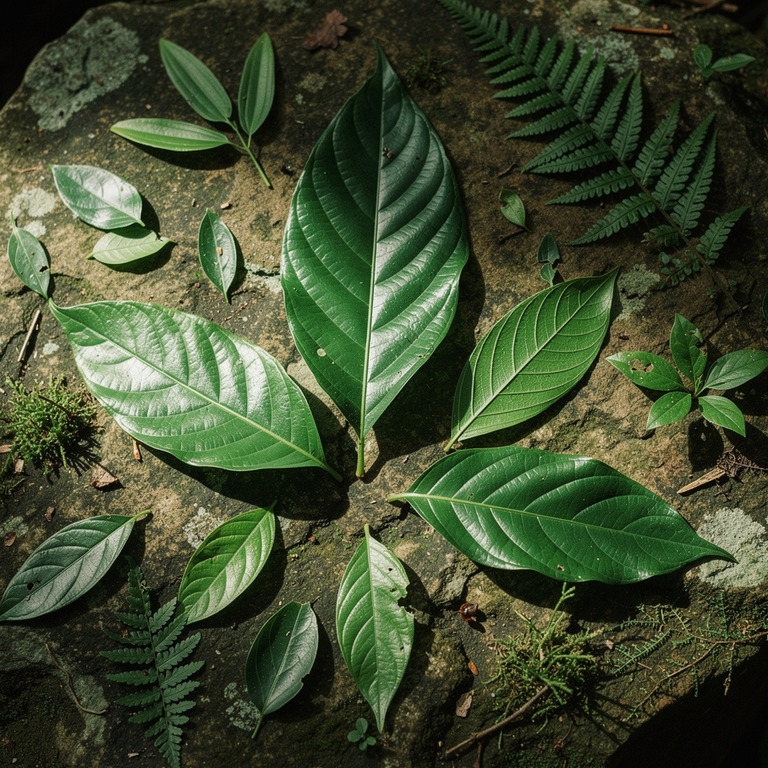
Traditional ayahuasca is brewed from two plants: the vine Banisteriopsis caapi and the leaves of Psychotria viridis. The leaves carry N,N-dimethyltryptamine — DMT, the famously short-acting psychedelic that, taken on its own by mouth, does absolutely nothing. Your gut enzymes destroy it before it can reach your brain.
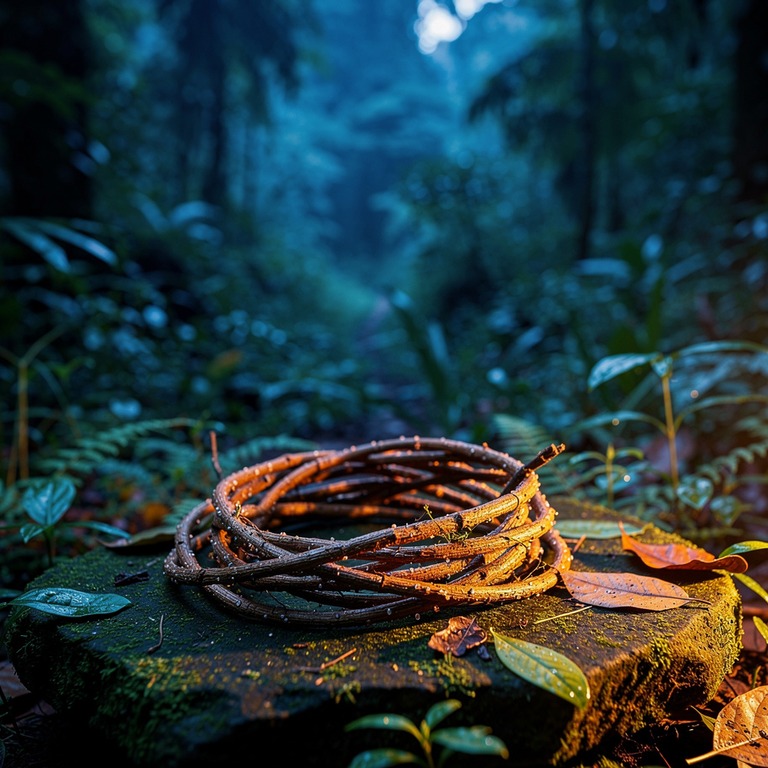
That's where the vine comes in. B. caapi contains a family of compounds called beta-carbolines — primarily harmine, harmaline, and tetrahydroharmine (THH). These are reversible monoamine oxidase inhibitors, or MAOIs. They block the enzyme that would otherwise dismantle the DMT, allowing it to survive the trip through your digestive system and reach the receptors that produce the experience. Without the vine, the leaves are inert. Without the leaves, the vine is something else entirely — a purgative, a dream-inducer, a teacher plant in its own right according to the curanderos, but not the full ayahuasca experience.
That much has been understood for decades. The harder question is what the harmala alkaloids are doing beyond protecting the DMT. And that's where things get interesting.
Additive or Synergistic? The Question That Won't Die
Early work by McKenna and colleagues in the 1980s proposed that mixing the beta-carbolines together produced effects that were merely additive — basically, the sum of their individual MAO-inhibiting strengths. Neat, tidy, and a little boring.
Later studies started complicating the picture. Researchers found that regular ayahuasca drinkers showed increased serotonin transporter binding sites on their platelets — a change that didn't appear in studies of DMT alone. Glennon's work in 2000 showed that harmala alkaloids themselves bind to 5-HT2 receptors, the same family of serotonin receptors DMT activates. So the vine isn't just a chaperone; it's nudging the same neurochemical machinery from a different angle.
Then there's harmine on its own. A 2010 rat study found that chronic harmine administration produced antidepressant-like effects and raised levels of BDNF — brain-derived neurotrophic factor — in the hippocampus. BDNF is roughly the brain's fertilizer for growing new connections. A 2017 study went further and showed that harmine stimulated adult neurogenesis in cultured hippocampal cells. Meaning: harmine, alone, may help the brain grow new neurons. That's not what you'd expect from a molecule whose job description was supposed to be "keep DMT alive long enough to work."
What This Means in the Body — and the Mind
Human pharmacology studies have filled in more of the picture. Riba and colleagues found that ayahuasca produced significant activation in the frontal and paralimbic regions of the brain — the areas tied to emotional processing, self-reflection, and what neuroscientists call interoception, the felt sense of your own body. Brain imaging showed increased blood flow in the anterior insula, anterior cingulate, and the amygdala/parahippocampal complex. These are exactly the regions you'd want to engage if your goal is to confront stored trauma, examine ingrained patterns, or experience something like ego dissolution.
Sampedro's 2017 work on the so-called psychedelic "afterglow" is one of the more striking findings in this whole literature. Participants showed measurable changes in brain chemistry and connectivity that persisted well after the acute experience ended. Reduced glutamate signaling in the posterior cingulate cortex. Increased connectivity between regions involved in self-awareness and emotional regulation. And — this is the part that matters for anyone considering a retreat — those neural changes correlated with increases in mindfulness traits like nonjudgmental awareness and self-compassion, and those traits were still elevated two months later.
So when retreat-goers say something shifted in them and stayed shifted, they're not making it up. Something measurable is going on under the hood.
Why the Synergy Question Matters for You
You might be wondering why any of this pharmacology trivia should affect a decision about whether to drink the brew in a maloca in Peru. Fair. Here's why it matters in practical terms.
The psychedelic industry is in the middle of a quiet identity crisis. Several biotech companies are working on synthetic alternatives — isolated DMT, harmine pills, time-released formulations, pharmahuasca capsules. The pitch is consistency, safety, and avoiding the rougher edges of the traditional brew (the nausea, the long duration, the variable potency). And there's a real case for that approach, especially in clinical contexts.
But if the harmala alkaloids are doing more than just protecting DMT — if harmine alone is stimulating neurogenesis, if THH has its own SSRI-like activity, if the beta-carbolines are nudging serotonin receptors independently — then stripping the brew down to "just DMT plus an MAOI" might miss something important. The whole may genuinely be more than the sum of its parts.
This is the part the curanderos have been saying all along, in their own language. The vine is a teacher. The leaf is a teacher. Together they teach something neither could teach alone. The pharmacology is starting to catch up to what indigenous practitioners have known for centuries.
What to Take Away If You're Considering a Ceremony
I don't think you need to memorize receptor names before you sit in ceremony. But a few practical takeaways are worth holding onto:
- The brew is genuinely complex. What you're drinking isn't a single drug. It's a cocktail of at least four pharmacologically active compounds, plus dozens of minor alkaloids whose effects nobody has fully mapped.
- Set, setting, and preparation matter because the chemistry is intricate. MAOIs interact with a long list of foods, medications, and supplements. The dieta most retreats prescribe — no tyramine-rich foods, no SSRIs, no stimulants — isn't superstition. It's basic pharmacology.
- The aftereffects are real and partly biological. The shifts people describe in the weeks after a ceremony line up with measurable changes in brain connectivity and signaling. Integration practice helps consolidate those changes; skipping integration likely lets them fade.
- Be skeptical of "ayahuasca alternatives" that promise the same experience in a pill. Some may be excellent for specific clinical goals. But "the same as ayahuasca" is, based on the current evidence, an overstatement.
The Honest Caveat
Science on ayahuasca is still young. Most of these studies have small sample sizes. Some are in rats, not humans. The freeze-dried brew used in clinical trials isn't quite the same as what gets served on the second night of a Shipibo ceremony. And the synergy question — additive vs. truly synergistic — isn't fully resolved. The systematic review's authors are clear about this: there appear to be more synergistic mechanisms at work than current research can explain.
Which is roughly where the curanderos have been pointing for centuries, if you ask them. The plants know things the pharmacology papers haven't gotten to yet. That doesn't make the science wrong — it just makes it incomplete, the way all science is incomplete on the way to better understanding.
If reading this has made you more curious rather than less, that's probably the right response. A range of vetted ayahuasca ceremonies and plant-medicine retreats can be browsed on our marketplace here, and looking through them is a useful way to start translating the chemistry on the page into a concrete sense of where and with whom you might eventually sit. Take your time with the decision. The brew, after all, has been around for a very long time and will still be there when you're ready.
Craving More Stories?
Join our ShopAyahuascaRetreats newsletter for the latest updates on thrilling
destinations and inspirational tales, delivered straight to your inbox!
We value your privacy. Your email address will never be shared or published.