 English
 Deutsch
 Français
 Nederlands
 Español
SHOP AYAHUASCA RETREATS BLOG
Finding Wild Mushrooms at Home: What to Know Before You Forage

Stella Vance
August 26, 2026
Your ultimate guide to discover transforming ayahuasca and psychedelic experiences. Dive into serene destinations and elevate your consciousness to unparalled heights.
Discover Ayahuasca & Psychedelic Retreats NowSearch for ayahuasca & psychedelic retreats
Discover retreats, trainings, and holidays from all over the world
Someone posts a photo to a psychedelics forum every autumn. Blurry mushroom cap, wet grass, caption reads something like — found these in me own backyard, are they shrooms? The replies pile up fast. Half the internet plays mycologist. The other half warns them not to eat anything without a spore print. And somewhere in the middle sits a real question worth taking seriously: what does it actually mean when psilocybin mushrooms start growing where you live, and should that change how you think about using them?
I've spent enough time around plant medicine and psychedelic circles to have opinions about this. Not the finger-wagging kind. Just the kind you form after watching people take shortcuts and pay for them later. So let's walk through it honestly — the identification piece, the legal piece, the set-and-setting piece, and the bigger question of whether a backyard flush is really the container you want for whatever you're carrying.
Why Are Wild Mushrooms Suddenly Everywhere?
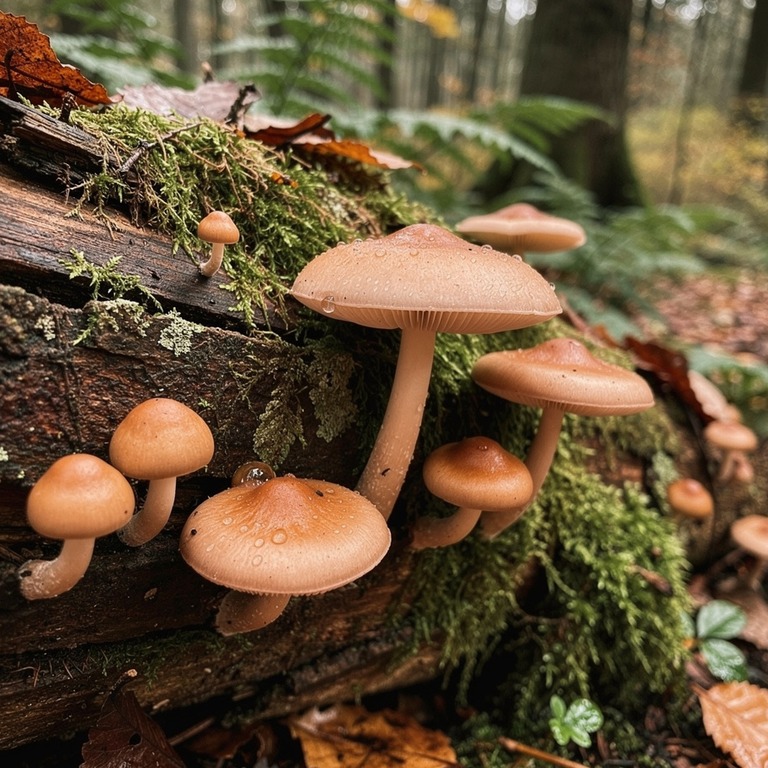
The short answer: they've always been there. Psilocybin-producing species like Psilocybe cubensis, Psilocybe semilanceata (liberty caps), and dozens of regional cousins fruit in specific conditions — cool nights, wet mornings, cow or horse pasture in the case of cubensis, and mossy grasslands for liberty caps. If your climate hits those notes in autumn or spring, they're probably closer than you think.
The reason more people are noticing them now is partly cultural. Interest in psychedelics has gone mainstream over the last few years — clinical trials at Johns Hopkins, decriminalization moves in Oregon and Colorado, a steady drip of press coverage. When curiosity rises, eyes get sharper. A mushroom that would have been ignored five years ago now gets photographed and posted. It's not that the woods changed. We did.
There's also a genuine geographic spread happening. Cubensis, originally tropical, has established populations across the American South, parts of Australia, and Southeast Asia wherever cattle graze. Semilanceata thrives across the UK, Ireland, the Pacific Northwest, and much of northern Europe. If you live in any of those places and haven't been looking, that's the only reason you haven't seen them.
How to Identify a Psilocybin Mushroom Without Poisoning Yourself
Here's the part where I get boring on purpose. Mushroom identification is not a hobby you learn from a Reddit thread. There are lookalikes that will send you to the hospital or kill you outright — Galerina marginata, for instance, contains the same amatoxins as the death cap and grows in similar habitats to some psilocybes. It doesn't care that you were hoping for a good trip.
If you're serious about identifying wild mushrooms, at minimum you need to learn:
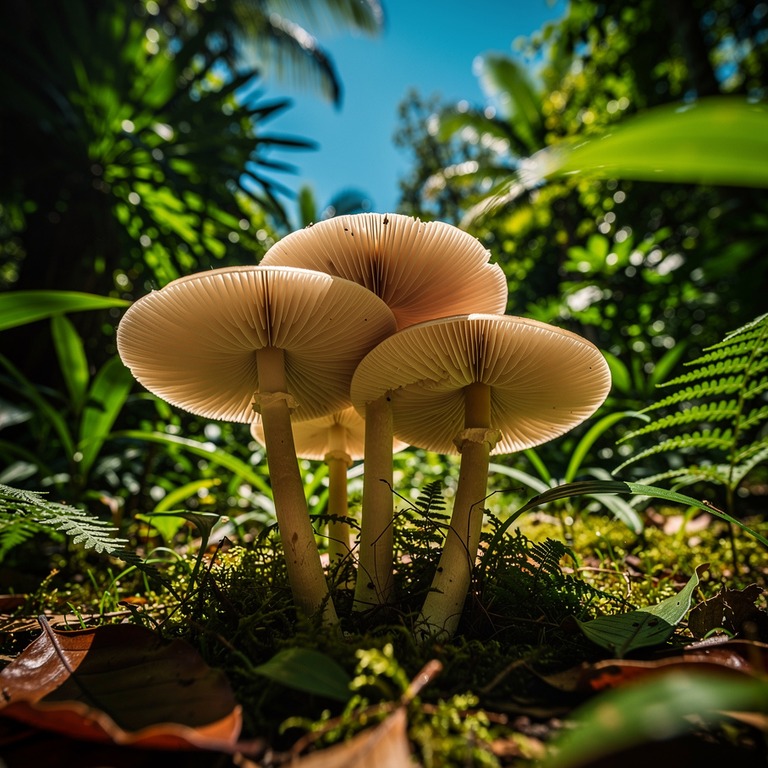
- Spore print color. Psilocybes drop purple-brown to black spores. Galerinas drop rust-brown. This alone rules out most fatal confusions, but only if you actually take the print.
- The blue bruising reaction. Psilocybin-containing species bruise blue-green where damaged, thanks to oxidation of the active compounds. No blue bruise, no psilocybin. It's not a perfect test, but it's a strong signal.
- Habitat and substrate. Cubensis on cow dung. Semilanceata in grazed grasslands, never on wood. Getting the habitat wrong is one of the most common ways beginners misidentify.
- Cap, stem, gill structure. Learn the whole morphology, not just “brown mushroom with a pointy cap.” Read a real mycology guide. Paul Stamets wrote one; so did others. Buy the book.
Even seasoned foragers use multiple confirmation methods and cross-check with a local mycological society before consuming anything they picked. If you take one thing from this section: never eat a wild mushroom based on visual identification alone, and never eat one because a stranger online said it looked right. The person confirming your ID has no skin in the game if they're wrong.
The Legal Question Nobody Wants to Answer Clearly
Legality varies wildly by jurisdiction, and “they grew on my property” is not the get-out-of-jail card people assume. In most of the United States, psilocybin mushrooms remain Schedule I under federal law, and possession is a felony in many states regardless of how you obtained them. Oregon has a regulated therapeutic program. Colorado passed decriminalization. A handful of cities — Denver, Oakland, Detroit, Seattle among them — have deprioritized enforcement. That's not the same as legal.
The UK criminalized fresh liberty caps in 2005 after a brief loophole. Most of Europe treats psilocybin as a controlled substance with varying tolerance. The Netherlands allows sclerotia (“truffles”) sold at licensed smart shops. Brazil, Jamaica, and a few other countries have no scheduling of psilocybin at all, which is part of why retreat destinations have clustered there.
Growing on your property doesn't grant immunity anywhere I know of. Neither does not knowing they were psilocybes. If law enforcement gets involved, “they just came up in the yard” is unlikely to be the argument that saves you. I'm not offering legal advice — talk to a lawyer in your jurisdiction if this matters to you — but please don't assume a backyard flush is a legal free pass.
Set, Setting, and the Backyard Trap
Okay. Let's say you've correctly identified them, you're in a jurisdiction where the risk feels acceptable to you, and you're thinking about actually using them. Here's where I get uncomfortable, because I've watched too many people rush this part.
The reason indigenous traditions, therapeutic clinicians, and reputable retreat centers all obsess over set and setting isn't superstition. Psilocybin lowers the brain's default filters. Whatever you bring into the experience — grief, unprocessed trauma, that fight with your partner from last Tuesday, unresolved questions about your father — gets amplified and put in front of you. That's the mechanism that makes it therapeutic. It's also the mechanism that makes an unprepared trip in your backyard on a Saturday afternoon a genuinely bad idea for a lot of people.
A short list of what a solid container usually includes:
- A sitter or facilitator who's done this before and isn't tripping themselves.
- A quiet, secure space where you won't be interrupted or need to make decisions.
- Time — a full day cleared, not squeezed between errands.
- Preparation, meaning several days of intention-setting, dietary adjustments, and honest reflection about why you're doing this.
- An integration plan for the days and weeks afterward, when the real work happens.
Backyard shrooms rarely come with any of that. The convenience of finding them tempts people to treat the experience as recreational, and for some folks it stays recreational and fine. For others — particularly people quietly hoping the mushrooms will fix depression, addiction, or something older and heavier — the lack of container turns what could have been a healing experience into a difficult night that produces more confusion than clarity.
When a Retreat Makes More Sense Than a Backyard
I'm not going to tell anyone not to work with what grows near them. Traditional cultures did exactly that for thousands of years, and the current retreat industry didn't invent psilocybin healing. But those traditional cultures had elders, ritual scaffolding, and a whole community that knew what to do if things got hard. Most of us don't have that at home.
A retreat, at its best, provides the scaffolding you can't easily build in your own life. Trained facilitators. Medical screening for contraindications like SSRIs, lithium, or heart conditions. Dosing that's measured rather than eyeballed from a bag of unknown potency. Integration sessions afterward. Other people going through the same thing, which turns out to matter more than most first-timers expect.
It's also expensive, and that's a legitimate barrier. A week-long psilocybin retreat in Jamaica or the Netherlands typically runs somewhere between three and eight thousand dollars once you factor in travel. Not everyone can access that. If you can't, and you're determined to work with mushrooms anyway, then please at least assemble the closest equivalent you can: a sober trusted sitter, real preparation, a proper dose, and a plan for after.
For readers who want to take this further with proper support, a range of curated psilocybin and plant-medicine retreats can be browsed on our marketplace here. Whatever direction you go, take the decision seriously — mushrooms in your backyard are a curiosity, but what you do with them is the part that actually matters.


Craving More Stories?
Join our ShopAyahuascaRetreats newsletter for the latest updates on thrilling
destinations and inspirational tales, delivered straight to your inbox!
We value your privacy. Your email address will never be shared or published.