 English
 Deutsch
 Français
 Nederlands
 Español
SHOP AYAHUASCA RETREATS BLOG
Does Ayahuasca Really Help When You Feel Nothing Will? An Honest Look

Finn Ashton
October 3, 2026
Your ultimate guide to discover transforming ayahuasca and psychedelic experiences. Dive into serene destinations and elevate your consciousness to unparalled heights.
Discover Ayahuasca & Psychedelic Retreats NowSearch for ayahuasca & psychedelic retreats
Discover retreats, trainings, and holidays from all over the world
There's a particular kind of question people type into search bars late at night. It usually sounds something like: has ayahuasca ever actually helped anyone who felt completely stuck? Not inspired. Not curious. Stuck. The kind of stuck where you've tried the therapists, the SSRIs, the meditation apps, maybe a self-help book or three, and some quiet part of you has started wondering if you're just built this way.
If that's roughly where you're sitting right now, this piece is for you. I've spent years around ayahuasca retreats, interviewing facilitators and participants, and sitting in ceremony myself more times than I probably should admit at a dinner party. What follows isn't a sales pitch. It's an honest attempt to answer the question — does this stuff actually help the people who feel like nothing else has?
What People Mean When They Say “Stuck”
Stuck wears a lot of outfits. For some people it's a decade-long depression that lifts just enough to function. For others it's addiction — alcohol, cocaine, porn, work, the usual suspects and the less-talked-about ones. For plenty of readers it's trauma that sits like a houseguest who won't leave, running the show from the back room while you try to live a normal life.
And then there's the version of stuck that's harder to name. You're not clinically anything. You just feel flat. The job pays well. The relationship is fine. You wake up most mornings vaguely aware that you're supposed to be grateful, and vaguely ashamed that you're not. If any of that sounds familiar, you're in good company — a lot of people arrive at an ayahuasca retreat carrying exactly that version of the problem.
Can Ayahuasca Actually Help With Depression and Addiction?
Short answer: for a meaningful number of people, yes. Not a magic bullet, not a guarantee, and not for everyone — but the evidence has been building for years. Small clinical studies out of Brazil and Spain have shown rapid, sustained reductions in depression scores after a single ayahuasca session. Trials on psilocybin for treatment-resistant depression have produced similar results, and the broader category of psychedelics is now being studied seriously for addiction, PTSD, and end-of-life anxiety.
Addiction is where I find the anecdotal evidence most striking. Talk to facilitators who've worked with people recovering from heroin, meth, or chronic alcohol use and they'll tell you the same thing: a single ceremony rarely does it, but a well-held series of ceremonies can crack open patterns that twenty years of effort couldn't budge. There are also specific plant medicines — ibogaine most famously — that have shown remarkable results interrupting opioid dependency. These aren't quick fixes. They're interventions that seem to do something that ordinary talk therapy can't reach.
Here's the thing worth sitting with, though. The medicine isn't the cure. The medicine shows you something. What you do with what it shows you — in the weeks and months after — is where the actual healing happens or doesn't.
Why Plant Medicine Reaches Places Therapy Sometimes Can't
Traditional therapy works through language and insight. You talk, your therapist reflects, patterns surface, you understand yourself a little better. That's valuable. It's also, for a lot of people, where the ceiling sits. You can know perfectly well why you keep sabotaging relationships and still do it next Tuesday.
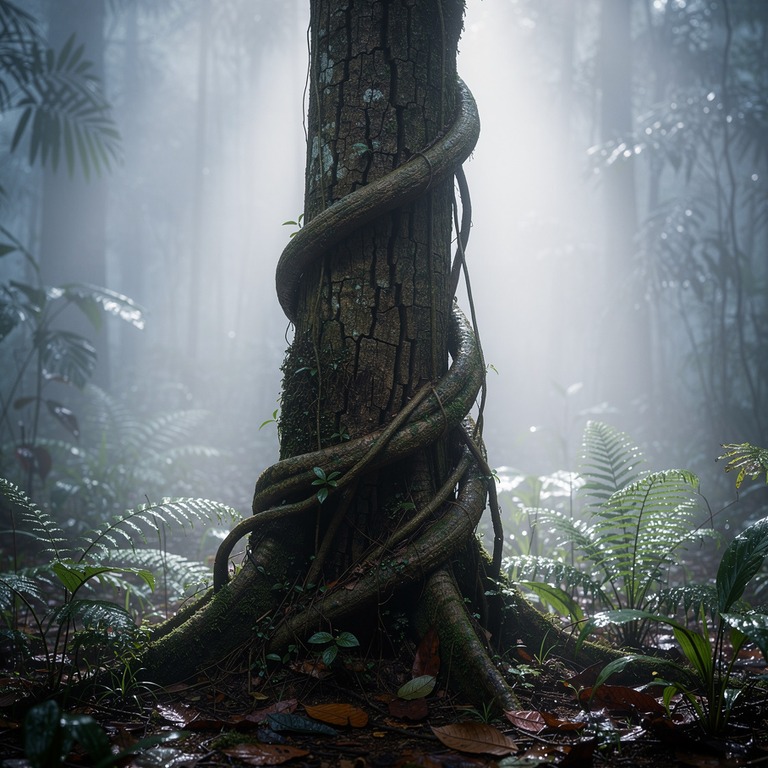
Ayahuasca and other master plants seem to work on a different layer. People describe being shown — not told, shown — exactly what their father's drinking did to their nervous system at age seven. They describe feeling their body release something that had been clenched for twenty years. They describe, sometimes, a kind of brutal clarity about who they've been pretending to be. It's not always pleasant. It's often not even pretty. But it reaches somewhere the conversation on the therapist's couch couldn't quite get to.
The master plants tradition — ayahuasca, San Pedro, tobacco, and others used ceremonially in Amazonian and Andean lineages — treats these substances as teachers rather than drugs. Whatever you make of that framing, the practical point is this: the experience tends to be intelligent in a way that random brain chemistry shouldn't be. People consistently report being met with exactly the thing they needed to look at, whether they wanted to or not.
What the Experience Actually Feels Like
Let's be concrete, because the vague mystical descriptions online do nobody any favors. A typical ayahuasca ceremony starts after dark. You drink a small cup of a thick, bitter brew that tastes genuinely terrible — expect this and you'll be fine. Nothing happens for 30 to 60 minutes. Then the first wave arrives: a kind of inner weather change, often with physical sensations, sometimes with visual patterning behind closed eyes.
Over the next four to six hours, you may experience vivid internal imagery, intense emotion, insights that feel significant, memories you'd forgotten, nausea, purging (vomiting is common and often framed as part of the healing), physical sensations that move through you, moments of profound stillness, and moments where you'd really like it to be over. People sometimes laugh. People sometimes cry for an hour. People sometimes just lie there in a hammock processing something they can't quite put into words. All of this is normal.
What you probably won't experience: a cartoon vision quest with spirit animals telling you what career to pick. The marketing version of ayahuasca is largely nonsense. The real thing is more like going into deep therapy with yourself, with a facilitator holding the room, usually accompanied by icaros (medicine songs) sung by the shaman.
Who It Doesn't Work For — And When to Stay Home
I'd be doing you a disservice if I only told you the good parts. Ayahuasca is not safe for everyone. People with a personal or family history of psychosis, schizophrenia, or bipolar disorder should not drink. Full stop. The risk of triggering a serious episode is real.
There are also medication interactions that can genuinely kill you — most notably SSRIs and other serotonergic drugs. Any legitimate retreat will screen for this and require a tapering period, often six weeks off antidepressants before ceremony. If a retreat doesn't ask about your meds, that's a red flag large enough to see from space.
Beyond the medical contraindications, there's the psychological readiness question. If you're in acute crisis — actively suicidal, in the middle of a psychotic break, days out of a traumatic event — this is not the moment. Ayahuasca amplifies and surfaces material. If you don't have the ground underneath you to meet what comes up, the experience can set you back rather than help.
- Any history of psychotic or bipolar disorders (yours or close family)
- Currently on SSRIs, MAOIs, lithium, or several other psychiatric medications
- Serious heart conditions or uncontrolled high blood pressure
- Pregnancy
- Active crisis without a support system in place for after
How to Tell a Real Retreat From a Tourist Trap
The ayahuasca world has grown fast, and the quality control has not kept up. Some retreats are run by indigenous lineage holders with forty years of practice. Others are run by someone who did a weekend training last year and bought a nice property. Learning the difference matters.
Signs you're looking at a serious operation: thorough medical and psychological intake, honest conversations about contraindications, small group sizes (fewer than fifteen participants per ceremony is a good rule of thumb), experienced facilitators who've trained for years rather than weeks, clear preparation and integration protocols, and a willingness to turn people away who shouldn't drink. If a retreat accepts anyone with a credit card, run.
Signs you're looking at trouble: no medical screening, no mention of integration, promises of specific outcomes (“you will heal your depression”), fuzzy information about who's actually leading ceremonies, large group ceremonies with dozens of people, and anything that feels more like a wellness festival than a serious container for difficult inner work.
The Part Nobody Talks About: Integration
Here's where most people fail themselves. They spend thousands of dollars and travel to Peru or Costa Rica, have a profound experience, cry, laugh, see their life clearly for the first time in years — and then come home and change absolutely nothing. Six months later they're exactly where they started, telling the story at parties.
Integration is the unsexy work of taking what the medicine showed you and actually building a different life around it. Therapy helps. Integration circles help. Journaling helps. A regular meditation practice helps. Changing the specific relationships, habits, or jobs the medicine clearly pointed at — that helps most of all, and it's also the hardest part.
The people I've watched genuinely heal are the ones who treated ceremony as the start of the work rather than the end of it. The people who stayed stuck mostly treated it as a one-weekend intervention and expected the plant to do what only sustained effort can do.
So — Does It Help People Who Felt Nothing Would?
Honestly, yes. More often than you might expect. I've met people whose decade of depression lifted after three ceremonies and never came back. I've met recovering addicts who count their sobriety from an ibogaine or ayahuasca retreat. I've met trauma survivors who found a doorway they'd been looking for since childhood. These aren't outliers.
I've also met people for whom it didn't work. For whom nothing happened. For whom the experience was difficult without being useful. That happens too, and it's worth being prepared for the possibility that you'll fly across the world and come home without the breakthrough you were hoping for. Even then, most participants say they don't regret going.
If you're seriously considering this path, do the research, be honest with yourself about contraindications, and choose carefully. A range of vetted ayahuasca and plant medicine retreats can be browsed on our marketplace here — not as the answer, but as a starting point for the kind of decision that deserves real care. Whatever you choose, choose it with your eyes open. That alone puts you ahead of most people who show up to ceremony hoping to be rescued.


Craving More Stories?
Join our ShopAyahuascaRetreats newsletter for the latest updates on thrilling
destinations and inspirational tales, delivered straight to your inbox!
We value your privacy. Your email address will never be shared or published.