 English
 Deutsch
 Français
 Nederlands
 Español
SHOP AYAHUASCA RETREATS BLOG
Ayahuasca on Screen: What Films Get Right (and Wrong) About the Vine

Ivy Chan
August 7, 2026
Your ultimate guide to discover transforming ayahuasca and psychedelic experiences. Dive into serene destinations and elevate your consciousness to unparalled heights.
Discover Ayahuasca & Psychedelic Retreats NowSearch for ayahuasca & psychedelic retreats
Discover retreats, trainings, and holidays from all over the world
Someone always asks me, usually two drinks into a conversation about plant medicine, whether there's a film they should watch first. A documentary. Something. Anything that might show them what an ayahuasca ceremony actually looks like before they book a flight to Iquitos or a rustic retreat in Costa Rica. It's a fair question. Ayahuasca is one of the most talked-about and least understood psychedelics on the planet, and for most people the closest they'll get before drinking the brew themselves is a screen.
Here's the honest answer: film can crack the door open, but it can't walk you through it. What follows is a working guide to what the camera catches, what it misses, and how to use movies about plant medicine as one small piece of your research — not the whole thing.
Why Ayahuasca Is So Hard to Film
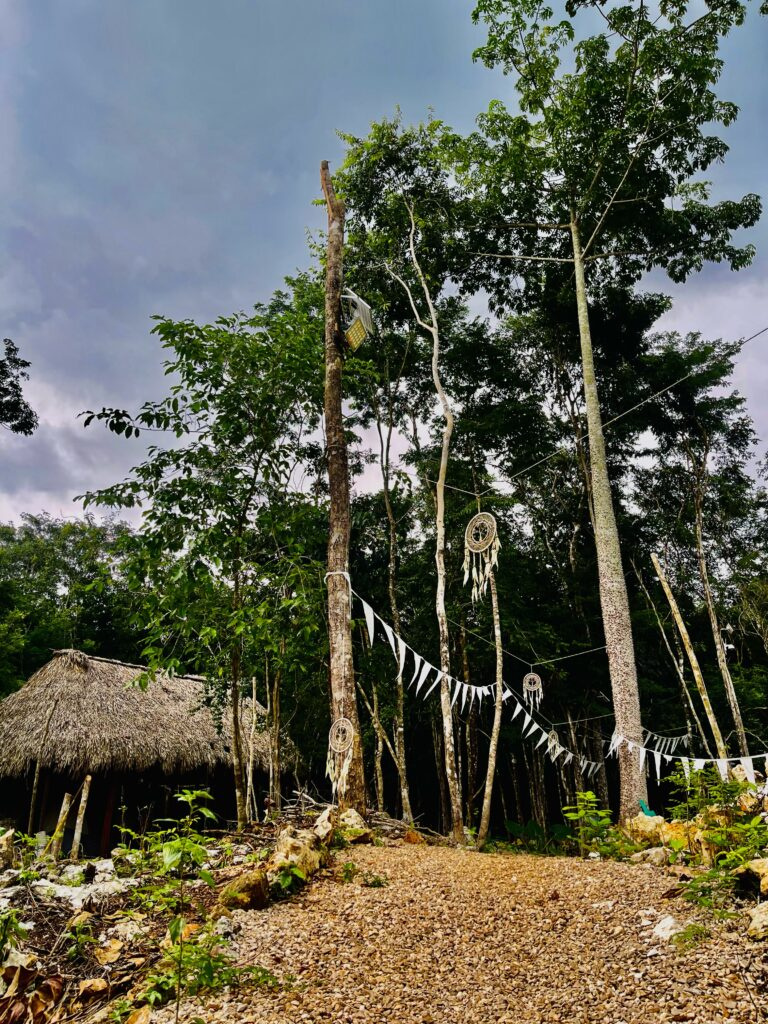
Ayahuasca isn't a spectator sport. The interesting parts happen inside your skull. A camera can film the maloca, the icaros, the moment someone reaches for a bucket at three in the morning — but it can't film the memory of your grandfather that came back with unbearable clarity, or the sudden certainty that you have to leave your job. The medicine works in a private theater and refuses to hand over the script.
Directors know this, so they compensate. Some use trippy visual effects — swirling fractals, saturated color, glowing serpents. Others go the opposite way and shoot documentary-style, letting participants talk to camera the next morning. Both approaches have limits. The fractals look ridiculous to anyone who's actually sat in ceremony (real visions rarely look like a screensaver), and the morning-after interviews always feel like someone trying to describe a dream that's already dissolving.
The best films accept this and lean into the atmosphere instead — the humidity, the smoke, the shuffling of the shaman's feet, the long silences. They tell you what the room felt like, and let your imagination do the rest.
The Documentaries People Actually Recommend
If you spend any time on forums where retreat-seekers gather, a handful of titles come up again and again. Rather than name-check every one (half of them are on shaky streaming platforms and drift in and out of availability), here's the shape of what's out there and what each type gives you.
- Journalistic exposés — a reporter goes to the Amazon, drinks, comes back. These are useful for a sober outsider's perspective, but they often over-index on the exotic and under-report on the boring, essential middle days of a retreat.
- Insider practitioner films — made by people who've been drinking for years, often featuring interviews with respected curanderos. These are richer, but they can slip into reverence that skips the harder questions.
- Addiction-recovery documentaries — usually follow participants using ayahuasca or ibogaine to break heroin, alcohol, or opioid dependency. These are often the most emotionally honest, because the stakes are unmistakable.
- Scientific documentaries — brain scans, neuroscientists, clinical trials. Good for skeptics. Less good at conveying what the experience actually feels like.
- Fictional or dramatized takes — feature films that use ayahuasca as a plot device. Almost always inaccurate, occasionally beautiful, worth watching only if you already know the real thing well enough to enjoy the liberties.
My rough advice: watch one from each of the first three categories, skip the fictional stuff until later, and take everything with a grain of salt. Every film is somebody's angle.
What Movies Consistently Get Wrong
A few patterns show up over and over, and it's worth naming them so you can spot the distortion when you see it.
They over-dramatize the visions. Real ayahuasca visions are sometimes stunning and sometimes not. Plenty of ceremonies pass with almost no visual content at all — just body sensations, emotional waves, or the flat feeling of nothing much happening. If your only reference is film, you'll show up expecting a Marvel movie and feel cheated when the medicine hands you a slow, gray meditation on your childhood instead.
They under-represent the purge. Yes, most films mention vomiting. Few of them sit with it long enough to show what it really is — not a bug, but often the whole point. The purge is where a lot of the healing seems to happen. Diarrhea and full-body shaking and crying jags don't make good cinema, so they get edited down. Real ceremonies do not.
They romanticize the shaman. Every documentary has that shot: an elder in a feathered crown, backlit by candlelight, blowing smoke over a bowl. It's a beautiful image. It's also, on its own, meaningless. A theatrical costume tells you nothing about a curandero's training, ethics, or safety record. The industry has bad actors — literally and figuratively — and film's love of the aesthetic can obscure that.
How to Use These Films Without Getting Misled
Watching movies about ayahuasca before a retreat is like watching surfing videos before you learn to surf. Helpful for orientation. Useless as a substitute for actually getting in the water. A few practical suggestions:
- Watch with a notebook. Write down every question that comes up. Bring that list to any retreat you're vetting and see how they answer.
- Notice who's speaking. Is it participants a week after the ceremony, when everything feels profound? Or people six months later, who've had time to integrate — or not? The second group is more useful.
- Be skeptical of before-and-after arcs. A film needs a narrative. Real life rarely provides one that clean. If someone's addiction, depression, or trauma resolves in the film's ninety minutes, ask what happened in the two years after the camera left.
- Cross-reference with written accounts. Long-form written trip reports, especially from people who've drunk many times, are often more honest than film. They have space to admit the ambiguity.
- Talk to a human. If you can find someone who's actually attended the retreat you're considering, one conversation with them will teach you more than ten documentaries.
The Bigger Question Films Rarely Ask
Most ayahuasca movies focus on the ceremony itself because that's where the drama lives. What they almost always skip is the least photogenic and most important stuff — the weeks before and the months after. The dieta. The intention-setting. The relationship with a facilitator you can actually reach at 2 a.m. when something surfaces you weren't ready for. Integration circles. Therapy. The slow work of translating an insight into a changed life.
This is where plant medicine either becomes genuine healing or turns into expensive tourism. And it's exactly the part film can't capture, because there's nothing to shoot. A person having a hard Tuesday six weeks after their ceremony, sitting on the edge of their bed, deciding not to call their dealer — that's the real story. It doesn't have a soundtrack.
If you're doing this research because you're weighing a retreat for addiction, depression, trauma, or one of those stuck patterns that won't seem to shift no matter what you try, take the films for what they are: a tourist brochure for a country you're still deciding whether to visit. Useful. Limited. Never the whole picture.
A Practical Path Forward
If a movie has moved you enough to keep researching, that's a signal worth taking seriously. Just don't let the signal become the whole plan. Read participant accounts. Learn the safety basics — the SSRI interaction, the cardiac contraindications, why MAOIs and certain foods don't mix. Understand the difference between traditional Amazonian lineages and modern hybrid retreats. Ask a prospective retreat exactly how they screen participants, what medical support they have on-site, and what integration looks like after you fly home.
And when you're ready to move from watching to seriously exploring, a curated selection of vetted ayahuasca retreats and other plant-medicine journeys can be browsed on our marketplace here. Take your time. This is the kind of decision that rewards patience — and the vine, from everything I've seen and heard, tends to meet people who've done their homework.
Craving More Stories?
Join our ShopAyahuascaRetreats newsletter for the latest updates on thrilling
destinations and inspirational tales, delivered straight to your inbox!
We value your privacy. Your email address will never be shared or published.