 English
 Deutsch
 Français
 Nederlands
 Español
SHOP AYAHUASCA RETREATS BLOG
Ayahuasca for Treatment-Resistant Depression: What a Landmark Clinical Trial Actually Found

Finn Ashton
May 30, 2026
Your ultimate guide to discover transforming ayahuasca and psychedelic experiences. Dive into serene destinations and elevate your consciousness to unparalled heights.
Discover Ayahuasca & Psychedelic Retreats NowSearch for ayahuasca & psychedelic retreats
Discover retreats, trainings, and holidays from all over the world
Depression that refuses to budge is a particular kind of exhausting. You've tried the SSRIs. Maybe the SNRIs. Maybe therapy, maybe ketamine, maybe a sabbatical that didn't sabbatical the way you hoped. And somewhere around the third or fourth failed protocol, you start googling things you wouldn't have googled five years ago. Ayahuasca. Psilocybin. Plant medicine. Master plants. The search histories of people quietly drowning are remarkable.
So let's talk about a study that keeps showing up in those searches — a randomized, placebo-controlled trial out of Brazil that tested whether a single dose of ayahuasca could shift treatment-resistant depression in a measurable way. Not anecdote. Not vibes. Actual MADRS scores, actual control group, actual statistical significance. Here's what the researchers found, why it matters, and — honestly — what it doesn't tell you about whether a retreat is the right move for your situation.
The trial in plain English
A research team led by Fernanda Palhano-Fontes ran a double-blind study with 29 adults who had been diagnosed with treatment-resistant depression — meaning at least two prior antidepressants hadn't worked. Half received a single dose of ayahuasca. The other half got a placebo designed to mimic the bitter, earthy unpleasantness of the brew so participants couldn't easily guess which group they were in. That detail matters more than it sounds. Designing a convincing placebo for a substance that makes you purge and see geometry is genuinely hard.
Depression severity was tracked using two well-established clinical instruments: the Montgomery-Åsberg Depression Rating Scale (MADRS) and the Hamilton Depression Rating Scale. Researchers measured baseline scores before dosing, then again on days one, two, and seven afterward. The compressed timeline is on purpose — one of the genuinely strange things about psychedelics is how quickly the antidepressant signal appears, in contrast to the four-to-six weeks SSRIs typically need.
What the numbers actually showed
The ayahuasca group's MADRS scores were significantly lower than the placebo group's at every measurement point. By day seven, 64% of the ayahuasca group met the threshold for clinical response. In the placebo group, that number was 27%. There was also a trend toward full remission in the ayahuasca arm by the end of the week — a finding small studies usually can't quite reach statistical confidence on, but which lines up with what later psilocybin work has shown.
A few things worth flagging here. First, effect sizes — basically, how big the difference between groups was — kept growing from day one to day seven. The ayahuasca group wasn't just feeling better immediately and then sliding back to baseline. They were getting better as the week went on. That's a pattern researchers find genuinely interesting, because it suggests something more durable than a chemical mood lift.
Second, this was 29 people. It's a real, peer-reviewed, well-designed trial — but it's small. Replicating these results at scale, with diverse populations and longer follow-up windows, is still ongoing work in the broader psychedelic research field. The signal is strong enough that it shouldn't be dismissed. It's also not yet strong enough to call ayahuasca a treatment in the regulated, prescription-drug sense.
Why ayahuasca seems to work differently than antidepressants
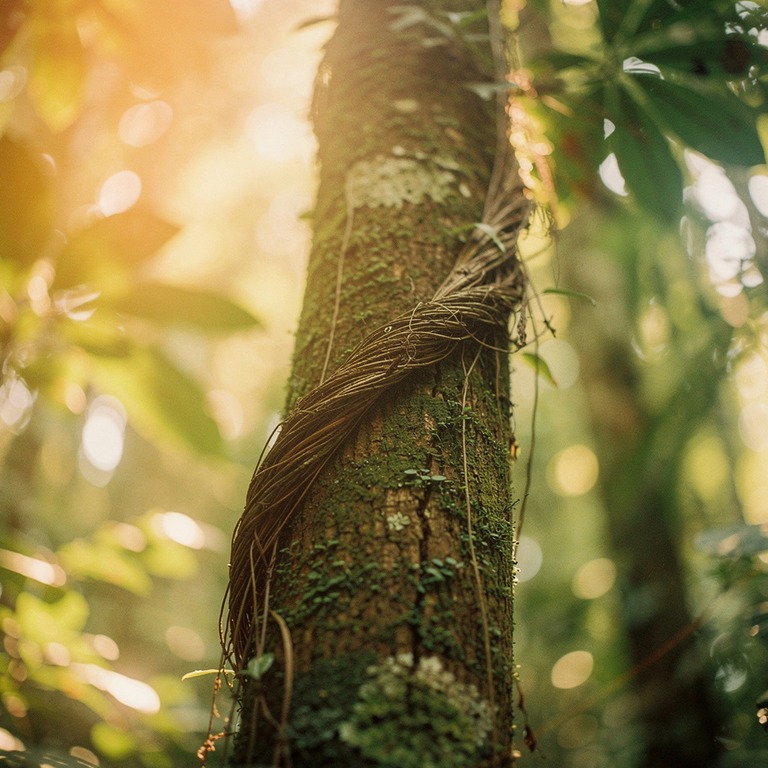
Conventional antidepressants tinker with serotonin levels over time, hoping the brain settles into a better baseline. Ayahuasca does something stranger. The brew contains DMT, a powerful psychedelic, combined with MAO-inhibiting compounds from the Banisteriopsis caapi vine that let the DMT survive your digestive system and reach the brain. The result is several hours of intense altered consciousness — visions, emotional content surfacing in unexpected ways, sometimes very physical purging, sometimes very confronting psychological material.
Researchers studying this and related compounds think the antidepressant effect probably isn't about the visuals or the trip narrative itself. It seems to involve a temporary loosening of the brain's default-mode network — the circuitry that handles rumination, self-referential thinking, the same loop of self-criticism that depression tends to grind on. When that loop briefly quiets, people often report being able to see themselves and their situation from outside the loop. The therapeutic value, if there is one, seems to live in what you do with that opening in the days and weeks afterward.
This is part of why ayahuasca is being studied at all instead of being lumped with recreational substances. The mechanism is genuinely different. And for treatment-resistant patients — people for whom standard mechanisms haven't worked — a different mechanism is, at minimum, an interesting lead.
What this study doesn't tell you
If you're reading this because you're personally considering a retreat, here's where I'd slow down. A controlled clinical trial happens in a hospital setting with medical screening, prepared participants, and emergency support a few doors away. It is not the same experience as showing up to a ceremony in the jungle, in Spain, in Costa Rica, or in someone's basement. Outcomes outside a clinical setting depend enormously on:
- Whether you're medically appropriate for the brew (SSRIs, MAOIs, certain heart conditions, and bipolar disorder are serious contraindications).
- The quality, sobriety, and experience of the facilitator or curandero running the ceremony.
- The structure of the container — how participants are screened, what happens if someone has a hard time, how the days after the ceremony are held.
- Whether anyone helps you integrate what comes up, or whether you're sent home Monday morning to figure it out alone.
The trial measured what ayahuasca can do under near-ideal conditions. Most retreats are not near-ideal conditions. Some are excellent, some are mediocre, and a few are genuinely unsafe. The decision you're making isn't really "is ayahuasca an antidepressant" — the research says it has antidepressant properties. The decision is whether a specific retreat, run by specific people, is the right context for you to encounter it.
If the research is pulling you toward a ceremony
A few honest pieces of guidance from years of writing about this world. Don't go off your antidepressants without a doctor — the interaction between SSRIs and ayahuasca is dangerous, and any reputable retreat will require a supervised taper weeks in advance. Be skeptical of any place that doesn't ask detailed medical and psychiatric questions before booking. A retreat that just takes your money and shows up to greet you at the airport is not a retreat that's looking out for you.
Take preparation seriously. The diet, the abstaining from alcohol and casual sex and pork and whatever else the tradition you're working with asks for — it's not arbitrary. It's a way of arriving with less noise so the experience has room to work. Take integration even more seriously. The week after a ceremony is when the actual rewiring happens, or doesn't. Plan for quiet time. Plan for a therapist, ideally one familiar with psychedelic experiences. Plan to not make any major life decisions for at least a month.
And be honest with yourself about why you're going. Ayahuasca isn't a magic eraser for depression. The clinical data is genuinely encouraging — that 64% response rate at day seven is the kind of number that makes psychiatrists sit up — but the people most likely to benefit are the ones who treat the ceremony as the beginning of work, not the end of it.
Where the science is heading
The Palhano-Fontes trial is one of several lines of evidence converging on the same conclusion: classical psychedelics, used carefully and in supportive contexts, seem to do something for depression that the current generation of antidepressants struggles to do. Psilocybin has a fuller research portfolio at the moment, partly because it's easier to dose-standardize than ayahuasca. But the Brazilian work on ayahuasca is part of the same broader picture, and it deserves a wider audience than it gets.
None of this is medical advice, and a single small trial doesn't rewrite psychiatry. What it does do is give people who've been failed by the existing options a legitimate, peer-reviewed reason to keep asking questions. If you've been quietly carrying treatment-resistant depression for years and the headlines about psychedelic research keep catching your eye — that instinct isn't naive. The science is real, even if it's still early.
For readers who want to take this further, a range of carefully vetted ayahuasca retreats can be browsed on our marketplace here. Whatever you decide, do the slow homework first — your future self will be grateful you didn't rush the choice.
Craving More Stories?
Join our ShopAyahuascaRetreats newsletter for the latest updates on thrilling
destinations and inspirational tales, delivered straight to your inbox!
We value your privacy. Your email address will never be shared or published.