 English
 Deutsch
 Français
 Nederlands
 Español
SHOP AYAHUASCA RETREATS BLOG
Ayahuasca and Motherhood: Sitting in Ceremony When You Have Kids at Home

Axel Hartley
August 4, 2026
Your ultimate guide to discover transforming ayahuasca and psychedelic experiences. Dive into serene destinations and elevate your consciousness to unparalled heights.
Discover Ayahuasca & Psychedelic Retreats NowSearch for ayahuasca & psychedelic retreats
Discover retreats, trainings, and holidays from all over the world
The question comes up more than you'd think, usually in a quiet voice: can I do this if I'm a mom? Sometimes it's a dad asking. Sometimes it's a single parent who's been white-knuckling depression for years and finally heard about ayahuasca from a friend. The worry underneath is always the same — am I allowed to leave for a week, and will I come back different in a way my kids can handle?
I've sat with a lot of parents in ceremony. Some arrive glowing with anticipation. Most arrive tired, guilty, and slightly panicked about the logistics they left behind. And almost all of them, by the second or third night, end up crying about their children in a way that surprises them. Ayahuasca has a habit of going straight for the thing you love most.
So let's talk honestly about what it looks like to consider a plant medicine retreat when you have small humans depending on you. Not the Instagram version. The real one.
Why parents are drawn to ayahuasca in the first place
Parenthood cracks people open in ways nothing else does. The exhaustion is one thing. But underneath it, a lot of parents run into their own unhealed childhood — patterns from their family of origin that suddenly show up in how they react to a toddler's tantrum or a teenager's silence. You promised yourself you'd never yell the way your dad yelled. Then one Tuesday, you did.
That's the doorway many people walk through when they start researching plant medicine. Not spiritual seeking in the abstract. Something much more practical: I don't want to hand my kids the same wound I got handed. Ayahuasca, ibogaine, psilocybin — the master plants have a reputation for surfacing exactly that material and letting people work with it in a way that years of talk therapy sometimes hasn't touched.
Addiction sits in this territory too. Plenty of parents come to plant medicine because they've been quietly drinking too much, or leaning on prescription meds, or scrolling their life away, and they're scared of what their kids are watching them model. Psychedelic-assisted recovery isn't a magic wand, but for some people it's the interruption that finally sticks.
Is it responsible to leave your kids for a week?
Here's the honest answer: it depends entirely on your situation, and no one on the internet can decide it for you. But there are useful questions to sit with before you book anything.
- How old are your children? A nursing infant is a different calculation than a nine-year-old who'll happily spend a week at grandma's.
- Who's your ground crew? Retreat weeks are logistically demanding for whoever's covering you. That person needs to be genuinely willing, not guilt-volunteered.
- What's your reintegration window? You should not fly home from a retreat on Sunday night and be back at school pickup Monday morning. More on this below.
- Are you stable enough to go? If you're in acute crisis, a remote jungle retreat may not be the right container. Sometimes the more grounded move is therapy first, medicine later.
I've watched parents do this well and I've watched parents do it badly. The ones who do it well tend to over-prepare the home front and under-promise their family about what will change. The ones who struggle tend to treat the retreat as an escape hatch and come home expecting everyone else to have transformed alongside them.
What actually happens in an ayahuasca ceremony
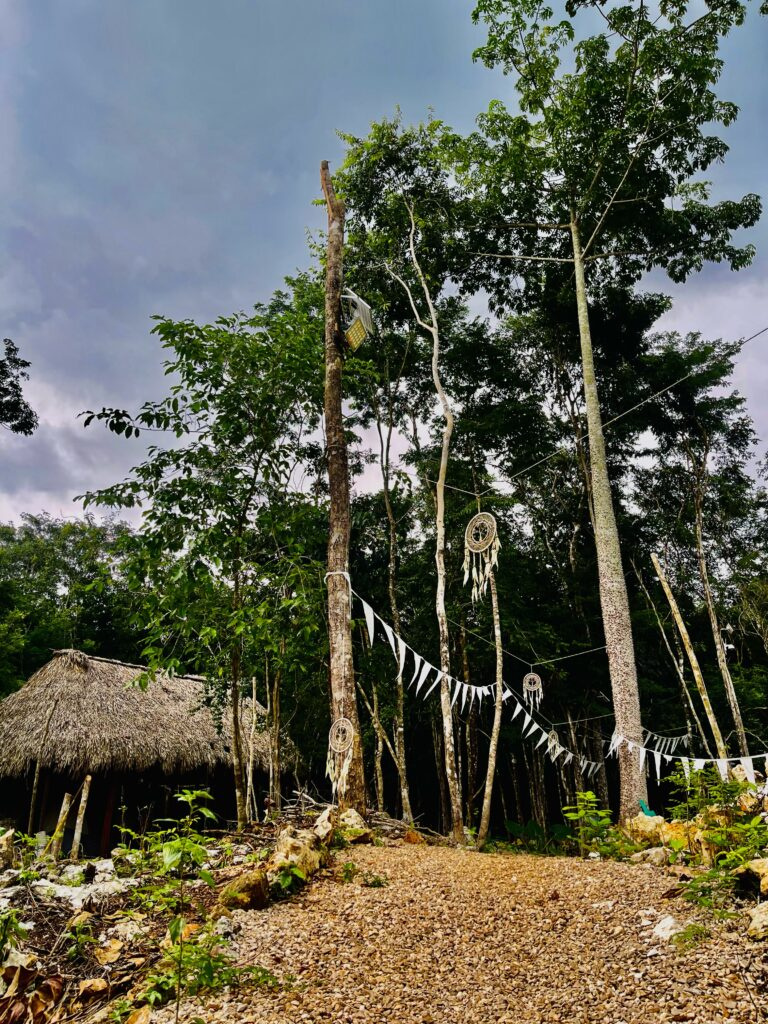
If you've never been, the mechanics are less mysterious than the mythology suggests. You gather in a ceremonial space — often a maloca, a round wooden structure — usually after sunset. A facilitator or curandero pours a small cup of dark, bitter brew. You drink it. Then you wait.
Somewhere between forty minutes and two hours later, the medicine arrives. What that looks like varies wildly. Some people see vivid geometric visions. Some people have conversations with parts of themselves they'd forgotten existed. Some people purge — vomiting, crying, shaking — and describe it afterward as one of the most cleansing experiences of their life. Some people lie there and feel almost nothing on night one, then get flattened on night two. Your mileage will vary. That's not a cliché; it's the actual reality of working with this plant.
For parents specifically, one theme comes up again and again: encounters with your own mother or father, often ones who are no longer alive or no longer speaking to you. Ayahuasca seems to have a nose for the lineage stuff. People report understanding, for the first time, why their parent was the way they were — and, sometimes more importantly, why they are the way they are with their own kids.
Choosing a retreat when you can't afford a bad one
A parent's time and money are limited. You can't chase a second retreat next month if the first one goes sideways. So the vetting matters more.
- Look for lineage and years, not marketing. Facilitators who've been holding ceremonies for a decade or more, ideally trained in a traditional lineage, tend to run safer spaces than well-branded newcomers.
- Ask about medical screening. A reputable retreat will ask about SSRIs, heart conditions, and psychiatric history before they take your deposit. If they don't, that's a red flag.
- Ask what happens if someone has a hard time. Every serious retreat has a plan for this. The facilitator should be able to describe it clearly.
- Look at the ratio. One or two facilitators for twenty participants is not a container — it's a crowd. Smaller groups or better ratios mean you're actually held.
- Ask about integration. Retreats that offer follow-up calls or integration coaching are taking the work seriously. Ones that wave goodbye at the airport are not.
Prices vary enormously — a straightforward week in Peru might run $1,500 to $2,500, while a more clinical or luxury setting in Costa Rica or Mexico can be $4,000 to $8,000 and up. Cheaper isn't always worse, and pricier isn't always better. What you're paying for is the container and the people holding it.
Coming home to the kitchen table
The part nobody prepares parents for is reentry. You've spent a week in a place with no wifi, no children's demands, no work email. You've possibly had the most profound experiences of your adult life. Then you land at the airport and your six-year-old wants Goldfish crackers immediately.
Give yourself a buffer. Two or three days minimum between the retreat ending and full parenting resuming. If you can arrange a night alone in a quiet hotel before the family reunion, do it. Not because you don't want to see them — because the nervous system needs a soft landing before it can co-regulate with small children again.
Integration is the actual work. The ceremony is the seed; integration is the tending. Journaling, walks, a good therapist familiar with psychedelic experiences, occasional check-ins with the friends you sat with — these are the practices that turn a week in the jungle into a slow, steady change in how you show up at home. Expect the insights to come in waves for months, not all at once.
What to tell your kids (and what not to)
This depends on ages and family culture, and there's no single right answer. Younger kids don't need details. “Mama went to a wellness retreat to feel better” is often enough. Older kids and teenagers, especially ones who might one day be curious about substances themselves, sometimes benefit from more honesty — framed carefully, without glamorizing.
What matters isn't the exact words. It's whether your behavior over the following months matches the story you told. Kids read the change, not the explanation. If you come home more patient, more present, less reactive — that's the education. If you come home talking about how transformed you are but still snapping about the dishwasher, they'll notice that too.
Plant medicine isn't a shortcut to being a better parent. It's a mirror, and sometimes a scalpel. What you do with what it shows you is the whole game. For parents who want to keep exploring this path thoughtfully, a range of vetted ayahuasca retreats can be browsed on our marketplace here. Take your time with the decision. The medicine will still be there when you're ready.

Craving More Stories?
Join our ShopAyahuascaRetreats newsletter for the latest updates on thrilling
destinations and inspirational tales, delivered straight to your inbox!
We value your privacy. Your email address will never be shared or published.