 English
 Deutsch
 Français
 Nederlands
 Español
SHOP AYAHUASCA RETREATS BLOG
Ayahuasca and Meditation: Why Both Rewire the Brain in Similar Ways

Axel Hartley
May 20, 2026
Your ultimate guide to discover transforming ayahuasca and psychedelic experiences. Dive into serene destinations and elevate your consciousness to unparalled heights.
Discover Ayahuasca & Psychedelic Retreats NowSearch for ayahuasca & psychedelic retreats
Discover retreats, trainings, and holidays from all over the world
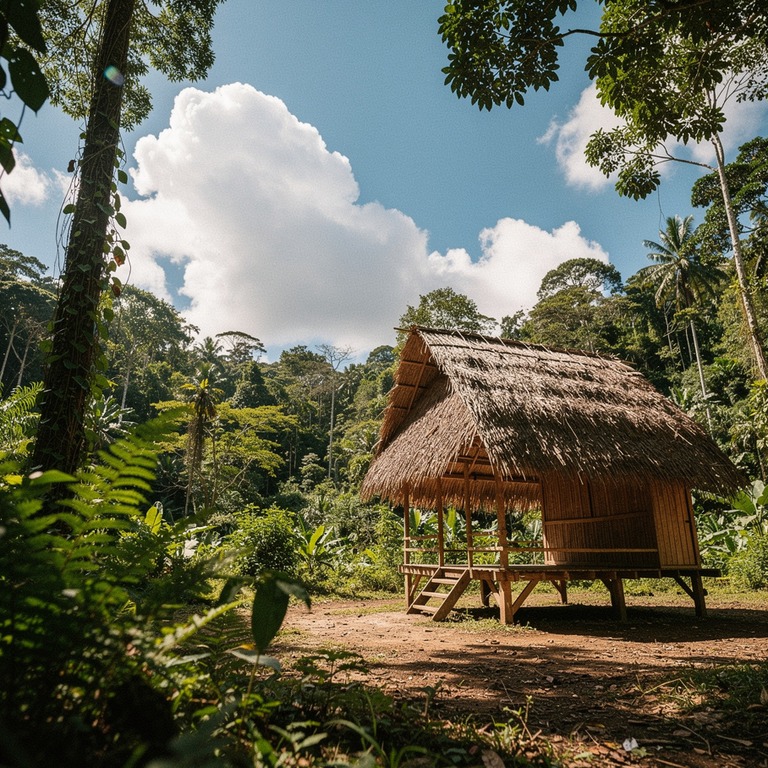
Picture two scenes. In one, somewhere off a muddy trail in the Peruvian Amazon, a thatched ceremonial house glows with candlelight while an Onanya healer pours a thick, bitter brew into a wooden cup. In the other, a neuroscientist in a Barcelona hospital watches brain scans flicker across a monitor as a volunteer comes down from that very same medicine. Different rooms. Different languages. Oddly similar findings.
That's the part that keeps catching researchers off guard. The traits that show up in long-term meditators — the people who've logged thousands of hours on the cushion — are showing up in people who've sat with ayahuasca a handful of times. Openness. Optimism. A particular kind of mental distance from one's own thoughts. For anyone weighing whether a psychedelic retreat could help with depression, addiction, or the kind of stuck thinking that grinds you down for years, this overlap matters.
What Ayahuasca and Meditation Actually Have in Common
The trait researchers keep pointing to is called decentering. It's a clunky word for something most of us have glimpsed once or twice. Decentering is the ability to watch a thought arise — say, I'm worthless or I'll never get past this — and recognise it as a thought, not as a fact about who you are. You see it. You don't become it.
This is one of the explicit aims of mindfulness practice. It's also a documented target of certain evidence-based depression treatments, particularly mindfulness-based cognitive therapy. People who score higher on decentering tend to score lower on measures of anxiety, depression, and unresolved grief. That's not a fringe claim. It's been replicated across plenty of studies of long-term meditators.
What's newer is the finding that ayahuasca seems to nudge people toward the same psychological territory — and faster. Volunteers in studies run by groups like the Beckley Foundation report higher decentering scores after ceremony, and those scores track with reductions in depressive symptoms and improvements in overall well-being. The brew, in other words, appears to be giving people a glimpse of a mental skill that monks spend decades cultivating.
The Brain Science: What's Actually Changing Up There
Surveys can only take you so far. People sometimes report feeling better because they expect to feel better, or because they paid a lot of money to go sit in the jungle and would prefer not to feel like idiots. That's why the neuroimaging work matters.
In Barcelona, neurologist Jordi Riba has been scanning the brains of depressed volunteers who've taken ayahuasca. In one small study of seventeen people with depression, scans showed a noticeable drop in activity in brain regions that tend to be overactive in depressed and anxious people — particularly the parts associated with rumination and the constant self-referential chatter that keeps depressive loops spinning. Follow-up work with long-term ayahuasca users has suggested those same regions may actually be physically smaller.
The pattern lines up with what David Nutt at Imperial College London has been describing for years. People with depression or addiction, he argues, get locked into patterns of thought driven by the brain's control center — what neuroscientists call the default mode network. Psychedelics seem to temporarily knock that network offline. The mind goes loose. New connections form. And for some people, the rigid loop they've been stuck in for a decade simply opens.
Long-term meditators, it turns out, also show quieter default mode networks. Same brain region. Same dampening effect. Two completely different routes to the same neurological neighbourhood.
Why This Matters If You're Considering a Retreat
If you've landed on this article, there's a decent chance you're not reading it for the science alone. You're trying to figure out whether a ceremony, or a week-long retreat, or a longer stretch with master plants might actually do something for you. Fair question. Here's what the research above suggests — and what it doesn't.
What it suggests:
- Ayahuasca isn't doing something mystical that has no relationship to known therapeutic processes. It appears to fast-track a psychological skill (decentering) and a brain-state shift (quieter default mode activity) that we already know are linked to better mental health.
- For people stuck in rigid patterns — depression, addiction, complicated grief — that loosening can be the difference between another year of grinding and a genuine opening.
- The benefits seem to require integration. The ceremony cracks something open. The weeks and months afterward decide whether it stays open.
What it doesn't suggest:
- That ayahuasca is a one-shot cure. Nobody serious in this field claims that.
- That every retreat is equivalent. There's a wide gulf between a well-run centre with trained facilitators, medical screening, and aftercare — and a weekend operation run by someone who learned the songs from YouTube.
- That you can skip the hard part. The medicine shows you the room. You still have to walk around in it after you get home.
Plant Medicine, Master Plants, and the Wider Family of Psychedelics
Ayahuasca isn't alone here. Research out of NYU and Johns Hopkins on psilocybin — the active compound in magic mushrooms — has produced strikingly similar results in people with treatment-resistant depression, end-of-life anxiety, and alcohol use disorder. Ibogaine, used for opioid addiction, appears to interrupt withdrawal and compulsion in ways no pharmaceutical has matched. San Pedro and peyote, both mescaline-bearing cacti, have their own long traditions of use for psychological and spiritual healing.
In Amazonian traditions, ayahuasca sits within a broader category called master plants — teacher plants taken under dieta, sometimes for weeks at a time, to address specific physical, emotional, or spiritual issues. It's a framework worth understanding before booking anything. The medicine isn't the whole picture; the relationship between participant, facilitator, plant, and integration is.
One useful comparison to chew on: meditation is free, available anywhere, and works — slowly, reliably, for those who commit. Plant medicine is expensive, geographically inconvenient, legally complicated in most countries, and works — sometimes dramatically, for those who commit to the much harder integration work afterward. Neither one is a shortcut. They're different on-ramps to the same territory.
What to Look for if You Decide to Go
If the research above has you genuinely curious rather than just intrigued, a few things worth knowing before you put down a deposit:
- Screening matters. Reputable centres ask about your medical history, your medications (SSRIs and ayahuasca don't mix well), and your mental health. If a retreat doesn't ask, that's a red flag — not a green light.
- Facilitator lineage and training. Ask who's running the ceremony. Ask how they trained. Ask how long they've been doing this. Vague answers are answers.
- Group size and ratios. A ceremony with fifty participants and two facilitators is a different experience from one with twelve participants and four facilitators. The latter is what you want.
- Integration support. What happens the day after? The week after? The month after? Centres that hand you a hug and a ride to the airport are not the ones doing this well.
- Honesty about risk. Anyone telling you ayahuasca is universally safe and gentle is selling something. Sit with people who'll tell you about the hard nights too.
The reason any of this matters is that the brain changes the research is documenting don't happen in a vacuum. They happen inside a container — the setting, the people, the songs, the silence afterward. Get the container right and the medicine has somewhere to land. Get it wrong and you've spent a lot of money to feel sick in a hut.
Sitting with the Decision
The most honest thing I can tell you, after years around this work, is that the people who get the most from plant medicine tend to be the ones who didn't arrive expecting it to fix them. They arrived curious. They did the prep. They sat with what came up — pleasant or otherwise — and then they kept doing the work once they got home. Meditation, therapy, journaling, time with people who knew them before. The retreat was the doorway, not the destination.
The science is catching up to what Amazonian traditions and contemplatives have been saying for a long time: there's more than one way to quiet the noisy part of the mind that's been making you miserable. Some people find it on a cushion. Some find it in a maloca at three in the morning. For readers who want to take this further, a range of curated ayahuasca and plant-medicine retreats can be browsed on our marketplace here. Whatever you choose, choose it with your eyes open.
Craving More Stories?
Join our ShopAyahuascaRetreats newsletter for the latest updates on thrilling
destinations and inspirational tales, delivered straight to your inbox!
We value your privacy. Your email address will never be shared or published.