 English
 Deutsch
 Français
 Nederlands
 Español
SHOP AYAHUASCA RETREATS BLOG
Ayahuasca and Identity: What Plant Medicine Reveals About the Self

Fiona Holloway
August 4, 2026
Your ultimate guide to discover transforming ayahuasca and psychedelic experiences. Dive into serene destinations and elevate your consciousness to unparalled heights.
Discover Ayahuasca & Psychedelic Retreats NowSearch for ayahuasca & psychedelic retreats
Discover retreats, trainings, and holidays from all over the world
There's a moment, usually somewhere in the second or third hour of an ayahuasca ceremony, when the story you've been telling yourself about who you are starts to come apart at the seams. Not violently. Not always. Sometimes it happens more like a slow unraveling — a thread you didn't know was loose gets tugged, and suddenly the whole tapestry of your identity looks like a costume you've been wearing for decades.
People come to ayahuasca retreats for a lot of reasons. Addiction. Depression. Grief they can't process. A creeping sense that something's fundamentally off. But underneath most of those specific complaints is a quieter, harder question: who am I actually, when you strip away the roles? That's the question the medicine tends to answer, whether you asked it out loud or not.
Why Identity Cracks Open on Plant Medicine
Ayahuasca doesn't care about your LinkedIn profile. It doesn't care that you're a lawyer, a mother, a recovering addict, a Buddhist, a skeptic. Those identities are useful in daily life — they help you navigate school pickup and tax returns — but in ceremony, they tend to get set aside. What's left underneath is often unfamiliar, sometimes uncomfortable, and occasionally the most honest version of yourself you've encountered in years.
Psychologists who study psychedelics have a name for part of this: ego dissolution. The parts of your brain that usually maintain the boundary between you and everything else temporarily quiet down. What people describe on the other side of that quieting is remarkably consistent across cultures — a sense of belonging to something larger, a loosening of the grip that shame or fear or self-image had on their daily functioning.
This is one of the reasons plant medicine has drawn so much attention for addiction recovery, trauma work, and stuck life patterns. When the identity built around I am someone who drinks or I am someone who is broken temporarily loosens, there's an opening for something else to move in. That opening is the whole point.
The People Who Show Up Asking About Self
Sit with facilitators long enough and you notice patterns in who walks through the door. There's the corporate high-achiever who realized last year that the promotion didn't fix anything. There's the person in their late twenties who has done every kind of talk therapy and still feels like a stranger in their own skin. There's the parent whose children have left home and who now has to figure out what they want, which they haven't asked in twenty-five years.
What they share isn't a diagnosis. It's a question. Some version of: if the identity I've been performing isn't really me, then what is? Ayahuasca has a reputation for being unusually direct about that question. It doesn't hand you a new label. It tends to show you, sometimes uncomfortably, that the old ones were never the whole story.
People who identify strongly with a particular label going into a ceremony — spiritual seeker, empath, highly sensitive, chronic something — often report that the medicine either deepened their understanding of that identity or dismantled it entirely. Neither outcome is better. Both are information.
How Master Plants Work on the Self
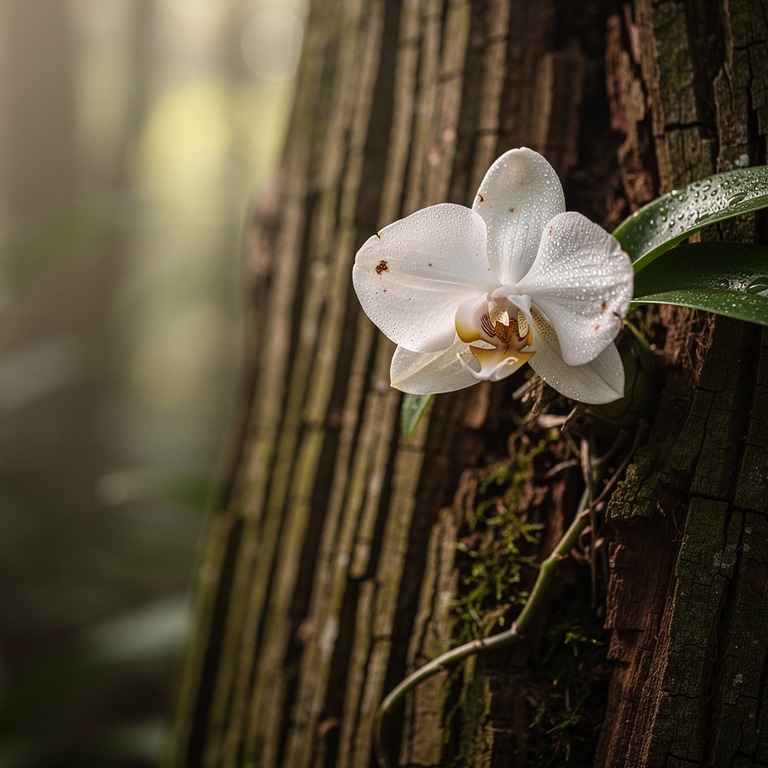
In the Amazonian traditions where ayahuasca comes from, the brew is one of several “master plants” — teachers, essentially. The idea is that certain plants, taken with proper preparation and under guidance, transmit specific kinds of knowledge and healing. Ayahuasca is often described as the plant that shows you yourself. Tobacco (mapacho), chacruna, bobinsana, and others are considered teachers in their own right, each with a different personality and specialty.
This framing is worth taking seriously, whether or not you buy the metaphysics. Approaching the medicine as a teacher rather than a drug tends to change how people prepare, how they behave in ceremony, and what they take away from it. It's a very different orientation than let's see what this substance does to my brain.
Facilitators trained in these traditions will often say the plant chooses what to show you. You come with an intention — say, I want to understand my anxiety — and the medicine might show you something entirely different that turns out, in retrospect, to be exactly what needed addressing. This is one reason why setting rigid expectations rarely works.
What Ego Dissolution Actually Feels Like
The clinical term makes it sound like a lab procedure. The lived experience is stranger and more varied than any single description can capture. Some people describe becoming a point of awareness with no body attached, floating in something that feels like warm water made of light. Others describe watching their own life play back like a film and realizing they weren't the main character they'd assumed they were.
A few common threads:
- The sense that your name, your history, and your personality are temporary arrangements — real enough, but not the deepest layer.
- An awareness that connection with other beings, other lives, or nature itself is more fundamental than separation.
- Sometimes a wave of grief for how much time was spent defending an identity that turned out to be small.
- Sometimes a wave of relief at not having to defend it anymore.
- Occasionally, terror — because losing your sense of self, even temporarily, can feel like dying if you resist it.
That last one is worth flagging. Not every ceremony is blissful. The medicine has a reputation for showing people what they've been avoiding, and identity is often at the top of that avoidance list. This is why facilitator skill, retreat vetting, and integration support matter so much.
Integration: Where the Real Work Happens
Here's what nobody selling a retreat wants to say too loudly: the ceremony is the easy part. What happens in the weeks and months afterward — how you translate the insights back into a life that still has a mortgage and a job and family dynamics — is where most of the difficulty lives.
People who come home from an ayahuasca retreat convinced they've been fundamentally changed sometimes discover, three months later, that the old identity has quietly reasserted itself. The insights are still there, but the behaviors haven't shifted. This is normal. It's also solvable, but it requires deliberate work.
Practical integration tools that actually help:
- A therapist or integration coach familiar with psychedelic experiences. Regular talk therapy can be useful, but someone who understands the territory is better.
- A daily practice — meditation, journaling, breathwork, movement — that gives you a quiet enough interior to keep listening to what the medicine surfaced.
- Community. Other people who have done this work. Not to compare notes about visuals, but to normalize the ongoing recalibration.
- Patience. Real identity change takes months to years, not weekends.
- Avoiding the temptation to sign up for the next ceremony too fast. Sometimes the medicine's most important message needs a year to metabolize.
Choosing a Retreat if Identity Work Is Your Reason
If what's drawing you toward ayahuasca is a question about who you are — rather than, say, a specific clinical condition — a few things matter more than the brochure photos.
Look for retreats that take screening seriously. If they'll book you without asking about your mental health history, medications, and preparation, that's a red flag. Ask what integration support they offer after the last ceremony. “We'll send you a PDF” is not integration. Ask how many ceremonies are in the program and how many participants per facilitator. Ratios matter enormously when someone is unraveling at three in the morning.
Ask about the lineage of the facilitators — where they trained, with whom, for how long. Ayahuasca has, unfortunately, attracted a fair number of people who took a workshop and started calling themselves shamans. The traditional apprenticeships take years, and the difference in ceremony quality is not subtle.
Finally, trust your gut on the phone. If someone selling you a $3,000 retreat can't answer basic questions about safety, contraindications with your medications, or what happens if you have a difficult night — keep looking. For readers who want to take this further, a range of carefully vetted ayahuasca and plant-medicine retreats can be browsed on our marketplace here, which is a reasonable place to start comparing lineages, locations, and approaches without the pressure of a sales call.
The Question That Stays After the Medicine Leaves
Months after a good ceremony, most people don't remember the visuals in much detail. What tends to stay is a quieter shift in how they hold the question of identity. Less clenching around who they think they should be. More curiosity about what they actually are, moment to moment, when nobody's watching and nothing's being performed.
That's not a personality transplant. It's more like the volume being turned down on a station that was blaring your whole life. Whether the medicine is right for you is a question only you can answer, ideally after doing your homework, talking to people who've done it, and being honest about what you're actually looking for. If the answer is yes, prepare well. If the answer is not yet, that's also fine. The plants have been around for a long time. They'll be here when you're ready.

Craving More Stories?
Join our ShopAyahuascaRetreats newsletter for the latest updates on thrilling
destinations and inspirational tales, delivered straight to your inbox!
We value your privacy. Your email address will never be shared or published.