 English
 Deutsch
 Français
 Nederlands
 Español
SHOP AYAHUASCA RETREATS BLOG
Aspiring Holistic Healer? Why Plant Medicine Belongs in the Conversation

Fiona Holloway
June 29, 2026
Your ultimate guide to discover transforming ayahuasca and psychedelic experiences. Dive into serene destinations and elevate your consciousness to unparalled heights.
Discover Ayahuasca & Psychedelic Retreats NowSearch for ayahuasca & psychedelic retreats
Discover retreats, trainings, and holidays from all over the world
Somewhere between the third cup of waking-up tea and the fourth article on root-cause medicine, a question tends to surface for people drawn to holistic healing: where does plant medicine actually fit? Ayahuasca, psilocybin, ibogaine, San Pedro — they keep showing up in the same conversations as breathwork, fasting, Ayurveda, and trauma-informed therapy. And yet most introductions to holistic health barely mention them.
That gap matters. Because if you're considering a career, a practice, or even just a personal path in holistic healing, the master plants and psychedelics deserve a real seat at the table — not as a fringe curiosity, but as some of the oldest and most studied tools humans have for working with the mind, body, and spirit at the same time.
What Holistic Healing Actually Means (And Where Plants Come In)
Holistic healing isn't a single modality. It's a stance — the idea that a person is more than a collection of symptoms, and that body, mind, emotions, relationships, and spirit are all part of the same operating system. Treat the depression without touching the trauma underneath, and the depression comes back. Treat the gut without looking at the chronic stress, same story.
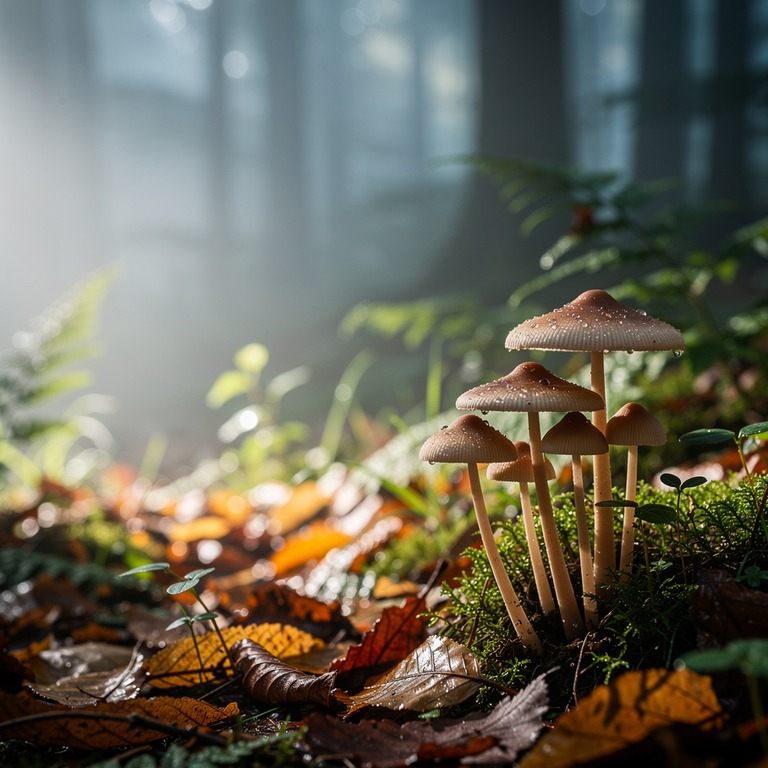
This is exactly the terrain where master plants have been working for thousands of years. Ayahuasca in the Amazon, peyote in the Sonoran desert, iboga in Gabon, psilocybin mushrooms in Mesoamerica — these aren't recreational substances in their traditional contexts. They're considered teachers. The Shipibo word for ayahuasca, oni, doesn't translate as “drug.” It translates closer to “wisdom” or “knowing.” That distinction matters.
When practitioners talk about plant medicine in a holistic frame, they're describing something closer to an intensive, embodied therapy session than a pharmaceutical intervention. The substance opens a door. What happens in the room — set, setting, facilitator, intention, music, aftercare — is the actual medicine.
Why Psychedelics Keep Showing Up in Addiction and Depression Research
If you've been reading clinical literature over the past five years, you've noticed the pattern. Psilocybin trials at Johns Hopkins and Imperial College show meaningful reductions in treatment-resistant depression. Ibogaine has produced striking results for opioid dependence in observational studies from Mexico and New Zealand. MDMA-assisted therapy has moved through late-stage PTSD trials. Ayahuasca research, though smaller, points in similar directions for depression and substance use.
The common thread isn't the molecule. It's what the molecule allows. People in these states report being able to look directly at memories, patterns, and feelings they've spent decades avoiding. They report a softening of the ego-grip that keeps shame and self-loathing locked in place. They report — and this is the part that fascinates holistic practitioners — feeling reconnected to something larger than their own suffering.
For someone struggling with addiction, that reconnection often does more than any willpower-based program. Addiction, viewed holistically, is rarely just a chemical problem. It's a disconnection problem — from self, from body, from meaning, from community. Plant medicine, in the right container, can address all of those at once. Not as a cure. As a catalyst.
What “Master Plants” Means, and Why the Word Matters
You'll hear the term master plants in any serious conversation about Amazonian healing traditions. It refers to a category of plants — ayahuasca and chacruna among them, but also tobacco (mapacho), bobinsana, ajo sacha, chiric sanango, and others — that traditional healers say have their own intelligence and teach the person who drinks them.
In a classic Amazonian dieta, a student or patient isolates with a single master plant for weeks or months. They eat a restricted diet, avoid salt and sugar, abstain from sex, and spend long hours in silence and dreaming. The plant, in this view, becomes a kind of teacher that imprints itself on the person — gifting songs, insights, healing capacities, sometimes things harder to name.
You don't have to buy the cosmology to take this seriously. What you do have to take seriously is the depth of the framework. These traditions have spent centuries developing protocols for working with non-ordinary states of consciousness safely. Modern psychedelic therapy is, in many ways, slowly catching up.
If You're Considering a Retreat: How to Think About It Honestly
For readers who are weighing whether to actually sit in ceremony — whether for personal healing or as part of training to work in this field — a few honest considerations are worth more than any glossy retreat brochure.
- Be honest about your “why.” Spiritual curiosity is a fine reason. Running from a specific problem you've never addressed in therapy is a harder one. Plants tend to surface what's already there, including the things you didn't want to look at.
- Vet the facilitators properly. Ask how long they've trained, with whom, and what their lineage or framework is. Ask what their medical screening looks like. Ask what happens if someone has a difficult experience at 3 a.m. A real answer should exist.
- Take screening seriously. Personal or family history of psychosis or bipolar disorder is a genuine contraindication for most psychedelics. Certain medications — SSRIs in particular for ayahuasca — require careful tapering with medical guidance. Skip any retreat that doesn't ask about this.
- Budget for integration, not just the ceremony. The week after is often more important than the night itself. Plan for therapy, journaling time, a slower work schedule, and someone to talk to who isn't going to panic at what you say.
- Watch the cost. Reputable retreats generally fall between $1,500 and $4,500 for a week. Wildly cheap is a red flag. Wildly expensive isn't automatically better either.
Red Flags Worth Walking Away From
A facilitator who claims to cure cancer. A center that pressures you to drink more than you're comfortable with. Group sizes above twenty per ceremony with one or two facilitators. No medical intake. No integration support. Charismatic leader vibes — that gut feeling where everything is a little too curated. Trust the gut. The whole point of this work is learning to listen to it.
Holistic Practice and Plant Medicine: Where the Two Meet
If you're training toward holistic work — naturopathy, somatic therapy, coaching, herbalism, integrative psychiatry — plant medicine is increasingly something clients will ask you about. They're reading the same headlines. They want someone who can hold the conversation without dismissing it and without pushing them into it.
That means doing your own homework. Read the clinical literature, yes, but also read anthropologists like Jeremy Narby and Stephan Beyer. Read practitioners who've trained inside traditional lineages and can describe what they actually learned. Sit with the discomfort of a worldview that doesn't map neatly onto the biomedical one. The best holistic practitioners I know are the ones who can hold multiple frameworks at once without forcing a synthesis.
And — this part is harder to write but truer for it — many of the strongest practitioners have done their own work with these medicines. Not because it's required, but because something about the experience changes how you hold suffering, both your own and someone else's. You become less afraid of the dark rooms inside other people, because you've been in your own.
A Quiet Word Before You Decide Anything
Plant medicine isn't for everyone, and it isn't a shortcut. It's an intensive, sometimes brutal, often beautiful tool that asks a lot of the person sitting with it. Done well, in the right container, with the right preparation and aftercare, it can do work that years of conventional approaches couldn't touch. Done poorly, it can deepen wounds it should have helped close.
So take your time. Read widely. Talk to people who've sat in ceremony and ask the awkward questions — what was hard, what didn't work, what they'd do differently. If something here speaks to you, a curated selection of ayahuasca and plant-medicine retreats can be browsed on our marketplace here, with notes on lineage, facilitator background, and integration support so you can compare honestly rather than guess.
The path into holistic healing is long, and the plants are only one tributary feeding into it. But for anyone serious about working with the whole human being — body, mind, story, and spirit at once — they're a tributary worth knowing.


Craving More Stories?
Join our ShopAyahuascaRetreats newsletter for the latest updates on thrilling
destinations and inspirational tales, delivered straight to your inbox!
We value your privacy. Your email address will never be shared or published.