 English
 Deutsch
 Français
 Nederlands
 Español
SHOP AYAHUASCA RETREATS BLOG
A Grounding Practice for a Busy Mind: Seeing, Hearing, Sensing

Stella Vance
July 22, 2026
Your ultimate guide to discover transforming ayahuasca and psychedelic experiences. Dive into serene destinations and elevate your consciousness to unparalled heights.
Discover Ayahuasca & Psychedelic Retreats NowSearch for ayahuasca & psychedelic retreats
Discover retreats, trainings, and holidays from all over the world
There's a particular kind of mental noise that shows up when you're seriously considering a plant-medicine retreat. Half research, half rumination. You're reading trip reports at 1 a.m., pricing flights to Iquitos, wondering whether ibogaine or ayahuasca might actually shift something you've been dragging around for a decade. And underneath all of that — the busy mind. The one that won't sit still long enough to hear itself think.
This piece is about a small, portable grounding practice that helps with exactly that. It's not glamorous. It won't unlock a mystical download. What it will do is give your attention something honest to do when everything else feels loud — including in the weeks before a ceremony and the tender days that follow one.
Why Grounding Matters More Than People Admit
Anyone who's spent time around ayahuasca, psilocybin, or the broader family of master plants will tell you the same thing: the medicine is only half of it. The other half is the nervous system you bring into the room. If you arrive at a retreat with a scattered, over-caffeinated, doom-scrolled mind, you're going to spend a good chunk of your first ceremony just untangling. That's normal. It's also avoidable, at least partially, with a bit of prep work.
Grounding practices are the boring backbone of psychedelic healing. Facilitators talk about set and setting, dieta and intention, but underneath all of that lives a more basic skill: being able to return to your body when your mind runs off. That's what this practice trains. And it trains it in a way that doesn't require an app, a cushion, or a spare hour.
Here's the honest bit — most people who sign up for a retreat have never really meditated. They've tried, felt bad about it, and quietly stopped. That's fine. This isn't meditation in the intimidating, cross-legged, hour-a-day sense. It's a technique. A way of nudging your attention into three simple lanes and letting it rest there.
The Practice: Seeing, Hearing, Sensing
The whole thing rests on rotating your awareness through three doorways of experience: what you see, what you hear, and what you feel in your body. Each doorway anchors you in the present in a slightly different way, and the movement between them keeps the mind engaged enough that it doesn't wander off into next Tuesday's meeting.
Try it now if you have five minutes. If you don't, bookmark it. But five minutes is really all this asks.
- Settle. Sit upright but not stiff. Let your shoulders drop. Notice where your body meets the chair or the floor. Feel the breath moving — you don't have to change anything about it.
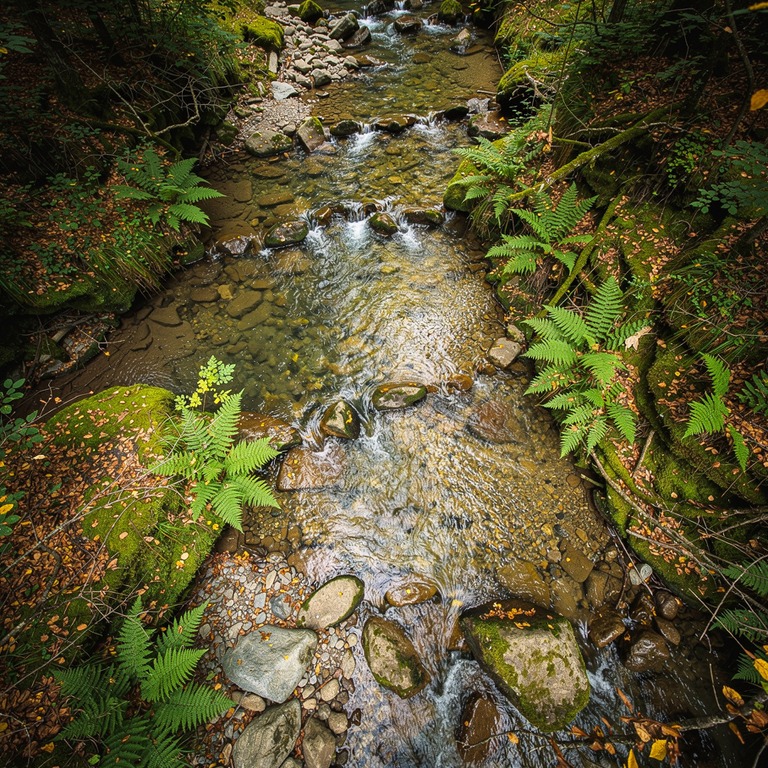
- See. Open your eyes and lower your gaze a few feet in front of you. Soft eyes, not focused on anything specific. Just receive color, light, shape, movement. You're not looking at anything. You're just seeing.
- Hear. Close your eyes. Let sound come to you — the hum of a fridge, distant traffic, birds, the faint tinnitus most of us pretend we don't have. No need to name the sounds. Just listen.
- Sense. Bring attention to the body. The weight of your legs. The temperature of the air on your face. Your breath. Whatever's there.
- Rotate. Cycle through those three — seeing, hearing, sensing — three or four times. Slowly at first. Then a little quicker.
- Rest. End with all three at once, if you can. Eyes soft, ears open, body felt. Sit there for a breath or two before getting up.
That's it. No mantras, no visualisations, no chakras to track. The elegance of the practice is that it uses what's already happening. You're always seeing something, hearing something, feeling something. The practice just asks you to notice.
What This Has to Do With Plant Medicine
A fair question. Why is a piece on a psychedelics site talking about grounding drills?
Because integration — the part everyone underestimates until they've done a retreat — depends on this skill. When you come back from ceremony carrying insights that felt luminous in the maloca but slippery on the plane home, the difference between an experience that reshapes your life and one that fades into a nice story is your capacity to return to the present. Grounding is what makes integration possible. Without it, the material dissolves.
The same goes for the ceremony itself. Anyone who's sat with ayahuasca knows there are moments — usually around the two-hour mark — when the brew asks you to surrender something. Fear, grief, an old story about yourself. If your only mode of coping is thinking your way out, you'll struggle. But if you've practised dropping into sensory experience, you have another door. You can hear the icaros. You can feel the mat under your back. You can let the visions do what they came to do.
Facilitators I trust often say that the people who get the most from a retreat aren't the ones with the most dramatic ceremonies — they're the ones who've built even a modest daily practice beforehand. This is a candidate for that practice.
Using It Before, During, and After a Retreat
Here's how it plays out in the real arc of a plant-medicine journey.
Before. In the weeks leading up to a retreat, most people oscillate between excitement and low-grade panic. You've committed money and time. You've told a few close friends and stayed vague with everyone else. Your mind is running scenarios. Practising seeing-hearing-sensing for even five minutes a day does two things: it starts to build the muscle of returning to now, and it gives your nervous system regular small doses of settling. That matters when you land in the jungle and everything is unfamiliar.
During. Between ceremonies at a retreat, there's usually a lot of downtime — hammocks, journaling, the occasional cold shower. This practice is perfect filler. It's also useful during the ceremony itself, in the calmer stretches, as a way to keep an anchor thrown while the deeper currents move.
After. The re-entry period is where most integration lives or dies. You've had experiences you can barely articulate, and suddenly you're back in traffic, back at your desk, back to a partner who wasn't in the room with you. The busy mind returns with reinforcements. Seeing, hearing, sensing gives you a way to pause without needing to explain yourself to anyone.
A Few Honest Notes
This practice won't fix a serious mental health crisis. It won't replace a trained therapist or a proper integration circle. If you're carrying complex trauma, and especially if you're considering plant medicine partly because of that trauma, please put professional support in place alongside whatever you do. Grounding is a supplement, not a substitute.
Also: don't judge the practice by how it feels the first time. Most people's first attempts at anything meditative feel like nothing. That's not failure — that's just what the beginning of a new attentional habit feels like. Give it two weeks of five minutes a day before deciding whether it does anything for you.
Try it in different environments too. Doing this indoors, with a fridge hum and the click of a heater, produces one flavour. Doing it in a park, or on a porch at dawn, produces something else entirely. Retreat centres in the Amazon or the Andes are dense with sound and light — the practice takes on a very different quality there. Notice the contrast. It's part of the training.

If You're Weighing a Retreat
Grounding practices like this one are, in a way, a quiet test. If you can carve out five minutes a day to sit with your own attention, you're already doing some of the work a retreat will amplify. If you can't — or you notice fierce resistance to even trying — that's useful information too. It tells you something about what the ceremony will be asking of you.
None of this is meant to talk you into or out of anything. Plant medicine is a serious decision and deserves a serious research process. But the readiness question is real, and it's answered in small daily moves more than in dramatic ones. If, after sitting with this for a while, you find yourself genuinely ready to look at what's out there, a curated selection of ayahuasca and plant-medicine retreats can be browsed on our marketplace here.
Whatever you decide, come back to seeing, hearing, sensing when the mind gets loud. It's older than any tradition and simpler than any technique. And it's always available — which is more than can be said for most things worth having.

Craving More Stories?
Join our ShopAyahuascaRetreats newsletter for the latest updates on thrilling
destinations and inspirational tales, delivered straight to your inbox!
We value your privacy. Your email address will never be shared or published.