 English
 Deutsch
 Français
 Nederlands
 Español
SHOP AYAHUASCA RETREATS BLOG
920: Inside International Magic Mushroom Day and Why Psilonauts Mark It
Lila Novak
May 25, 2026
Your ultimate guide to discover transforming ayahuasca and psychedelic experiences. Dive into serene destinations and elevate your consciousness to unparalled heights.
Discover Ayahuasca & Psychedelic Retreats NowSearch for ayahuasca & psychedelic retreats
Discover retreats, trainings, and holidays from all over the world
Every subculture eventually picks a date and turns it into a flag. Cannabis got 4/20. Coffee got its own September Monday. And somewhere in the last decade or so, the psilocybin crowd — quieter, weirder, more inward-looking — landed on September 20. Or rather, 9/20. Hence the name: 920.
If you've spent any time researching psychedelics, psilocybin retreats, or plant medicine for things like depression and addiction, you've probably brushed past the date without registering it. It doesn't get the parade-and-pizza treatment that 420 does. The vibe is different. Quieter. A little more reverent, a little less party. But it's worth understanding what 920 is, where it came from, and what it actually says about how psilocybin culture is changing.
So what is 920, exactly?
920 — short for September 20 — is the unofficial holiday for psilocybin mushrooms. It's the day people who work with, study, grow, or simply respect magic mushrooms tip their hat to the little fungus that started a lot of conversations. Think of it as the psilocybin world's mirror image of 420, except the symbolism leans more toward reflection than recreation.
The number itself doesn't have a buried code the way 420 supposedly does (the San Rafael High School kids, the 4:20 meet-up, all those origin stories). 920 is more pragmatic: it falls near the autumn equinox in the northern hemisphere, when mushrooms are actually flushing in the wild across much of Europe and North America. Foragers know the date in their bones long before anyone names it on a calendar.
The day got an early public push from organizations like the Psychedelic Society and various harm-reduction groups, who saw the chance to use a fixed date for education, advocacy, and community gatherings. It's been slowly gaining traction ever since.
Why bother having a day at all?
Fair question. Mushrooms don't need a hype day to keep growing. But the people pushing 920 had specific reasons.
First, advocacy. Psilocybin sits in a strange legal limbo across most of the world — Schedule I in the U.S., illegal in most of Europe, decriminalized in pockets like Oregon, Colorado, and several U.S. cities. A shared date gives campaigners something to organize around. Petitions get signed. Op-eds get published. Local decrim efforts get a focal point.
Second, education. The conversation around psilocybin has shifted dramatically in the past five years. Clinical trials at Johns Hopkins, NYU, Imperial College London, and elsewhere have shown psilocybin-assisted therapy holding up against — and in some cases outperforming — standard treatments for depression, end-of-life anxiety, and certain forms of addiction. 920 is a chance for that research to break out of academic journals and reach people who might actually benefit.
Third, community. Anyone who has gone deep with psilocybin tends to come out the other side wanting to talk about it. Not preach, necessarily — just compare notes. A dedicated date gives that conversation a public-facing home.
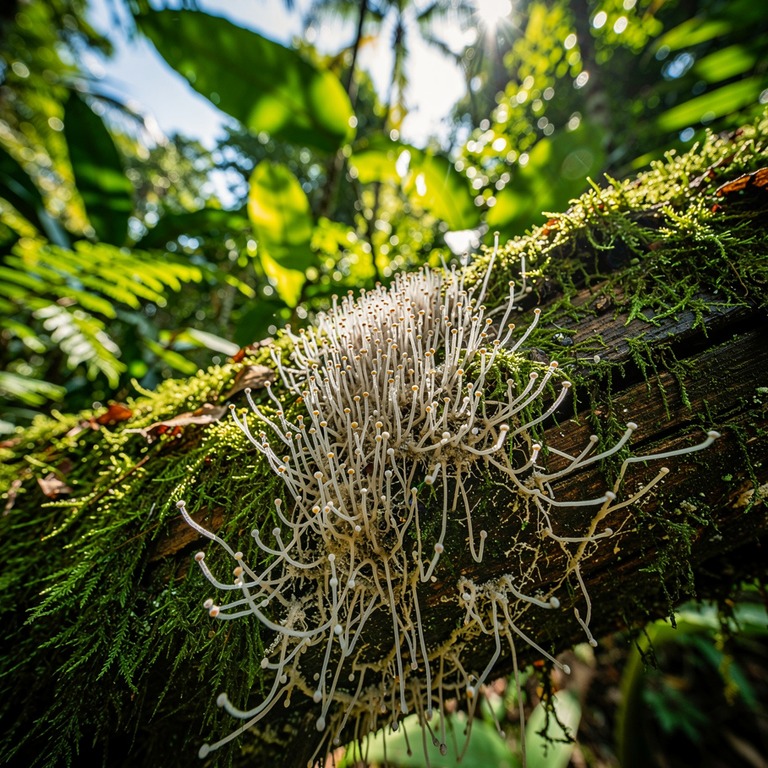
What people actually do on 920
It varies wildly. Some of it is solemn, some of it is silly, most of it is somewhere between. Here's a fair sample of what happens on the day, based on what I've seen and what friends in the scene report back:
- Small group ceremonies, often led by an experienced facilitator, with a heavy emphasis on intention and integration rather than the experience as entertainment.
- Educational events — talks, panels, film screenings about the history of psilocybin, the Mazatec curandera María Sabina, the Wassons, the rediscovery of the Hopkins research line.
- Forays and forest walks. Mycologists love this date. Even sober people who just enjoy fungi turn up with baskets and field guides.
- Online fundraisers for psychedelic research nonprofits and drug-policy reform groups.
- Quiet personal reflection — many people use the day for journaling, microdosing protocols, or simply marking time since a previous journey.
You'll notice what's mostly absent: the rowdy, public-park energy of 420. Psilocybin culture tends to be more introspective by nature. The medicine doesn't really invite a crowd; it invites attention.
The shift from underground to clinical — and what it means
To appreciate why 920 even exists as a polite, semi-mainstream observance, look at where psilocybin has been parked for the last fifty years. After Nixon's Controlled Substances Act of 1970, research effectively died for a generation. The cultural memory of mushrooms hid out in Terence McKenna lectures and Phish parking lots.
Then, slowly, things changed. Roland Griffiths' 2006 Johns Hopkins paper on psilocybin and mystical-type experiences cracked the door. Michael Pollan's How to Change Your Mind kicked it open for the general public in 2018. By the time Oregon voters passed Measure 109 in 2020, psilocybin had moved from countercultural curiosity to active policy debate.
Today there are FDA-recognized clinical trials, licensed psilocybin service centers in Oregon, decriminalization in a growing list of U.S. cities, and a steady stream of retreat operators in the Netherlands, Jamaica, Mexico, Costa Rica, and elsewhere offering legal or quasi-legal access. A holiday like 920 only makes sense in this context — when enough people are openly engaged with the topic that giving it a date feels reasonable rather than radical.
If you're curious about psilocybin, where do you start?
This is the question I get more than any other from readers in their 30s, 40s, and 50s who are quietly thinking about it — usually because something in their life isn't moving. Long-running depression. A drinking habit they've tried to walk back five times. Grief that hasn't softened. A career that pays well and feels like wearing wet clothes.
Psilocybin isn't a magic eraser for any of that. Anyone who tells you it is should be backed away from slowly. But the research is real, and so are the personal accounts. If you're considering it, here's what I'd suggest before anything else:
- Read the actual studies. Not the news write-ups — the studies themselves. They're usually free on PubMed. You'll get a much more honest picture of effect sizes, who responded, who didn't, and what the protocols looked like.
- Get clear on your reason. “Curiosity” is a fine reason for a microdose; it's a thin reason for a five-gram journey. The people who get the most out of psilocybin tend to come in with a specific question or wound they want to look at.
- Take screening seriously. Personal or family history of schizophrenia or bipolar I is a real contraindication. So are certain medications, particularly lithium and some SSRIs. A reputable retreat or therapist will ask. If they don't, that's your sign to leave.
- Plan the landing. The journey is maybe ten percent of the work. Integration — the weeks afterward, when you actually translate what you saw into how you live — is where the change happens or doesn't.
Retreats vs. doing it yourself
Plenty of people have meaningful experiences on their own or with a trusted friend. I'm not going to pretend that doesn't happen. But for someone working on real psychological material — trauma, addiction, depression that hasn't moved in years — the case for a structured retreat is strong.
A good retreat gives you a few things that are hard to assemble alone: a screened cohort, facilitators who've sat with hundreds of journeys, medical backup if something physical happens, and a container that takes you off your phone and away from your usual life for long enough that the experience can actually settle. The flip side is cost and time. A reputable psilocybin retreat in the Netherlands or Jamaica usually runs somewhere between $1,500 and $5,000 for three to seven days, depending on what's included.
The honest test of a retreat isn't the marketing photos. It's whether they ask hard questions on the intake form, whether they offer integration support after you go home, and whether the facilitators have actual training rather than a charismatic personality and a feathered hat. If something here speaks to you, the available psilocybin and plant-medicine retreats can be browsed on our marketplace here.
What 920 quietly stands for
Strip away the calendar gimmick and 920 is really about a single proposition: that a small, strange organism has, against significant odds, become one of the more interesting tools humans currently have for looking at their own minds. That's worth a day. Not a parade, not a sale on novelty t-shirts — just an afternoon of paying attention.
Whether you mark it with a ceremony, a long walk in the woods, a stack of research papers, or nothing at all, the date is a useful nudge. The mushroom isn't going anywhere. Neither is the question of what to do with it.
Craving More Stories?
Join our ShopAyahuascaRetreats newsletter for the latest updates on thrilling
destinations and inspirational tales, delivered straight to your inbox!
We value your privacy. Your email address will never be shared or published.