 English
 Deutsch
 Français
 Nederlands
 Español
SHOP AYAHUASCA RETREATS BLOG
What People Actually Mean by the "Higher Self" in Psychedelic Work

Cleo Adler
July 25, 2026
Your ultimate guide to discover transforming ayahuasca and psychedelic experiences. Dive into serene destinations and elevate your consciousness to unparalled heights.
Discover Ayahuasca & Psychedelic Retreats NowSearch for ayahuasca & psychedelic retreats
Discover retreats, trainings, and holidays from all over the world
Sit in enough ceremonies and you'll hear the phrase within the first hour. Your higher self will guide you. Trust your higher self. The medicine connects you to your higher self. Facilitators say it. Integration circles repeat it. Somebody's cousin who did one ayahuasca retreat in 2019 says it at dinner parties. And if you're the sort of person who came to plant medicine because you're tired of vague spiritual language, you may find yourself wanting to raise your hand and ask — higher than what, exactly?
It's a fair question. The term gets thrown around like everyone agreed on a definition years ago and you missed the memo. In reality there are several very different things people mean when they say it, and they don't all belong in the same conversation. Some are useful. Some are metaphor. Some are, frankly, filler. If you're weighing whether to book an ayahuasca ceremony or a psilocybin retreat, it helps to know which is which before you get there.
The Phrase Has at Least Four Different Meanings
When you press people on what they actually mean by their higher self, the answers usually cluster into a handful of camps. They overlap, but they're not the same claim, and treating them as one big idea is where the confusion starts.
- The literal metaphysical version. A non-physical part of you — a soul, an oversoul, a fragment of something larger — that exists independently of your brain and body. It knows things your everyday mind doesn't. Death doesn't touch it.
- The psychological version. A metaphor for the parts of your own mind you don't usually access — long-term values, deeper motivations, the wiser voice that's usually drowned out by anxiety, ego, and to-do lists.
- The systems version. Not a hidden self at all, but the version of you that emerges when the noise quiets down. The you that shows up when you're calm, rested, and not defending anything.
- The cultural-mashup version. Vague New Age vocabulary borrowed from theosophy, Jungian psychology, and yogic traditions, blended into retreat marketing without much rigor. This one exists too, and pretending it doesn't is naive.
A skeptic tends to hear the fourth and dismiss the whole conversation. A true believer hears the first and treats disagreement as spiritual immaturity. Neither is very interesting. The useful conversation is somewhere between the psychological and systems versions — because whatever the metaphysics turn out to be, something real happens in a ceremony that these frames actually describe.
What Actually Happens in a Psychedelic Experience
Here's what people usually mean when they say ayahuasca or psilocybin put them in touch with their higher self, stripped of the vocabulary.
Under a strong dose of a serotonergic psychedelic, the parts of your brain that normally run the show — the default mode network, the internal narrator, the constant background hum of self-referential thought — quiet down. That narrator is the part of you that rehearses arguments in the shower, plans tomorrow's meeting, and reminds you of that thing you said in 2011. When it goes quiet, other stuff gets a turn at the microphone. Emotions you've been sitting on. Memories you'd forgotten. Perspectives on your own behavior that your ego usually blocks.
Whether you call that a higher self, a subconscious, a shadow, or just a rare moment of not being defensive — the phenomenon is the same. You're temporarily meeting a version of yourself that isn't being managed by the usual security detail. For people working with addiction, depression, or trauma, that meeting can be extraordinary. For people who assumed they knew themselves already, it can be humbling.
None of that requires a metaphysical commitment. It also doesn't rule one out. Plenty of thoughtful, skeptical people leave a ceremony with the strong impression they encountered something more than their own psychology, and I'm not going to talk them out of it. But you don't need to believe in a soul to get value from the experience — which is worth saying, because a lot of people rule out plant medicine because they think they have to buy the whole cosmology first. They don't.
Master Plants and the Idea of an Inner Teacher
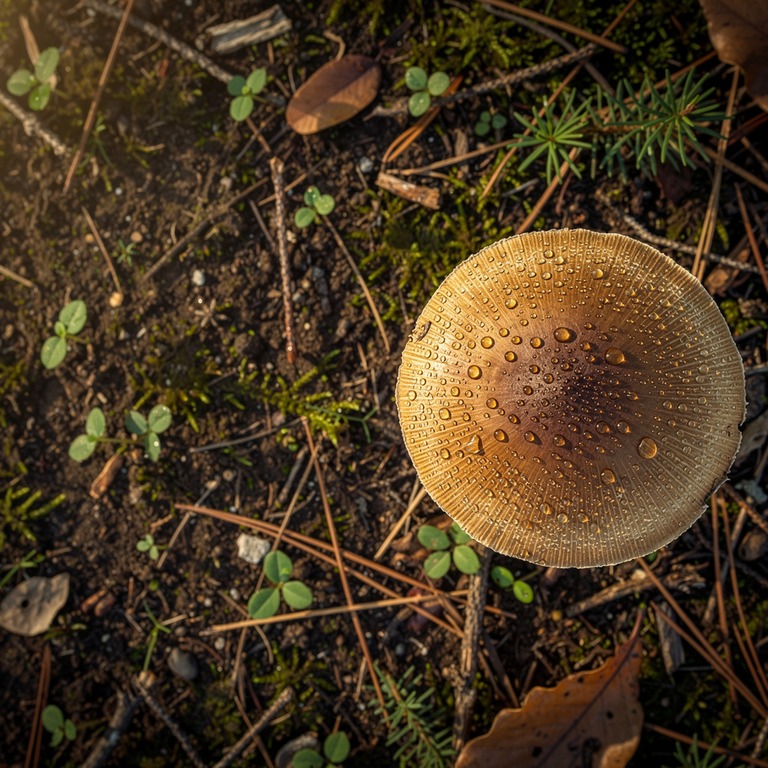
In Amazonian traditions, ayahuasca and other master plants — ayahuasca vine, chacruna, tobacco, chiric sanango, bobinsana, and dozens more — are treated as teachers with their own personalities. A curandero will say the plant showed them something, taught them a song, corrected them. This is a very different framework from the higher-self language, but retreats often collapse the two.
The overlap is real, though. Both frames describe a source of information that isn't your everyday thinking mind. Whether that source is inside you (higher self) or outside you (the plant spirit), the practical effect on the person receiving it is similar: information arrives that they didn't consciously construct, and it often turns out to be useful. Whatever you believe about the mechanism, the pattern is well-documented across thousands of years of practice and, more recently, across clinical trials at institutions that don't traffic in mysticism.
Why This Matters When You're Choosing a Retreat
If you're actually researching an ayahuasca retreat or a psilocybin program, the way a facilitator talks about the higher self tells you a lot about how they'll run the ceremony and the aftermath. Listen for it on their intake calls. Read it in their materials. It's a tell.
- Overly certain language is a yellow flag. If someone speaks about your higher self as a fact everyone should accept, with no space for interpretation, you're in a belief system, not a healing container. That's fine if you want that. It's a problem if you don't.
- Purely psychological framing has its own limits. A facilitator who insists it's all just neurochemistry may not be equipped for the moments when an experience feels genuinely mysterious — and those moments are common. You want someone who can hold the strangeness without needing to explain it away.
- The best facilitators hold it lightly. They'll use the language because it's useful shorthand, but they won't insist on it. They'll ask what the experience meant to you, not tell you what it meant.
- Integration is where this really matters. A big part of integration is deciding what the experience means and what you'll do with it. A good facilitator helps you build your own vocabulary rather than pushing theirs.
This is the practical stakes of the whole conversation. It's not just semantics. If you're spending three thousand dollars and a week of your life on a psychedelic retreat, the interpretive framework you're handed shapes what you take home.
A Working Definition That Doesn't Require Belief
Here's the version I'd offer someone asking the question honestly: the higher self, if the phrase has to mean anything, is a shorthand for the version of you that would exist if the anxious, defensive, story-telling part of your mind stepped aside for a while. It's not necessarily supernatural. It's the you underneath the you that got built on top of you by twenty or forty years of coping. Psychedelics can put you in the same room with that person for a few hours. What you do with the introduction is up to you.
You don't have to call it a higher self. Some people call it their essential self, their unconditioned mind, their soul, their gut, their inner witness, or nothing at all. The label matters less than whether you can actually hear it once the noise dies down — and whether you can keep hearing it three months after the ceremony, when your inbox is back to full and the maloca feels like a dream you had.
If any of this resonates and you're thinking about doing the work yourself, a range of curated ayahuasca and plant-medicine retreats can be browsed on our marketplace here. Whatever framework you bring to it, the important thing is going in with your eyes open and coming out with something you can actually use.
Craving More Stories?
Join our ShopAyahuascaRetreats newsletter for the latest updates on thrilling
destinations and inspirational tales, delivered straight to your inbox!
We value your privacy. Your email address will never be shared or published.