 English
 Deutsch
 Français
 Nederlands
 Español
SHOP AYAHUASCA RETREATS BLOG
Meditation for Transitions: A Practice for Life's In-Between Moments

Ezra Caldwell
September 9, 2026
Your ultimate guide to discover transforming ayahuasca and psychedelic experiences. Dive into serene destinations and elevate your consciousness to unparalled heights.
Discover Ayahuasca & Psychedelic Retreats NowSearch for ayahuasca & psychedelic retreats
Discover retreats, trainings, and holidays from all over the world
Change has a way of arriving whether you asked for it or not. A relationship ends. A job dissolves. You come home from a plant-medicine retreat and realize the person who boarded that flight is not quite the same one unpacking the duffel bag. The old self is still there, sort of, but it doesn't quite fit anymore — and the new one hasn't fully arrived.
That in-between space is where most of us struggle. We want the change to happen cleanly, on a schedule, with a neat resolution. It rarely does. What tends to work better is a small, portable practice you can return to when the ground feels unstable — something like a meditation for transitions.
Why Transitions Are Harder Than the Change Itself
Here's the thing about big shifts: the moment of decision is usually not the hard part. Deciding to leave the job, book the retreat, end the marriage, get sober — those choices carry their own momentum. What blindsides people is the long middle. The weeks and months where the old identity is loosening its grip but the new one hasn't crystallized yet.
Anyone who has done serious inner work — through therapy, meditation, or plant medicine — knows this territory. Ayahuasca, in particular, has a reputation for cracking things open. What most first-timers underestimate is not the ceremony but the integration weeks that follow. You return with new clarity and no roadmap for using it. Old habits reach for you. Old relationships test the changes. This is where a lot of people quietly slide back into whatever they were trying to leave behind.
A regular sitting practice — even ten minutes — gives you a place to land during that stretch. Not to fix the discomfort, but to be with it without needing to escape it.
What This Meditation Actually Does
The practice below is adapted from a mindfulness teacher who works with high-school students navigating some of life's rawest transitions. Don't let that fool you into thinking it's basic. The technique — noticing the space between breaths, anchoring with a light count, returning without self-criticism when the mind wanders — is exactly what trained meditators have used for centuries. It's also, not coincidentally, the same skill set that helps people sit with the intense material that surfaces during and after psychedelic experiences.
The goals are modest and honest:
- Notice the emotions rising up around whatever change you're in
- Stay present to what's actually happening in your body, even the uncomfortable parts
- Practice returning your attention on purpose — a small but repeatable act of agency
- Offer yourself something kinder than the running commentary in your head
Give it ten minutes. If you're overwhelmed halfway through, that's not failure — that's information.
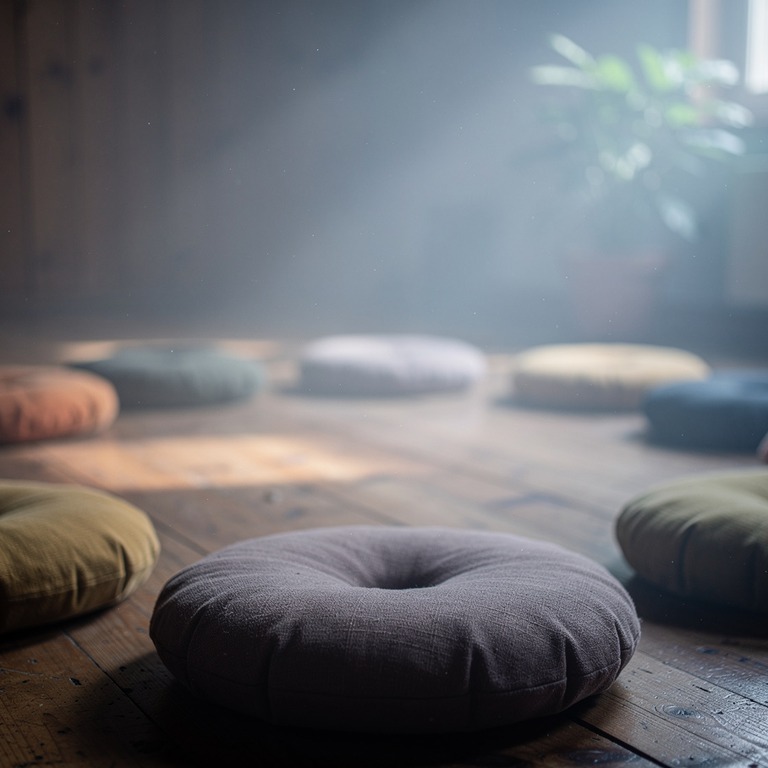
The Practice
Read through the whole thing first, then run it yourself. You can keep your eyes open, close them, or drift between the two. Whatever keeps you settled without dozing off.
1. Get Comfortable, But Alert
Sit however you sit. Cushion, chair, edge of the bed — none of it matters as much as the intention behind how you place your body. Notice if you're already sliding into your default slump. No judgment. Just pause and let your body tell you what small adjustment would help. A little more lift through the spine. Feet flat on the floor. Shoulders down from your ears.
2. Three Long Breaths
Take three of the deepest, longest breaths you've taken all day. Really commit to them. When those are done, let the breath find its own pace. You're not managing it now — you're just letting it be there.
3. Notice the Details
Bring a beginner's mind to the breath. Where does the inhale start? Where does it end? Is one nostril working harder than the other? None of this is trivia — it's the felt-sense practice of dropping into the body instead of narrating from above it.
Thoughts will show up. That's fine. So will sounds outside, an itch on your calf, a jolt of anxiety about a meeting tomorrow. You don't have to shove any of it away. The breath is spacious enough to hold all of it.
4. Find the Pause
Now bring your attention to that quiet gap between the inhale and the exhale. It's small. It's easy to miss. For the next few breath cycles, see if you can rest your attention right there — in the transition itself. There's a lovely bit of symbolism in that, if you want it: practicing presence in the exact place where one thing becomes another.
5. Add the Count
Still watching the breath, still noticing the pause, begin counting each inhale. One. Two. Three. When you get to ten, start again at one. That's it.
Almost certainly, you'll drift. You'll notice you're at twenty-three and thinking about laundry. Or you've forgotten to count at all. This is the practice — not the smooth counting, but the moment you notice you've wandered and choose to come back. Neuroscientists get excited about this moment because it's where the actual rewiring happens. Meditators get excited about it because it's a small, repeatable rehearsal of agency. Rather than beating yourself up for a wandering mind, treat each return as a tiny victory.
6. The Embrace of Compassion
To close, place one hand over your heart and the other just below, where the ribs meet at the solar plexus. Let some weight settle there.
Offer yourself something kind. It doesn't need to be poetic. Something as plain as I see you. I'm here with you through this is enough. If words don't come, just let the warmth of the contact do the work. There's no right way to do this part.
7. Close the Way You Started
Three more long, full breaths. Fill the lungs. Let the exhale be complete. When you're ready, drop the hands, open the eyes, and step back into your day.

Using This Practice for Bigger Transitions
If you're reading this while considering a plant-medicine retreat, or you've just come back from one, this kind of meditation is worth building into your daily rhythm — before, during, and especially after. Retreat centers talk endlessly about intention-setting on the front end, and rightly so. Far fewer talk seriously about the return. The days when the insights start to fade. The moment an old craving whispers back. The awkward dinner with family who didn't go where you went.
A ten-minute practice won't replace an integration therapist, a good friend, or a community. It's not supposed to. What it does is give you a place to sit down inside yourself when the outside world feels too loud — a doorway back to what the ceremony reminded you of. That reminder, in the Pali language, is the root meaning of mindfulness itself: remembrance. Remembering to come back. Remembering who you are underneath the noise.
Transitions — the ones we choose and the ones that choose us — tend to move faster than our nervous systems. Practices like this one buy us a little more time inside each moment. Enough time to respond instead of react. Enough time to notice we have a choice.
For readers walking through a bigger shift and wondering whether a supported container might help, a curated selection of plant-medicine and ceremony retreats can be browsed on our marketplace here. Whatever you decide, the small practice above is yours to keep — a portable anchor for the in-between.
Craving More Stories?
Join our ShopAyahuascaRetreats newsletter for the latest updates on thrilling
destinations and inspirational tales, delivered straight to your inbox!
We value your privacy. Your email address will never be shared or published.