 English
 Deutsch
 Français
 Nederlands
 Español
SHOP AYAHUASCA RETREATS BLOG
Beyond the Clinic: Why Medicalizing Psychedelics May Shrink What They Can Actually Do

Lila Novak
November 3, 2026
Your ultimate guide to discover transforming ayahuasca and psychedelic experiences. Dive into serene destinations and elevate your consciousness to unparalled heights.
Discover Ayahuasca & Psychedelic Retreats NowSearch for ayahuasca & psychedelic retreats
Discover retreats, trainings, and holidays from all over the world
Something strange has happened to the way we talk about psychedelics over the past decade. Your conservative uncle brings up psilocybin at Thanksgiving. Magazine covers feature serious-looking researchers in white coats. The word “medicine” gets attached to substances that, not long ago, were considered the drug-war's biggest villains. On the surface, that looks like progress. And in many ways, it is.
But sit with it a little longer and you start to notice what's missing from the conversation. The acceptable version of psychedelics — the one allowed into polite company, clinical trials, and pharmaceutical boardrooms — is a narrow slice of what these substances have done for people across cultures and centuries. Plant medicine, ceremony, community, the weird and ineffable territory that ayahuasca drinkers and mushroom seekers have been describing for generations — most of that doesn't fit cleanly into a prescription bottle. And right now, the prescription bottle is winning the narrative war.
How We Got Here: The Medicalization Bargain
Rewind fifteen years. Psychedelics were still deeply taboo. If you wanted them taken seriously by the mainstream — by regulators, by doctors, by the aforementioned conservative uncle — you had to translate them into a language that mainstream institutions understood. That language was medicine. Depression scores. Clinical endpoints. Peer-reviewed trials. Statistical significance.
It worked. Research centers opened at Johns Hopkins, Imperial College, NYU. The FDA started granting breakthrough-therapy designations. Oregon legalized supervised psilocybin services. Ketamine clinics multiplied. A whole generation of therapists started training in psychedelic-assisted protocols. For those of us who'd been quietly following this world for a long time, it felt like vindication.
Here's the catch, though. Every bargain has terms, and this one came with conditions. To make psychedelics acceptable, we agreed — mostly without discussing it openly — to let the medical frame define what they are, what they're for, and how people are allowed to approach them. Everything that didn't fit that frame got quietly pushed to the margins.
What Gets Lost When Everything Becomes Medicine
Psychedelics are not simple. Anyone who's actually sat with ayahuasca, lain down with mushrooms, or watched a kambo ceremony unfold will tell you the same thing: these experiences spill out past whatever container you try to put them in. They're weird. Unpredictable. Sometimes beautiful, sometimes terrifying, often both inside the same hour. The honest practitioners I've interviewed never promise outcomes. They talk about meeting what arises.
The medicalized version flattens all of that. In a clinic, the question becomes: did the patient's score on a standardized depression inventory drop by X points at the six-week follow-up? That's it. That's the whole measurement. Whether the person had a profound encounter with their late father, remembered something crucial from childhood, felt their relationship to their body shift, or decided to leave a career that was killing them — none of that shows up on the scale. The scale measures depression. The trial measures the scale. The regulator approves the drug. Everything else is noise.
And so a whole category of what psychedelics do — foster community, generate meaning, reconnect people to nature, scramble the ego's story about itself long enough for something new to come through — gets treated as either irrelevant or as a problem to be controlled. The ceremony becomes a dosing session. The shaman becomes a monitor. The integration circle becomes a billable follow-up appointment.
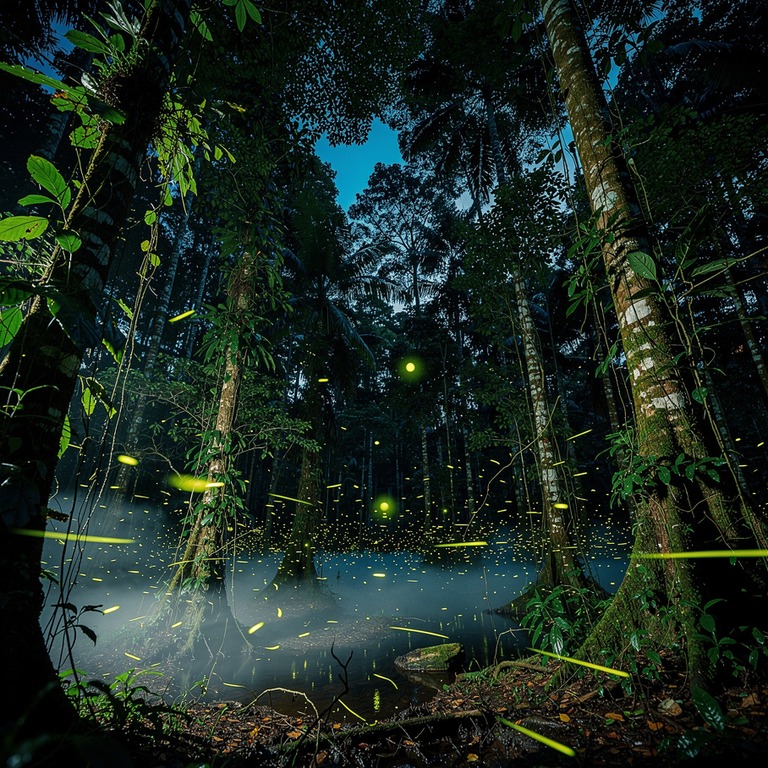
The Weirdness Problem (and Why Pharma Can't Sell It)
Here's a question that doesn't get asked enough: can you really separate the healing properties of psychedelics from their inherent strangeness? A lot of people in the industry are betting that you can. I'm not convinced.
Think about what pharmaceutical companies need in order to bring a product to market. They need predictability. They need a reliable mechanism of action. They need to be able to tell a doctor, with reasonable confidence, that if you give substance X to patient Y, outcome Z will follow within a specific window. That's the whole business model. It's how aspirin works, how statins work, how SSRIs are supposed to work.
Now consider 5-MeO-DMT — a substance so intense that experienced psychonauts describe it as being briefly annihilated. One of the largest pharmaceutical companies on the planet recently acquired a 5-MeO-DMT program and is pushing it as a depression treatment. Picture that rollout. Picture your grandmother getting a prescription from her GP for what longtime users call “the god molecule.” Try to imagine the informed-consent conversation. It's hard to see how that scales. It's hard to see how it doesn't produce a tidal wave of people showing up in emergency rooms, utterly unprepared for what just happened to them.
MDMA is a different story — it's genuinely more predictable, its effects are more consistent, and the therapeutic frame around it has decades of underground practice to draw from. But psilocybin, LSD, DMT, 5-MeO? These aren't lane-stayers. The idea that we can turn them into dependable, scalable, insurance-reimbursable treatments without losing something essential — that's an assumption, not a proven fact.
The Clinical Trial Trap
Clinical trials for psychedelics have a methodological problem that researchers quietly acknowledge in the hallways and almost never address in the published papers: functional unblinding. In most drug trials, neither the patient nor the researcher knows who got the real medicine and who got placebo. With psychedelics, everyone knows. The person who just experienced ego dissolution for six hours is pretty sure they didn't get the sugar pill. The clinician rating their symptoms afterward can tell too.
On top of that, trials recruit a very narrow slice of humanity. The ideal participant is depressed but not anxious, not suicidal, not on other medications, not using recreationally, not pregnant, not diagnosed with anything else. In other words — basically nobody. In the real world, people are messy composites of overlapping conditions and life circumstances. We've seen this exact pattern with conventional antidepressants: clean trial results, muddy real-world performance. There's no reason to expect psychedelics to magically escape that trajectory.
- Narrow endpoints: trials measure one or two symptom scales and nothing else.
- Narrow populations: real human complexity gets filtered out at the enrollment stage.
- Unblinded ratings: clinicians who know their patient tripped are not neutral observers.
- Short follow-up: most trials end long before anyone can see what the integration period actually produces.
None of this means the research is worthless. It means the confidence being projected — the headlines about miracle cures, the breathless press releases about depression being solved — is running way ahead of what the data can actually support.
What a Fuller Picture Could Look Like
Here's the thing nobody in the pharma pipeline wants to say out loud: most of the people throughout history who've benefited from psychedelics did not take them in a clinic. They took them in ceremony. In community. On the land. With elders, or with trusted friends, or alone in nature with intention. The therapeutic benefit was woven into a context — a set of practices, relationships, and meanings — that no pill bottle can replicate.
If we care about these substances actually helping people, we need to protect multiple paths, not collapse everything into one. That means:
- Supporting traditional and indigenous practices where plant medicines have always lived, and respecting the lineages that kept them alive.
- Allowing legal, well-structured retreat and ceremonial settings to exist alongside clinical ones.
- Investing in community-based integration — the slow, unsexy work of helping people make sense of what they experienced.
- Being honest with the public that these substances are powerful, weird, and sometimes difficult, not just gentle antidepressants in disguise.
- Keeping the research going, but widening the questions it asks beyond symptom scores.
None of this is anti-medicine. I think psychedelics genuinely can help some people with addiction, depression, PTSD, and the kinds of stuck patterns that other treatments haven't touched. I've interviewed enough people whose lives changed to know this isn't hype across the board. The concern isn't that medicalization exists. It's that medicalization is becoming the only acceptable frame, and that frame is too small for what we're actually dealing with.

Where This Leaves the Person Considering a Retreat
If you're reading this because you're weighing whether to sit with ayahuasca, drink San Pedro, or spend a week in a psilocybin container somewhere, the medicalization debate isn't abstract to you. It shapes what's available, what's legal, what gets covered by insurance someday, and — maybe most importantly — what expectations you carry into the experience.
My suggestion, having watched this space for a while: don't go in expecting a reliable antidepressant delivered by nature. Go in expecting an encounter with something you don't fully control, in a container held by people whose job is to keep you safe while you meet whatever shows up. The healing, when it happens, tends to come from the meeting, not from the molecule alone. Ceremony, community, integration, honest facilitators, enough time afterward to let things settle — those matter at least as much as the substance itself.
If any of this resonates and you want to look at what's actually available — the retreats run by lineage-trained facilitators, the centers with proper screening and aftercare, the ceremonies that haven't been flattened into something clinical — a curated range of psychedelic and plant-medicine retreats can be browsed on our marketplace here. Take your time with the decision. The weird, unpredictable, non-pharmaceutical dimensions of this work are a feature, not a bug — and they're worth protecting while we still can.
Craving More Stories?
Get your free guide on how to choose a psychedelic retreat, plus upcoming retreats and new reading every two weeks.
We value your privacy. Your email address will never be shared or published.